
Important historical note: The title uses a common phrase, but it needs a careful correction before we march any farther down history lane. Adolf Hitler was not directly elected as Germany’s dictator. He was appointed chancellor on January 30, 1933, by President Paul von Hindenburg after the Nazi Party became the largest party in the Reichstag but failed to win a majority in free elections. So, when people ask why “the German people elected Adolf Hitler,” the more accurate question is: why did millions of Germans support the Nazi Party, and why did Germany’s political system allow Hitler to turn that support into power?
That question matters because Hitler’s rise was not a single dramatic thunderclap. It was a chain reaction: war trauma, economic collapse, political paralysis, propaganda, fear, resentment, elite miscalculation, and organized violence all fed one another. Democracy did not trip over a banana peel; it was pushed, weakened, mocked, negotiated away, and then smashed.
This article explores ten major reasons many German voters turned toward Hitler and the Nazi Party in the late 1920s and early 1930s. The goal is not to excuse those choices. It is to understand how a modern society with newspapers, universities, courts, elections, cafés, cabarets, and very serious-looking men in hats could slide into dictatorship.
1. The Trauma of World War I Left Germany Angry and Humiliated
Germany’s defeat in World War I shocked many Germans. The country had lost millions of soldiers, endured shortages at home, and watched the old empire collapse. The new democratic government, known as the Weimar Republic, inherited the mess and had to sign the Treaty of Versailles in 1919.
To many Germans, the treaty felt like a national punishment. It forced Germany to accept responsibility for the war, pay reparations, reduce its military, and give up territory. Whether every complaint was fair is a different debate; politically, the emotional damage was enormous. The treaty became a convenient villain, and the Weimar politicians who signed it were painted as traitors.
Hitler exploited that anger brilliantly and viciously. He told people their suffering was not the result of military defeat, strategic mistakes, or the brutal reality of modern war. Instead, he pushed the “stab-in-the-back” myth, falsely claiming Germany had been betrayed from within by Jews, communists, liberals, and democratic politicians. It was a lie, but it was a useful lie for voters who wanted a story with villains, not a history lesson with footnotes.
2. The Weimar Republic Looked Weak and Chaotic
Germany’s Weimar Republic was a real democracy, but it was born under miserable conditions. It faced political violence, attempted coups, economic crises, and constant attacks from both the far left and far right. Many citizens associated democracy not with stability and dignity, but with defeat, inflation, street fighting, and parliamentary bickering.
The government also struggled to form lasting coalitions. Parties disagreed sharply, cabinets rose and fell, and emergency presidential powers became more common. For ordinary voters, this made democracy look like a leaky roof: technically still a roof, but not one you trusted in a storm.
Hitler promised something simpler: unity, order, strength, and action. He sold dictatorship as efficiency. He framed compromise as weakness. He presented pluralism as chaos. In a frightened society, that message found an audience.
3. Hyperinflation Destroyed Trust in the System
Before the Great Depression, Germany had already suffered the nightmare of hyperinflation in 1923. Prices rose so fast that money lost value almost by the hour. Middle-class savings vanished. Workers were paid with stacks of paper money that could become nearly worthless by the time they reached the shop.
Even though Germany stabilized later in the 1920s, the memory of hyperinflation remained. It burned itself into public consciousness. People who had played by the rules saw their savings evaporate. Pensioners, clerks, shopkeepers, and professionals felt betrayed by the state and vulnerable to the next crisis.
This mattered because political extremism feeds on broken trust. Once voters believe respectable institutions cannot protect them, they become more open to radical promises. Hitler offered certainty in a world where money itself had recently behaved like a practical joke written by an evil accountant.
4. The Great Depression Created Mass Desperation
The Wall Street crash of 1929 triggered a global economic crisis, and Germany was hit especially hard. The German economy depended heavily on foreign loans, particularly from the United States. When credit dried up, banks failed, businesses collapsed, and unemployment soared.
By the early 1930s, millions of Germans were out of work. Poverty, homelessness, hunger, and fear spread through cities and rural communities. The government’s response seemed painfully inadequate. Moderate parties looked slow, divided, and unimaginative.
The Nazis stepped into this misery with a loud, simple promise: work, bread, national revival, and an end to humiliation. They did not offer a careful spreadsheet of responsible policy. They offered emotional rescue. For voters worried about feeding families, paying rent, or saving a failing farm, Hitler’s promises could sound less like ideology and more like a lifeboat.
5. Hitler Was a Powerful Speaker and Political Performer
Hitler’s ideas were hateful, but his political performance was effective. He understood crowd psychology, symbolism, repetition, and emotional escalation. His speeches often began slowly, then built into fury. He made listeners feel that they were not isolated victims but members of a heroic national movement.
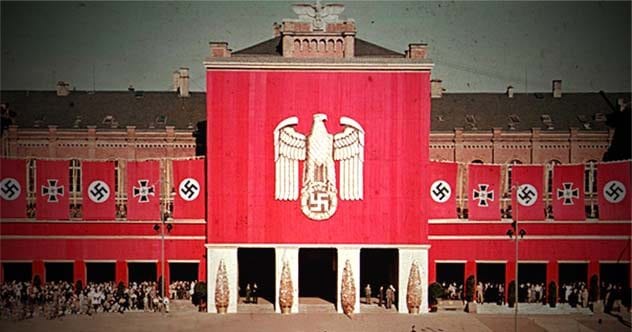
The Nazi Party also mastered spectacle. Rallies, flags, uniforms, songs, torchlight parades, posters, and choreographed public events turned politics into theater. That theater told voters: this movement is disciplined, energetic, modern, and unstoppable.
In anxious times, style can masquerade as substance. Hitler’s confidence made him seem decisive. His rage made him seem sincere. His slogans made complex problems feel solvable. The message was ugly, but the packaging was powerful.
6. Nazi Propaganda Targeted Different Groups With Different Promises
Nazi propaganda was not one-size-fits-all. It was more like a sinister department store: different aisle, different sales pitch. Workers heard promises about jobs. Farmers heard promises about protection from debt and foreign competition. Middle-class voters heard warnings about communism and social disorder. Nationalists heard promises of military revival. Young people heard adventure, belonging, and purpose.
The Nazis used posters, newspapers, speeches, radio, film, marches, and local organizing. They simplified everything. Germany’s problems were not complicated, they said. The villains were obvious. The solution was Hitler.
One famous 1932 propaganda message presented Hitler as Germany’s “last hope,” appealing directly to people left unemployed and desperate by the Depression. That kind of messaging was emotionally sharp. It did not ask voters to compare policy platforms over tea. It asked them to panic, blame, and follow.
7. Fear of Communism Drove Many Conservative and Middle-Class Voters Toward the Nazis
The Russian Revolution of 1917 terrified many Europeans, especially property owners, business leaders, farmers, religious conservatives, and middle-class families. In Germany, the Communist Party was strong, visible, and openly revolutionary. Street clashes between communist groups and Nazi paramilitaries made politics feel like civil war in slow motion.
Hitler used anti-communism as one of his strongest appeals. He promised to crush Marxism, protect private property, restore order, and defend Germany from revolution. For many voters who disliked Nazi extremism but feared communism more, the Nazis appeared to be the “lesser evil.” History would prove that calculation catastrophically wrong.
This is one of the most important lessons of Hitler’s rise: people do not always vote for extremists because they love every part of the program. Sometimes they vote for extremists because they fear someone else. Fear can become a political shortcut, and shortcuts through democracy often lead to cliffs.
8. Antisemitism and Scapegoating Gave People Easy Answers
Antisemitism existed in Europe long before Hitler. The Nazis did not invent hatred of Jews, but they weaponized it with modern propaganda and state ambition. They falsely blamed Jews for Germany’s defeat in World War I, the Treaty of Versailles, capitalism, communism, cultural change, and economic suffering. The accusations contradicted one another, but propaganda does not need logic; it needs repetition.
Scapegoating gave frustrated voters a target. Instead of asking difficult questions about war, debt, globalization, class conflict, political failure, and economic policy, Nazi propaganda offered a poisonous shortcut: blame an internal enemy.
Not every Nazi voter was equally antisemitic, and some supporters cared more about jobs, nationalism, or anti-communism. But voting for the Nazis still empowered a party whose ideology was openly racist and antisemitic. Indifference became complicity. Looking away became permission.
9. Political Elites Thought They Could Control Hitler
Hitler did not take power by winning a clean national majority and instantly becoming dictator. He entered government through appointment, negotiation, and elite miscalculation. Conservative politicians, business figures, and traditional power brokers believed they could use Hitler’s popularity while controlling him from inside a cabinet.
Franz von Papen and other conservatives imagined that Hitler could be boxed in. They thought they were inviting a loud guest to dinner, not handing matches to an arsonist in a room full of curtains. Their plan was to harness Nazi mass support for conservative goals. Instead, Hitler used the state to destroy his rivals and dismantle democracy.
This reason is crucial because voters alone did not make Hitler chancellor. Millions voted for the Nazi Party, but elites opened the final door. The tragedy was not only mass support from below; it was reckless cooperation from above.
10. Violence and Intimidation Weakened Democratic Opposition
The Nazis were not merely a campaign organization. They were also a movement of intimidation. The SA, or storm troopers, fought opponents, disrupted meetings, marched through streets, and helped create an atmosphere of crisis. Political violence made the republic seem ungovernable, then the Nazis presented themselves as the cure for the disorder they helped create.
After Hitler became chancellor, repression accelerated. The Reichstag Fire in February 1933 became a pretext for emergency measures that crushed civil liberties and targeted communists and other opponents. The March 1933 election was held in a climate of intimidation, censorship, and violence. Soon after, the Enabling Act gave Hitler dictatorial powers.
In other words, the Nazis used elections to enter power and then used power to destroy meaningful elections. Democracy became the ladder; dictatorship kicked it away.
What the 1932 Elections Really Show
The Nazi Party became the largest party in the Reichstag in July 1932 with about 37 percent of the vote. That was a massive breakthrough, but it was not a majority. In November 1932, the Nazi vote share fell to about 33 percent. Hitler’s movement was powerful, but it was also vulnerable. Many Germans still opposed him.
This matters because the phrase “the German people elected Hitler” can mislead readers into thinking the whole country freely and directly chose dictatorship. The reality is more complicated and more disturbing. A large minority backed the Nazis; other parties failed to unite effectively; conservative elites gambled with authoritarianism; and Hitler exploited legal procedures to gain office before dismantling the system from within.
The lesson is not simply “bad voters choose bad leaders.” The deeper lesson is that democracy can fail when economic misery, propaganda, political violence, prejudice, institutional weakness, and elite cowardice converge.
Experience-Based Reflections: What This History Teaches Modern Readers
Studying why many Germans supported Hitler is uncomfortable, but useful discomfort is sometimes the tuition fee for wisdom. The experience of reading survivor testimony, visiting Holocaust museums, studying election posters, or discussing Weimar Germany in a classroom often produces the same realization: dictatorship rarely introduces itself by saying, “Hello, I am here to ruin everything.” It usually arrives promising order, pride, safety, jobs, and national renewal.
One practical experience many students and readers have with this topic is the shock of seeing how ordinary the early warning signs looked. There were elections. There were newspapers. There were political debates. There were people going to work, raising children, shopping for bread, complaining about prices, and arguing about parties. Evil did not appear only in dramatic uniforms. It also appeared in casual jokes, rumors, resentments, and the quiet decision to tolerate cruelty because “at least someone is fixing the economy.”
Another lesson comes from propaganda analysis. When modern readers examine Nazi posters and speeches, they often notice how emotionally simple the messages were. The propaganda did not invite people to think deeply; it invited them to feel deeply. It turned anxiety into anger and anger into loyalty. That experience is useful today because public life still contains slogans that promise easy answers to complicated problems. History teaches us to slow down when a leader says, “Only I can fix it,” or when a movement insists that one group of people is responsible for everything wrong in society.
There is also a civic lesson about institutions. Weimar Germany shows that constitutions, courts, parliaments, and elections are not magic furniture. They only work when enough people defend their purpose. If political leaders treat democracy as a game to be hacked, if media ecosystems reward lies, if voters become numb to violence, and if elites believe they can control extremists for personal advantage, the system can weaken faster than expected.
Finally, this history teaches the danger of indifference. Not every German who supported the Nazis was a fanatical ideologue, but many accepted fanaticism because it seemed useful, distant, or someone else’s problem. That is one of the hardest truths. Democracies are not protected only by heroes giving grand speeches. They are protected by ordinary people refusing to normalize dehumanization, refusing to laugh along with hate, refusing to trade rights for convenience, and refusing to believe that cruelty becomes harmless when it is popular.
The experience of studying Hitler’s rise should not leave readers feeling superior to the past. It should leave us more alert in the present. The people of Weimar Germany were not cartoon villains twirling mustaches in smoky rooms. Many were frightened, angry, exhausted, proud, misled, ambitious, or simply passive. That is exactly why the story matters. It reminds us that democracy depends not only on laws and elections, but also on habits: skepticism, empathy, courage, historical memory, and the willingness to say no before “no” becomes dangerous.
Conclusion
Adolf Hitler’s rise to power was not inevitable, and it was not the result of one cause. Millions of Germans supported the Nazi Party because they were living through war trauma, economic collapse, political instability, and social fear. Hitler and the Nazis exploited those conditions with propaganda, scapegoating, nationalism, anti-communism, and promises of order. At the same time, political elites made disastrous choices that helped turn electoral support into state power.
The most accurate answer to “Why did the German people elect Adolf Hitler?” is this: many Germans voted for the Nazi Party, but Hitler became chancellor through appointment and political bargaining, then destroyed democracy from within. The tragedy lies in the combination of voter support, institutional weakness, elite collaboration, and public tolerance of hatred.
History is not a museum piece sealed behind glass. It is a warning label. When fear becomes more persuasive than truth, when scapegoats become more attractive than solutions, and when democracy is treated as disposable, the past starts clearing its throat.