
Note: The headline uses the popular word “tribes” for search visibility, but throughout the article, “Indigenous peoples” and “communities” are used where possible for accuracy and respect.
Some communities do not disappear with a dramatic movie ending. They fade under paperwork, roads, boarding schools, mining permits, tourism, disease, and the relentless global habit of calling someone else’s homeland “unused land.” That is what makes the story of the world’s most distinct Indigenous peoples so gripping. These are not relics from a dusty chapter of human history. They are living communities, carrying languages, ecological knowledge, spiritual traditions, and social systems that survived invasions, borders, missionaries, governments, and modernity’s favorite hobby: pretending it knows best.
So when we talk about the “last of their kind,” we are not saying these peoples are literally the final humans standing in some cinematic sunset shot. We mean they represent some of the last communities on Earth still holding onto exceptionally rare ways of life, endangered languages, or degrees of isolation that the outside world has nearly stamped out. Their stories matter not because they are exotic, but because they prove human diversity is far richer than the standard urban, Wi-Fi-powered template.
Here are 10 Indigenous peoples whose histories, resilience, and cultural survival make them some of the last of their kind.
1. The Sentinelese
If isolation had a world championship, the Sentinelese would likely refuse to attend, which is exactly the point. Living on North Sentinel Island in the Bay of Bengal, they are widely considered one of the most isolated peoples on Earth. They have consistently resisted outside contact, and that resistance is not ignorance. It is strategy. History shows that contact with outsiders often brings disease, violence, exploitation, and cultural collapse. The Sentinelese seem to have understood that better than many so-called civilized governments ever did.
What makes them remarkable is not just their isolation, but their survival. While countless Indigenous populations were absorbed, relocated, missionized, cataloged, or flattened by empire, the Sentinelese kept the door firmly shut. Their existence is a reminder that not every community wants a “connection” to the outside world, and maybe humanity should learn to respect a closed door when it sees one.
2. The Jarawa
Also from the Andaman Islands, the Jarawa are one of the few Indigenous groups still maintaining a traditional hunting-and-gathering lifestyle in their forest homeland. Unlike the Sentinelese, the Jarawa have experienced more contact with outsiders, and that has brought a complicated mix of dependency, tourism pressure, exploitation, and cultural disruption. In short, contact did what contact usually does: it showed up promising progress and left a mess.
The Jarawa matter because they represent a vanishing form of human adaptation, one rooted in deep forest knowledge and mobility rather than highways and supermarket aisles. Their challenge today is not whether their culture is “backward,” because it is not. Their challenge is whether they can preserve autonomy while living next door to a world that rarely leaves Indigenous land alone.
3. The Onge
The Onge of Little Andaman are another small Indigenous community whose traditional lifeways have endured despite enormous outside pressure. For generations, the Onge lived through hunting, fishing, and gathering, with an intimate knowledge of the island’s ecology. But like so many Indigenous peoples, they have faced population decline, land loss, and the heavy hand of administrators who often assume that “help” must mean control.
What makes the Onge one of the last of their kind is not just their small population. It is the fragility of everything around them: language, land access, food traditions, and the rhythm of life that once made perfect sense on their island. When a people’s environment is altered faster than its traditions can adapt, the damage is not abstract. It hits the dinner table, the family structure, and the future all at once.
4. The Great Andamanese
The story of the Great Andamanese is one of the clearest warnings in human history. Once made up of multiple closely related groups across the islands, they were devastated by colonial intrusion, disease, alcohol, displacement, and the breakdown of their social world. Today, only a tiny surviving remnant remains, and much of the older linguistic and cultural diversity has already been lost.
If that sounds tragic, it is because it is. The Great Andamanese show what happens when outsiders treat Indigenous communities as curiosities, obstacles, or administrative problems instead of sovereign human societies. Yet even in reduced numbers, their survival still matters. They are living evidence that history did not fully erase them, even if it tried very hard. And yes, history absolutely has some explaining to do.
5. The Korowai
The Korowai of Indonesian New Guinea became famous to outsiders for their spectacular treehouse architecture, and unfortunately, fame is rarely a harmless visitor. Traditionally living in remote forest communities, the Korowai developed a way of life shaped by swamp forest ecology, clan networks, and extraordinary building knowledge. Their elevated homes are not gimmicks. They are a practical response to environment, security, and tradition.
Some Korowai communities have had increasing outside contact through missionaries, tourists, and media crews eager to package them as a “lost world.” That framing misses the real story. The Korowai are not lost. They know exactly where they are. It is the outside world that tends to get lost in its own fantasies. What makes them one of the last of their kind is the persistence of a forest-based lifeway that still holds together despite intrusion and cultural pressure.
6. The Yanomami
The Yanomami live across northern Brazil and southern Venezuela and are often described as one of the largest relatively isolated Indigenous populations in South America. Their villages, social structures, and forest knowledge represent an enormously important human and ecological heritage. But their survival has been repeatedly threatened by illegal mining, disease, and land invasion.
Gold mining has been especially destructive, bringing contamination, violence, and outbreaks of illness. In other words, outsiders saw a thriving Indigenous homeland and thought, “What if we added mercury?” The Yanomami story captures one of the central contradictions of modern civilization: the same society that praises the rainforest often bankrolls the forces that destroy the people who have protected it best. The Yanomami endure, but their resilience should not be mistaken for invulnerability.
7. The San
The San of southern Africa are among the most culturally distinctive Indigenous peoples on Earth. Their communities preserve ancient hunting traditions, sophisticated tracking skills, oral storytelling, and some of the world’s most fascinating linguistic systems, including languages famous for click consonants. For generations, San peoples lived through intimate knowledge of the desert and savanna, reading landscapes with a precision that would make most GPS users weep softly into their phones.
Yet the San have also faced dispossession, marginalization, and pressure to abandon traditional livelihoods. Their story matters because it pushes back against the myth that technology alone equals intelligence. The San developed survival systems that were not primitive at all; they were elegant, adaptive, and astonishingly effective. They are among the last of their kind because very few hunting-and-tracking cultures with that depth of continuity remain in the modern world.
8. The Nenets
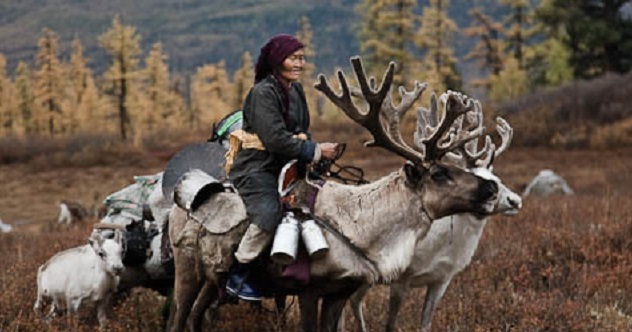
In the Russian Arctic, the Nenets have preserved one of the world’s most extraordinary nomadic reindeer-herding traditions. Families migrate across the tundra with reindeer, sleds, and portable homes, navigating extreme cold through knowledge passed down over generations. This is not romantic fantasy. It is a demanding, technical, deeply skilled way of life built around movement, weather, herd behavior, and survival in one of the harshest environments on Earth.
Today, climate change and industrial development are making that life harder. Changing snow and ice conditions affect migration routes, while extraction projects disrupt pasture and mobility. The Nenets are among the last of their kind because there are few remaining large-scale nomadic pastoral cultures that still function in such direct relationship with a severe environment. Their culture proves that movement can be a civilization, not just a temporary inconvenience for people who forgot their charger.
9. The Ainu
The Ainu, Indigenous to northern Japan and nearby regions, are not isolated in the same way as the Sentinelese or Korowai. Their struggle is different and, in some ways, more familiar: forced assimilation, discrimination, language loss, and the long battle to reclaim cultural dignity. For decades, the Ainu were pressured to abandon their language, spirituality, and customs in favor of a national identity that had little room for difference.
What makes the Ainu one of the last of their kind is the rarity of their linguistic and cultural heritage. The Ainu language has been severely endangered, and many traditional practices survived only because communities fought to keep memory alive even when official policy leaned the other way. Today, Ainu cultural revival efforts are a powerful reminder that being “the last” does not always mean disappearing. Sometimes it means rebuilding from the edge and refusing to vanish on schedule.
10. The Sámi and the Maasai
Yes, this final entry bends the rules a little, but both the Sámi of northern Europe and the Maasai of East Africa deserve a place in this conversation because each represents one of the world’s last highly visible Indigenous cultures still rooted in pastoral tradition and land-based identity.
The Sámi
The Sámi live across Sápmi, a region spanning northern Norway, Sweden, Finland, and Russia. Their reindeer herding traditions, joik singing, clothing, and languages form one of Europe’s oldest Indigenous cultural continuities. Yet Sámi communities face pressure from mining, energy development, climate shifts, and long histories of state-driven assimilation. They are not disappearing, but the conditions that support Sámi language, land rights, and reindeer culture remain fragile.
The Maasai
The Maasai of Kenya and Tanzania remain one of the world’s most recognizable Indigenous pastoral peoples. Their cattle-centered social world, beadwork, ceremony, and land-based identity have endured despite colonial boundaries, tourism pressure, conservation conflicts, and repeated land disputes. What makes the Maasai one of the last of their kind is not small population size, but the unusual visibility of a pastoral society still fighting to retain cultural continuity in a rapidly commercialized world.
Why These Communities Matter
These peoples matter for reasons bigger than curiosity. They hold ecological knowledge shaped over centuries. They preserve languages that encode unique ways of understanding land, kinship, weather, memory, and the sacred. They challenge the lazy assumption that history naturally moves in one direction, toward the same apartment blocks, the same apps, the same processed snacks, and the same algorithm-approved lifestyle. Human civilization is not a single road. It is a braided river, and too many channels have already been dammed.
Protecting these communities does not mean freezing them in time or turning them into tourism mascots. It means defending their right to choose their own future. Some may want more engagement with the outside world. Others may want less. The point is that the decision should be theirs, not ours, not a company’s, not a government office’s, and definitely not some travel influencer who thinks respect begins and ends with a dramatic drone shot.
Experiences That This Topic Awakens
Reading about these peoples creates a strange combination of awe, grief, and humility. Awe, because it is hard not to be impressed by how many ways human beings have learned to live on this planet. A person who can read wind over tundra, track movement through dry earth, build a treehouse high above swamp forest, or preserve a threatened language through song is not living on the margins of humanity. They are showing how broad humanity really is.
There is grief, too, because many of these stories are threaded with loss. You begin by admiring a language, a migration route, a ritual, or a social system, and then history barges in with a ledger full of epidemics, confiscations, schools designed to erase identity, and industries that call destruction “development.” It becomes painfully clear that cultural loss is rarely natural. More often, it is engineered, excused, or ignored until it looks inevitable.
Then comes humility. Topics like this force readers to reconsider what counts as knowledge. Modern societies are very confident in their data dashboards, satellite maps, and productivity hacks. Meanwhile, Indigenous communities have preserved weather wisdom, medicinal knowledge, landscape management practices, and social resilience that industrial societies are only beginning to appreciate. The experience of encountering these histories can be unsettling in the best way. It shrinks arrogance.
There is also a moral discomfort that lingers. It is easy to admire Indigenous cultures from a distance, much harder to ask what threatens them now and who benefits from that threat. Illegal mining, tourist intrusion, exclusionary conservation, land grabs, pipelines, dams, wind projects without consent, deforestation, and cultural commodification are not abstract issues. They are present-tense forces. Learning about these communities can leave readers with the uneasy realization that modern comfort is often built on someone else’s dispossession.
And yet, the strongest feeling this topic produces is not despair. It is respect. Not the shallow kind that turns people into symbols, but the deeper kind that understands endurance. The Sentinelese defending their isolation, the Ainu rebuilding cultural pride, the Sámi defending herding lands, the Nenets adapting to a changing Arctic, the Yanomami resisting invasions, the Maasai protecting ancestral territory, the San carrying ancient tracking knowledge, the Jarawa, Onge, and Great Andamanese surviving histories that nearly erased them: all of it adds up to one lesson. Human diversity is not a decorative extra. It is part of the world’s intelligence.
That is the real experience at the heart of this topic. You start by reading about “the last of their kind,” and you end by realizing the real danger is not that these peoples are too distant from modernity. It is that modernity has too often been too careless with them. Once that realization lands, the article stops being a list and starts becoming a responsibility.
Conclusion
The world still contains peoples whose languages, land relationships, and lifeways are astonishingly rare. Some remain fiercely isolated. Others are rebuilding after centuries of erasure. All of them remind us that human culture is not meant to come in one standardized global flavor. The future should not belong only to the loudest economies or the most aggressive developers. It should also make room for the communities that have kept different ways of being alive against unbelievable odds.
SEO Tags