
Plumbing pipes used to live a quiet life behind walls, under sinks, and in basements. Then DIYers looked at black iron pipe, galvanized fittings, copper tubing, and PVC and said, “Wait a minutethis could be a bookshelf.” And just like that, humble hardware-store supplies became stars of industrial home decor.
DIY plumbing pipe projects are popular for a reason: pipes are strong, modular, widely available, and surprisingly stylish when paired with wood, glass, baskets, plants, or vintage accessories. Whether your home leans farmhouse, modern industrial, rustic, minimalist, or “I found this board in the garage and I have a vision,” plumbing pipe can add both structure and personality.
This guide covers 15 fabulous DIY plumbing pipe projects you can build for storage, organization, lighting, furniture, and decor. Most of these ideas use common parts such as floor flanges, elbows, tees, nipples, caps, pipe straps, wood boards, screws, anchors, and basic finishing supplies. The magic is not in complicated toolsit is in planning, measuring, cleaning the pipe, securing everything properly, and not pretending “close enough” is a structural engineering principle.
Important note: These projects are for furniture, decor, and storage. Do not repurpose active gas, water, or drain lines, and do not modify live plumbing or electrical systems unless you are qualified. For lamps or hardwired fixtures, use approved electrical components and consult a licensed professional when needed.
Why Plumbing Pipe Works So Well for DIY Projects
Plumbing pipe is basically adult building blocks. You can connect short pipes to elbows, attach flanges to walls, create sturdy legs, build open shelving frames, or turn a simple wood plank into something that looks like it belongs in a boutique loft. Black iron pipe gives a bold industrial look, galvanized pipe feels rugged and utilitarian, copper pipe brings warmth and shine, and PVC is lightweight, affordable, and excellent for garage or craft-room organizers.
The best DIY plumbing pipe projects have three things in common: they solve a real problem, they are securely fastened, and they look intentional. A pipe towel rack can make a tiny bathroom feel custom. A PVC tool organizer can rescue your garage from “where did I put the drill again?” chaos. A pipe bookshelf can turn an empty wall into a practical statement piece. In other words, pipe projects are not just cutethey work hard.
Before You Start: Basic Supplies and Smart Prep
Most pipe projects start with a sketch. Measure the wall, tabletop, closet, or corner where the finished piece will go. Then list every pipe length and fitting before you shop. Pipe fittings add length, so do not measure only the pipe pieces and forget the elbows, flanges, and tees. That is how a “perfectly planned” shelf becomes three inches too wide and develops an attitude.
For black iron or galvanized pipe, clean the pieces before bringing them near fabric, walls, or freshly painted shelves. Many pipes arrive oily or dusty from manufacturing and handling. Wipe them down with a degreaser, dry them thoroughly, and seal or paint them if you want a cleaner finish. For wall-mounted projects, always locate studs when possible and use proper anchors for the wall type. Heavy pipe plus heavy books plus drywall alone equals a future dramatic sound from the next room.
15 Fabulous DIY Plumbing Pipe Projects to Try
1. Industrial Pipe Bookshelf
An industrial pipe bookshelf is the classic gateway project. Once you build one, you may start seeing every blank wall as “shelf potential,” which is normal and only mildly concerning. Use wood boards for shelves and black iron pipe for the vertical supports. Floor flanges can attach the frame to the wall or floor, while elbows and tees create the structure.
This project works beautifully in living rooms, home offices, dining rooms, and bedrooms. For a polished look, stain the wood in a warm walnut or oak tone and keep the pipe matte black. For a brighter room, use natural pine or whitewashed shelves with galvanized pipe. Make sure each shelf is level and attached securely into studs or proper wall anchors.
2. Wall-Mounted Pipe Shelf
If a full bookcase feels too ambitious, start with a wall-mounted pipe shelf. This project typically uses two or three pipe brackets made from flanges, short pipe nipples, elbows, and caps. Place a wood board on top, secure the board from underneath with pipe straps or screws, and suddenly your wall has personality.
Pipe shelves are great above a desk, in a bathroom, beside a bed, or near an entryway. Use them for plants, candles, framed art, hand towels, coffee mugs, or small storage baskets. The key is scale: a narrow shelf looks sleek, while deeper boards can feel bulky unless the wall is large enough to handle the visual weight.
3. Plumbing Pipe Towel Rack
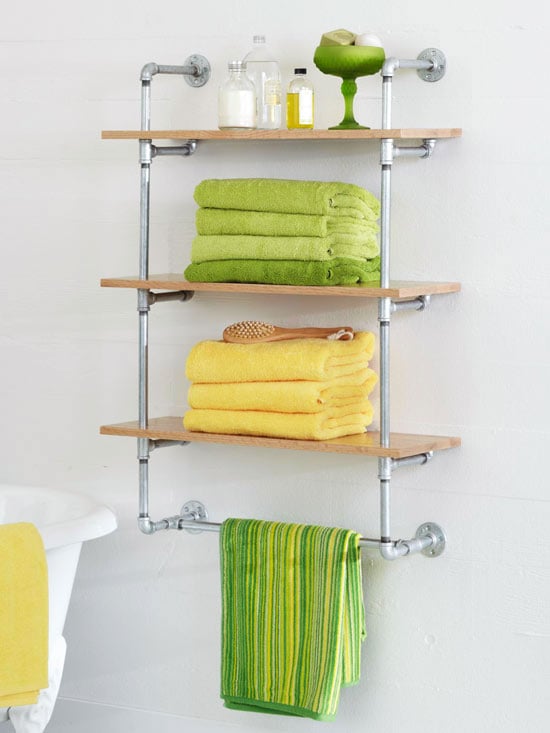
A pipe towel rack gives bathrooms a sturdy, rustic edge. It can be mounted vertically for hand towels or horizontally for bath towels. Black pipe pairs well with white tile, wood vanities, and matte black faucets, while galvanized pipe looks at home in farmhouse or coastal bathrooms.
For a simple version, use two flanges, two elbows, and one straight pipe. Add caps if you want a more finished look. Mount it into studs or use anchors rated for bathroom use. Since bathrooms are humid, consider sealing the pipe or choosing galvanized materials to help reduce surface rust.
4. Pipe Curtain Rod
A DIY plumbing pipe curtain rod is a high-impact project that does not require a huge parts list. It is especially useful for wide windows where ordinary curtain rods may sag in the middle. Pipe has the strength to hold heavier curtains, including canvas panels, blackout drapes, or linen-look fabric.
Use flanges as wall mounts, elbows to return the pipe toward the wall, and a straight pipe as the rod. Spray paint the pipe if you want a custom finish. Matte black is the classic choice, but brass, bronze, or soft white can look surprisingly elegant. Just measure carefully so the curtains clear the window trim and hang at the right height.
5. Copper Pipe Plant Stand
Copper pipe is the jewelry of the plumbing aisle. It adds warmth, shine, and a little “I casually have great taste” energy to indoor plant displays. A copper pipe plant stand can be made with short pipe sections and elbow fittings to create a cube or rectangular base that holds a pot.
This project is best for lightweight planters. Keep the design low and stable, especially if you have pets, younger siblings, or a habit of bumping into furniture while carrying snacks. Copper develops a patina over time, which many people love. If you want to keep it shiny, polish and seal it.
6. PVC Garage Tool Organizer
PVC pipe may not have the moody charm of black iron, but it is a storage hero. Cut sections of wide PVC pipe at an angle, mount them to a board, and use them as holders for screwdrivers, paint brushes, pencils, garden tools, extension cords, or drill accessories.
This is one of the most budget-friendly DIY plumbing pipe projects because PVC is lightweight and easy to cut. It also works well in garages, sheds, craft rooms, and laundry areas. Label each section if you want a super-organized setup. Or do what many DIYers do: label three things, get distracted, and still feel proud because the garage looks better than before.
7. Pipe Clothing Rack
A pipe clothing rack is ideal for small closets, guest rooms, laundry rooms, boutiques, costume storage, or outfit planning. Use flanges to mount a horizontal pipe to the wall, or build a freestanding rack with pipe legs and a top rail.
For wall-mounted racks, leave enough clearance between the pipe and the wall so hangers slide easily. For freestanding racks, make the base wide enough to prevent tipping. Add a lower shelf with wood or pipe crossbars for shoes and baskets. This project is practical, stylish, and especially helpful when your closet has reached “fabric avalanche” status.
8. Industrial Pipe Desk
A plumbing pipe desk brings strong structure and custom sizing to a home office. The top can be butcher block, plywood, reclaimed wood, or a premade desktop. The pipe base can be as simple as four legs with cross supports, or more complex with shelves and side braces.
The biggest advantage is flexibility. You can design the exact width, height, and storage layout you need. For comfort, aim for a standard desk height and make sure there is enough legroom. Use floor protectors or caps under the feet to prevent scratching. Once finished, add a good chair, task lamp, and cable management so the desk does not become a beautiful platform for cord spaghetti.
9. Pipe Coffee Table
A pipe coffee table looks great in living rooms that need a bit of industrial texture. Use pipe legs and a wood top, then add a lower shelf for books, baskets, or board games. Casters can make the table easier to move, especially if your living room doubles as a workout zone, movie-night lounge, or snack command center.
Keep proportions balanced. Thin pipe can look delicate under a large tabletop, while overly chunky pipe may overpower a small room. Sand the wood well, round the corners slightly, and apply a durable finish that can handle mugs, remotes, and the occasional “I swear I used a coaster” moment.
10. Pipe Paper Towel Holder
A pipe paper towel holder is small, useful, and perfect for beginners. It can be freestanding on a countertop or mounted under a cabinet or on a wall. Black pipe creates an industrial kitchen accent, while galvanized pipe blends well with utility spaces and workshops.
For a freestanding version, attach a vertical pipe to a heavy wood base with a flange and finish the top with a cap. For a wall-mounted version, use elbows and flanges to create a horizontal holder. Keep the roll easy to replace, because a DIY project that requires a puzzle-solving session every time you change paper towels is not a gift to your future self.
11. Pipe Pot Rack
A pipe pot rack can free up cabinet space and turn cookware into decor. Mount a sturdy pipe rail on the wall and add S-hooks for pans, utensils, colanders, or mugs. This works especially well in small kitchens where every cabinet is already hosting a dramatic meeting of lids and mismatched containers.
Install the rack near the cooking zone, but not where it blocks movement or creates a head-bumping hazard. Use strong fasteners and check the weight rating of hooks and anchors. Cast iron pans look great hanging from a pipe rack, but they are heavy enough to deserve serious support.
12. Pipe Bathroom Vanity Shelf
A pipe vanity shelf adds open storage below or beside a bathroom sink. Use a wood shelf supported by pipe brackets for towels, baskets, extra soap, or rolled washcloths. This is an especially smart solution for pedestal sinks or small bathrooms with almost no cabinet storage.
Choose a wood finish that can handle moisture, and avoid placing raw wood where it will get splashed daily. Seal the surface with a water-resistant finish. Keep the shelf airy and uncluttered so the bathroom feels larger, not like the linen closet had a tiny explosion.
13. PVC Wine or Bottle Rack
Large-diameter PVC pipe can be cut into short sections and arranged into a honeycomb-style bottle rack. Glue or fasten the sections together, paint the outside, and place the rack inside a cabinet, pantry, or bar area. It can hold wine bottles, water bottles, rolled towels, or craft vinyl rolls.
This project is easy to customize. Use a single row for a narrow cabinet or stack several rows for a bigger storage piece. Sand the cut edges smooth so bottles slide in cleanly. A coat of paint can make PVC look far more stylish than its humble price tag suggests.
14. Pipe Entryway Organizer
An entryway organizer made from pipe can combine hooks, a shelf, and a hanging rod in one compact station. Use the hooks for bags, jackets, umbrellas, dog leashes, or keys. Add a wood shelf on top for baskets, mail, sunglasses, and whatever mysterious objects people bring home in their pockets.
This project works best when it is designed around your daily habits. If shoes pile up near the door, add a lower rack. If keys disappear constantly, install small hooks or a tray. If backpacks are heavy, mount the organizer securely into studs. A good entryway system does not just look niceit prevents the morning treasure hunt for “where did I put my keys?”
15. Pipe and Wood Rolling Kitchen Island
A rolling kitchen island made with plumbing pipe and wood can add prep space, storage, and industrial character. Use wood for the top and shelves, pipe for towel bars or side rails, and locking casters for mobility. This project is more advanced than a towel rack, but it can be incredibly useful in a small kitchen.
Design the island to fit your space with room to walk around it. Add a lower shelf for mixing bowls, pans, or baskets. A side pipe can hold towels or hooks for utensils. Use food-safe finishes on surfaces that may touch food, and choose locking wheels so the island does not roll away during serious chopping sessions.
Design Tips for Making Pipe Projects Look Expensive
The difference between “custom industrial decor” and “I bolted random pipe to a board” often comes down to finishing. Clean the pipe thoroughly, sand rough wood edges, choose screws that match the hardware, and keep spacing consistent. A symmetrical layout usually looks more polished, especially for shelves and racks.
Wood choice matters too. Pine is affordable and easy to work with, but hardwood or butcher block can make a project feel more substantial. Stain adds warmth, while paint can create a cleaner modern look. If you use reclaimed wood, check for nails, splinters, pests, and warping before building with it.
Do not overload every shelf with decor. Pipe already has a strong visual presence, so give it breathing room. Pair heavy metal lines with soft elements such as plants, towels, books, baskets, or warm lighting. Industrial style works best when it feels balancednot like your living room is applying for a job at a warehouse.
Common Mistakes to Avoid
The first mistake is skipping the measuring stage. Pipe parts are fixed sizes, and fittings change the final dimensions. Sketch the project, dry-fit the pieces, and confirm the total width and height before drilling holes.
The second mistake is underestimating weight. Pipe is heavier than it looks, and shelves become much heavier once loaded. Use studs, quality anchors, and appropriate screws. For freestanding furniture, build a stable base and test for wobble before calling the project done.
The third mistake is ignoring surface prep. Black iron pipe can leave residue, galvanized pipe can look uneven, and PVC can show rough cut marks. Cleaning, sanding, priming, painting, and sealing may not sound glamorous, but they are what make the final project look intentional.
Experience Notes: What DIYers Learn After Building Pipe Projects
After working through several DIY plumbing pipe projects, one lesson becomes clear: the pipe aisle rewards patience. At first, the fittings can feel like a confusing metal alphabet. Elbows, tees, flanges, unions, nipples, capswho named these things, a committee of plumbers and crossword puzzle writers? But once you build one small project, the logic starts to click. A flange attaches to a surface, an elbow changes direction, a tee creates a branch, and a cap finishes an end. Suddenly the parts are not intimidating; they are possibilities.
Another real-world experience is that cleaning the pipe is not optional. Many beginners bring black pipe home, assemble a gorgeous shelf, and then discover dark residue on their hands, wall, or wood. Cleaning before assembly saves frustration. Lay the pieces on cardboard, wipe them down, let them dry, and consider sealing or painting them. It is a small step that makes the final project feel cleaner and more professional.
Planning the shopping list also matters more than expected. Pipe projects often require multiples of the same fitting, and stores may not have every piece in stock. For a big bookcase or wall unit, it helps to buy all the parts at once, label them by section, and dry-fit the frame before attaching anything permanently. This prevents the classic DIY situation where one missing elbow stops the entire weekend.
Mounting is where confidence should meet caution. A pipe towel rack may be light, but a pipe bookshelf loaded with novels is serious business. Find studs, use the right anchors, predrill when necessary, and check level more than once. The shelf may forgive a tiny cosmetic flaw, but gravity has no sense of humor.
Finally, the best pipe projects feel personal. Maybe you use copper pipe for a plant stand because your room needs warmth. Maybe you build a PVC organizer because your garage tools have been living like nomads. Maybe you choose a black pipe curtain rod because regular rods look too flimsy for your big windows. The goal is not to copy every trendy industrial design online. The goal is to create something sturdy, useful, and good-looking enough that visitors ask, “Where did you buy that?” Then you get to smile and say, “I made it.” That is the best part.
Conclusion
DIY plumbing pipe projects prove that practical materials can become stylish home upgrades with the right plan. From industrial pipe bookshelves and towel racks to PVC organizers and copper plant stands, pipe projects offer a rare mix of strength, affordability, customization, and character. They are also wonderfully adaptable: one person may build a sleek office desk, while another turns leftover PVC into the most organized garage wall in the neighborhood.
Start small if you are new to this style. A paper towel holder, curtain rod, towel rack, or single wall shelf can teach you the basics without overwhelming your weekend. Once you understand how the pieces connect, you can move on to bigger builds like coffee tables, kitchen islands, closet racks, and full shelving systems. Measure twice, clean the parts, secure everything properly, and let the pipe do what it does best: hold things up while looking cool.
Note: This article focuses on decorative and storage-based DIY plumbing pipe projects. For active plumbing, gas lines, structural installations, or electrical wiring, follow local codes and consult a qualified professional.