
Beauty has always been a moving target. One century says pale skin is perfection, another worships a sun-kissed glow. One culture celebrates soft curves, another praises sharp cheekbones, and the internet somehow decided that “clean girl makeup” required at least twelve products and the emotional patience of a monk. Now artificial intelligence has entered the chat, producing polished portraits of what it thinks “beauty” looks like in different countries.
The result is fascinating, a little eerie, and occasionally as subtle as a pageant sash made of neon lights. AI-generated portraits can reveal patterns in global beauty standards, but they also expose the limits of the data behind them. When an image generator is trained on online photos, captions, hashtags, stock images, fashion campaigns, pageant archives, celebrity culture, and social media trends, it does not discover truth. It averages what the internet has repeated loudly enough.
That is why “AI beauty standards” is such a powerful topic. These images can look glamorous, but they are also cultural mirrors. Sometimes the mirror is clear. Sometimes it is foggy. Sometimes it has a beauty filter, dramatic lighting, and a suspiciously perfect jawline.
What Does It Mean When AI “Sees” Beauty?
AI does not see beauty the way humans do. It does not remember a grandmother’s smile, a friend’s laugh, or the confidence someone carries when they walk into a room. It reads patterns. If millions of online images connect a country with certain hairstyles, skin tones, makeup looks, body types, clothing, or facial features, the model may turn those signals into a “typical” beauty portrait.
That is useful for studying cultural beauty ideals, but it is not the same as defining national attractiveness. No country has one face. The United States is not one cheekbone. India is not one complexion. Brazil is not one body shape. South Africa, Mexico, Japan, Egypt, and the Philippines are too diverse to be squeezed into a single glossy image. AI-generated beauty pictures should be viewed as interpretations, not verdicts.
Still, these portraits make people click because they turn invisible social pressure into something visible. We can suddenly see how algorithms may associate beauty with youth, symmetry, smooth skin, thinness, clear complexions, styled hair, fashionable clothing, and camera-ready confidence. The images are pretty, yes, but they also ask an uncomfortable question: who taught the machine what “pretty” means?
15 AI-Style Portraits of Global Beauty Standards
The following examples imagine how an AI image generator might portray beauty standards in different countries based on common online beauty cues, fashion references, pop culture, and social media aesthetics. The goal is not to stereotype real people. The goal is to analyze what the internet often highlights, exaggerates, or repeats.
1. United States: The “Model Off Duty” Glow
An AI portrait of American beauty would likely feature glossy skin, full brows, bright teeth, defined lashes, and hair that looks effortless despite requiring a small engineering team. The U.S. beauty ideal often swings between fitness culture, celebrity glam, and “no-makeup makeup,” which is hilarious because it usually involves makeup. The image might show confidence, casual fashion, and a face shaped by Hollywood, TikTok, and wellness branding.
2. South Korea: Radiant Skin First, Everything Else Second
For South Korea, AI would probably focus on luminous skin, soft color, smooth hair, delicate makeup, and a youthful finish. K-beauty has made hydration, glow, sunscreen, serums, cushion foundation, and skin-care routines globally famous. The portrait might look fresh and polished rather than heavily sculpted. Yet the image could also flatten Korean beauty into one “glass skin” ideal, ignoring personal style, age, regional identity, and the growing demand for inclusivity.
3. Brazil: Sun, Movement, and Body Confidence
An AI-generated Brazil portrait might emphasize bronzed skin, beachy hair, expressive features, and body confidence. Online culture often connects Brazilian beauty with warmth, fitness, swimwear, and a relaxed attitude toward showing the body. But Brazil is racially and culturally diverse, so any one image will be incomplete. A responsible reading sees the portrait less as “Brazilian beauty” and more as the internet’s favorite postcard version of it.
4. Japan: Soft Detail and Polished Minimalism
For Japan, AI might create a portrait with neat hair, soft makeup, clear skin, gentle blush, and precise styling. Japanese beauty trends often balance minimalism, cuteness, elegance, and highly detailed grooming. The machine may lean into smooth textures, subtle eyes, and carefully arranged fashion. The risk is that AI may overuse familiar pop-culture cues and miss the wide range of Japanese street style, mature beauty, traditional aesthetics, and alternative subcultures.
5. India: Color, Contrast, and Cinematic Glamour
An AI portrait of India might show dramatic eyes, dark hair, jewelry, glowing skin, and richly colored clothing. Bollywood, bridal fashion, regional textiles, and social media makeup trends all influence what the internet associates with Indian beauty. However, AI may also reproduce colorism by making skin lighter than reality or by overvaluing a narrow standard. India’s beauty landscape is enormous, multilingual, regional, and far more varied than one “ideal” portrait can hold.
6. France: The Famous “Effortless” Illusion
AI would likely portray French beauty as undone hair, minimal makeup, natural skin, red or rosy lips, and that mysterious expression that says, “I woke up like this, and my scarf tied itself.” The French ideal is often described as chic, low-maintenance, and relaxed. Of course, effortless beauty is still a style, and style takes effort. AI may capture the aesthetic but miss the cultural attitude behind it: restraint, confidence, and personal taste.
7. Italy: Classic Drama With Warmth
For Italy, AI might generate warm-toned skin, expressive eyes, dark hair, strong brows, elegant clothing, and a sense of classic glamour. Italian beauty is often linked online with fashion, Mediterranean features, luxury, and cinematic femininity. The portrait may look timeless and romantic. Yet Italy, like every country, includes many ethnic backgrounds, body types, and beauty preferences. A single AI image can easily confuse a fashion stereotype with a national standard.
8. Mexico: Bold Color and Cultural Fusion
An AI interpretation of Mexican beauty might combine glowing skin, dark hair, strong features, colorful styling, and expressive makeup. It may draw from pageants, regional dress, modern fashion, telenovelas, and Indigenous and Spanish influences. The danger is that AI may simplify Mexican identity into decorative symbols. A better approach is to read the image as a collage of internet signals, not as a complete portrait of Mexican people.
9. Colombia: Polished Glamour and Vibrant Energy
Colombia’s AI portrait might feature voluminous hair, sculpted makeup, warm skin, bright styling, and a confident pose. Online images often connect Colombian beauty with pageant culture, music, dance, and high-glam presentation. But that does not mean every Colombian beauty ideal is glamorous or body-focused. The country’s diversity includes Afro-Colombian, Indigenous, mestizo, urban, rural, and regional identities that deserve more than one polished AI face.
10. China: Elegance, Youthfulness, and Digital Perfection
An AI portrait of China might emphasize smooth skin, delicate makeup, sleek hair, a slim silhouette, and refined styling. Online beauty trends in China often include youthful presentation, careful skin care, fashion-forward photography, and app-enhanced imagery. Historically, beauty standards in China have shifted dramatically, proving that ideals are never fixed. AI may capture current digital aesthetics while missing the full complexity of age, class, history, and regional identity.
11. Egypt: Sculpted Eyes and Historic Echoes
For Egypt, AI may focus on defined eyes, dark hair, warm undertones, strong brows, and elegant styling. The internet often connects Egyptian beauty with ancient visual culture, dramatic eyeliner, and modern Middle Eastern glamour. That can create a striking portrait, but it can also trap a living country inside museum lighting. Real Egyptian beauty includes contemporary fashion, religious diversity, regional looks, and everyday styles that do not always resemble a cinematic queen.
12. South Africa: Diversity That Challenges the Algorithm
South Africa may be one of the hardest countries for AI to summarize because its beauty landscape is deeply diverse. The model might create images with natural hair, rich skin tones, bold fashion, strong facial features, or pageant-inspired elegance. But South Africa contains many languages, ethnic groups, and beauty traditions. If an AI produces only one look, that limitation says more about the model than the country.
13. Philippines: Soft Glam and Pageant Polish
An AI portrait of the Philippines might show warm skin, soft glam makeup, long hair, expressive eyes, and pageant-ready styling. Filipino beauty culture is strongly shaped by entertainment, pageants, family photography, social media, and global influences from both Asia and the West. A common risk is colorism, where AI may favor lighter complexions because those images are overrepresented online. A better standard would celebrate the full range of Filipino features and skin tones.
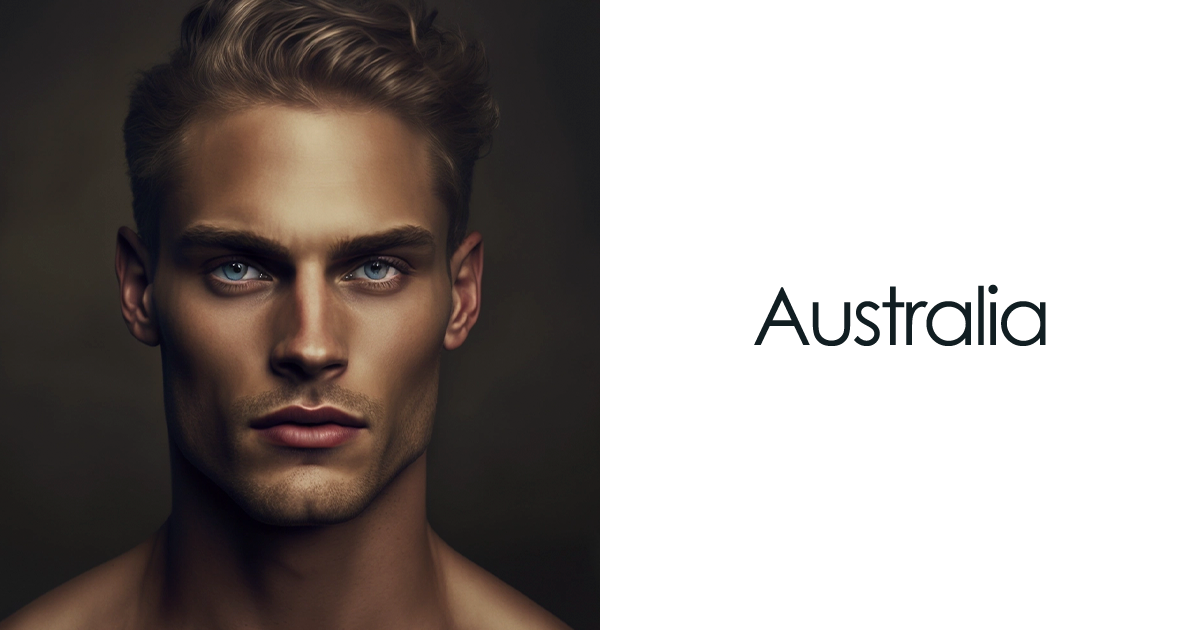
14. Australia: Fresh, Sunlit, and Casual
For Australia, AI might imagine beachy hair, fresh skin, light makeup, athletic ease, and outdoor confidence. The “sunlit natural” look appears often in lifestyle media, especially because Australian beauty branding frequently emphasizes SPF, simplicity, and healthy skin. Still, the country is multicultural, and an AI portrait that only shows one coastal ideal ignores Indigenous Australians, immigrant communities, city style, alternative fashion, and mature beauty.
15. Global Composite: The Internet’s “Average Beautiful Face”
The global composite may be the most revealing picture of all. AI might combine symmetry, youth, smooth skin, full lips, thick hair, high cheekbones, and polished lighting into one face that looks familiar but belongs nowhere. This is the algorithmic beauty standard: attractive, marketable, smooth, and slightly unreal. It is not global beauty. It is global internet beauty, filtered through platforms, ads, celebrity photos, and whatever images were easiest for the machine to learn from.
Why These AI Beauty Pictures Go Viral
AI beauty portraits go viral because they mix curiosity with comparison. People want to see how their country is represented. They want to argue with the result. They want to say, “Absolutely not,” and then send it to five friends. That emotional reaction is part of the appeal.
They also work because beauty is personal. A map of national foods is fun, but a map of national beauty standards feels intimate. It touches identity, race, gender, desirability, belonging, and insecurity. When AI produces a face and labels it “beautiful,” it can feel like the machine is judging everyone who does not match it. That is why these images should be handled carefully.
There is also a technical reason they spread quickly: AI images are optimized for instant recognition. They exaggerate visual symbols. They make skin extra smooth, eyes extra bright, clothes extra polished, and lighting extra dramatic. The pictures are built to stop thumbs from scrolling. Unfortunately, the same qualities that make them clickable can also make them unrealistic.
The Big Problem: AI Can Reinforce Beauty Bias
AI does not invent bias from nothing. It learns from human-made data. If online media has long favored lighter skin, thinner bodies, younger faces, Eurocentric features, able-bodied presentation, or gender stereotypes, image generators may repeat those ideas with high-definition confidence.
This matters because beauty standards already affect real life. They shape confidence, dating, hiring, media visibility, fashion, cosmetics, and even mental health. Social media can intensify body comparison, especially when people spend hours looking at influencers, edited selfies, and algorithm-selected images. Add AI to that environment, and the standard can become even more impossible: not just edited humans, but humans who never existed.
The best response is not to panic or ban all AI art. The better response is media literacy. View AI beauty images as prompts for discussion. Ask what features appear repeatedly. Ask who is missing. Ask whether age, disability, body size, skin tone, and cultural clothing are represented with care or reduced to decoration. Most importantly, ask whether the image expands beauty or shrinks it.
What These Images Teach Us About Real Beauty
The irony of AI beauty standards is that they can make real beauty look more interesting. A generated face may be flawless, but flawless is not always memorable. Real beauty has texture, asymmetry, personality, age, movement, humor, and history. It is the gap in someone’s teeth, the silver in their hair, the scar with a story, the laugh lines that prove they have been using their face for joy.
Across countries, beauty ideals change because people change. Migration changes beauty. Music changes beauty. Film changes beauty. Fashion changes beauty. Social movements change beauty. The internet speeds everything up, mixing local traditions with global trends. A teenager in Mexico City may copy a Korean skin-care routine, while a creator in Seoul may use makeup inspired by Black American beauty influencers. A bride in India may blend regional jewelry with global runway styling. A student in Paris may reject the classic French look and go full neon eyeliner because life is short and eyelids are available.
That is the future of global beauty standards: not one universal ideal, but endless remixing. AI can show us the patterns, but humans decide what those patterns mean.
Experience Section: What It Feels Like to Look at AI Beauty Standards
Looking at AI-generated beauty portraits is a strange experience. At first, it feels like opening a glossy magazine from the future. The faces are smooth, the lighting is perfect, the hair behaves better than most people’s Wi-Fi, and every image seems ready for a luxury perfume campaign. You scroll through country after country, thinking, “Wow, this is beautiful.” Then a second thought arrives: “Wait, why do so many of these people look like they were designed by the same committee?”
That is when the fun becomes more complicated. AI beauty pictures can be entertaining, but they can also make viewers compare themselves to a fictional standard. A real person may look at an AI portrait from their country and wonder why they do not match it. Their nose is different. Their skin is darker. Their body is bigger. Their hair is curlier. Their face is older. Their style is less polished. Suddenly, an image that was supposed to be a cultural experiment starts acting like a mirror with bad manners.
The healthier experience is to treat these pictures like visual essays, not instructions. They are not saying, “This is how you should look.” They are saying, “This is what the internet has frequently rewarded, uploaded, tagged, filtered, and repeated.” That shift matters. It moves the pressure away from the viewer and puts the spotlight back on the system that created the image.
Many people have had the experience of traveling, studying abroad, or simply meeting people from different backgrounds and realizing that beauty is far bigger than the version they grew up with. A person who felt “too tall” in one place may feel elegant somewhere else. Someone who was teased for curly hair may later see those curls celebrated online. A skin tone that one culture tried to lighten may be admired in another. A body shape that fashion once ignored may become the center of a new style movement. Beauty standards are powerful, but they are not permanent laws. They are social weather.
AI adds a new layer to this experience because it shows us how quickly digital culture can manufacture an ideal. But it also gives us a chance to question that ideal. When an AI portrait looks too narrow, viewers can push back. When it excludes darker skin, older faces, larger bodies, textured hair, or cultural nuance, people can say so. That criticism is not negativity. It is participation. It is how beauty becomes less like a locked door and more like a crowded, colorful room where more people get to enter.
The best way to view “15 Pics of How AI Sees Global Beauty Standards In Various Countries” is with curiosity and a sense of humor. Enjoy the artistry. Notice the patterns. Laugh at the suspicious perfection. Then remember that no algorithm gets the final word on beauty. The machine can generate a face. It cannot measure presence, kindness, confidence, wit, resilience, or the way someone becomes more beautiful when they are fully themselves.
Conclusion
AI-generated beauty standards are not the truth about countries; they are the truth about data. They reveal what online culture has repeated, rewarded, and polished into visibility. In that sense, the images are useful. They show us how beauty ideals travel through social media, fashion, entertainment, advertising, and algorithms. They also remind us that representation matters. When AI shows only one kind of beauty, it is our job to ask for more.
The most exciting future is not one where every country gets a single perfect AI face. It is one where beauty becomes too diverse, too personal, and too alive for any machine to summarize neatly. That may be inconvenient for algorithms, but it is excellent news for humans.