
Editor’s note: This article explores the design ideas behind body-responsive tattoos. It is not medical advice. Anyone considering a tattoo should choose a licensed professional, follow studio aftercare instructions, and seek medical care for signs of infection or an unusual skin reaction.
Most tattoos sit politely on the skin. They are lovely, sure, but they largely behave like tiny paintings: look at them, admire them, move along. Then there are tattoos that refuse to stay still. They stretch, bend, squish, and suddenly reveal a second message when an elbow folds or a knee snaps into position. These are not merely tattoos. They are visual punchlines with a pulse.
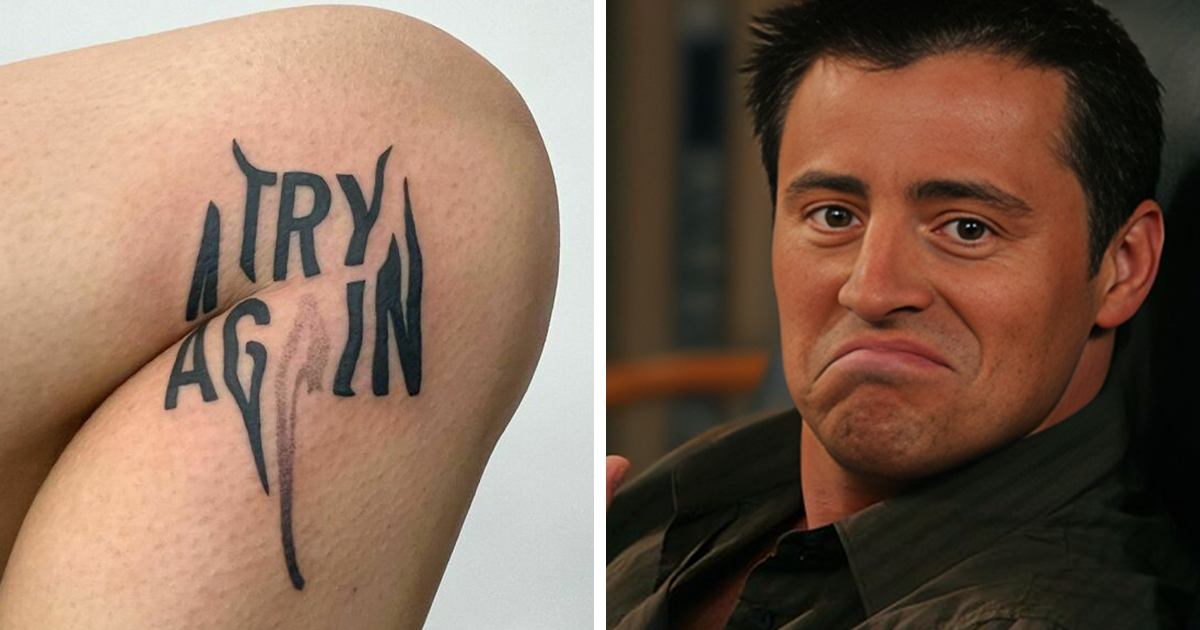
That is the creative territory explored by Los Angeles tattoo artist Tia Naayem, known online as @delicatesquash. Her work has drawn attention for turning the body itself into part of the artwork. A phrase can look abstract when a leg is straight, then become readable when the wearer bends a knee. A word may curve around a joint, appear broken, or become whole only when the body moves. It is equal parts typography, optical illusion, anatomy, and the kind of cleverness that makes someone say, “Wait, hold onbend your leg again.”
The result is a fresh take on hidden-meaning tattoos. Instead of hiding a message in microscopic lettering or a secret symbol, these designs hide meaning in motion. The wearer becomes a living flipbook, except with more moisturizer and fewer paper cuts.
The Real Trick: The Body Is Part of the Design
A tattoo that changes with movement
Traditional tattoo design often treats skin like a canvas. That makes sense on a broad, relatively flat area such as the upper arm, back, or thigh. But knees, elbows, shoulders, and ankles are not flat surfaces. They crease, rotate, stretch, and occasionally make alarming noises when you stand up too quickly.
Naayem’s hidden-meaning tattoo style embraces that movement instead of fighting it. Her lettering and shapes are created around the way a joint naturally bends. The “distortion” is intentional. A design may look fragmented in one pose and suddenly lock into place in another, much like a secret message appearing in a magic-eye posteronly this version may require lunges.
Why warped lettering feels so powerful
Words carry meaning before the viewer even understands them. When a phrase is stretched across a knee or curved around an elbow, it becomes temporarily unreadable. That visual tension makes the eventual reveal more satisfying. The viewer has to pause, look again, and see the tattoo in motion.
It is a smart artistic move because the visual form reflects the message. A phrase about resilience can bend without breaking. A phrase about change can transform as the wearer moves. A phrase about perception can be difficult to perceive at first glance. In the best hidden-meaning tattoos, the concept is not just written on the skin; it is built into the way the skin moves.
Meet the Artist Behind the Moving Messages
Tia Naayem’s path into tattooing began with a creative itch that would not go away. Before becoming a tattoo artist, she worked in film and spent much of her free time drawing. After experiencing the tattoo process herself, she became interested in the unusual meeting point between art and biology. That fascination makes sense when you see her work: her designs are not simply placed on the body but designed with the body.
Her portfolio moves between surreal imagery, abstract forms, warped text, bold blackwork, realism, and visual jokes that land differently depending on the viewer’s angle. For her knee and joint tattoos, the approach is deeply custom. The phrase, placement, flexibility, and proportions are considered together. In other words, this is not a “copy this image from Pinterest and hope for the best” situation.
That custom process is one reason the work feels so personal. The body is not a blank mannequin. One person’s knee bend, muscle shape, and preferred stance will differ from another’s. A successful movement-based tattoo has to acknowledge that reality. Skin is not printer paper, and thankfully nobody is trying to feed an elbow through a laser printer.
30 Clever Tattoo Ideas That Hide Meaning in Plain Sight
The following examples interpret the design language behind clever, body-responsive tattoos. Some are inspired by themes seen in Naayem’s work, while others show how the same visual logic can be adapted into a meaningful custom tattoo.
-
1. “Bend, Don’t Break” Across the Knee
This phrase becomes more meaningful when placed over a joint built to bend. It is a compact reminder of resilience: flexibility is not weakness, and recovery does not have to look perfectly straight.
-
2. “Overhead” Hidden at the Elbow
A word connected to direction or location becomes funnier when it reveals itself only after the arm moves. It is a simple idea with a wonderfully literal payoff.
-
3. “Do Not Perceive” in Distorted Lettering
This design makes the viewer work to read a phrase about not being seen. It is playful, slightly mysterious, and perfect for anyone who prefers to be interesting rather than easily explained.
-
4. “Breathe Deeper” Along the Leg
Breathing-themed tattoos often lean soft and serene. Distorted lettering gives the message a more physical quality, as though the words themselves are expanding and contracting.
-
5. “Tunnel Vision” Wrapped Around a Joint
The lettering can narrow, curve, and disappear into itself. The visual effect mirrors the phrase without needing a neon arrow labeled “metaphor.”
-
6. “Make It Happen” That Assembles When You Move
A motivational phrase becomes less generic when the wearer has to physically shift to make it visible. Suddenly, the tattoo has a tiny built-in action plan.
-
7. “Flying Out of Space” in Extended Typography
Elongated letters can make a phrase feel like it is being pulled, launched, or stretched into another dimension. It is ideal for someone whose brain has been running on cosmic chaos since middle school.
-
8. “Feel Something” With Broken Letterforms
A message about emotion can appear incomplete until the body moves. That uncertainty gives the phrase emotional texture without turning it into a greeting-card slogan.
-
9. “Break the Mold” With Cracked Shapes
Letters can appear to burst through a geometric frame or split across a moving joint. The design says independence without requiring a full inspirational poster behind it.
-
10. “I’ll Be Right Here” on a Hidden Area
A private placement gives the phrase intimacy. It can function as a quiet reminder to stay grounded, especially when life begins acting like it has twelve browser tabs open.
-
11. A Balloon That Changes Expression
A balloon can look sad with the leg straight and cheerful with the knee bent. The design turns mood into movement, proving that emotional complexity can fit inside one tiny floating object.
-
12. A Two-Part Heart That Joins at the Elbow
When the arm bends, two incomplete forms meet and become a heart. It can represent connection, healing, partnership, family, or simply an appreciation for excellent geometry.
-
13. A Diver Entering a Frame
A diver can appear to jump into a rectangular shape as the limb shifts. This creates a visual story about curiosity, risk, imagination, or diving headfirst into a questionable group chat.
-
14. A Wolf Built From Lettering
Words can be shaped into an animal silhouette, allowing a personal phrase to become visible only after the viewer studies the image. It is a strong choice for anyone who likes symbols with a second layer.
-
15. A Spill That Looks Like It Is Moving
An ink design resembling spilled wine, paint, or liquid can use the curve of an arm to create motion. It is a wonderfully dramatic option for people who appreciate artful messiness.
-
16. A Map Line That Becomes a Word
A winding route can look like a geographic line from afar and become a meaningful word up close. It suits travelers, homebodies with one favorite road trip, and people who get lost inside malls.
-
17. A Plant Stem That Straightens Into a Phrase
Fine-line botanical tattoos can hide a short message in the stem or leaves. When the limb stretches, the letters separate and become easier to read.
-
18. A Doorway That Opens at the Knee
A rectangular doorway can appear closed when the leg is straight and open when bent. It can symbolize change, opportunity, privacy, or the fact that everyone needs a little emotional storage closet.
-
19. A Sun That Rises With the Elbow
Rays can radiate outward only when the arm bends. The tattoo becomes a mini sunrise in motion, which is much more reliable than actually waking up at sunrise.
-
20. A Wave That Breaks at the Joint
Water is naturally suited to curved anatomy. A wave can crest over a knee or elbow, revealing a hidden word such as “return,” “drift,” or “steady.”
-
21. A Star Map That Reveals a Date
Dots and connecting lines can look like a constellation until the viewer spots a meaningful date built into the pattern. It is subtle, personal, and less likely to require an explanation during Thanksgiving dinner.
-
22. A Snake That Becomes an Infinity Symbol
A serpent wrapped around a limb can form an infinity loop from one angle and a flowing line from another. The double image adds meaning without clutter.
-
23. A Mirror Phrase
One word can be designed to read normally from one direction and transform into another phrase when reflected or viewed upside down. It is especially effective for ideas involving identity, duality, or change.
-
24. A Paper Airplane With a Hidden Name
The folds of a tiny airplane can conceal initials or a short name. It is sentimental without being overly obvious, which is often the sweet spot for meaningful tattoos.
-
25. A Flower That Blooms When the Arm Bends
Petals can appear compressed when the arm is straight and open when the elbow bends. The movement turns a floral tattoo into a little mechanical miracle.
-
26. A Broken Chain That Reconnects
Segments of a chain can line up only in one pose. This works beautifully for themes of recovery, freedom, reconciliation, or putting your life back together one slightly confusing piece at a time.
-
27. A Shadow That Reveals Another Shape
A blackwork shape can cast a visual “shadow” that forms a second image. It is a more abstract hidden-meaning tattoo and rewards people who enjoy looking twice.
-
28. A Pair of Eyes That Close and Open
The crease of a joint can become the eyelid line. When the body moves, the eyes seem to blink. It is surreal, theatrical, and delightfully strange in the best possible way.
-
29. A Zipper That Opens Into a Message
A zipper-shaped tattoo can reveal a phrase beneath it, suggesting vulnerability, humor, transformation, or the vague sensation that your emotional software needs an update.
-
30. A Tiny Object With a Giant Personal Story
The most effective hidden-meaning tattoo may be the simplest: a familiar object with a private association. A spoon, key, moth, cassette tape, or childhood snack can carry a full novel without printing a single paragraph.
Why Hidden-Meaning Tattoos Feel More Personal
There is something satisfying about art that does not reveal everything immediately. A hidden-meaning tattoo creates a relationship between the wearer and the viewer. The wearer knows the secret. The viewer gets a clue. Movement becomes the key.
That does not mean every tattoo needs a profound backstory involving destiny, three moons, and a relative who once owned a mystical lighthouse. A tattoo can be meaningful because it marks a time, a relationship, a place, a joke, a favorite image, or a feeling that is hard to explain. It can also be meaningful because it simply looks fantastic. Beauty is allowed to have its own resume.
Still, the best movement-based tattoos make their visual trick serve the larger idea. A phrase about resilience works on a knee because knees bend. A phrase about perspective works when it is unreadable from one angle. A heart that joins when an elbow folds becomes more than a heart; it becomes a small act of connection.
Before Getting a Hidden-Meaning Tattoo
Test the idea in every position
Ask the artist to consider how the design looks while standing, sitting, walking, bending, and relaxing. A tattoo around a joint should not only look good in the single pose used for the photo. It has to live with the body in ordinary life.
Choose an artist for the specific style
Look beyond fresh tattoo photos. Ask to see healed work, lettering examples, and tattoos placed on moving areas such as knees, elbows, hands, and ankles. A talented illustrator is not automatically the best choice for warped typography or anatomy-based optical illusions.
Keep readability realistic
Very small lettering, overly delicate lines, and high-friction placements can age unpredictably. A design may need more spacing, thicker lines, or a simpler phrase than the original idea. That is not the artist ruining your dream. That is the artist helping your dream survive contact with real skin.
Respect cultural symbols
Research symbols with sacred, ceremonial, historical, or community-specific meaning before using them. A tattoo can celebrate an influence without borrowing a cultural practice carelessly. When in doubt, choose imagery connected to your own story or work with an artist who understands the tradition.
Experiences With Hidden-Meaning Tattoos: What They Teach Us About Art and Identity
People are often drawn to hidden-meaning tattoos because they want something that feels personal without becoming a billboard. A visible tattoo can invite conversation, but a body-responsive design allows the wearer to control the reveal. The message is there, yet it is not always available on demand. That small amount of privacy can feel powerful. You may wear the art every day, while only a few people ever notice how it changes when you bend your arm or shift your leg.
There is also a playful experience built into these tattoos. They are not frozen images. They create a moment. Someone notices a strange stretch of lettering, asks about it, and then watches the design transform when the wearer moves. In a world where many conversations begin with a phone screen, a tattoo that requires someone to look closely can become a surprisingly human icebreaker. It says, “Yes, this is permanent, but it also has a party trick.”
For many people, the design process is just as meaningful as the finished tattoo. Choosing a phrase, discussing placement, and testing how the artwork will move can lead to useful self-reflection. What message would you want to carry with you? What part of your body feels like the right place for it? Would you rather have a reminder that is visible to everyone or one that appears only when you decide to reveal it? Those questions can be more revealing than the tattoo itself.
Movement-based tattoos can also change the way people think about their bodies. Joints, scars, curves, and muscles are often treated as obstacles in design. This style treats them as collaborators. A knee is no longer just a knee; it can become the hinge of a sentence. An elbow can become a flower opening. A scar can become part of a path, a bolt of lightning, or a repaired line. The body’s ordinary changes are not flaws in the design. They are what make the design work.
Of course, the experience is not always effortless. Tattooing around joints can be uncomfortable, and a clever concept still has to be practical. The artist may recommend changing the size, simplifying the lettering, moving the placement, or choosing a different phrase. Those adjustments can feel disappointing at first, but they often protect the long-term quality of the tattoo. A design that survives years of movement, sun exposure, friction, and everyday life is more impressive than one that only looked good for a dramatic reveal video.
Ultimately, hidden-meaning tattoos remind us that personal art does not have to shout. It can whisper, bend, distort, disappear, and reappear. It can make sense only to its wearer. It can be a private reminder, a clever joke, a memory, a symbol of change, or simply a beautiful oddity that makes someone smile. And honestly, any artwork that gets more interesting when you squat deserves at least a little admiration.
Final Thoughts
Tia Naayem’s work shows why clever tattoos are more than a trend. By using movement, warped typography, and custom placement, she turns skin into an active part of the storytelling. The tattoo is not fully complete until the body moves, which makes every bend, stretch, and turn part of the art.
Whether you are considering a hidden-meaning tattoo, a meaningful phrase, an optical illusion design, or simply a small piece of personal ink, the lesson is the same: the strongest tattoos work with the body, not against it. Choose a message that matters, choose an artist whose healed work earns your trust, and make room for the delightful possibility that your knee may become the smartest part of your outfit.