
Classic TV trivia is like finding a mint-condition remote in the couch cushions: oddly thrilling, slightly dusty, and guaranteed to make someone say, “Wait, seriously?” From the three-camera magic of I Love Lucy to the emotional intelligence of Mister Rogers’ Neighborhood, vintage television was not just comfort food with laugh tracks. It was a laboratory where producers, writers, actors, sponsors, censors, and occasionally very nervous network executives invented the rules of modern entertainment while wearing aggressively sensible shoes.
Below are 30 tweed bits of classic TV triviasmall, textured facts with a scholarly cardigan vibe. Some are funny. Some are surprisingly influential. A few may make your brain itch in the best possible way, like discovering that your favorite old sitcom was also quietly rewriting television history.
Why Classic TV Trivia Still Matters
Classic television shows did more than fill living rooms before streaming, smartphones, and algorithms started recommending “because you watched one episode of a cooking show in 2017.” They shaped American comedy, family storytelling, children’s education, social commentary, and rerun culture. Many old TV shows were produced under strict technical limits, sponsor pressure, and cultural taboos. Yet those limits often forced creators to become sharper, funnier, and sneakier.
That is why classic TV trivia is not just nostalgia. It is TV history in pocket-size form. Every behind-the-scenes decision tells us something about how entertainment evolves: what audiences accepted, what networks feared, and what artists managed to slip past the gatekeepers with a smile, a wink, or one perfectly timed nose twitch.
30 Classic TV Trivia Bits That Deserve Their Own Tiny Plaque
1. I Love Lucy Helped Invent the Sitcom Look We Still Know
I Love Lucy did not merely become a hit; it helped define how sitcoms would be made. The show used multiple cameras, filmed on 35mm film, and played to a live studio audience. That combination gave episodes the energy of theater and the durability of cinema. Translation: Lucy Ricardo’s chaos was preserved like a museum artifact, only with more grape-stomping.
2. Lucille Ball’s Pregnancy Became a Television Milestone
When Lucille Ball became pregnant, I Love Lucy incorporated the pregnancy into the show, a daring move for early 1950s television. Network rules were so delicate that the word “pregnant” was avoided, with softer terms such as “expecting” doing the heavy lifting. It sounds ridiculous now, but at the time, even fictional maternity had to tiptoe politely through the living room.
3. Little Ricky’s Birth Was Scheduled Like a National Event
The episode in which Lucy Ricardo gave birth aired close to the real-life birth of Desi Arnaz Jr. It became one of early television’s biggest audience moments. In modern terms, it was appointment television before appointment television needed a calendar alert, three push notifications, and a group chat.
4. Reruns Got a Major Boost from Lucy and Desi
Because I Love Lucy was filmed rather than simply broadcast live and forgotten, it could be rerun and syndicated. That helped prove old episodes could have new economic life. Every time you binge a vintage sitcom today, you can quietly thank Lucy, Desi, and a business model that aged better than most 1950s kitchen wallpaper.
5. The Twilight Zone Used Fantasy to Talk About Reality
Rod Serling’s The Twilight Zone was full of aliens, time loops, haunted towns, and strange dimensions, but its real subject was humanity. By using science fiction and fantasy, Serling could explore prejudice, war, fear, conformity, and moral failure while dodging some of the censorship that blocked more direct drama. The monsters were often human, which remains inconveniently accurate.
6. Rod Serling’s War Experience Shaped His Writing
Serling served in World War II and experienced combat in the Philippines. That trauma echoed through his work, especially in stories about fear, cruelty, memory, and the cost of violence. The Twilight Zone may look like a spooky anthology, but under the fog machine sits a serious moral engine.
7. M*A*S*H Ended With a Ratings Earthquake
The 1983 finale of M*A*S*H, “Goodbye, Farewell and Amen,” drew a massive audience and became one of the most famous television events in U.S. history. Its success showed how deeply a comedy-drama about war, friendship, grief, and survival had lodged itself in American culture. Not bad for a show that made viewers laugh and then emotionally ambushed them with surgical precision.
8. Sesame Street Was Built Like Educational Rocket Science
Sesame Street premiered in 1969 with a mission: teach children using television’s own language. The show mixed humor, music, animation, Muppets, repetition, and research-driven learning. It understood that children could learn letters and numbers while also enjoying a giant yellow bird, a grouchy trash-can philosopher, and a vampire who was very committed to arithmetic.
9. Mister Rogers’ Neighborhood Turned Routine Into Comfort
Fred Rogers’ cardigan-and-sneakers ritual was not random wardrobe fluff. His routine signaled calm, safety, and transition. Children knew what was coming, and that predictability mattered. In a louder television universe, Mister Rogers lowered his voice and somehow became impossible to ignore.
10. Fred Rogers’ Sweater Became a Museum-Worthy Object
One of Fred Rogers’ famous cardigans is preserved by the Smithsonian, which feels exactly right. It is hard to think of another piece of television clothing that says so much with so little sparkle. No cape. No armor. Just a cardigan powerful enough to make generations of viewers feel personally welcomed.
11. Star Trek Made Social Commentary Look Like Space Adventure
The original Star Trek used planets, aliens, and starships to examine very earthly problems. Its famous Kirk-and-Uhura kiss is often discussed as a landmark moment in American network television history, especially because it placed a Black woman and a white man in an intimate scene during a deeply divided era. The future, apparently, arrived wearing velour.
12. All in the Family Turned the Sitcom Into a Debate Stage
Norman Lear’s All in the Family brought controversial subjects into prime-time comedy, including racism, politics, religion, gender roles, and generational conflict. Archie Bunker was not just a character; he was a walking argument in a chair. The show proved that sitcoms could make audiences laugh while also making dinner feel suddenly awkward.
13. The Mary Tyler Moore Show Helped Redefine the TV Heroine
Mary Richards was single, professional, independent, and not treated as a tragic cautionary tale because she did not begin every episode shopping for a husband. The Mary Tyler Moore Show made workplace comedy warmer, smarter, and more modern. It also helped build one of the best ensemble casts in sitcom history.
14. The Mary Richards Hat Toss Became Cultural Shorthand
The opening credits of The Mary Tyler Moore Show end with Mary tossing her hat into the air in downtown Minneapolis. It is a tiny gesture, but it became a symbol of optimism and self-determination. Some TV images explain an entire character in two seconds. This one did it with wool.
15. The Andy Griffith Show Theme Has Lyrics
Most viewers know the whistled theme from The Andy Griffith Show, but the melody also had lyrics under the title “The Fishin’ Hole.” The whistling itself became so iconic that words almost feel unnecessary. Honestly, adding lyrics to that tune is like putting a necktie on a golden retriever: technically possible, but not required.
16. Don Knotts Was Not Supposed to Become That Important
Don Knotts’ Barney Fife became one of television’s great comic creations, but the role expanded because the chemistry between Knotts and Andy Griffith was too good to ignore. Barney’s shaky confidence, tiny authority, and Olympic-level panic gave Mayberry its most lovable human alarm bell.
17. The Honeymooners “Classic 39” Is Shockingly Short
The most famous half-hour version of The Honeymooners consists of only 39 episodes from the 1955–1956 season. That is a tiny number compared with many sitcoms, yet Ralph, Alice, Ed, and Trixie remain permanently installed in TV history. Proof that impact is not always measured in episode count; sometimes it is measured in how loudly someone says, “To the moon!”
18. Bewitched Found Magic in a Nose Twitch
Elizabeth Montgomery’s Samantha Stephens made magic with a signature nose twitch, a small physical gag that became one of classic TV’s most recognizable gestures. It was charming, quick, and economical. Modern superhero shows need explosions. Samantha needed half a second and excellent nasal control.
19. The Brady Bunch Was Inspired by Changing American Families
The Brady Bunch emerged from the idea that blended families were becoming more visible in American life. The show softened complicated family structure into cheerful pop design, matching outfits, and a theme song that could colonize your brain for decades. It made domestic rearrangement look like a staircase full of smiling headshots.
20. The Brady House Became More Famous Than Most Real Houses
The exterior house used for The Brady Bunch became a pop-culture landmark even though the famous interior staircase did not match the real home. Television has always been excellent at architectural fibbing. If classic TV taught us anything, it is that a house can be bigger on the inside when the studio needs it to be.
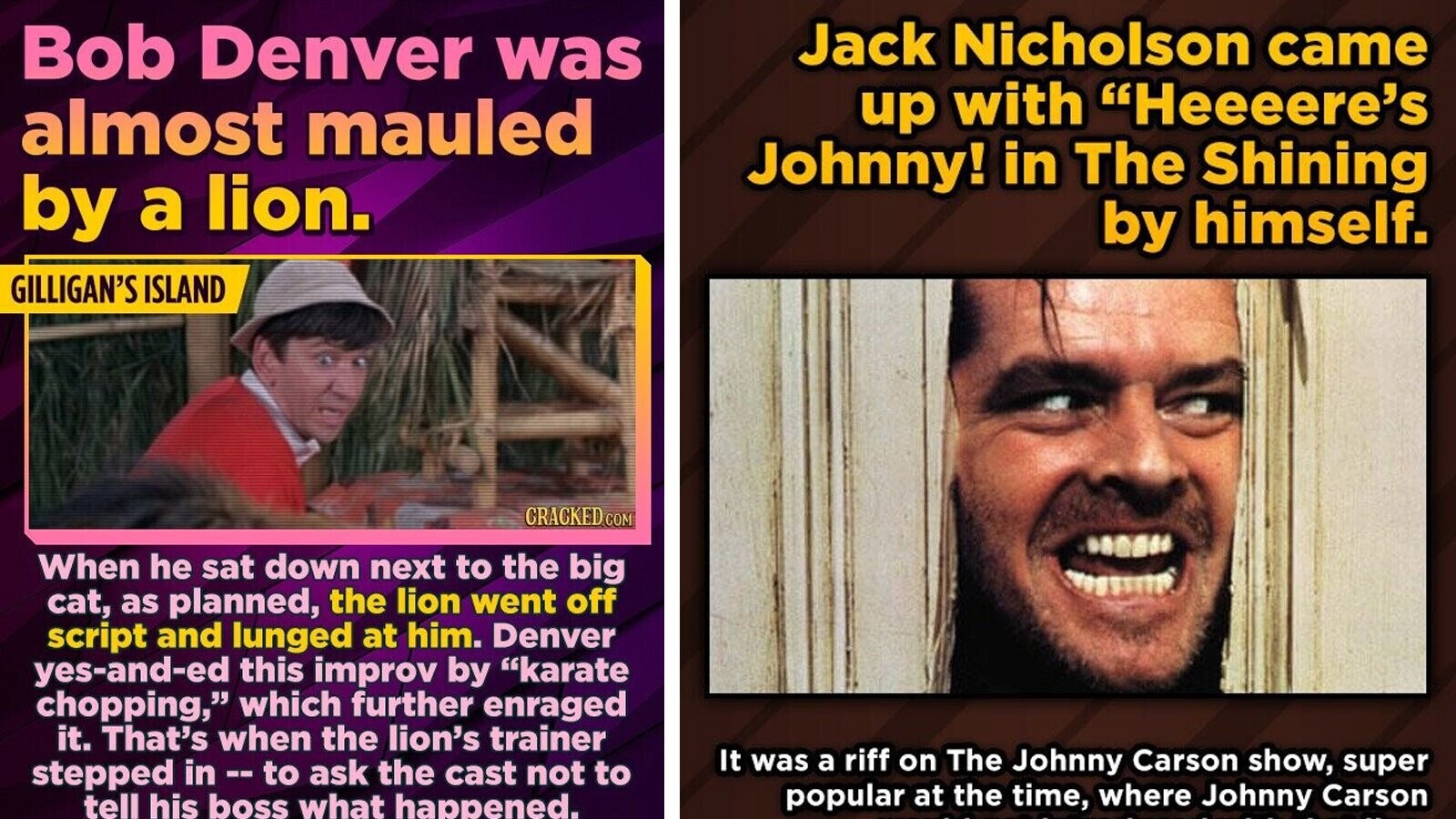
21. Gilligan’s Island Changed Its Theme Song Credits
Early versions of the Gilligan’s Island theme grouped the Professor and Mary Ann under “and the rest.” Later, the theme named them directly. That change mattered because opening credits were status, visibility, and respect rolled into a catchy little sea shanty. Nobody wants to be “and the rest” forever.
22. Happy Days Turned a Side Character Into a Phenomenon
Arthur “Fonzie” Fonzarelli was not originally the whole center of Happy Days, but Henry Winkler’s charisma made the character explode in popularity. The Fonz became a leather-jacketed icon of cool, despite spending much of his time in a restroom-adjacent office at Arnold’s. Television fame is mysterious and apparently very good with jukeboxes.
23. The Golden Girls Made Aging Funny, Sharp, and Marketable
The Golden Girls centered older women as witty, romantic, flawed, and independent at a time when television often treated age like a storage closet. Dorothy, Blanche, Rose, and Sophia were not side characters in someone else’s life. They were the main event, and cheesecake was their emergency meeting software.
24. All Four Golden Girls Won Emmys
Each of the four principal actresses on The Golden Girls earned Emmy recognition, a remarkable achievement for an ensemble comedy. The awards confirmed what audiences already knew: this was not just a sweet sitcom about roommates. It was a precision comedy machine disguised as a Miami living room.
25. Cheers Had a Slow Start Before Becoming a Giant
Cheers became one of the most beloved sitcoms of the 1980s and 1990s, but it did not begin as an instant ratings monster. Its growth showed the value of patience, strong writing, and characters people wanted to revisit. Sometimes the place “where everybody knows your name” needs a little time for people to learn the address.
26. The Cheers Finale Was a National Goodbye
When Cheers ended in 1993, tens of millions of viewers watched the closing of Sam Malone’s bar. The finale became a shared cultural moment, the kind of TV event that made people discuss fictional bartenders as if they were moving out of the neighborhood.
27. The Dick Van Dyke Show Made Writers’ Rooms Look Fun
The Dick Van Dyke Show gave viewers a behind-the-scenes comedy about television comedy itself. Rob Petrie’s work life with Buddy and Sally offered a clever peek at joke-making, deadlines, and show-business ego. It was meta before everyone started using the word “meta” at brunch.
28. Classic TV Theme Songs Were Tiny Branding Machines
Old TV theme songs did serious work. They explained the premise, introduced characters, set the tone, and sometimes summarized an entire pilot episode before the first line of dialogue. Today, many shows give you a moody title card. Classic TV gave you a full musical briefing and expected you to sing along.
29. Censors Accidentally Made Some Shows More Creative
Network restrictions often forced writers to imply, suggest, and joke around sensitive subjects. This could be frustrating, but it also created layered writing. Classic TV comedy often worked through double meanings, facial expressions, and carefully placed pauses. The writers were basically doing gymnastics in a room full of “no” signs.
30. Reruns Turned Classic TV Into Family Inheritance
Because so many classic shows reran for decades, they became cross-generational objects. A grandparent, parent, and child could all know Lucy, Barney Fife, Mister Rogers, Archie Bunker, or Sophia Petrillo. Reruns made television feel less like disposable entertainment and more like a living room heirloomonly louder and with better theme music.
What These Vintage Television Facts Reveal About TV History
The best classic TV trivia is not just “Did you know?” material. It reveals how American television grew up. Early sitcoms learned how to use live audiences, filmed episodes, ensemble chemistry, and repeatable formats. Children’s shows discovered that education could be entertaining without becoming a chalkboard with puppets stapled to it. Socially conscious programs proved that comedy could carry difficult conversations into homes that might otherwise avoid them.
Classic TV also reminds us that limitations can create style. Black-and-white cinematography, modest sets, sponsor restrictions, and broadcast schedules forced creators to focus on writing, performance, rhythm, and character. A show did not need twenty dragons and a moon-sized effects budget if it had Lucille Ball’s timing, Rod Serling’s moral imagination, or Bea Arthur’s ability to weaponize a stare.
For SEO readers searching for classic TV trivia, vintage television facts, classic sitcom facts, or fun facts about old TV shows, the big takeaway is simple: television history is full of accidental inventions. Reruns, ensemble sitcoms, socially relevant comedy, educational children’s programming, and the modern TV finale all have roots in shows that were trying to survive one week at a time.
A Viewer’s Experience: Why Classic TV Trivia Feels So Weirdly Personal
There is a special kind of joy in learning classic TV trivia because old television often feels like it belongs to everyone. Even if you did not watch these shows when they first aired, you probably met them somewhere: a weekend marathon, a grandparent’s living room, a hotel cable channel, a late-night rerun, or a streaming menu that looked at your modern anxiety and gently suggested The Golden Girls.
My favorite experience with classic TV is how quickly a small fact can change the way a familiar episode feels. Take I Love Lucy. On the surface, it is bright, silly, and elastic, built around Lucy getting herself into trouble with the confidence of a woman who has never once asked, “Should I maybe not?” But once you know how much the show changed production, reruns, and pregnancy on television, the slapstick gains another layer. Lucy is still funny, but now the laughter comes with a tiny footnote wearing tap shoes.
The same thing happens with Mister Rogers’ Neighborhood. A cardigan looks simple until you understand the ritual behind it. Fred Rogers was not merely changing clothes. He was creating a reliable emotional doorway for children. That makes the old episodes feel less quaint and more expertly designed. The man was doing gentle psychology while tying his sneakers, which is a level of multitasking most of us cannot reach before coffee.
Classic TV trivia also makes group conversations better. Mention that The Honeymooners has only 39 classic half-hour episodes, and someone will blink like their brain just tripped over a rug. Bring up the Gilligan’s Island theme change, and suddenly everyone is debating the dignity of “and the rest” as if it were a constitutional issue. Say that All in the Family turned the sitcom into a place for social conflict, and the conversation shifts from nostalgia to cultural history.
That is the real charm of vintage television facts: they let us watch twice. First, we watch the joke, the song, the catchphrase, the character entrance. Then we watch the machinery behind itthe production choice, the cultural risk, the network compromise, the actor’s instinct, the writer’s workaround. Classic TV becomes richer, not smaller, when we learn how it was made.
And yes, sometimes the trivia is just deliciously odd. A theme song has secret lyrics. A nose twitch becomes a special effect. A bar finale becomes a national event. A cardigan becomes worthy of preservation. These details are tiny, but they carry texture. They are tweed bits: warm, scratchy, old-school, and somehow stylish again.
In a media world where shows arrive by the truckload and vanish into the algorithmic mist, classic TV trivia gives us something sturdy to hold. It reminds us that television used to gather people at the same time, around the same jokes, with the same commercials interrupting everyone equally. That shared experience is harder to find now. Maybe that is why these old facts still feel alive. They are not just trivia. They are little signals from the living rooms that built pop culture.
Conclusion: Classic TV Trivia Is Comfort Food for Curious Brains
Classic television remains powerful because it combines simplicity with hidden complexity. The sets may look modest, the jokes may arrive on a familiar rhythm, and the theme songs may sound like they were written to be hummed by a cheerful uncle, but behind them sits a history of invention. These shows helped shape sitcom production, rerun economics, children’s media, workplace comedy, socially relevant storytelling, and the idea that television characters could become part of everyday American life.
So the next time you see Lucy Ricardo scheming, Fred Rogers changing sweaters, the Golden Girls gathering around cheesecake, or the crew of the Enterprise pretending space is just down the hall from a soundstage, remember: you are not only watching old TV. You are watching the blueprint. And if your brain feels a little itchy afterward, congratulations. That is the tweed working.
SEO Metadata