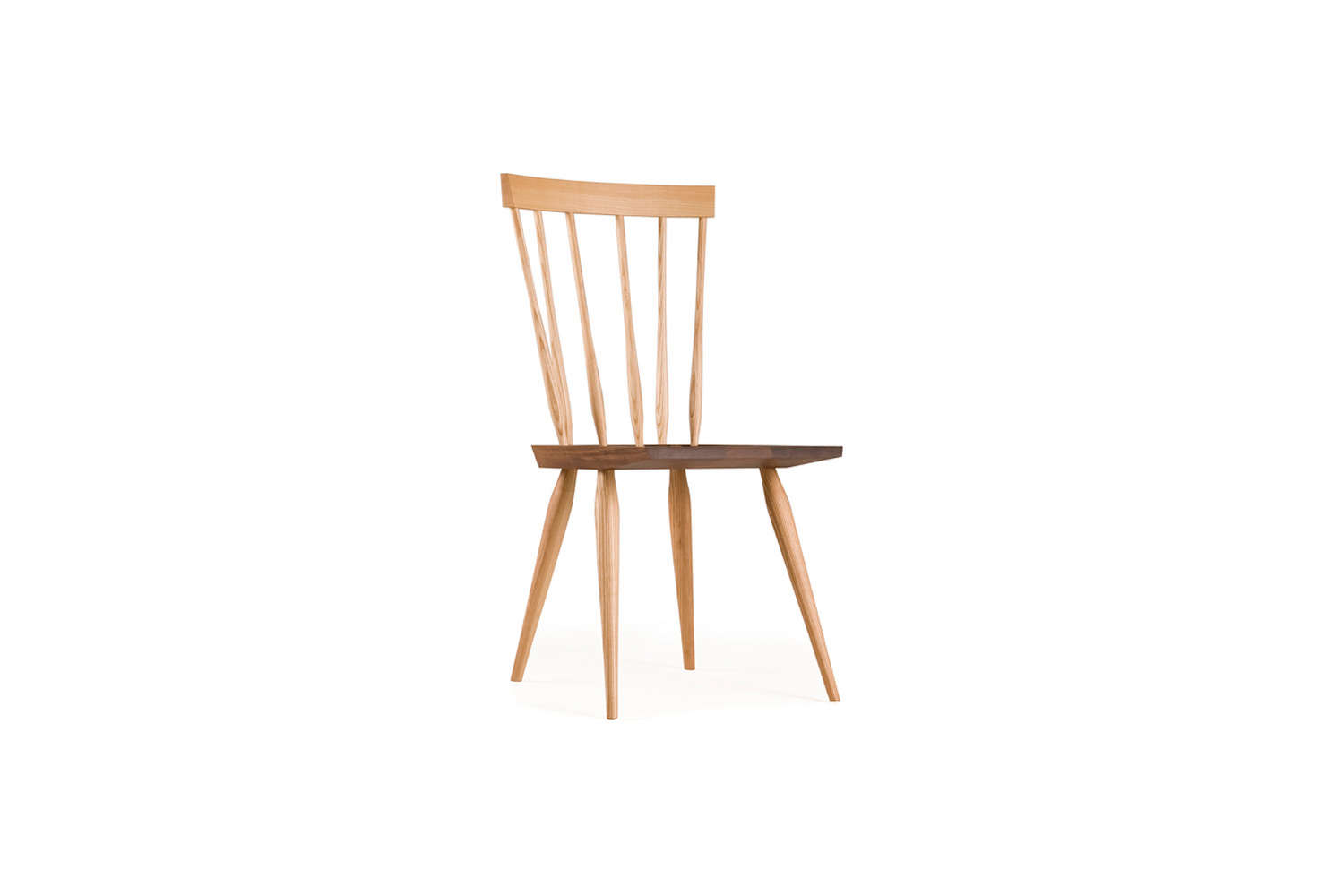

The 362 Hastoe Windsor Chair is what happens when a centuries-old English chair visits a modern design studio, gets a careful haircut, and returns looking considerably more sophisticated. Designed by British furniture designer Matthew Hilton and manufactured by De La Espada, the Hastoe preserves the recognizable spindle back, shaped wooden seat, splayed legs, and traditional joinery of a Windsor chair while removing nearly every decorative distraction.
This is not an inexpensive farmhouse chair assembled for a breakfast nook. It is a made-to-order piece of contemporary furniture built from solid European ash and American black walnut at De La Espada’s workshop in Portugal. Its model number is 362, its current U.S. list price is approximately $2,155, and its production lead time can stretch to several months. In other words, it requires more commitment than grabbing four chairs during a weekend furniture salebut it also offers considerably more character.
What Is the 362 Hastoe Windsor Chair?
The Hastoe is a contemporary wooden dining chair created by Matthew Hilton for his namesake collection with De La Espada. The number 362 is the manufacturer’s model code, not the number of spindles you must dust. Thankfully, there are far fewer.
According to De La Espada, the chair is named after Hastoe, a Buckinghamshire village near the High Wycombe region associated with English chairmaking. Hilton’s design was conceived as an evolutionary step rather than a nostalgic reproduction. It retains traditional Windsor construction principles but expresses them through slimmer components, cleaner transitions, and carefully controlled proportions.
The chair is also part of a broader Windsor-inspired family that includes dining and lounge variations. The 362 model is the upright dining version: compact enough to fit comfortably around a table, yet visually distinctive enough to work alone as an occasional chair in a bedroom, hallway, or reading corner.
The Windsor Chair Heritage Behind the Hastoe
A Design That Has Survived for Centuries
Windsor chairs began appearing in Britain during the early 18th century. Their exact birthplace is debated, but the design became strongly associated with English country furniture and later with chairmaking communities around the Thames Valley and High Wycombe. Early versions may have been used in gardens, porches, passages, and informal rooms before gradually earning a place at dining tables and in more formal interiors.
The style traveled to colonial America, where Philadelphia became an important center of Windsor chair production during the 18th century. American makers adapted the form into regional varieties with fan backs, bow backs, comb backs, writing arms, rockers, and other variations. Museum collections now preserve examples made in Pennsylvania, New England, and other parts of the country.
What Makes a Windsor Chair a Windsor Chair?
The defining feature is its construction. Instead of building a chair around two large rear posts extending from the legs to the top of the back, a Windsor chair uses a thick seat as its structural center. The legs enter the underside of that seat, while the back spindles enter the top. The seat functions almost like a wooden junction boxalthough much prettier and unlikely to contain confusing wires.
Traditional Windsor chairs commonly have a carved or “saddled” seat, turned legs, splayed geometry, and a back composed of thin spindles. These elements make the chair appear light while distributing forces through multiple joints. The format is flexible enough to be rustic, formal, colorful, sculptural, or highly minimal, which helps explain why designers continue revisiting it. Architectural Digest has described the Windsor as an unusually durable design archetype, while modern interpretations documented by Remodelista and Design Milk demonstrate how easily its structure can be simplified or translated into new materials.
How Matthew Hilton Modernized the Form
Hilton did not modernize the Windsor chair by disguising it. There are no plastic shells, shiny steel bases, or mysterious appendages requiring an instruction manual. Instead, he refined its familiar elements.
The back is made from a disciplined row of narrow ash spindles. A gently curved top rail connects them without overwhelming the silhouette. The legs taper as they move toward the floor, creating a lighter profile than the heavily turned legs found on many antique Windsors. The seat is shaped from contrasting walnut, providing a darker visual center within the lighter ash frame.
This reduction gives the chair a quiet architectural quality. Viewed from the front, it is orderly and symmetrical. From the side, the angled rear legs and backward sweep of the back reveal more movement. From above, the sculpted seat and visible leg joints become the main event. Hilton’s work is often characterized by attention to every viewing angle, and the Hastoe rewards the sort of person who walks around furniture admiring joinery while everyone else wonders when dinner will be served.
Materials: European Ash and American Black Walnut
Why Ash Works for the Frame
The Hastoe’s legs, spindles, stretchers, and back are made from solid European ash. Ash is particularly suitable for slender structural components because it offers strong performance relative to its weight, good shock resistance, and favorable bending properties. It also machines, glues, and finishes well.
Aesthetically, ash generally has a pale tone and visible grain. That lightness emphasizes the narrow spindles and keeps the chair from appearing bulky. Under a natural Danish oil or white oil, the grain remains part of the design rather than disappearing under an opaque coating.
Why Walnut Is Used for the Seat
The solid American black walnut seat introduces warmth and contrast. Walnut is a medium-density hardwood known for its rich brown color, dimensional stability, workability, and ability to take a refined finish. Those qualities make it appropriate for a broad, sculpted component that is both visually prominent and touched every time the chair is used.
The contrast is not merely decorative. It draws attention to the point where the ash legs pass through the walnut seat, exposing the wedge-tenon detail. On many chairs, a joint is something the maker tries to hide. Here, the joint gets better lighting than some actors receive in independent films.
Traditional Joinery and Modern Manufacturing
De La Espada produces the Hastoe in its solar-powered workshop in Portugal. The company combines computer-controlled machinery, product engineering, hand shaping, assembly, sanding, and hand-applied finishes. This hybrid method makes sense for a chair with repetitive precision in its spindles but subtle human judgment in its shaping and finishing.
The manufacturer uses traditional solid-wood joinery, including mortise-and-tenon and wedge-tenon construction. In a wedged joint, a tenon enters a corresponding hole or mortise and is expanded by a wedge. The result increases mechanical grip while creating a visible detail that can become part of the chair’s appearance. Fine Woodworking similarly notes that wedged mortise-and-tenon joints can add both strength and visual interest.
De La Espada states that its timber is sourced as sustainable solid wood from North America and Europe. The company also emphasizes repairable surfaces, traditional wood glue, and non-toxic finishes that are sprayed, rubbed, or otherwise applied by hand. These choices are significant because the Hastoe is marketed as a long-life object rather than temporary décor.
Dimensions and Everyday Comfort
The official dimensions of the 362 Hastoe Windsor Chair are approximately:
- Width: 19.7 inches
- Depth: 22.4 inches
- Overall height: 36.2 inches
- Seat height: 17.9 inches
These are practical dining-chair proportions. The width is generous enough for comfortable seating without demanding the floor space of an armchair, while the seat height works with many standard dining tables. Buyers should still compare the dimensions with their specific table, especially when fitting several chairs between table legs or beneath a substantial apron.
The seat is carved into a shallow saddle form rather than left as a flat board. This shaping helps distribute pressure and provides a more supportive sitting surface. The spindle back offers multiple contact points and some visual openness, although the Hastoe remains an unupholstered wooden chair. It is intended for upright dining, conversation, and occasional desk usenot for an eight-hour movie marathon involving three blankets and questionable snack decisions.
Comfort will depend on body shape and sitting habits. People who prefer firm, supportive seating may appreciate its directness. Those who expect deep cushioning should consider using a thin seat pad, provided it does not cover the walnut seat that accounts for much of the chair’s visual appeal.
Finish Options and Visual Character
De La Espada offers the Hastoe in Danish oil, white oil, or black oil finishes. One oil selection is applied across the entire chair, including the ash frame and walnut seat, although the two species continue to respond differently because of their natural color and grain.
Danish Oil
The Danish-oiled version provides the clearest expression of the ash-and-walnut contrast. It brings warmth to both species while allowing the darker seat to remain the visual anchor. This is the most natural choice for warm modern, Scandinavian, transitional, and contemporary rustic interiors.
White Oil
A white-oiled finish softens the timber colors and gives the chair a paler, quieter appearance. It can work well with light oak tables, limestone floors, neutral textiles, and rooms where visual brightness matters.
Black Oil
Black oil makes the silhouette more graphic. The spindle pattern becomes stronger, while the contrast between the two woods becomes subtler. It is an effective option for minimalist dining rooms, dramatic kitchens, or interiors that already use black architectural details.
How to Style the Hastoe Windsor Chair
The chair is refined, but it does not require an entire room to behave formally. Its historical foundation allows it to work with old and new furniture.
A set of Hastoe chairs can soften a sharply modern dining table by adding visible grain and traditional joinery. Around a farmhouse table, they create the opposite effect: the table supplies the rustic weight while the chairs introduce precision. A single Hastoe can also work beside a writing desk, near a console, or in a bedroom corner where an upholstered chair would feel too bulky.
Because the back is open, the chair preserves sightlines in smaller rooms. This makes it particularly effective around round tables or in apartments where solid-backed chairs might create a visual barricade. Remodelista has included the Hastoe among notable contemporary reinterpretations of the Windsor form, placing it within a larger movement of designers simplifying traditional spindle chairs for modern interiors.
Price, Lead Time, and Buying Considerations
As checked on July 28, 2026, the official De La Espada U.S. website lists the 362 Hastoe Windsor Chair at approximately $2,155. The official estimated lead time is around 20 to 22 weeks, while individual authorized retailers may display slightly different production or delivery estimates. Prices, freight charges, taxes, and timelines can change, so buyers should confirm the final details before ordering.
The price places the Hastoe firmly in the premium designer-furniture category. A set of four represents a substantial purchase before delivery costs. Its value therefore depends on what the buyer expects. Anyone primarily seeking an inexpensive place to sit can find hundreds of alternatives. The Hastoe makes more sense for someone who values authorship, solid hardwood, made-to-order production, visible joinery, repairability, and a design intended to remain relevant after the latest color trend has quietly left the building.
Before ordering, request timber or finish samples when available. Photographs can show the general appearance, but natural wood varies in tone and grain. Measuring the dining area is equally important. Allow space for pulling the chair away from the table and verify that the seat height and overall width suit both the table and the intended users.
Care and Long-Term Maintenance
Solid wood continues to respond to its environment after it becomes furniture. Changes in humidity can cause expansion, contraction, small checks, or temporary gaps. De La Espada recommends monitoring indoor humidity and aiming for approximately 50% relative humidity when practical. Chairs should be kept away from intense heat sources, persistently damp areas, and abrupt environmental changes.
For routine cleaning, use a soft dry cloth or a lightly dampened cloth rather than soaking the timber. Spills should be wiped promptly. Harsh cleaners, silicone polishes, abrasive pads, and improvised furniture remedies may change the sheen or damage the oil finish.
Oiled wood can eventually benefit from maintenance using manufacturer-approved oils or waxes. Minor marks are not necessarily disasters; one advantage of solid timber is that many scratches, dents, and worn areas can be treated by an experienced furniture specialist. De La Espada offers a five-year warranty and a lifetime repair service, although transportation, local labor, replacement materials, or factory logistics may involve additional costs.
Advantages and Possible Drawbacks
Notable Advantages
- Distinctive contemporary interpretation of a historic furniture type
- Solid European ash frame with a solid American black walnut seat
- Traditional wedge-tenon details remain visible
- Sculpted seat improves comfort without upholstery
- Open spindle back keeps the silhouette visually light
- Three oil-finish options suit different interior styles
- Repairable solid-wood surfaces support long-term ownership
Possible Drawbacks
- The premium price may be difficult to justify for a large dining set
- Made-to-order production requires patience
- Firm wooden seating will not suit everyone
- Natural timber requires reasonable humidity control and maintenance
- Wood grain and color variation make every chair slightly different
- The narrow spindles take longer to dust than one broad back panel
Who Should Consider the 362 Hastoe Windsor Chair?
The Hastoe is best suited to buyers who want a dining chair with a recognizable historical foundation but do not want a literal antique reproduction. It also appeals to people who prefer natural materials, subtle construction details, and furniture that can gain character as it ages.
It may be especially appropriate for carefully edited interiors where each object needs to contribute something meaningful. The chair does not shout, spin, recline, illuminate, or charge a phone. Its special effect is simply being unusually well resolved.
Budget-focused households, families expecting extremely rough use, and buyers who strongly prefer upholstered seating may find more practical alternatives. The Hastoe is less about maximizing features per dollar and more about maximizing design integrity per square inch.
A 500-Word Ownership Experience: What Living With the Hastoe May Feel Like
The following is an informed ownership scenario based on the chair’s documented dimensions, materials, construction, and care requirements. It is not presented as a claim of personal hands-on testing.
The first noticeable aspect of the Hastoe would probably be its visual lightness. Product photographs make the chair look delicate, but its full-size dining proportions become more apparent when it is placed beside a table. The spindles allow walls, windows, and neighboring furniture to remain visible, so even a set of four should feel less imposing than chairs with broad upholstered backs.
During the first sit, the walnut seat would likely attract attention before the back. Its shallow saddle shape should feel firmer than upholstery but more considered than a flat wooden panel. Instead of sinking into the chair, the sitter remains upright and centered. At breakfast, during a short meeting, or through an ordinary dinner, that support may feel refreshing. After several hours, someone accustomed to deep padding might begin negotiating with the nearest cushion.
The back would produce a different sensation from a solid wooden slab. Each spindle creates a narrow contact point, while the upper rail provides a broader place to lean. The experience should be supportive without visually or physically enclosing the sitter. Because there are no arms, getting in and out is straightforward, and the chair can slide more easily beneath many tables.
In daily use, the contrast between ash and walnut would probably become the most appreciated detail. Morning light may emphasize the pale frame, while warmer evening light deepens the walnut seat. The visible wedges at the leg joints offer a small moment of craftsmanship that is easy to miss initially and difficult to stop noticing later. This is the furniture equivalent of discovering a clever lyric in a song you have already heard twenty times.
The chair’s relatively compact width should make arranging multiple seats manageable. Four chairs around a round or rectangular table would create a balanced, orderly rhythm. Mixing Hastoe chairs with a dining bench or upholstered end chairs could provide more variety, although purists may prefer the repetition of matching spindles.
Cleaning would be simple in principle but slightly more detailed in practice. The seat can be wiped quickly, while the spindle back requires moving the cloth through several narrow spaces. Crumbs have an impressive ability to locate joinery, regardless of a chair’s price. Fortunately, the absence of fabric means there are no upholstery stains or seams collecting mysterious evidence from last Tuesday’s dinner.
Seasonal changes may be more noticeable than with veneered or synthetic furniture. In a dry, heated room, the solid timber can react to lower humidity. An owner who monitors the environment and follows the manufacturer’s care recommendations should be better prepared for natural movement. Small variations, marks, and changes in sheen can become part of the chair’s patina rather than signs that it has failed.
Guests may recognize the general Windsor shape without identifying the specific model. That is part of the Hastoe’s charm. It feels familiar before its details reveal how different it is from a conventional farmhouse chair. The design does not rely on a famous silhouette visible from across a showroom; it earns attention gradually through proportion, material, and construction.
Over several years, the greatest satisfaction would likely come from the chair’s ability to remain useful while changing subtly. The walnut may deepen, the oil finish may develop a softer sheen, and frequently touched areas may record daily use. Because the surface is solid wood rather than a printed imitation, careful maintenance or professional refinishing can address many signs of wear.
The realistic ownership verdict is therefore nuanced. The Hastoe will not feel luxurious in the plush, hotel-lobby sense. Its luxury comes from precision, natural material, patience, and the confidence to leave construction visible. For the right owner, it could become the chair that quietly outlasts louder purchases. For the wrong owner, it may simply become an expensive place where someone leaves a jacket. Knowing which owner you are is the most important part of the buying decision.
Conclusion
The 362 Hastoe Windsor Chair succeeds because it respects tradition without becoming trapped by it. Matthew Hilton retains the structural logic of the Windsor chairthe independent seat, slender spindles, splayed legs, and wedged jointswhile removing the heaviness and ornament that can make historical reproductions difficult to place in modern rooms.
Its European ash frame, American black walnut seat, sculpted profile, and carefully exposed joinery give it substance beyond its streamlined appearance. The high price and extended lead time prevent it from being an impulse purchase, but those willing to invest in craftsmanship, repairable materials, and enduring design may find that the Hastoe offers something increasingly rare: a new chair with a genuine connection to furniture history and enough restraint to create its own future.