
Note: This article is based on current APA 7 guidance and reputable U.S. academic citation resources, including APA Style, Purdue OWL, Penn State Libraries, Kent State University Libraries, Cornell University Library, Walden University Academic Answers, George Washington University, and Bowling Green State University. APA uses an author-date in-text citation system, and each in-text citation should lead readers to a matching reference list entry.
Citing a website in APA can feel like trying to find the expiration date on a bag of chips: technically it should be there, but sometimes it is hiding like a tiny academic goblin. One page has a real author. Another has a company name. Another has no date, no author, and the confidence of a raccoon walking across your roof at midnight.
The good news? APA in-text citation for websites is not as mysterious as it looks. In APA 7th edition, most website citations follow the same basic idea: include the author and the year near the information you borrowed. That is the heart of the author-date citation system. Whether you are writing a psychology paper, nursing assignment, education essay, business report, or blog post that needs scholarly polish, the goal is simple: show readers where the idea came from without stopping the sentence like a traffic cone in a marching band.
This guide breaks down 4 ways to cite a website in text in APA, with examples for parenthetical citations, narrative citations, organization authors, missing authors, missing dates, and direct quotes from webpages. We will keep it practical, clean, and only mildly dramatic.
What Is an APA In-Text Citation for a Website?
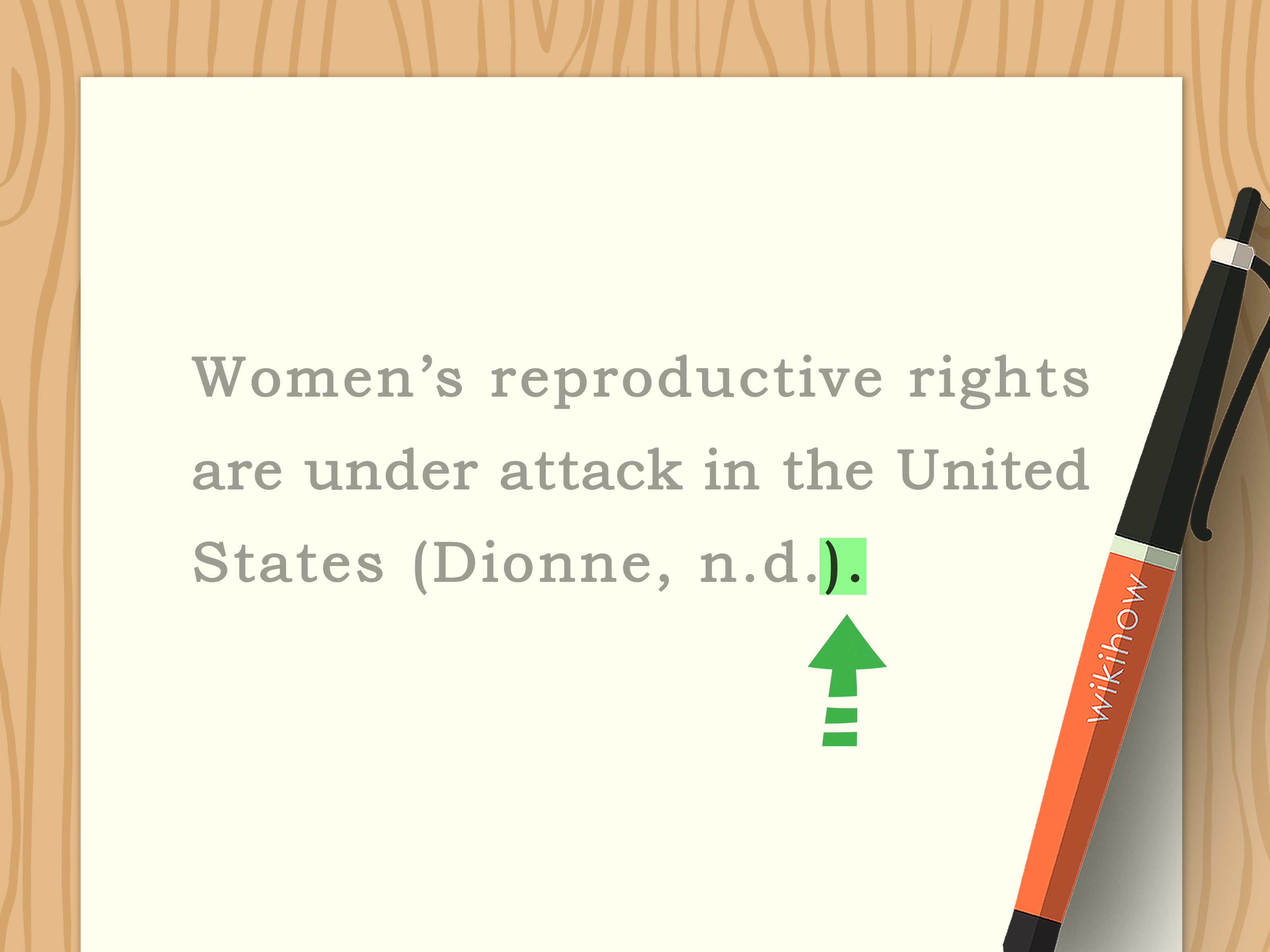
An APA in-text citation is a short source marker placed inside your writing. It usually includes the author’s last name or organization name and the publication year. For websites, that “author” might be a person, a government agency, a university, a company, a nonprofit, or the title of the webpage when no author is available. APA guidance also explains that when a source has no date, writers should use “n.d.” in place of the year.
In practice, APA website in-text citations usually appear in two main styles:
- Parenthetical citation: The source appears in parentheses at the end of the sentence.
- Narrative citation: The author appears naturally in the sentence, with the year in parentheses.
Both are correct. Choosing between them depends on sentence flow. APA is not trying to ruin your afternoon; it is trying to help readers find your sources quickly.
Way 1: Cite a Website With a Named Author
The cleanest version of an APA website citation happens when the webpage lists a personal author and a publication date. This is the citation equivalent of finding your keys exactly where you left them. Beautiful. Rare. Worth appreciating.
Parenthetical APA Website Citation
Use a parenthetical citation when you want the source to support the sentence without making the author part of the sentence.
Format:
(Author Last Name, Year)
Example:
Online learning can improve flexibility for students who balance coursework with jobs and family responsibilities (Martinez, 2024).
Notice that the citation comes before the period. The sentence ends after the citation, not before it. In APA land, punctuation matters. It is tiny, but it has authority.
Narrative APA Website Citation
Use a narrative citation when the author’s name fits naturally into the sentence.
Format:
Author Last Name (Year)
Example:
Martinez (2024) explained that online learning can improve flexibility for students who balance coursework with jobs and family responsibilities.
This style is useful when you want to emphasize who made the point. In academic writing, narrative citations also help vary your sentence rhythm so your paper does not sound like a robot reading a cereal box.
When Should You Use This Method?
Use this method when the webpage clearly lists an individual author and publication year. Check the top of the article, the bottom of the page, the “about this article” section, or the page metadata. If you find a “last reviewed” or “last updated” date, use the date that best reflects the content’s publication or update, especially when the page itself identifies that date as relevant to the content.
Way 2: Cite a Website With an Organization or Group Author
Many websites do not list a single human author. Instead, the author is an organization, such as the Centers for Disease Control and Prevention, National Institutes of Health, American Psychological Association, Mayo Clinic, a university, or a company. APA allows group authors, and APA’s webpage guidance notes that for a page on an organization’s website without individual authors, the organization can be used as the author.
Parenthetical Group Author Citation
Format:
(Organization Name, Year)
Example:
Sleep quality can affect attention, mood, and overall health (National Institute of Mental Health, 2023).
Narrative Group Author Citation
Format:
Organization Name (Year)
Example:
The National Institute of Mental Health (2023) notes that sleep quality can affect attention, mood, and overall health.
For a long organization name, write the name clearly the first time. If your instructor or style guide allows abbreviations and the organization is widely recognized, you may introduce the abbreviation after the full name. For example, you might use “Centers for Disease Control and Prevention (CDC)” in the sentence, then “CDC” later. However, when in doubt, clarity beats cleverness.
Do You Repeat the Organization Name as the Website Name?
That question mainly affects the reference list, not the in-text citation. In the reference list, APA does not require repeating the website name when the author and website name are the same. But inside the paper, your in-text citation still needs to point clearly to the author/date information used in the reference entry.
Think of the in-text citation as a little address label. It does not need the whole GPS route, but it should get the reader to the right house.
Way 3: Cite a Website With No Author or No Date
Here is where students usually start whispering, “Please no.” But APA has rules for missing information, and they are surprisingly manageable. If no author is listed, move the title into the author position. If no date is available, use “n.d.” for “no date.” APA’s missing-information guidance, Purdue OWL, Penn State Libraries, Walden University, and Bowling Green State University all reflect this basic approach.
Website With No Author
When there is no author, use the webpage title in the citation. If the title is long, shorten it in the in-text citation. Use quotation marks around the title of a webpage or article in the in-text citation.
Format:
("Title of Webpage," Year)
Example:
Students often benefit from planning research before drafting the final paper ("Research Habits That Work," 2024).
If the title appears in the sentence, place the year after it:
"Research Habits That Work" (2024) recommends planning sources before drafting the final paper.
Website With No Date
If the webpage has an author but no publication date, use “n.d.” in place of the year.
Format:
(Author, n.d.)
Example:
Clear writing depends on matching the tone to the audience (Johnson, n.d.).
Website With No Author and No Date
Sometimes a webpage gives you nothing but a title and vibes. In that case, use the title and “n.d.”
Format:
("Title of Webpage," n.d.)
Example:
Many students revise more effectively when they read their work aloud ("Better Revision Strategies," n.d.).
This is not a perfect source situation. A page with no author and no date may be less credible than one with clear authorship and publication information. Still, APA gives you a way to cite it when the source is relevant and acceptable for your assignment.
Way 4: Cite a Direct Quote or Specific Part of a Website
When you quote directly from a website, APA wants more than author and year. You should help readers locate the exact passage. For webpages without page numbers, APA recommends using another locator, such as a heading, section name, paragraph number, or a combination that guides the reader to the quoted material.
Direct Quote From a Website With Paragraph Number
Format:
(Author, Year, para. Number)
Example:
Effective note-taking is described as "a bridge between reading and original thinking" (Lee, 2022, para. 4).
Direct Quote From a Website With a Heading
If the webpage has section headings, use the heading to guide readers.
Example:
Lee (2022) described effective note-taking as "a bridge between reading and original thinking" (Note-Taking Strategies section).
Direct Quote From a Website With No Page Numbers
Most websites do not have page numbers. Do not invent them. That is how citation gremlins are born. Instead, use a locator that actually exists on the page.
Acceptable locators may include:
para. 3Introduction sectionMethods section, para. 2Frequently Asked Questions section
For paraphrases, APA does not always require a page or paragraph number, but adding a locator can be helpful when the webpage is long, detailed, or divided into many sections.
APA Website Citation Examples at a Glance
| Situation | Parenthetical Citation | Narrative Citation |
|---|---|---|
| Personal author | (Martinez, 2024) |
Martinez (2024) |
| Organization author | (American Psychological Association, 2023) |
American Psychological Association (2023) |
| No author | ("How Memory Works," 2022) |
"How Memory Works" (2022) |
| No date | (Garcia, n.d.) |
Garcia (n.d.) |
| No author and no date | ("Study Skills for College," n.d.) |
"Study Skills for College" (n.d.) |
| Direct quote, no page number | (Lee, 2022, para. 4) |
Lee (2022) stated that ... (para. 4) |
Common Mistakes When Citing Websites in APA
Mistake 1: Using the Website Name Instead of the Author
Do not automatically cite the website name just because it appears in big letters at the top. Look for the author first. If an article on a website lists “Jane Smith” as the author, cite Smith, not the website brand.
Mistake 2: Forgetting the Year
APA is an author-date style. The date is not decoration; it is part of the system. If there is no date, use “n.d.” rather than leaving the year out.
Mistake 3: Citing the URL in the Sentence
In APA in-text citations, you usually do not paste the URL into the paragraph. Save the URL for the reference list. Your in-text citation should stay short and readable.
Mistake 4: Using a Full Webpage Title Every Time
If a webpage title is long, shorten it for the in-text citation. Use the first few words that clearly match the reference list entry. Do not turn your sentence into a parade float of title text.
Mistake 5: Ignoring the Reference List
Every in-text citation should match a full reference entry. APA’s reference guidance emphasizes the core elements of author, date, title, and source. For webpages, the reference list usually includes the author, date, page title, website name when needed, and URL. Retrieval dates are generally used only when the page is designed to change over time and is not archived.
How to Decide Which APA Website Citation Method to Use
Before you cite a website in text, ask four quick questions:
- Is there a personal author? If yes, cite the author’s last name and year.
- Is there an organization author? If yes, cite the organization and year.
- Is there no author? If yes, cite the webpage title and year.
- Is there no date? If yes, use “n.d.”
That decision tree handles most website citation situations. The only extra step is for direct quotes: add a locator, such as a paragraph number or section heading.
Practical Experience: What Citing Websites in APA Looks Like in Real Writing
In real student papers, APA website citation problems usually do not appear because students do not understand the rule. They appear because websites are messy. One source lists an author at the top. Another hides the author under “About the contributor.” A third gives three dates: published, updated, and reviewed. A fourth has no date at all, because apparently time is a social construct and your deadline is tomorrow.
A useful habit is to collect citation details before you start writing. When students wait until the final editing stage, they often end up with ten open browser tabs, two broken links, and one mysterious sentence that says “research shows” with no research in sight. Instead, build a mini source log. For each webpage, record the author, date, title, website name, URL, and a short note about what information you used. This saves time later and prevents the classic “Where did I get this fact?” panic.
Another experience-based tip: do not trust citation generators blindly. Tools can be helpful, especially for formatting reference entries, but they often misread webpage authors, dates, or titles. A generator may treat a website name as an author, skip an update date, or capitalize a title incorrectly. Use the tool as a helper, not as a tiny professor living in your browser. Always compare the result with APA rules.
When writing paragraphs, vary your citation style. If every sentence ends with parentheses, the paper can feel stiff. Try mixing parenthetical and narrative citations. For example, one paragraph might say, “Garcia (2023) found that…” and the next might end with “(Garcia, 2023).” This keeps your writing smooth while still giving credit. Good APA style is not just correct; it is readable.
Direct quotes deserve special care. Many students quote websites without adding a paragraph number or section heading. That makes the reader hunt through the page like they are searching for a missing sock in a laundry basket. If the quote is important enough to use, it is important enough to locate. For long webpages, cite the section heading and paragraph number when possible.
Finally, remember that citation is not just a formatting chore. It is part of your credibility. A clean APA in-text citation tells readers, “I did the research, I know where this came from, and no, I did not simply summon this fact from the fog.” That matters in school, professional writing, research summaries, healthcare content, business reports, and any situation where trust matters. APA may look picky, but its purpose is practical: it helps ideas travel with labels attached.
Conclusion: APA Website Citations Are Easier With a System
Learning how to cite a website in text in APA becomes much easier when you stop memorizing random examples and start using a simple system. First, look for the author. If there is a personal author, cite the last name and year. If the author is an organization, cite the organization and year. If there is no author, use the webpage title. If there is no date, use “n.d.” For direct quotes, add a locator such as a paragraph number or section heading.
That is the whole puzzle. Not always glamorous, but very useful. With these four methods, you can handle most APA website citation situations without spiraling into a citation-induced identity crisis. Your paper becomes clearer, your sources become traceable, and your instructor gets fewer reasons to write “APA?” in the margin. Everybody wins.