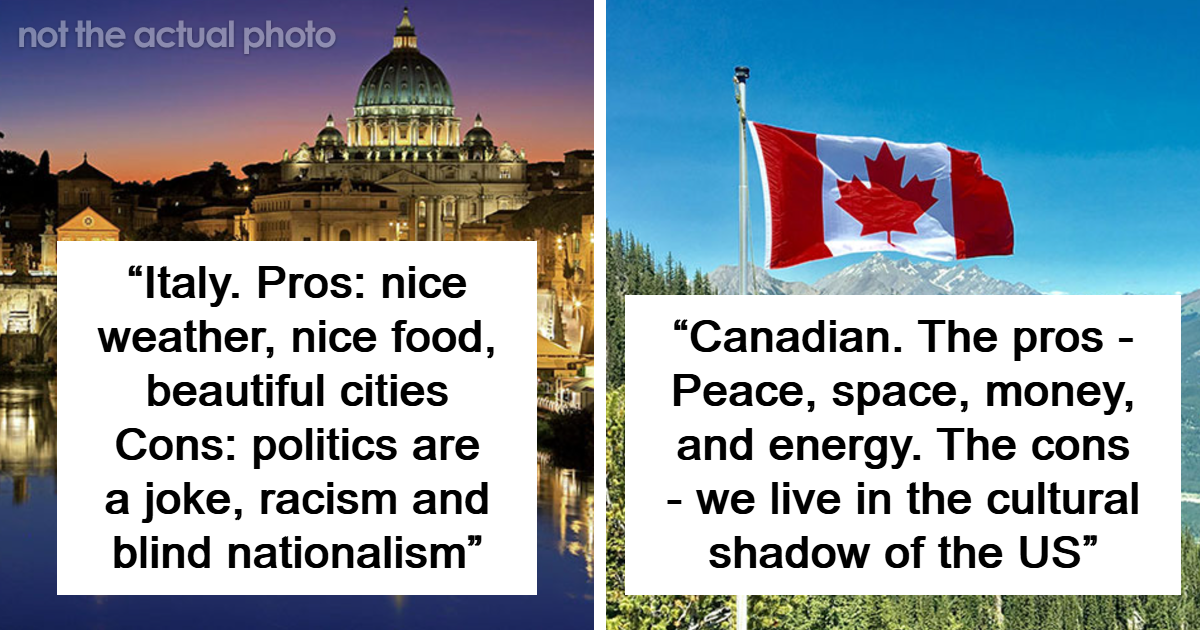

Ask people what life is really like in their home country, and you rarely get a tourism-board answer. You get the good stuff: the proud stuff, the messy stuff, the “our food is amazing but our politics are a circus” stuff. Across international surveys, public-opinion research, and reporting on migration, work, democracy, housing, and daily life, one pattern keeps showing up: people can love their country deeply and still be painfully honest about what is broken.
That honesty matters. It reveals the gap between postcard identity and daily reality. A country may have beautiful landscapes, strong family ties, and cultural pride, while also leaving people crushed by rent, corruption, weak public services, dead-end job markets, or the feeling that ordinary citizens are shouting into a void. In many places, people are not asking for perfection. They are asking for basics: fairness, safety, decent work, affordable housing, and leaders who act like public servants instead of reality-show villains with official stationery.
This article gathers 40 brutally honest takes that capture how people describe life in their home countries today. They are not meant to flatten entire nations into stereotypes. They are snapshots of frustration, pride, irony, resilience, and realism. The result is less “Top 10 dream destinations” and more “Here’s what locals mutter while standing in line, paying bills, or watching the news with their eyebrows fully raised.”
Why These Takes Hit So Hard
The most revealing thing about modern national identity is that pride and disappointment often live in the same apartment and split the rent badly. People still celebrate culture, food, humor, music, sports, family traditions, and the feeling of belonging. At the same time, they worry about inflation, wages, corruption, crime, traffic, inequality, and whether young people can build a future without moving abroad.
That tension explains why brutally honest takes resonate. They sound like lived experience, not policy jargon. They sound like the person saying, “Yes, I love this place. No, I am not going to lie about it.” And frankly, that may be the most patriotic sentence on Earth.
40 Brutally Honest Takes From People About Life In Their Home Countries
1. Beautiful scenery does not cancel out ugly systems.
People often feel proud of their country’s natural beauty while feeling furious about the institutions running it. Mountains are lovely. Bureaucracy that eats your whole Tuesday is not.
2. Great food can coexist with terrible policy.
Many people adore their national cuisine but roll their eyes at leadership, inflation, or public dysfunction. A perfect meal is still not a substitute for affordable groceries next week.
3. “We are warm people” is sometimes code for “the system is cold.”
In many countries, social life survives because families, neighbors, and communities compensate for weak public services. Human kindness becomes the emergency backup generator.
4. Corruption is not always dramatic; sometimes it is just exhausting.
It is not only about giant scandals. It is about favoritism, delay, quiet bribes, nepotism, and the daily suspicion that rules exist mainly for people without connections.
5. Democracy feels fake when ordinary people think nothing changes.
One brutally honest theme across countries is not hatred of democracy itself, but disappointment in how it works. Voting feels less inspiring when the same problems keep clocking in on time.
6. People do not only want freedom; they want functioning.
Citizens care about rights, yes, but they also care whether the bus arrives, paperwork gets processed, and public offices behave like they know humans use them.
7. Housing is where national frustration becomes personal.
People can argue abstractly about the economy for hours. Rent ends the debate in 12 seconds. If homeownership feels impossible, national optimism starts to crack.
8. Inflation turns patriotism into math.
When wages lag and prices sprint like they are training for the Olympics, people become brutally practical. Pride is nice, but so is paying for electricity without a spiritual crisis.
9. The young often love their country and plan their exit anyway.
That may be one of the harshest truths of all. People do not always leave because they hate home. Sometimes they leave because they want a future that feels reachable.
10. “There are no jobs” often means “there are no decent jobs.”
Employment numbers can hide miserable realities: underemployment, low wages, informal work, dead-end roles, and the sense that education no longer guarantees mobility.
11. Strong culture cannot always outrun weak opportunity.
Cultural pride is powerful, but it struggles when ambition repeatedly smashes into stagnant wages, corruption, or industries that cannot absorb a growing generation.
12. Rapid growth can still feel bad on the ground.
Some places post solid growth figures while locals complain about congestion, pollution, inequality, and housing costs. GDP can rise while patience collapses.
13. Public trust is a daily quality-of-life issue.
Low trust makes everything heavier. People question elections, police, courts, media, and public spending. Once trust leaks out, every bad headline feels like confirmation.
14. Crime changes how people experience freedom.
Even when formal rights exist, people do not feel free if they cannot walk safely at night, trust institutions, or believe the law applies equally.
15. National pride often survives through culture, not politics.
When people are fed up with leadership, they still point to music, language, humor, history, festivals, and community as reasons to keep loving where they come from.
16. “We are resilient” is sometimes a compliment and sometimes an indictment.
Resilience sounds noble. It can also mean people have been forced to normalize stress, shortages, instability, or bad governance for far too long.
17. Urban life can feel like opportunity wrapped in chaos.
Big cities attract talent, money, and ambition, but they also concentrate traffic, rent pressure, pollution, and inequality. The skyline may gleam while commuters slowly lose faith.
18. Rural neglect creates a different kind of national anger.
In many countries, people outside major cities feel forgotten, underinvested, and spoken to only during elections. Distance from power becomes emotional, not just geographic.
19. When leaders talk big and deliver little, cynicism becomes a national language.
Citizens learn to decode slogans fast. Grand speeches lose power when roads stay broken, schools stay underfunded, and “reform” keeps arriving in costume only.
20. Public services shape dignity more than politicians realize.
A functioning clinic, reliable school, or fair licensing office may not trend online, but these are the things that make a country feel livable instead of merely survivable.
21. Social media did not invent frustration; it just gave it better lighting.
People have always complained about life at home. Now those complaints spread faster, compare across borders, and make bad governance look even more embarrassing.
22. Migration is often a referendum on hope.
When large numbers of people want to leave, the issue is not just economics. It is whether citizens believe the future belongs to them if they stay.
23. Remittances can help families while exposing national failure.
Money from relatives abroad keeps many households afloat. It is also a blunt reminder that opportunity had to be exported to come back home.
24. People resent elites who seem insulated from ordinary life.
Nothing intensifies anger like the belief that politicians, executives, or connected insiders live in a different country without ever leaving the same capital city.
25. National identity gets weird when citizens love the people but distrust the state.
This is more common than outsiders think. People say, “I love us. I do not trust them.” The “us” is society. The “them” is usually power.
26. Safety and dignity are more persuasive than ideology.
Citizens do not wake up craving abstract political theory. They want safe streets, fair rules, stable prices, and a sense that effort still leads somewhere.
27. A country can be globally admired and locally frustrating.
International reputation often hides domestic irritation. A place may look innovative, democratic, or glamorous from afar while locals complain about debt, housing, and social strain.
28. People are often angriest because they know their country could do better.
Brutal honesty usually comes from disappointed belief, not total despair. Citizens get harsher when they see potential being wasted in real time.
29. Inflation is not just economic; it is emotional.
It shrinks plans, delays milestones, and makes adulthood feel like a subscription nobody can afford. People do not merely spend more; they trust less.
30. Bureaucracy can make citizens feel smaller than they are.
Forms, stamps, delays, missing signatures, and contradictory instructions turn routine tasks into endurance sports. At some point, even optimistic people start talking to printers like enemies.
31. Corruption destroys more than budgets; it wrecks morale.
Once people believe advancement depends more on connections than merit, effort starts to feel naive. That is when cynicism stops being a mood and becomes infrastructure.
32. Not all national frustration is about poverty.
Even relatively wealthy countries produce brutally honest complaints about loneliness, housing shortages, immigration tensions, taxes, or democracy that feels increasingly hollow.
33. Diversity can be a source of pride and tension at the same time.
Many people celebrate multicultural life while others blame immigration for social pressure. Honest national conversations are often messy precisely because identity is messy.
34. People want fairness more than perfection.
Most citizens understand no country is flawless. What breaks patience is the sense that sacrifice is uneven, justice is selective, and rules are enforced differently depending on your surname.
35. Good headlines mean little if daily life feels harder.
Governments may celebrate investment, reforms, or international praise. Locals still ask whether groceries, transport, rent, schools, and healthcare got any easier. That question tends to win.
36. National humor is often a survival skill.
When politics disappoints and prices rise, jokes become public therapy. Many countries survive on sarcasm almost as much as on tax revenue.
37. The middle class often feels squeezed from both sides.
They are too “comfortable” to qualify for help, too stretched to feel secure, and too aware to believe cheerful official messaging without laughing first.
38. Trust in institutions and trust in neighbors are not the same thing.
People may deeply trust family and community while expecting almost nothing from formal systems. That mismatch shapes how societies cope, protest, and adapt.
39. Hope usually survives in smaller places than governments expect.
Hope lives in classrooms, local businesses, churches, neighborhood groups, online communities, and families making outrageous miracles out of ordinary paychecks.
40. The most brutally honest people are often the ones who still care the most.
Indifference is quiet. Love is louder. People criticize home because home still matters to them, and because giving up completely would hurt more than complaining ever could.
What These Honest Takes Really Reveal
Put all 40 takes together and a pattern emerges. Across countries, people keep returning to the same life pillars: fair government, affordable living, decent work, social trust, and a future that feels possible without heroic luck. They may disagree about politics, blame different groups, or frame the problem through culture, class, region, or generation. But the emotional architecture is similar. People want to feel that citizenship means something practical.
That is why so many brutally honest takes sound less like rants and more like frustrated performance reviews. Citizens are grading the country they inherited, the leaders they elected, and the systems they depend on. They are also grading whether daily life rewards effort or punishes it. When the answer is “depends who you know,” social frustration becomes self-replicating.
Still, the honesty is not all doom. The same people who criticize leadership often praise culture. The same citizens who worry about inflation still speak warmly about community. The same young adults who consider emigration still carry loyalty, memory, and identity with them. In other words, people are not just diagnosing decay. They are also defending what is worth saving.
Longer Experiences: What Life in Home Countries Often Feels Like Up Close
Talk to enough people about life in their home countries and a familiar emotional map appears. Morning starts with practical calculations: commute time, fuel prices, rent due dates, school fees, utility bills, and the tiny psychological game called “Can I ignore this government website until tomorrow?” Then comes the second layer, the deeper one. People ask themselves whether working harder will actually move them forward, whether their children will inherit something better, and whether the rules apply to everyone or just to the unlucky.
In some places, the frustration is loud and political. In others, it is quieter and almost domestic. It sounds like a parent saying their kid may need to move abroad to have a normal life. It sounds like a graduate explaining that a diploma is useful mainly as a decorative wall rectangle. It sounds like a shop owner complaining that costs keep rising while customers keep cutting back. It sounds like a commuter who spends three hours a day in traffic and would like a medal, a massage, and a refund.
And yet, home keeps defending itself in surprising ways. People complain bitterly about corruption, but then they glow when talking about local festivals, neighborhood food, grandparents, street humor, regional slang, or the collective ability to turn hardship into jokes before dessert. In many countries, the informal social contract is stronger than the formal one. Institutions disappoint, but people still show up for one another. A cousin finds the doctor. A neighbor knows the clerk. A friend helps with rent. An aunt somehow fixes a problem using mysterious social powers that deserve their own ministry.
That combination of frustration and affection is what outsiders often miss. Life in a country is rarely one clean story. It is pride mixed with fatigue, loyalty mixed with criticism, and tenderness mixed with rage. People can say, “This place drives me insane,” and still miss it the second they leave. They can condemn the leadership, hate the bureaucracy, resent the prices, and still insist nobody else makes soup, music, holidays, or family gatherings quite like home does.
So the brutally honest take is not simply that life in many countries is hard. It is that people are carrying two truths at once: the country they love, and the country they are tired of negotiating with. That tension is not hypocrisy. It is adulthood. It is citizenship with the filter turned off. And honestly, it may be the clearest way to understand modern national life anywhere in the world.
Conclusion
The sharpest insights about life in any country usually come from the people living inside it, not the people selling it. Across regions, citizens are remarkably consistent about what makes life feel fragile or fair: institutions that work, prices people can handle, jobs with dignity, housing that does not feel fictional, and leaders who remember the public is not a prop. The brutally honest take is not that every country is broken. It is that people know exactly where the cracks are, and they are tired of pretending those cracks are decorative.