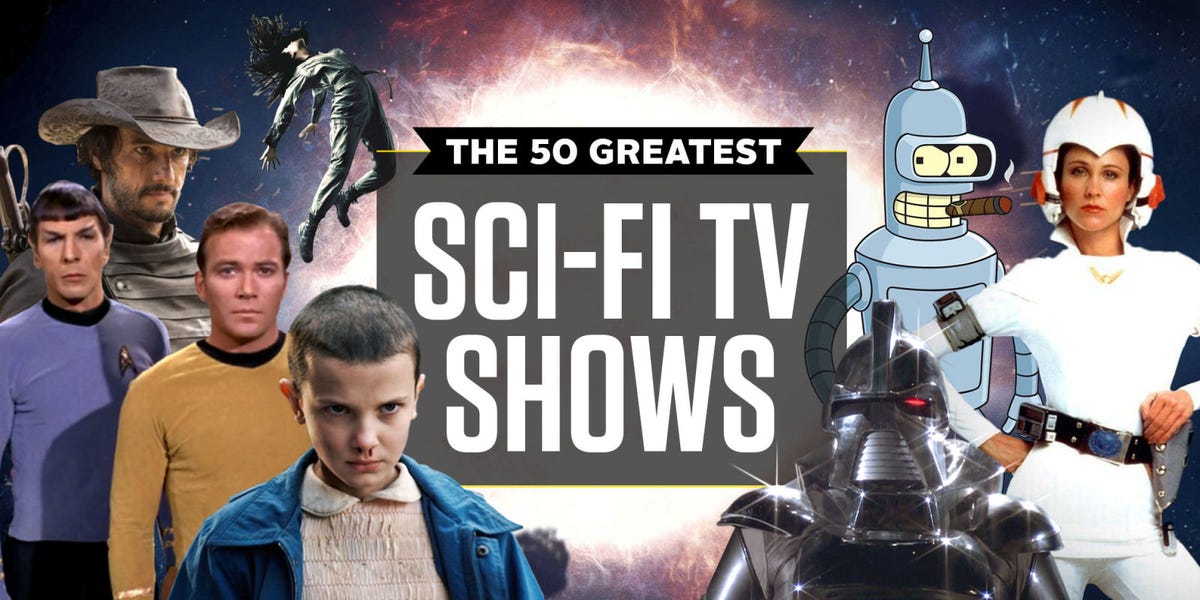

Science fiction television has never been limited to spaceships, laser battles, and actors bravely arguing with green-screen monsters. The best sci-fi shows use imagined worlds to examine very real problems: authoritarianism, artificial intelligence, climate collapse, corporate power, identity, grief, and humanity’s remarkable ability to press a glowing button labeled “Do Not Press.”
This curated list balances cultural influence, storytelling quality, originality, memorable characters, and long-term rewatch value. It includes foundational classics, space operas, dystopian dramas, animated adventures, time-travel mysteries, and modern speculative thrillers. The numbering makes the watchlist easier to navigate, but the categories matter more than a rigid ranking. Comparing Futurama with Severance is a little like comparing a robot bartender with an unsettling office handbook: both are excellent, but they solve very different problems.
Foundational Science Fiction TV Shows
1. The Twilight Zone
Rod Serling’s anthology transformed ordinary anxieties into unforgettable speculative stories. Its sharp social commentary, twist endings, and eerie atmosphere influenced nearly every science fiction anthology that followed.
2. Star Trek: The Original Series
Gene Roddenberry’s optimistic vision imagined humanity exploring space through cooperation rather than conquest. Kirk, Spock, and McCoy turned philosophical arguments into thrilling weekly adventuresand occasionally settled matters with dramatically torn shirts.
3. Doctor Who
A time-traveling alien, a shape-shifting cast, and a police box larger inside than outside created television’s most adaptable science fiction concept. Its best stories combine cosmic imagination with unmistakably human compassion.
4. The Outer Limits
Darker and more creature-focused than The Twilight Zone, this anthology explored alien encounters, scientific ambition, and technological fear. Its monsters were entertaining, but human arrogance was usually the real menace.
5. The Prisoner
A former intelligence agent is trapped in a surreal village where everyone has a number and nobody gives a straight answer. The result is a stylish, paranoid examination of surveillance, conformity, and individual freedom.
6. Star Trek: The Next Generation
Captain Jean-Luc Picard brought diplomacy, curiosity, and formidable speechmaking to the Enterprise. After an uneven beginning, the series became thoughtful television about ethics, consciousness, prejudice, and humanity’s possible future.
7. Quantum Leap
Scientist Sam Beckett leaps into other people’s lives to repair history while hoping to return home. The technology is vague, but the show’s empathy, humor, and moral clarity remain wonderfully precise.
8. Red Dwarf
This British comedy strands humanity’s last survivor in space with a hologram, an evolved cat, and an anxious android. It affectionately mocks science fiction while producing surprisingly clever time-travel and identity stories.
9. The X-Files
FBI agents Mulder and Scully investigate paranormal cases while uncovering a sprawling conspiracy. The series perfected the partnership between a believer and a skeptic, creating monsters, mysteries, and enough distrust to ruin any government retreat.
10. Babylon 5
Built around a planned multiseason narrative, Babylon 5 brought serialized political storytelling to television science fiction. Its visual effects have aged, but its treatment of war, diplomacy, faith, and authoritarianism has not.
Best Space Operas and Interstellar Adventures
11. Battlestar Galactica
The 2004 reimagining follows human survivors fleeing the Cylons, machines they created. Military tension, political conflict, religious uncertainty, and moral compromise make it one of television’s richest space dramas.
12. The Expanse
Humanity has colonized the solar system but brought inequality and political rivalry along for the ride. Realistic physics, complex factions, and a compelling alien mystery give this space opera unusual weight.
13. Star Trek: Deep Space Nine
Set primarily aboard a stationary space station, this Star Trek series embraces serialized war, occupation, religion, and political ambiguity. Its characters evolve more dramatically than those in almost any other Trek production.
14. Farscape
An astronaut is thrown across the universe and joins escaped prisoners aboard a living ship. Jim Henson Company creatures, emotional storytelling, and fearless weirdness make the series feel genuinely alien.
15. Firefly
Joss Whedon’s space western follows the renegade crew of Serenity through a future ruled by a powerful central government. Its brief run produced sharp dialogue, warm relationships, and a fan base that still refuses to behave quietly.
16. Stargate SG-1
A military-scientific team travels through an ancient portal network to visit other worlds. The show blends mythology, humor, exploration, and team chemistry across a remarkably long and consistently entertaining run.
17. Andor
This grounded Star Wars drama treats rebellion as difficult political work rather than a sequence of heroic poses. Its writing examines surveillance, sacrifice, radicalization, prison labor, and the machinery of authoritarian control.
18. The Mandalorian
A solitary bounty hunter becomes the reluctant guardian of a mysterious child. Western imagery, practical creature effects, and compact adventures helped the series make the vast Star Wars universe feel intimate again.
19. Foundation
Inspired by Isaac Asimov’s novels, this ambitious epic spans planets, dynasties, and centuries. It turns mathematical predictions about civilization into a visually spectacular conflict involving empire, faith, free will, and extremely complicated family trees.
20. For All Mankind
What if the Soviet Union had reached the moon first? This alternate-history drama follows the space race across decades, blending scientific ambition with political change, personal sacrifice, and increasingly daring missions.
Time Travel, Parallel Worlds, and Reality-Bending Mysteries
21. Dark
This German masterpiece begins with a missing child and expands into an intricate story about time, family, and determinism. Careful attention is essential; keeping a family chart nearby is not surrender but sensible survival.
22. Lost
Plane-crash survivors discover that their island obeys unusual rules. The series changed serialized television through character-centered flashbacks, bold mysteries, and weekly cliffhangers that turned viewers into amateur conspiracy theorists.
23. Fringe
A scientist, his estranged son, and an FBI agent investigate impossible events. What begins as a procedural develops into an emotional parallel-universe saga anchored by John Noble’s extraordinary performance as Walter Bishop.
24. 12 Monkeys
Inspired by the film, this series sends travelers through time to prevent a devastating plague. Its increasingly complex mythology remains coherent, rewarding patient viewers with strong character arcs and a satisfying conclusion.
25. Counterpart
J.K. Simmons plays two versions of the same man after parallel worlds split during the Cold War. The series combines espionage drama with thoughtful questions about identity, regret, and roads not taken.
26. Devs
Alex Garland’s miniseries follows a programmer investigating a secretive quantum-computing division. Stark visuals and philosophical arguments about determinism turn a corporate conspiracy into a quiet, unnerving technological nightmare.
27. Travelers
People from a ruined future transmit their consciousness into bodies in the present. Clever mission plots gradually give way to deeper questions about consent, loyalty, and whether saving humanity excuses controlling individual lives.
28. Orphan Black
Tatiana Maslany plays a group of genetically identical women with sharply different identities. The cloning conspiracy is gripping, but her ability to create distinct personalitiesand impersonations between themis the show’s true special effect.
29. Sense8
Eight strangers across the world become mentally and emotionally connected. The Wachowskis use this science fiction premise to celebrate empathy, shared experience, identity, and resistance to institutions that fear human difference.
Dystopian, Artificial Intelligence, and Post-Apocalyptic Shows
30. Black Mirror
Charlie Brooker’s anthology explores how technology can amplify loneliness, cruelty, vanity, and control. Not every episode is equally strong, but its finest stories have become cultural shorthand for digital-age anxiety.
31. Severance
Lumon employees undergo a procedure that divides their work memories from their personal lives. Elegant production design, dry humor, and escalating dread turn “work-life balance” into one of television’s smartest horror concepts.
32. Person of Interest
Initially disguised as a crime procedural, the series gradually becomes a sophisticated conflict between competing artificial intelligences. It explores surveillance, privacy, free will, and whether machines can develop moral responsibility.
33. Westworld
Artificial hosts in a futuristic theme park begin questioning their scripted existence. Although later seasons divide audiences, the first season remains a beautifully constructed meditation on consciousness, exploitation, memory, and violent entertainment.
34. The Leftovers
After two percent of humanity vanishes without explanation, the survivors struggle with grief, belief, and uncertainty. The disappearance is speculative; the emotional devastation feels painfully real.
35. The Handmaid’s Tale
Margaret Atwood’s dystopia becomes a visually striking drama about reproductive control and authoritarian power. Its most disturbing element is how its fictional institutions repurpose recognizable prejudices and political tactics.
36. Watchmen
HBO’s limited series expands the graphic novel’s world while confronting racism, inherited trauma, policing, and power. Dense, daring, and formally inventive, it rewards both superhero fans and skeptical newcomers.
37. Silo
Thousands of people live underground under strict rules, supposedly protected from a poisonous world. Rebecca Ferguson anchors a methodical mystery involving forbidden history, engineered obedience, and some deeply suspicious cafeteria windows.
38. 3 Body Problem
Scientists confront impossible experimental results and evidence of an approaching extraterrestrial threat. The series converts theoretical physics and philosophical questions into an accessible global thriller without shrinking its enormous ideas.
39. The Last of Us
A fungal pandemic destroys civilization, leaving Joel and Ellie to cross a fractured America. Exceptional performances and carefully observed relationships elevate the adaptation beyond survival horror into a devastating study of love and loss.
40. Fallout
This video game adaptation sends an optimistic vault dweller into a retrofuturistic nuclear wasteland. Graphic violence, cheerful corporate branding, and eccentric characters create a rare apocalypse that is horrifying and genuinely funny.
Animated, Cult, and Genre-Blending Sci-Fi Series
41. Neon Genesis Evangelion
Teenagers pilot giant biological machines against mysterious beings, but the real battle occurs inside their damaged minds. The anime combines apocalyptic spectacle with psychologically intense examinations of depression, isolation, and connection.
42. Cowboy Bebop
Bounty hunters drift through a colonized solar system while carrying unresolved pasts. Jazz, noir, westerns, martial arts, and melancholy combine in an effortlessly stylish anime that remains endlessly influential.
43. Ghost in the Shell: Stand Alone Complex
Cybernetic agents investigate crimes in a networked future where bodies and memories can be altered. Its intelligent cases examine political corruption, artificial consciousness, and the instability of identity.
44. Futurama
A delivery boy awakens in the 31st century and joins an interplanetary courier service. Beneath the robots, mutants, and math jokes, the series frequently delivers clever science fiction and unexpected emotional power.
45. Rick and Morty
A reckless genius drags his anxious grandson through alternate universes. The show uses cosmic absurdity to explore nihilism, family dysfunction, and consequenceusually while something revolting screams in the background.
46. Love, Death & Robots
This animated anthology ranges from comic robot tours to brutal interstellar warfare. Its changing visual styles and short running times make it an ideal laboratory for experimental science fiction storytelling.
47. Star Wars: The Clone Wars
What began as an animated expansion became one of the franchise’s strongest stories. It gives the clone soldiers individuality while deepening Anakin Skywalker’s tragedy and the political collapse of the Republic.
48. Scavengers Reign
Stranded survivors navigate a planet where every organism feels interconnected, beautiful, and potentially digestive. The animation presents alien ecology with an inventiveness rarely achieved by live-action television.
49. Stranger Things
Children in an Indiana town uncover secret experiments and a hostile parallel dimension. Nostalgia provides the wrapping paper, but friendship, strong performances, creature horror, and emotional stakes are the actual gift.
50. Station Eleven
After a pandemic, traveling performers preserve art and community among scattered settlements. Its nonlinear structure rejects simple disaster spectacle, arguing that survival requires memory, creativity, and meaningful relationshipsnot merely canned beans.
The Sci-Fi Viewing Experience: How to Explore These 50 Shows
Choose an Entry Point That Matches Your Mood
The most rewarding way to approach the best sci-fi shows is not necessarily to begin with the oldest or most famous production. Start with the kind of experience you already enjoy. Viewers who love political thrillers can enter through Andor, Counterpart, or Battlestar Galactica. Mystery fans may prefer Dark, Severance, or Fringe. Anyone seeking humor should try Futurama, Red Dwarf, or Rick and Morty.
Starting with a compatible tone makes the genre feel inviting instead of assigning yourself 900 episodes of television as though a streaming service were an unusually demanding college professor.
Build Short Themed Marathons
Watching related programs together reveals how science fiction ideas evolve. Pair The Twilight Zone with Black Mirror to compare analog-era anxiety with digital paranoia. Follow Star Trek: The Original Series with The Next Generation and Deep Space Nine to see optimism tested by diplomacy, religion, and war.
For an artificial-intelligence marathon, move from Person of Interest to Westworld, Devs, and Severance. Each show asks whether technology controls people because machines become too intelligent or because humans eagerly build systems that reward control. That distinction provides more to discuss than the familiar question of whether a robot could defeat a superhero.
Give Older Special Effects a Fair Chance
Classic science fiction television sometimes features cardboard corridors, rubber creatures, or computers that appear to be assembled from spare kitchen appliances. Those limitations are part of the experience. Earlier programs survived because their strongest ideas did not depend on photorealistic effects.
Episodes of The Twilight Zone, The Prisoner, and the original Star Trek still work because they create moral pressure, memorable characters, and unsettling situations. After a few episodes, viewers often stop noticing inexpensive sets and begin appreciating how much atmosphere the productions created with lighting, dialogue, and imagination.
Expect Different Rewards From Serialized and Episodic Shows
An episodic series such as The Outer Limits offers complete ideas in manageable portions. A serialized mystery such as Dark, Lost, or Silo asks for patience and attention. Neither form is automatically superior. The better choice depends on whether the evening calls for a self-contained story or a six-hour investigation that ends with someone whispering, “Just one more episode.”
Complicated shows also become more enjoyable when watched deliberately. Avoid scrolling through a phone during Dark, because the unfamiliar face dismissed in episode two may become somebody’s parent, child, or time-displaced grandparent ten episodes later. Brief notes can help with sprawling casts, but exhaustive online research should wait until after viewing; science fiction communities are generous with spoilers.
Make Room for Emotional Science Fiction
Spaceships and speculative technologies attract attention, yet the shows that linger longest usually have powerful emotional foundations. Station Eleven is about rebuilding meaning after disaster. Orphan Black turns cloning into a celebration of individuality and chosen family. The Last of Us asks how love can save people while also making them dangerous. For All Mankind makes alternate history compelling because every technological triumph carries personal costs.
The ideal viewing experience therefore includes variety. Alternate a dense drama with a playful animated series, or a bleak dystopia with an optimistic space adventure. Fifty consecutive episodes about civilization collapsing may be critically enriching, but it is also an excellent way to become suspicious of the toaster.
Conclusion
The 50 best sci-fi shows demonstrate why science fiction remains one of television’s most flexible genres. It can deliver space battles, workplace satire, intimate grief, political rebellion, philosophical puzzles, or an alien ecosystem that considers visiting humans a convenient snack.
More importantly, great science fiction does not merely predict new gadgets. It asks who controls those inventions, who benefits from them, and how people behave when familiar rules disappear. Whether you begin with The Twilight Zone, The Expanse, Severance, or Scavengers Reign, every series here offers a different doorway into the future.
SEO Metadata