
Concrete patios are the plain white T-shirts of the backyard world: practical, durable, and perfectly fine… until you realize they have been wearing the same outfit since 1998. The good news? A tired slab does not need to be demolished, hauled away, and replaced with something that costs more than your vacation fund. With smart planning, a few design tricks, and the right materials, a concrete patio makeover can turn a gray rectangle into an outdoor living room, dining area, garden retreat, or weekend hangout zone.
Whether your patio is cracked, stained, sun-faded, boring, or simply suffering from “builder-basic personality disorder,” there are plenty of ways to refresh it. Some projects are budget-friendly weekend upgrades, such as paint, stain, furniture, plants, and outdoor rugs. Others, like pavers, tile, resurfacing, or a pergola, require more planning but can completely change the look and function of the space.
Below are nine great concrete patio ideas for a makeover inspired by practical DIY remodeling principles, real outdoor living trends, and the kind of Remodelaholic-style creativity that says, “Why replace it when you can make it fabulous?”
Why Concrete Patios Are Perfect for Makeovers
A concrete patio is one of the most makeover-friendly surfaces around. It is strong, flat, long-lasting, and usually already positioned where outdoor living makes sense: near the kitchen, backyard, pool, garden, or grill. Instead of seeing concrete as boring, think of it as a blank canvas with excellent bone structure.
Before choosing a design, inspect the patio carefully. Hairline cracks, discoloration, and surface wear can often be repaired or covered. Large cracks, sinking sections, drainage problems, or crumbling edges may need professional attention before you decorate. A makeover should improve the patio, not politely hide a structural problem under a rug and hope gravity forgets.
1. Paint a Pattern for Instant Personality
Painting a pattern is one of the most affordable concrete patio makeover ideas, and it can make a dramatic difference. Instead of painting the entire slab one flat color, use painter’s tape or a stencil to create a tile-inspired pattern, checkerboard design, geometric border, faux rug, or modern stripe layout.
Best Pattern Ideas for Concrete Patio Paint
For a small patio, try a simple diamond or grid pattern in soft neutral colors. For a modern backyard, consider large-scale black-and-white squares, charcoal stripes, or a minimalist border. For a cottage-style patio, a Moroccan stencil or floral tile pattern can bring charm without the cost of real tile.
The secret is surface prep. Concrete paint needs a clean, dry, repaired surface to bond well. Sweep away debris, wash the patio thoroughly, patch cracks, and allow everything to dry completely. Use exterior concrete paint or porch-and-patio paint designed for outdoor foot traffic. A non-slip additive is smart, especially if the patio gets wet.
Paint is best for patios in decent condition. It offers color and style, but it sits on top of the concrete, so it can chip or wear over time. Plan on touch-ups. Think of it like nail polish for your patio: gorgeous, affordable, but not invincible.
2. Stain the Concrete for a Rich, Natural Finish
Concrete stain is ideal if you want a more permanent-looking finish that enhances the slab instead of covering it completely. Stain penetrates the concrete and creates translucent color, which can look like stone, leather, tile, or weathered earth depending on the product and technique.
Water-based stains come in many colors and are easier for beginners. Acid stains create more variegated, natural-looking tones, but they require careful handling and neutralizing. Either way, staining works best on clean, porous concrete. If the patio has old sealer, paint, grease, or heavy stains, those must be removed first.
How to Make Stained Concrete Look Like Tile
One clever trick is to tape off “grout lines” before staining. Use narrow tape to create squares, rectangles, or a large-format tile pattern. Apply stain over the surface, let it work, then remove the tape. The untouched concrete lines create the illusion of tile without installing tile. It is the patio version of wearing a blazer over a T-shirt and suddenly looking employed.
Finish stained concrete with an outdoor-rated concrete sealer. Sealing helps protect color from moisture, sun, foot traffic, and outdoor messes like barbecue sauce, muddy paws, and whatever mysterious thing falls out of a tree every spring.
3. Add Outdoor Tile Over the Concrete
If your concrete slab is stable, properly sloped, and free of major cracks, it can be a great base for outdoor tile. Tile can take a patio from plain to polished, especially when you choose porcelain, slate-look tile, quarry tile, or textured ceramic rated for exterior use.
Outdoor tile works beautifully for Mediterranean, modern, farmhouse, Spanish, and transitional patios. It is especially effective for covered patios or areas with moderate weather exposure. Always choose slip-resistant tile, and make sure the tile, mortar, grout, and sealer are appropriate for freeze-thaw conditions if you live in a colder region.
Design Tip: Choose Large-Format Tile for a Modern Look
Large-format tiles can make a small concrete patio feel bigger and cleaner. A slate-look porcelain tile gives the feel of natural stone without as much maintenance. Patterned tile can create a bistro look, while neutral stone tones make furniture and plants the stars of the show.
Tile is more expensive and labor-intensive than paint or stain, but the transformation can be stunning. Before starting, check for drainage issues. Water should move away from the house, not form tiny patio ponds where mosquitoes can hold family reunions.
4. Cover the Patio with Pavers
Installing pavers over an existing concrete patio is a classic makeover strategy because it creates the look of a brand-new hardscape without removing the slab. Concrete pavers, brick pavers, or stone-style pavers can add texture, color, and a high-end feel.
This idea works best when the existing slab is stable and relatively level. Thin pavers may be installed over the main field, while thicker pavers can be used around the perimeter to lock the design in place. The result can look like a custom patio instead of a cover-up.
Use Pavers to Add Shape and Movement
A square slab can feel boxy, but pavers let you visually expand the patio. Add a curved paver border, a circular fire pit area, or a walkway that connects the patio to a garden, shed, or side yard. Curves soften the hard edges of concrete and help the patio feel more integrated with the landscape.
Pavers are also useful when you want to define different outdoor zones. For example, keep the original concrete as a dining area, then add a paver extension for lounge chairs or a fire pit. Suddenly, your patio has “rooms,” and your backyard starts acting like it hired an interior designer.
5. Build a Floating Deck Over the Concrete
A low floating deck can hide an unattractive concrete patio and introduce the warmth of wood or composite decking. This is a strong option if you want a cozy outdoor living room feel. Decking can make a patio look softer, warmer, and more finished, especially when paired with comfortable seating and planters.
Before building, check door thresholds, drainage, and local code requirements. You need enough height for sleepers, deck boards, ventilation, and water flow. If the patio slopes toward the house, fix that problem first. A deck should not trap water against the foundation.
Wood vs. Composite Decking
Pressure-treated lumber is typically more affordable but requires staining or sealing. Composite decking costs more upfront but needs less maintenance and resists fading, splintering, and rot. For a concrete patio makeover, composite boards can be especially appealing because they create a clean, modern finish without demanding yearly attention like a needy houseplant.
A floating deck pairs well with built-in benches, privacy screens, string lights, and outdoor curtains. It can also make a patio feel more like an extension of the home rather than a slab that wandered into the backyard and stayed.
6. Resurface the Concrete for a Fresh Start
Concrete resurfacing is a practical choice for patios with worn, pitted, or lightly damaged surfaces. A resurfacer creates a thin new layer over sound concrete, refreshing the look without a full replacement. It can be broom-finished for traction, tinted for color, or used as the base for decorative treatments.
Resurfacing requires careful preparation. Loose material must be removed, cracks should be patched, and the slab must be cleaned thoroughly so the resurfacer bonds properly. Many resurfacing products are applied with a squeegee, trowel, or brush, then textured before they set.
When Resurfacing Makes Sense
Resurfacing is a smart option when the patio is structurally sound but cosmetically tired. It is not the right fix for major heaving, deep cracks, unstable concrete, or drainage failure. In those cases, resurfacing is like putting frosting on a collapsed cake: technically possible, emotionally optimistic, and probably not enough.
Once resurfaced, the patio can be sealed, stained, painted, or decorated. It gives you a smoother, cleaner foundation for the rest of your makeover plan.
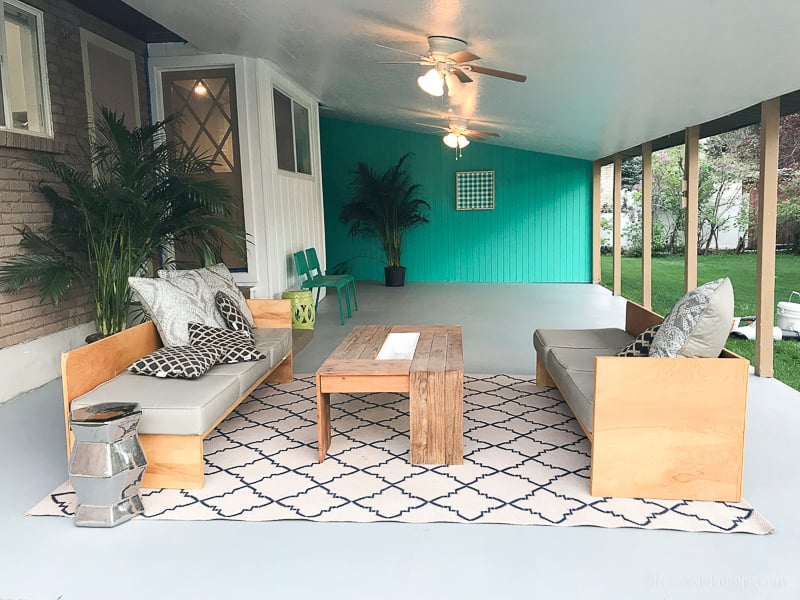
7. Create a Patio “Room” with Furniture, Rugs, and Lighting
Sometimes the concrete itself is not the problem. Sometimes the patio just looks unfinished because it has one lonely chair, a grill, and the emotional energy of a parking lot. Treat the patio like an outdoor room, and the transformation can happen fast.
Start with a purpose. Do you want an outdoor dining area, a reading nook, a fire pit lounge, a coffee spot, or a family hangout zone? Once you know the function, choose furniture that fits the scale of the patio. Oversized sectionals can overwhelm a small slab, while tiny bistro sets can disappear on a large one.
Use an Outdoor Rug to Define the Space
An outdoor rug is one of the fastest ways to soften concrete. It adds color, pattern, and comfort while visually anchoring furniture. Choose a rug made for outdoor use so it can handle sun and moisture. Leave enough visible concrete around the edges so the rug looks intentional, not like it is hiding a crime scene.
Lighting completes the room. String lights, lanterns, solar path lights, wall sconces, or low-voltage landscape lighting can make the patio usable after sunset. Warm lighting is especially flattering. Everyone looks better under soft patio lights, including the patio.
8. Add Shade with a Pergola, Sail, or Umbrella
Shade can turn a concrete patio from “surface of the sun” into a comfortable retreat. If the patio gets intense afternoon light, consider adding a pergola, shade sail, retractable awning, large umbrella, or covered structure.
A pergola creates architecture and height. It can support climbing plants, curtains, lights, or a canopy. Shade sails are modern and budget-friendly, though they need secure anchoring. Umbrellas are flexible and easy to move, making them ideal for renters or smaller spaces.
Match Shade to Your Patio Style
For a farmhouse patio, use a wood pergola with climbing vines and simple lanterns. For a modern patio, try a black metal pergola or triangular shade sail. For a coastal look, choose a light-colored umbrella, woven furniture, and breezy curtains.
Shade also protects furniture, cushions, rugs, and finishes from sun damage. It improves comfort, reduces glare, and makes the patio more useful during hot months. Basically, shade is the difference between sipping lemonade and becoming lemonade.
9. Bring in Plants, Borders, and a Fire Feature
Landscaping is what helps a concrete patio feel connected to the yard. Without plants, even a beautifully finished patio can look like it was dropped from the sky. Add container gardens, raised beds, border plantings, trellises, or vertical planters to soften the edges.
Use a mix of heights and textures. Tall grasses, dwarf shrubs, herbs, flowering perennials, and trailing plants create movement and depth. Large planters at the corners can frame the patio, while smaller pots can be grouped near seating areas.
Add a Fire Pit or Fire Bowl
A fire feature can turn a plain patio into a gathering place. Portable fire bowls, propane fire tables, and built-in fire pits all create warmth and ambiance. Always follow local regulations, manufacturer instructions, and safe clearance guidelines. Keep fire features away from overhangs, dry plants, furniture cushions, and anything that looks flammable because it absolutely is.
Pair a fire feature with curved seating, pavers, gravel borders, or Adirondack chairs for a relaxed backyard retreat. Add side tables for drinks and snacks, because no great patio makeover is complete without a place to set chips and salsa.
How to Choose the Best Concrete Patio Makeover Idea
The best concrete patio makeover depends on three things: your budget, your patio condition, and how you want to use the space. If you want a quick visual upgrade, paint, stain, rugs, lighting, and plants are excellent. If you want a more permanent transformation, consider tile, pavers, resurfacing, or decking.
Also think about maintenance. Painted concrete may need touch-ups. Stained concrete should be sealed. Pavers may need joint sand refreshed. Tile grout needs cleaning. Wood decking needs care. Plants need watering. Outdoor spaces are wonderful, but they are not magic. Even the prettiest patio occasionally asks for a broom and a little attention.
Budget-Friendly Concrete Patio Makeover Plan
If you are working with a modest budget, start with cleaning and repairs. A freshly washed patio already looks better. Then add one high-impact surface treatment, such as stain or paint. Next, define the seating area with an outdoor rug and furniture. Finish with string lights, planters, and a few decorative accents.
For a medium budget, add paver borders, a pergola kit, or a fire feature. For a larger budget, install tile, build a floating deck, or hire a professional to resurface and seal the slab. The goal is not to do everything at once. The goal is to create a patio that works for your life and makes you want to go outside before your phone battery dies.
Concrete Patio Makeover Mistakes to Avoid
Do not skip prep work. Most failed paint, stain, resurfacing, and sealing projects happen because the concrete was dirty, damp, sealed, oily, or damaged. Do not ignore drainage either. Water should move away from the house and off the patio. If water pools, fix the slope or drainage before adding finishes.
Another common mistake is choosing indoor materials for outdoor use. Indoor tile, rugs, cushions, and paint may look beautiful for approximately one weather event. Use exterior-rated products designed for sun, moisture, temperature changes, and foot traffic.
Finally, avoid overcrowding the space. A patio needs room for movement. Leave walking paths around furniture, keep grill areas safe, and make sure doors open freely. Your patio should feel welcoming, not like an obstacle course designed by patio furniture salespeople.
Extra Experience-Based Tips for a Better Concrete Patio Makeover
After looking at many patio makeover projects, one lesson becomes clear: the most successful transformations are not always the most expensive. They are the ones with a clear plan. Homeowners often begin by saying, “I just hate this concrete,” but that is not a design plan. A better starting point is asking, “What do I want this patio to do?” Once the purpose is clear, every choice becomes easier.
For example, a family that eats outdoors several nights a week should prioritize shade, a dining table, lighting, and an easy-to-clean surface. A couple who wants a quiet morning coffee spot may need comfortable chairs, privacy plants, and a small side table more than a full dining set. A household that hosts friends should think about flexible seating, a fire feature, and traffic flow from the kitchen to the patio.
Another real-world tip: test colors outside before committing. Concrete paint and stain can look very different in full sun than they do on a sample card. A warm beige may turn peachy. A gray may look blue. A bold pattern may seem charming at first and then start yelling at you every time you open the back door. Paint a small test area or sample board and look at it in morning, afternoon, and evening light.
Scale matters too. Tiny decor can make a patio feel cluttered, while a few large pieces can make it feel intentional. Instead of scattering twelve small pots around the slab, try three large planters with layered plants. Instead of five mismatched chairs, choose a seating arrangement that feels balanced. Outdoor design benefits from editing. Your patio does not need to display every cute garden item you have ever met.
Comfort is another detail people underestimate. A patio can look magazine-ready and still go unused if the chairs are stiff, the sun is brutal, or there is nowhere to set a drink. Add cushions, shade, side tables, and lighting before spending money on purely decorative pieces. Function is what makes the patio part of daily life. Style is the whipped cream. Very important, very delightful, but not dinner.
Maintenance should influence the makeover as much as beauty. If you dislike upkeep, choose simple finishes and durable furniture. A stained and sealed patio with an outdoor rug, metal furniture, and drought-tolerant planters may be easier to manage than painted patterns, delicate cushions, and high-maintenance plants. Be honest about your habits. The best patio is not the one that impresses strangers online; it is the one you can actually keep looking good.
For renters or anyone not ready for permanent changes, focus on reversible upgrades. Outdoor rugs, container plants, freestanding privacy screens, furniture, umbrellas, and battery-operated lanterns can dramatically improve a concrete patio without altering the slab. Even a plain apartment patio can feel cozy with a rug, two chairs, a small table, vertical planters, and warm lighting.
For homeowners planning a long-term makeover, work in phases. Phase one can be cleaning, repairing, and sealing. Phase two can be furniture and shade. Phase three can be landscaping, lighting, and a fire feature. This approach spreads out cost and lets you learn how you actually use the space before making permanent decisions.
One of the most underrated makeover moves is adding a border. A concrete patio often looks unfinished because it ends abruptly at grass or mulch. A border of pavers, gravel, low plants, or edging creates a visual frame. It makes the slab look designed instead of abandoned. Borders can also help connect the patio to pathways, garden beds, and other outdoor zones.
Finally, remember that a patio makeover should fit the home’s architecture. A sleek modern tile may look odd beside a rustic cottage, while a distressed farmhouse look may not suit a contemporary house. Use colors and materials that echo the exterior: siding, trim, roof color, brick, stone, or landscape style. When the patio relates to the house, the whole backyard feels more expensive and more intentional.
A concrete patio makeover does not need to be perfect. It needs to be useful, inviting, safe, and enjoyable. Start with the slab you have, improve the surface, add comfort, bring in greenery, and create a reason to spend time outside. Before long, that once-boring concrete patio may become your favorite “room” in the housejust with better air circulation and more birds judging your snack choices.
Conclusion
A concrete patio makeover is one of the smartest ways to improve outdoor living without starting from scratch. From painted patterns and stained finishes to pavers, tile, decking, shade structures, lighting, plants, and fire features, there are many ways to transform a plain slab into a beautiful backyard destination.
The key is to match the project to your patio’s condition, your budget, and your lifestyle. Clean and repair first. Choose outdoor-rated materials. Think in zones. Add comfort before clutter. And remember: concrete may be tough, but it does not have to be boring. With a little creativity, your patio can go from “meh” to “meet me outside.”
Note: This article is written as original, publication-ready web content based on practical U.S. home improvement guidance, concrete finishing principles, and widely used patio makeover methods.