28 Humorous Comics By Bella Maris That You Might Find Very Relatable If You’re A Woman

Some comics make you laugh because the joke is clever. Bella Maris’s comics make you laugh because they appear to have been secretly monitoring your life. The questionable haircut, the dramatic late-night symptom search, the ambitious New Year’s resolution that lasts until breakfastsomehow, it is all there.
Known for warm, colorful illustrations about everyday life, relationships, pregnancy, and motherhood, Bella transforms ordinary experiences into highly relatable comics for women. Her work does not need superheroes, villains, or complicated plot twists. Sometimes the villain is a puffer jacket. Sometimes it is the front-facing camera. Sometimes it is your own brain replaying an embarrassing memory from 2009.
This collection of 28 humorous comics celebrates the tiny struggles, private victories, and beautifully messy moments that make womanhood so interesting. Prepare to laugh, nod, and possibly whisper, “Who told her about me?”
Who Is Bella Maris?
Bella Maris is an illustrator, comic artist, and graphic designer originally from Thailand. She has lived in Los Angeles and Japan and now calls Belgium home. She also describes herself as a devoted mother whose personal experiences frequently inspire her creative work.
Her comics began as observations from life in her twenties: fashion problems, relationship moments, social awkwardness, food cravings, and the suspicious difference between looking good in a mirror and appearing in a photograph. As Bella’s life changed, her stories expanded to include pregnancy, parenting, breastfeeding, recovery, and the daily adventure of caring for a small human who has not yet learned to respect personal space.
That evolution is one reason her audience remains engaged. The characters grow because Bella grows. Instead of inventing an impossibly polished heroine, she draws someone who gets tired, overthinks, laughs at herself, and occasionally makes a decision involving scissors and bangs that should have required adult supervision. Bella has explained that real situations often become comics when she suspects other people must have experienced the same thing.
Why Relatable Comics About Womanhood Matter
Women have long used cartoons to explore identity, work, family life, insecurity, social expectations, and subjects that mainstream entertainment sometimes overlooks. Historical collections preserved by the Library of Congress show how women cartoonists created their own spaces when established comic circles ignored them. Other artists, including Roz Chast, became known for turning common anxieties and everyday insecurities into recognizable humor.
Bella Maris continues that tradition in a modern, social-media-friendly form. Her drawings are brief enough to understand during a coffee break, yet specific enough to unlock a complete memory. A picture about cutting your own bangs does not merely show a haircut. It activates every warning you ignored immediately before saying, “How difficult could this be?”
Relatable humor can also create a sense of connection. Research into internet memes suggests that people often respond strongly to content they consider personally recognizable, funny, and shareable. Laughter is not a magical solution to life’s problems, but it can temporarily reduce tension and soften the stress response. In other words, a comic cannot finish your laundry, but it may make the laundry pile feel slightly less judgmental.
Everyday Disasters That Somehow Become Comedy
The original collection moves between domestic life, appearance, relationships, pregnancy, parenting, pets, and seasonal habits. The following reflections discuss its 28 central themes without reproducing the original artwork or captions.
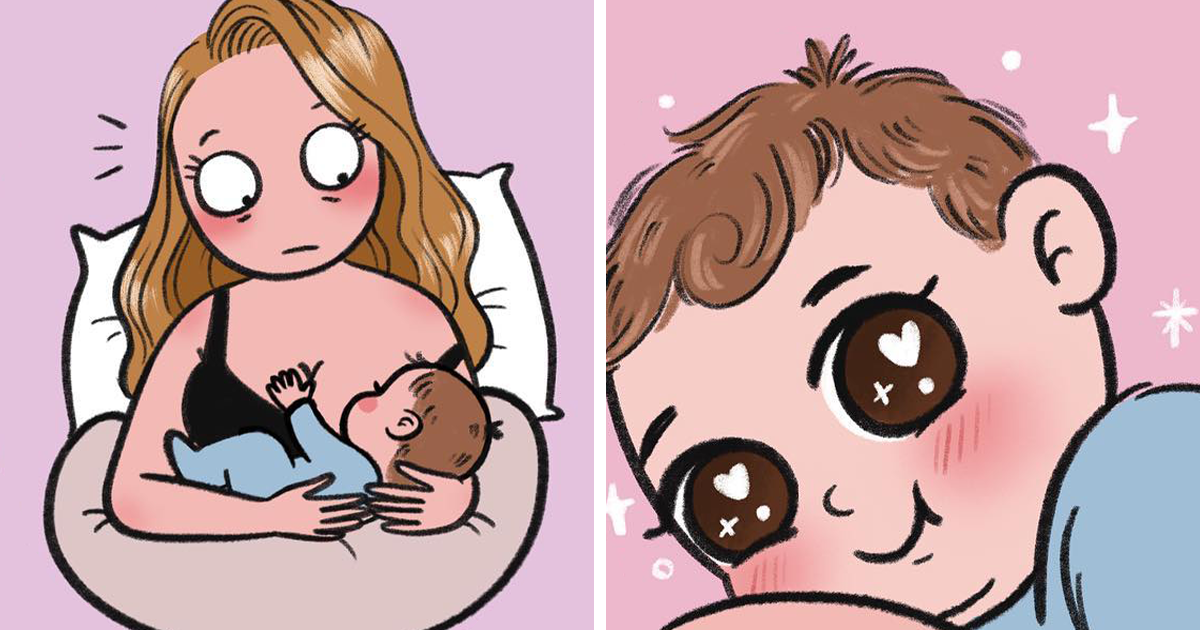
1. Breastfeeding Becomes a Full-Contact Activity
Breastfeeding may look peaceful in carefully staged photographs. Real life can involve awkward positions, surprise movements, leaking, exhaustion, and a baby treating Mom like an all-night restaurant with no closing time.
2. The Puffer Jacket Transformation
A puffer jacket promises warmth and style. Then you put it on and discover that your winter silhouette is less “elegant traveler” and more “luxury sleeping bag with opinions.” At least the wind cannot hurt your feelings.
3. Googling a Minor Symptom
One small headache becomes a twelve-tab medical investigation. Within minutes, you have diagnosed yourself with three rare diseases and begun emotionally preparing your family. The symptom usually disappears immediately after you close the browser.
4. Garlic Has No Reasonable Serving Size
A recipe may request one clove of garlic, but many home cooks recognize that as a polite suggestion rather than a legally binding limit. Add three. Add six. Become temporarily unsuitable for vampire society.
5. Decorating Only the Visible Half
Why fully decorate a Christmas tree placed against a wall? The unseen half does not receive visitors, take photographs, or contribute financially. Strategic laziness is not failure; it is seasonal efficiency.
6. The Embarrassing Memory Ambush
You are resting peacefully when your brain suddenly replays something awkward you said years ago. Nobody else remembers it, but your mind has restored the scene in high definition and scheduled a midnight screening.
7. Drinking Water Right Before Bed
Hydration is important, but timing is everything. A large glass of water before sleep can turn the night into a recurring journey between the bed and bathroom, starring you as a very tired commuter.
Food, Fashion, Photos, and Questionable Choices
8. Halloween Decorations Refuse to Leave
Taking down Halloween decorations can feel deeply unnecessary. A skeleton wearing a Santa hat is technically festive, and a decorative ghost can remain employed through New Year’s with only minor wardrobe adjustments.
9. Eating While Watching Television
You prepare the perfect snack, sit down, and start the show. The snack is gone before the opening credits end. Now you must decide whether to pause, get more food, or spend the episode thinking about food.
10. Dressing for Work Versus Dressing for Fun
Getting ready for a social event can inspire creativity, accessories, and actual enthusiasm. Getting ready for work may involve finding the cleanest acceptable shirt and negotiating with yourself about whether dry shampoo counts as a hairstyle.
11. Children Somehow Wear Clothes Better
An adult carefully coordinates an outfit and still feels uncertain. A child combines rain boots, sunglasses, a superhero cape, and pajama pantsand walks away looking like the creative director of an expensive fashion house.
12. The Selfie Versus Reality Problem
Taking a natural-looking selfie can require forty photographs, six angles, two locations, and a facial expression that says, “I casually woke up like this after significant technical preparation.”
13. New Year’s Eve Expectations
The fantasy includes glitter, music, champagne, and a dramatic countdown. The reality may involve pajamas, snacks, and wondering whether staying awake until midnight is a meaningful achievement or an avoidable administrative task.
14. The Practical Mom Outfit
Motherhood can change the purpose of clothing. An outfit must survive milk, crumbs, floor sitting, sudden weather, and a small person wiping something mysterious on your shoulder. Fashion remains possible, but washable fabric becomes extremely attractive.
Pregnancy, Motherhood, and the Comedy of Changing Bodies
15. The Famous Pregnancy “Glow”
People often praise the pregnancy glow, which may be genuineor may be sweat, hormonal changes, and the result of walking across a room while carrying an increasingly determined passenger.
16. Looking Different in Every Photograph
A woman can look wonderful in the mirror and strangely unfamiliar in a photograph taken seconds later. Cameras possess mysterious powers, especially when operated by someone who believes every angle is equally flattering.
17. The Perfect Gift Is Personal
A gift does not need to be glamorous to be perfect. Sometimes the winner is a useful object, a favorite snack, or something wonderfully specific that proves another person has been paying attention.
18. Loving Plants Without Understanding Them
Buying a houseplant creates immediate optimism. Keeping it alive introduces questions about sunlight, drainage, humidity, and why a supposedly low-maintenance plant has developed the emotional needs of a Victorian poet.
19. Pregnancy Changes Everyday Movement
Standing up, rolling over, tying shoes, and retrieving a dropped object can become advanced physical challenges. A pregnant body is doing remarkable work, even when ordinary movement starts resembling a carefully planned construction project.
20. Comparing a Real Baby Bump With Online Images
Social media may suggest that every pregnant woman has a perfectly shaped bump, coordinated maternity wardrobe, and professionally lit kitchen. Real pregnancy includes diverse bodies, changing proportions, exhaustion, and clothes that suddenly negotiate their own terms.
21. Online Life Versus Real Life
The internet version of a person may appear composed, productive, and beautifully lit. The real-life version may be eating cereal over the sink while wearing a shirt with an unexplained stain. Both versions are authenticone simply has better editing.
22. Cutting Your Own Bangs
The decision often begins with confidence and an online tutorial. It ends with a very short section of hair, several stages of grief, and a new appreciation for trained professionals.
Relationships, Pets, Babies, and New Beginnings
23. Sharing a Bed With a Dog
A dog may weigh twenty pounds but occupy approximately ninety percent of a mattress. Humans are left clinging to the edge while the pet sleeps diagonally, deeply relaxed and completely unaware of property boundaries.
24. Holding a Baby Is Never Just Holding a Baby
Babies pull hair, grab jewelry, drool unexpectedly, and test the structural limits of every neckline. They are adorable, but they approach personal grooming with the confidence of an experimental stylist.
25. The Difference Between Texting and Talking
A person may write bold, hilarious messages and then become remarkably quiet during an in-person conversation. Digital confidence travels at high speed; spoken confidence occasionally gets stuck buffering.
26. Feeling a Baby Kick
A baby’s movement can feel magical, reassuring, surprising, and occasionally like an enthusiastic internal martial arts class. Pregnancy contains moments that are both deeply emotional and objectively strange.
27. Assuming a Baby Girl Must Wear Pink
Color-coded expectations begin early, often before a child can express any preference beyond “hungry” and “not this sock.” Bella’s humor gently exposes how quickly adults attempt to package identity into familiar categories.
28. New Year’s Resolutions Meet Reality
The resolution begins with motivation, a new planner, and perhaps expensive workout clothes. Then normal life returns. Sustainable change is usually less dramatic than January advertising would have us believeand contains fewer inspirational sunrise photographs.
Why Bella Maris’s Humor Feels So Familiar
Bella’s strongest tool is not exaggeration alone. It is recognition. Each comic begins with a detail that could easily be dismissed as too ordinary for storytelling: a bad photograph, an unfinished decoration, a late-night thought, or an uncomfortable outfit. She then isolates the emotional truth inside that moment.
Her humor is also affectionate. The characters may be messy, tired, anxious, or unrealistic, but they are rarely treated cruelly. Bella is not pointing at women and announcing that their habits are ridiculous. She is standing beside them and admitting that she does the same things.
That distinction matters in an online environment where appearance and behavior are constantly evaluated. Research reported by the American Psychological Association has linked reduced social media use with improvements in how some young people felt about their appearance. Pew Research Center has also documented that womenparticularly younger womenface distinctive forms of harassment online. Against that background, comics that normalize imperfection can feel pleasantly rebellious.
The motherhood panels carry additional weight because they show affection without pretending parenting is effortless. Postpartum life can involve substantial physical and emotional changes, while newborn care can make it easy for mothers to neglect their own recovery. Bella’s work finds gentle comedy within that demanding adjustment without denying its difficulty.
The Shared Experiences Behind These 28 Comics
Reading Bella Maris’s comics feels a little like entering a group conversation where nobody needs to explain the background. Someone mentions taking twenty selfies to obtain one usable image, and every woman in the room immediately understands the technical, emotional, and architectural complexity of the project.
That shared recognition is important because many daily frustrations feel strangely private while they are happening. A woman may assume she is the only person who has worn an outfit confidently at home and then disliked it the moment she reached a public place. She may believe everyone else handles pregnancy gracefully, maintains perfect plants, takes effortless photographs, and remembers to remove seasonal decorations on time. Relatable comics quietly reveal that the polished version of adulthood is largely a collaborative myth.
The experience becomes even more familiar when work and household responsibilities enter the picture. Women’s domestic workload is not merely a comic invention. In the United States, 2025 time-use data showed that women were more likely than men to perform household activities on an average day and spent more time doing them when they participated. Among households with young children, women also spent more time providing primary childcare.
Those numbers help explain why a comic about unfinished decorating or a practical mom outfit can land so effectively. The joke is not simply that the character is lazy or unfashionable. The unspoken context may include paid work, meals, cleaning, appointments, childcare, emotional support, and the invisible responsibility of remembering what everyone needs. Decorating the back of the Christmas tree starts to look less like a duty and more like an optional side quest.
There is also something liberating about seeing physical experiences drawn without excessive glamour. Pregnancy, breastfeeding, postpartum recovery, and caring for a baby are meaningful, but meaning does not remove inconvenience. Love can coexist with fatigue. Gratitude can coexist with frustration. A woman can treasure the feeling of her baby moving and still wonder whether the child is practicing kickboxing.
Bella’s relationship and pet comics expand the experience beyond motherhood. Sharing a bed with a dog, communicating differently over text, receiving an oddly perfect gift, or watching food disappear before a television show begins are not exclusively female experiences. However, presenting them through a woman’s perspective gives the collection a recognizable voiceobservant, self-aware, affectionate, and willing to admit that adulthood often involves improvisation.
The most relatable moment may be the gap between expectation and reality. We expect the pregnancy glow, the perfect holiday, the stylish winter outfit, the thriving indoor garden, and the triumphant New Year’s transformation. Reality delivers sweat, pajamas, a spherical coat, one surviving leaf, and a resolution that would prefer to begin next Monday.
That gap is where Bella’s humor lives. Her comics do not ask readers to become more polished. They invite them to laugh at the impossible standard of being polished all the time. The result is not only funny; it is reassuring. You are not the only one taking unflattering photos, overusing garlic, remembering old embarrassments at bedtime, or allowing a dog to occupy an unreasonable portion of the mattress.
Conclusion
Bella Maris turns small, overlooked experiences into humorous comics that feel personal without becoming exclusionary. Her illustrations capture the awkwardness of self-image, the comedy of relationships, the physical realities of pregnancy, and the loving chaos of motherhood.
The appeal of these 28 comics is simple: readers recognize themselves. They see the person they are online, the person they are at home, and the person who should absolutely put down the scissors before attempting another haircut. That recognition transforms ordinary frustration into shared laughterand sometimes that is exactly what a difficult day needs.
Note: This article analyzes the themes and cultural appeal of Bella Maris’s work without reproducing her original comic artwork or dialogue.
SEO Information