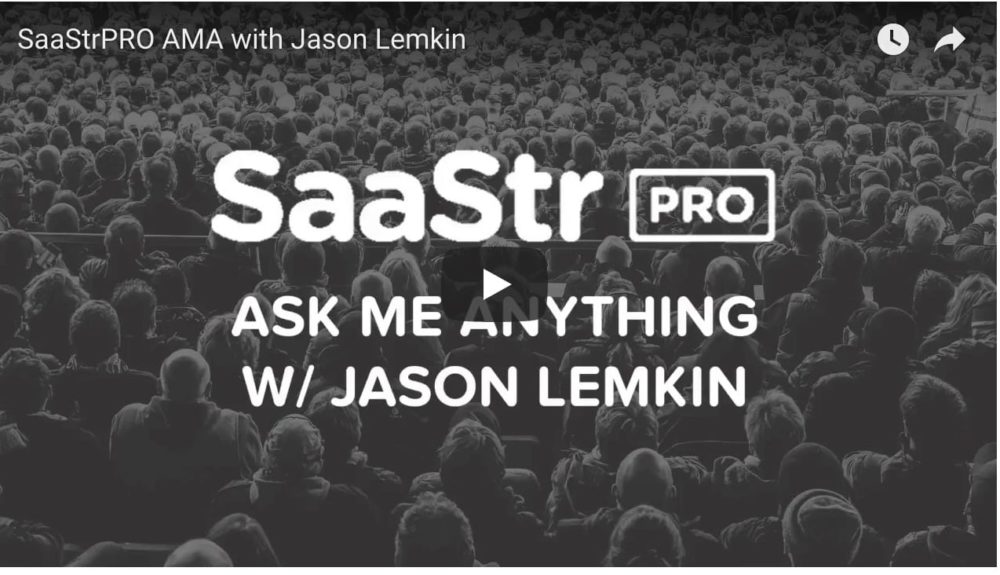

Some launches whisper. This one walked into the room, grabbed a dry-erase marker, and started answering the questions founders usually save for late-night Slack panic. “New: First SaaStr Pro AMA with Jason!” was not just a content drop. It was a signal that SaaStr wanted to turn one-way advice into a two-way operating system for SaaS leaders.
That matters because the internet is overflowing with startup wisdom, and a good chunk of it has the shelf life of gas-station sushi. Founders do not just need more content. They need sharper context. They need someone to say, “Yes, growth is nice, but have you looked at churn?” They need someone to explain whether a pricing increase is brave strategy or just a fancy way to annoy loyal customers. And they need someone credible enough to answer without sounding like a motivational poster wearing a Patagonia vest.
Enter Jason Lemkin. His name carries weight in SaaS for a simple reason: operators listen to operators who have actually been bruised by the job. The appeal of a first SaaStr Pro AMA was not celebrity. It was practicality. The format promised something founders crave and rarely admit out loud: the chance to ask messy, awkward, deeply specific questions before those questions become expensive mistakes.
Why This Announcement Was Bigger Than It Looked
On the surface, an AMA sounds casual. A webinar. A Q&A. Another calendar invite fighting for oxygen between pipeline reviews and “quick syncs” that are never quick. But the first SaaStr Pro AMA with Jason represented something more useful: a move from passive inspiration to active problem-solving.
SaaStr Pro was built around structured weekly lessons, team discussion, and practical implementation. In other words, it was not selling founders another folder full of PDFs they would swear to read “this weekend.” It was built to help management teams learn together, apply lessons together, and ideally argue productively together. That is a much bigger deal than it sounds. Companies usually do not fail because nobody read a blog post on pricing. They fail because the CEO, head of sales, and product lead all read different blog posts and turned them into three conflicting plans.
The genius of the AMA format is that it closes that gap. A team can hear the same answer, react to the same nuance, and then translate it into the same operating decision. That is how you turn “interesting content” into “something we are actually doing on Monday.”
Why Jason Was the Right Person for the First One
Jason Lemkin is not popular in SaaS because he talks in elegant abstractions. He is popular because he tends to skip the perfume and get straight to the smoke. His credibility comes from building EchoSign, selling it to Adobe, helping grow that business after acquisition, and then turning years of scaling lessons into the broader SaaStr community.
That background matters for an AMA. Founders are rarely asking textbook questions. They are asking things like:
- Are we hiring a CRO too early?
- Should we raise prices or leave our early customers alone?
- Is the mid-market a gold mine or just enterprise’s less glamorous cousin?
- Do we actually have product-market fit, or are we just temporarily good at giving demos?
These are not theory questions. They are operating questions. They sit at the uncomfortable intersection of ego, math, customer psychology, and timing. Jason’s style works in that environment because he tends to treat startup advice like a mechanic treats engine noise: listen carefully, find the real issue, and do not pretend the rattling is “part of the journey.”
What the First SaaStr Pro AMA Really Stood For
The first AMA with Jason symbolized three things that still matter for SaaS teams today.
1. Founder learning had to become more structured
One of the quiet truths of startup life is that teams often expect learning to happen by osmosis. People attend one event, skim one article, listen to half a podcast while answering email, and somehow assume wisdom has been uploaded directly into the brain. Spoiler alert: it has not.
The SaaStr Pro model tackled that problem by making learning repeatable. Weekly lessons. Shared takeaways. Homework. Team discussion. This is not glamorous, but neither is compound interest, and both tend to work beautifully over time.
2. The best questions are embarrassingly specific
Generic startup advice is easy to produce and hard to use. Specific advice is harder to produce and much more valuable. An AMA works because it invites the real question hiding under the polished one. Not “How do we scale revenue?” but “We are selling at $500 MRR into mid-market accounts and cannot tell whether to move upmarket, go self-serve, or stay weird. Help.” That is a usable question.
3. Community beats isolated guessing
SaaS can be oddly lonely, especially for early leaders. Everyone looks confident on LinkedIn. Everyone is “excited to announce” something. Meanwhile, inside the company, half the executive team is wondering whether their funnel is healthy or just caffeinated. A member-driven AMA format helps normalize the fact that smart teams wrestle with the same ugly questions at every stage.
The Questions That Made This Format Valuable
What made the first SaaStr Pro AMA worth paying attention to was not just the event itself. It was the kind of questions it started surfacing in follow-up snippets and discussions. Those topics are a treasure map for what SaaS operators actually care about.
Pricing: Because “Just Raise Prices” Is Not a Strategy
One of the smartest themes to emerge from the SaaStr Pro ecosystem was pricing discipline. Founders love talking about pricing the way people love talking about fitness after buying one set of dumbbells. The enthusiasm is real. The follow-through is less impressive.
The useful insight is that pricing is not merely about courage. It is about timing, positioning, and customer trust. If you are growing fast, there may be less reason to squeeze your installed base just because a spreadsheet says you can. Early customers are often more than revenue lines. They are proof, referenceability, and product partners with credit cards.
That is where the AMA format shines. Instead of giving founders a cartoonishly simple “charge more,” it lets a seasoned operator add the nuance: be thoughtful, protect relationships, and attach additional value when you change the equation. In SaaS, the right price is not just what the market can bear. It is what the relationship can sustain.
The Mid-Market: The Quietly Attractive Middle Child
Another standout lesson tied to these AMAs was the idea that the mid-market is often overlooked. Startup folklore usually swings between two extremes. On one side: glorious enterprise contracts with steak-dinner sales cycles and paperwork thick enough to stop a bullet. On the other: self-serve SMB scale, where the dream is product-led growth and the nightmare is support tickets multiplying like rabbits.
The mid-market sits in between, frequently ignored in the storytelling and sometimes full of opportunity in the real world. That makes it classic Jason territory: slightly unsexy, highly practical, and potentially lucrative. A first AMA anchored around these kinds of questions told founders that SaaStr Pro was not here to hand out startup clichés. It was here to point at real white space.
CRO Timing: Hire Too Early, Regret Elegantly
Few decisions are more expensive than hiring the wrong senior revenue leader at the wrong time. The label sounds impressive. The LinkedIn profile glows. The comp package looks like a hostage negotiation. And yet the central question is painfully simple: do you have something ready to scale, or are you trying to hire a grown-up to solve an unsolved founder problem?
The lesson that keeps surfacing in SaaS advice is consistent: do not hire senior sales leadership before you have enough clarity on customer, motion, and repeatability. A great CRO is not a magician. They are a scaler. If the underlying motion is still foggy, even a strong leader can spend months professionally rearranging confusion.
An AMA is perfect for this topic because timing questions are brutally contextual. They depend on deal size, founder strengths, sales velocity, market maturity, and how repeatable the motion actually is. The best answer is rarely a neat milestone. It is a diagnostic conversation.
Product-Market Fit: The Answer Is Usually “Ask More Customers”
Many SaaS companies want product-market fit to behave like a diploma. You pass the test, frame the certificate, and move on to scaling with cinematic confidence. Real life is ruder. Product-market fit is less like graduating and more like gardening. You keep checking the soil, pulling weeds, and learning which parts are growing because of skill versus weather.
That is why the broader body of SaaS guidance surrounding pricing, customer feedback, and founder questioning fits so naturally with a Jason AMA. Strong operators keep returning to the same fundamentals: talk to customers, understand why they buy, confirm they renew, and make sure your pricing matches the value they actually feel. If those basics are fuzzy, no amount of branding language will save you.
Why This Matters for Modern SaaS Teams
Even though the original announcement belongs to an earlier SaaS moment, the logic behind it has aged surprisingly well. In some ways, it has aged like a good leather chair. In other ways, it has aged like a dashboard that now has 47 more metrics than it used to. But the core idea still works.
Today’s SaaS leaders are dealing with AI disruption, more scrutiny on spend, tighter expectations around retention, and buyers who are harder to impress. That environment makes shallow advice even less helpful. Teams need tighter feedback loops, faster pattern recognition, and more candid conversations about what is actually working.
That is exactly what a serious AMA format can deliver when done well. Not startup theater. Not performative thought leadership. Actual operating help.
What Founders Can Learn From the First SaaStr Pro AMA
If you strip away the branding and keep the substance, the first SaaStr Pro AMA with Jason leaves founders with a useful playbook:
- Create a habit of shared learning. The best teams do not consume advice randomly. They process it together.
- Ask narrower questions. A question that feels too specific is usually the one worth asking.
- Treat pricing like strategy, not bravado. The goal is durable value capture, not customer heartburn.
- Be honest about stage. Hiring, packaging, and sales structure all depend on what is repeatable right now.
- Keep the customer in the room. Product-market fit, growth, and retention all get better when customer reality outranks internal mythology.
That may not sound flashy. Good. Flashy is overrated. Startups rarely die from a lack of excitement. They die from confusion wearing confidence as a Halloween costume.
Experience Section: What It Feels Like to Be in a Real SaaS AMA
Now for the human part, because this is where the first SaaStr Pro AMA with Jason becomes more than a business announcement. The actual experience of a candid founder AMA is different from watching a polished keynote or reading a neatly edited blog post. It feels closer to sitting in a room where the lights are bright enough to expose the dust.
You show up thinking you have one question, and ten minutes later you realize you have been carrying five. One is about pricing, one is about hiring, one is about whether your churn is quietly unacceptable, one is about whether your product roadmap is too founder-driven, and one is the secret question you do not want to ask because it sounds like this: “Are we actually doing better, or are we just louder than last quarter?”
A good AMA has a strange emotional rhythm. First comes relief. Somebody else asks the uncomfortable question before you do. Then comes mild panic. The answer is useful, which means you may have to change something. Then comes clarity. You start hearing patterns instead of noise. That is the value. A real AMA does not simply hand out advice; it improves your ability to diagnose your own company.
There is also a special kind of comfort in hearing experienced operators answer without pretending everything is clean and linear. The best SaaS advice usually includes caveats, tradeoffs, and a tiny bit of pain. It sounds less like “Here is the perfect framework” and more like “This worked, but only after we stopped kidding ourselves.” That honesty is refreshing because most founders spend their week surrounded by partial information. Investors see one slice. customers see another. employees see another. The leadership team is often the only group that has to hold the whole messy picture at once.
That is why the community aspect matters so much. In a strong AMA environment, you realize your company is not uniquely broken just because it is struggling with pricing, hiring, handoffs, or market positioning. Other teams are wrestling with the same things. Some are ahead of you. Some are behind. Almost all are less polished than their public persona suggests. That realization is not just emotionally helpful; it is strategically helpful. It makes better questions possible.
And then there is the practical afterglow. The best AMAs linger because they trigger immediate conversations inside the company. After the session, someone says, “We should revisit our segmentation.” Someone else says, “We are definitely not ready for that executive hire.” The head of product says, “We need five more customer interviews before we touch packaging.” Suddenly the event is no longer content. It is a catalyst.
That is the real experience tied to a launch like “New: First SaaStr Pro AMA with Jason!” It is not the thrill of attending a cool startup event. It is the more valuable, less glamorous experience of leaving with clearer thinking. And in SaaS, clearer thinking is a serious competitive advantage. It saves time, saves money, and occasionally saves you from making a very expensive decision with tremendous confidence and absolutely no business making it.
Conclusion
The first SaaStr Pro AMA with Jason mattered because it turned SaaS advice into something more interactive, more candid, and more operationally useful. It recognized that founders and management teams do not just need inspiration. They need context, challenge, and better questions. The best startup education is not a motivational monologue. It is a sharp conversation that helps a company see itself more clearly.
That is why this announcement still feels relevant. Whether the question is pricing, hiring, product-market fit, or go-to-market focus, the winning move is usually not to chase more noise. It is to create a stronger learning loop. The first SaaStr Pro AMA with Jason promised exactly that: a place where real SaaS questions could get real SaaS answers. No fluff, no jazz hands, and ideally fewer avoidable mistakes.
SEO Tags