
Note: This article is a cultural and educational overview of folklore, mythology, and religious traditions. It treats each figure respectfully as part of storytelling, belief, symbolism, and historynot as a prediction or claim that anyone is literally about to wake up under a mountain and fix your Wi-Fi.
Across the world, people have told stories about heroes who are not truly gone. They are sleeping, hidden, waiting, enchanted, preserved, or promised to return when humanity finally hits the big red emergency button. These “sleeping saviors” appear in Celtic legend, medieval European folklore, Buddhist tradition, Hindu eschatology, Byzantine memory, Portuguese messianism, and more. The details change, but the emotional engine is surprisingly familiar: when the world becomes too broken for ordinary leadership, someone greater may come back.
The theme is often called the sleeping hero, king asleep in the mountain, or returning savior myth. In many versions, the hero rests in a cave, mountain, island, castle, paradise, or heavenly realm. Sometimes they are surrounded by loyal companions. Sometimes their beard grows through a stone table, because apparently even legendary monarchs cannot escape awkward grooming problems. Sometimes they wait for a horn, a prophecy, a national crisis, or the collapse of moral order.
Below are ten of the most fascinating sleeping saviors who, according to legend or belief, might return to save a nation, renew the world, restore justice, or at least remind humanity that hope has always had a flair for dramatic entrances.
1. King Arthur: The Once and Future King
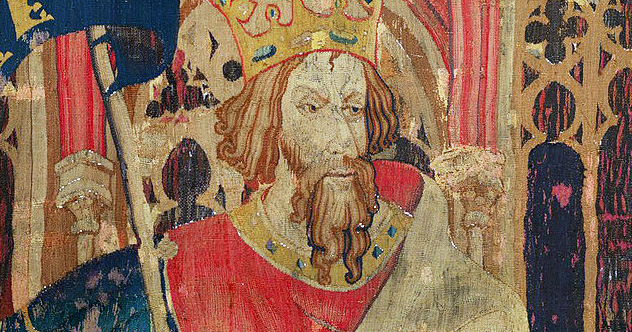
Few sleeping hero legends are as famous as King Arthur. In medieval romance, Arthur is the great British king associated with Camelot, the Round Table, Excalibur, and a court full of knights who clearly had stronger scheduling discipline than most modern group chats. After his final battle, Arthur is often said to be taken to Avalon, a mysterious island of healing and enchantment.
The key idea is that Arthur did not simply die. In popular tradition, he waits until Britain needs him again. This is why he is remembered as “the Once and Future King.” The phrase captures the dream that a golden age can return, even after betrayal, war, and decline. Arthur’s legend is powerful because it combines political hope with moral longing. He represents courage, unity, justice, and the idea that leadership should be more than a chair with a crown on top.
As a sleeping savior, Arthur is not just a warrior king. He is a symbol of unfinished promise. Whenever societies feel divided, people return to Arthurian legend because it asks a comforting question: what if the best version of us is not lost, only waiting?
2. Frederick Barbarossa: The Emperor Beneath the Mountain
Frederick I Barbarossa, the red-bearded Holy Roman Emperor, became one of Europe’s classic “king asleep in the mountain” figures. According to German legend, Barbarossa sleeps inside the Kyffhäuser Mountain, seated at a stone table. His beard grows longer and longer as he waits for the right moment to return.
The story often includes ravens circling the mountain. As long as they continue to fly, Barbarossa’s time has not yet come. When the birds disappear, the sleeping emperor will awaken and restore greatness. It is a wonderfully cinematic image: ancient ruler, underground hall, supernatural alarm system, and a beard that deserves its own postal code.
Barbarossa’s legend reflects the desire for unity during periods of fragmentation. Germany’s history included many competing princes, territories, and loyalties, so the sleeping emperor became a symbol of national restoration. His return was imagined not merely as a military rescue but as a repair of order itself. In SEO terms, he is basically the premium keyword for “sleeping hero legends Europe.” In folklore terms, he is the mountain napper-in-chief.
3. Charlemagne: The Emperor Waiting in the Deep Places
Charlemagne, the great Frankish ruler crowned emperor in the year 800, also appears in sleeping emperor traditions. Various legends place him beneath mountains or in hidden chambers, waiting with his knights until a time of great need. In some accounts, he sleeps in the Untersberg region near the German-Austrian border; in others, his legend blends with the same “underground emperor” motif attached to Barbarossa.
Charlemagne’s historical reputation made him perfect for this role. He was remembered as a unifier, lawgiver, Christian ruler, military leader, and patron of learning. Whether admired, mythologized, or politically repurposed, he became larger than life. Once history inflated him into legend, folklore gave him the most efficient storage solution: put him in a mountain until needed.
His sleeping savior story suggests that people often turn great rulers into emergency reserves. It is not enough for the hero to have lived. The hero must remain available. Charlemagne’s imagined return speaks to a common human wish: that wisdom, courage, and order can be summoned back when the present feels chaotic.
4. Holger Danske: Denmark’s Sleeping Defender
Holger Danske, also known as Ogier the Dane, is one of Denmark’s beloved legendary protectors. His story has roots in medieval French epic literature, but in Danish folklore he became a national hero. The best-known tradition places him beneath Kronborg Castle, the famous fortress in Helsingør, where he sleeps until Denmark faces its greatest danger.
According to the legend, when the country is threatened, Holger will wake, rise from his resting place, and defend the Danish people. Statues and stories have helped keep his image alive, turning him into a cultural emblem of national resilience. He is the kind of hero who does not need constant attention. He simply waits below the castle like the world’s most patient security guard.
Holger’s legend is especially interesting because it shows how stories migrate. A figure from medieval romance can become a symbol of modern national identity. The sleeping savior motif is flexible: it can belong to empires, kingdoms, small communities, and even tourist sites with excellent gift shops.
5. Fionn mac Cumhaill: Ireland’s Hero in the Cave
Fionn mac Cumhaill, often anglicized as Finn McCool, is a giant of Irish myth in more ways than one. He leads the Fianna, a band of warrior-hunters, and appears in the Fenian Cycle, one of the great bodies of Irish legendary storytelling. Fionn is associated with wisdom, poetry, hunting, loyalty, and adventures that make ordinary weekend plans look painfully underachieving.
In some versions of Irish legend, Fionn is not dead. He sleeps in a cave with the Fianna, waiting for the hour when Ireland needs him most. A horn may awaken him. When that moment comes, he and his companions will rise in full strength to defend the land.
Fionn’s sleeping savior role has a different flavor from imperial legends. He feels closer to the landscape: caves, hills, hunting grounds, and oral storytelling. He is not just a ruler on pause; he is the spirit of heroic Ireland held in reserve. His legend suggests that national identity can live inside stories, ready to wake whenever language, memory, or culture calls its name.
6. Constantine XI: The Marble Emperor
Constantine XI Palaiologos was the last Byzantine emperor, remembered for the fall of Constantinople in 1453. Around his memory grew the legend of the “Marble Emperor.” In this tradition, Constantine did not truly perish in the city’s final hours. Instead, he was miraculously preserved, turned to marble, or hidden away until the time comes for his return.
The legend says he waits near the Golden Gate of Constantinople, ready to awaken and reclaim what was lost. Historically, this is not a record of events; it is an expression of grief, hope, and cultural memory. When an empire falls, people often need more than a timeline. They need a story that gives defeat a future.
Constantine XI as a sleeping savior represents the emotional aftermath of catastrophe. The Marble Emperor is not simply about politics. He is about refusing to believe that an entire world can vanish overnight. In that sense, he is one of the most haunting figures in the global family of returning hero myths.
7. King Sebastian of Portugal: The Hidden King in the Fog
King Sebastian of Portugal disappeared after the Battle of Alcácer Quibir in 1578, a disaster that triggered a succession crisis and deeply shook Portuguese identity. His body was not clearly recognized by many of his followers, and a messianic belief known as Sebastianism took root. According to this tradition, Sebastian would return in Portugal’s hour of need, often imagined as coming through the fog.
This is not a mountain-sleeping story in the strictest sense, but it belongs naturally among returning savior myths. Sebastian became “the Hidden One,” a king whose absence created a space for hope, rumor, and prophecy. Over time, pretenders appeared, and the legend traveled beyond Portugal, influencing movements in Brazil as well.
What makes Sebastian’s story so human is its connection to uncertainty. When people do not see a clear ending, imagination may refuse to close the book. His legend shows how missing leaders can become mirrors for national longing. Fog, in this case, is not just weather. It is grief with a dramatic lighting department.
8. Saint Wenceslas and the Knights of Blaník
In Czech legend, Saint Wenceslas is connected with a sleeping army hidden inside Mount Blaník. When the Czech lands face their darkest hour, the mountain will open, Wenceslas and his knights will awaken, and peace will be restored. It is one of the most enduring Central European examples of the sleeping army motif.
Wenceslas is both a historical ruler and a saintly national patron, which gives the legend a double force. He is not merely a heroic commander; he also represents moral protection and spiritual identity. The hidden knights add another layer: salvation is collective. The hero does not return alone. He brings a community of the faithful, the brave, and the prepared.
The Blaník legend is a powerful example of how geography becomes sacred through story. A mountain is no longer just a mountain. It becomes a sealed promise. Every hill, cave, and shadow can feel like a door waiting for the right century to knock.
9. Maitreya: The Future Buddha
In Buddhist tradition, Maitreya is the future Buddha. He is often described as a bodhisattva presently residing in Tushita heaven, destined to descend to earth when the teachings of Gautama Buddha have faded. Maitreya will renew the dharma, bringing fresh understanding to a world that has lost its way.
Maitreya is not a “sleeping king under a mountain” in the European folklore sense. Still, he belongs in this broader conversation because he represents the waiting savior, the future teacher, the figure whose arrival is linked to spiritual restoration. His role is less about dramatic rescue and more about renewal through wisdom.
That distinction matters. Not every savior returns with thunder. Some return with teaching. Maitreya’s future is rooted in compassion, moral clarity, and the restoration of a path. In a world obsessed with instant solutions, the idea of a future Buddha suggests that saving the world may begin with remembering how to understand it.
10. Kalki: The Future Avatar of Vishnu
In Hindu tradition, Kalki is the future and final avatar of Vishnu, expected to appear at the end of the Kali Yuga, an age associated with moral decline and disorder. Kalki’s role is to restore dharma and begin a new cycle of time. Like Maitreya, Kalki is not sleeping in a cave, but he is a powerful example of the future savior motif.
Kalki’s story operates on a cosmic scale. The issue is not merely one kingdom in trouble; the entire age has become unbalanced. His arrival marks a reset, a renewal of order after corruption has reached its limit. This makes Kalki one of the grandest returning savior figures in world mythology and religious imagination.
As a symbol, Kalki reflects a profound belief that decline is not the final chapter. Time moves in cycles, and even the darkest period can give way to renewal. If Arthur is the dream of national return, and Barbarossa is the dream of imperial unity, Kalki is the dream of cosmic correction.
Why Do Sleeping Savior Myths Keep Appearing?
The repeated appearance of sleeping saviors is not random. These stories answer deep emotional needs. They give communities a way to survive defeat, uncertainty, occupation, decline, or moral crisis. They say, “The story is not over.” That sentence has kept many cultures breathing through difficult centuries.
One reason the motif works so well is that sleep is different from death. Death feels final. Sleep suggests return. A sleeping hero can be imagined as preserved, unchanged, and untouched by the compromises of the present. While living leaders disappoint, the sleeping savior remains perfect because he never has to deal with tax policy, social media, or committee meetings.
Another reason is geography. Mountains, caves, islands, castles, and hidden gates make hope feel physical. People can point to a place and say, “There.” The legend becomes part of the landscape. That is why the Kyffhäuser, Kronborg, Avalon, Blaník, and the Golden Gate matter so much. They turn memory into location.
Finally, these myths often appear when identity is under pressure. A community that feels threatened may imagine a protector who embodies its best self. The returning hero is not only expected to defeat enemies. He is expected to restore meaning.
Modern Lessons From Ancient Sleeping Heroes
Even if we read these legends symbolically, they still have something to say. A sleeping savior can represent courage that has gone dormant, justice waiting to be awakened, or cultural memory that refuses to disappear. The hero under the mountain may not be a person at all. It may be a community’s hidden strength.
That reading makes the stories surprisingly modern. Today, people still look for saviors: brilliant leaders, new technologies, reform movements, spiritual teachers, or one magical productivity app that will finally organize their life. Spoiler: the app will send notifications, and you will ignore them. But the longing is ancient. We want help from beyond our current limits.
The healthiest way to understand sleeping savior myths may be this: they are not invitations to wait passively. They are reminders that renewal is possible. The horn that wakes Fionn, the danger that wakes Holger, the moral collapse that brings Kalki, and the fading dharma that calls Maitreya all point toward responsibility. The world changes when something hidden wakes upsometimes inside the legend, sometimes inside us.
Experience Section: What These Stories Feel Like in Real Life
There is a strange comfort in walking through an old castle, standing near a mountain, or reading a myth and realizing that people centuries ago worried about the same things we do. They feared collapse. They missed better leaders. They wondered whether justice had packed a suitcase and left town. And then they told stories about someone sleeping nearby, ready to return when the moment became serious enough.
The experience of these legends is not only intellectual. It is atmospheric. Imagine visiting Kronborg Castle and hearing the story of Holger Danske sleeping below. The stone corridors suddenly feel less like architecture and more like a secret. Or picture the Kyffhäuser landscape, where Barbarossa’s legend turns a mountain into a national waiting room. Even if you do not believe the story literally, you may feel its emotional logic: people needed a place to store hope.
Reading about King Arthur creates a similar feeling. Avalon is not just a location; it is a mood. It is the place where the broken hero goes when history cannot bear to let him die. Arthur’s story feels especially relevant in times of division because Camelot represents the fantasy of a table where everyone has a seat, even if half the knights seem one bad decision away from ruining the whole group project.
Fionn mac Cumhaill offers a more earthy experience. His sleeping legend feels tied to hills, caves, stories told aloud, and the rhythm of Irish landscape. He does not feel locked in a palace. He feels folded into the land itself. That is one of the great pleasures of folklore: it makes nature feel inhabited by memory.
The Marble Emperor and King Sebastian feel more sorrowful. Their legends grow from historical trauma and uncertainty. These are not simply adventure stories. They are grief refusing to become silence. When people imagine Constantine XI or Sebastian returning, they are not only dreaming of victory. They are trying to heal a wound that history left open.
Maitreya and Kalki expand the experience beyond national hope. They ask what happens when the whole age feels tired, confused, or morally upside down. Their stories suggest that renewal may require more than a hero with a crown. It may require wisdom, compassion, and a reset of values. That is why returning savior myths still matter. They are not just about the past. They are imaginative tools for thinking about the future.
Personally, the most meaningful way to read these stories is not “Someone will come fix everything.” It is “Every culture has imagined that goodness can sleep without dying.” That is a beautiful idea. Courage can sleep. Justice can sleep. Wisdom can sleep. A society’s better self can sleep. But sleep is not extinction. Under the mountain, inside the cave, beyond the island, behind the fog, or in the future age, something waits to be awakened.
And perhaps that is why these tales survive. They are less about magical rescue than moral memory. They whisper that when the world feels beyond repair, the answer may not be to invent hope from scratch. It may be to wake the hope that was already there.
Conclusion
The legends of sleeping saviors who might return to save the world reveal how deeply humans crave restoration. King Arthur, Barbarossa, Charlemagne, Holger Danske, Fionn mac Cumhaill, Constantine XI, King Sebastian, Saint Wenceslas, Maitreya, and Kalki come from different traditions, but they share one powerful idea: the best forces in the universe may be hidden, not gone.
These stories are not only entertaining myths. They are cultural survival tools. They helped communities process defeat, preserve identity, and imagine a future beyond crisis. Whether the hero sleeps under a mountain, waits in a heavenly realm, hides behind fog, or belongs to a future cosmic age, the message is remarkably consistent. When darkness deepens, humanity looks for a dawn with a familiar face.
In the end, the most useful sleeping savior may be the one inside human imagination. These legends remind us that courage, wisdom, justice, and compassion can return whenever people are willing to wake them.