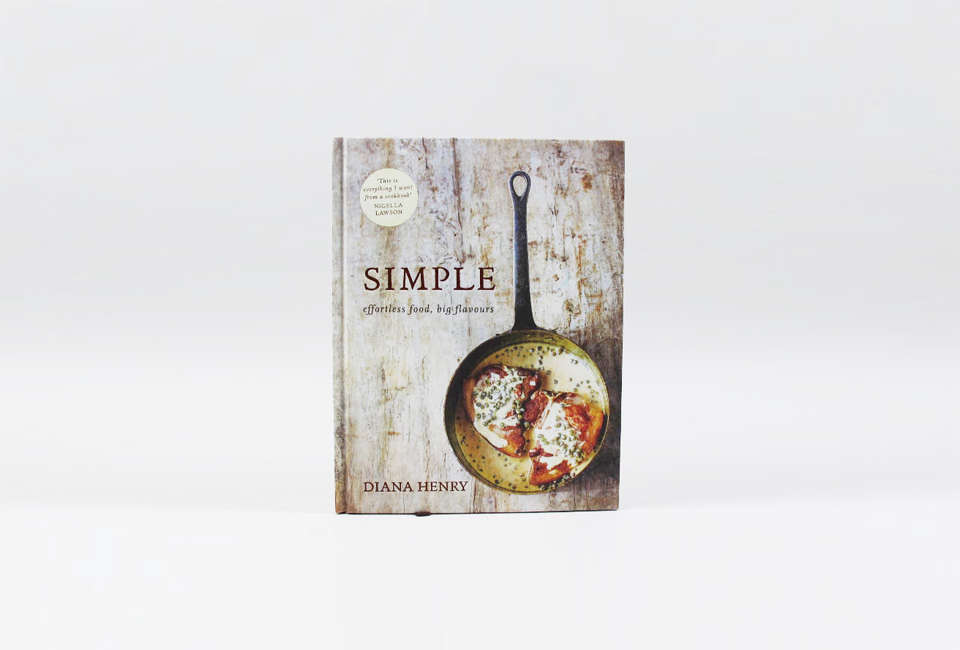

Some cookbooks seem to assume that dinner begins with a leisurely afternoon, a perfectly stocked refrigerator, and a charming little market two blocks away selling exactly the obscure herb you need. SIMPLE: effortless food, big flavours is interested in a more recognizable situation: you are hungry, the day has been long, and nobody wants to wash twelve pans.
Written by acclaimed food writer Diana Henry, Simple: Effortless Food, Big Flavors approaches everyday cooking with a useful idea: simple food does not have to taste plain. Instead of stripping recipes down until dinner resembles a punishment, Henry uses roasting, strong seasonings, contrasting textures, herbs, yogurt, citrus, spices, and smart pantry ingredients to create meals that feel far more ambitious than the effort required.
That philosophy explains why the cookbook continues to attract home cooks looking for dependable weeknight recipes as well as dishes impressive enough for guests. It is practical without becoming boring, globally inspired without turning every Tuesday-night dinner into a scavenger hunt, and sophisticated without demanding restaurant-level technique.
What Is SIMPLE: Effortless Food, Big Flavours?
Published in 2016, SIMPLE is one of Diana Henry’s most celebrated collections of home cooking. Henry was already known for books such as A Bird in the Hand, which earned major culinary recognition for its imaginative approach to chicken. With SIMPLE, however, she turned her attention more broadly toward the question most home cooks face every day: how do you make dinner easy without making it dull?
The resulting collection contains more than 150 recipes spanning eggs, vegetables, fish, chicken, pork, roasts, pasta, grains, salads, toast-based meals, and desserts. The recipes move freely between Mediterranean, Middle Eastern, Asian, Indian, Nordic, and British influences.
The word “simple” therefore describes the cooking process more than the flavor profile. You may encounter sumac, harissa, pomegranate molasses, Shaoxing wine, caraway, preserved lemon, or plenty of fresh herbs. Yet those ingredients are generally used as shortcuts to complexity rather than excuses to create extra work.
Simple Cooking Does Not Mean Boring Cooking
There is a dangerous version of simple cooking in which everything eventually becomes boneless chicken breast seasoned with optimism. Henry avoids that trap.
Her recipes often rely on one or two assertive elements that make ordinary ingredients memorable. Roast carrots become more interesting with cumin, coriander, avocado, yogurt, and pomegranate. Cauliflower gains personality from Parmesan, garlic, and thyme. Chicken can meet orange, oregano, olives, mustard, chiles, dates, or warming spices depending on which direction dinner is traveling that evening.
This is one of the central lessons of SIMPLE: effortless food, big flavours: complexity on the plate does not necessarily require complexity in the kitchen.
Flavor Comes From Contrast
Henry repeatedly combines opposites: hot and cool, crisp and creamy, sweet and salty, rich and acidic. That is why yogurt appears so effectively beside spices, herbs brighten roasted foods, fruit shows up with savory ingredients, and lemon or vinegar frequently provides the final spark.
A good example of the approach is a plate of cumin-and-coriander roasted carrots with avocado and pomegranate. Carrots provide sweetness, spices contribute warmth, avocado adds richness, yogurt cools the dish, and pomegranate seeds bring acidity, freshness, and texture.
Nothing requires advanced culinary gymnastics. The excitement comes from assembling ingredients intelligently.
The Pantry Is Your Secret Sous-Chef
One reason Henry’s easy recipes can produce such big flavors is that she treats the pantry as an active cooking tool rather than the place where cans of beans go to contemplate eternity.
A useful pantry for this style of cooking might include good olive oil, mustard, capers, canned beans, anchovies, dried pasta, nuts, spices, vinegar, honey, soy sauce, chile flakes, and a few stronger condiments such as harissa or pomegranate molasses.
You certainly do not need every ingredient before opening the cookbook. In fact, part of the pleasure is gradually expanding your collection. Buy sumac for an omelet and suddenly you discover that it also wakes up roasted vegetables, yogurt sauces, salads, and chicken. A jar of harissa may begin as a recipe requirement and end up permanently stationed in the refrigerator door.
A Few Strategic Ingredients Can Change Dinner
Imagine plain roasted chicken. Perfectly respectable. Nobody complains.
Now give that chicken orange, oregano, olives, garlic, or a sharp gremolata. The basic technique barely changes, but the finished meal suddenly seems designed rather than merely cooked.
This is Henry’s recurring trick. She spends effort where it produces the largest return. Rather than adding seven additional techniques, she adds the right ingredient.
Vegetables Get More Than a Supporting Role
SIMPLE also reflects the increasingly vegetable-forward way many people cook. Henry has explained that her own eating evolved toward more vegetables and somewhat less red meat, and the book mirrors that change.
Vegetables are not treated as obligatory green objects assigned to the corner of the plate. They receive the same flavor-building attention as meat and fish.
Parmesan-roasted cauliflower with garlic and thyme is the kind of dish that demonstrates how little intervention good vegetables sometimes need. Carrots get spices and jewel-like pomegranate seeds. Greens can be paired with a powerful Asian-style dressing balancing chile, ginger, garlic, lime, sweetness, and salty fish sauce.
These combinations help explain why the book works for households trying to eat more plants without making dinner feel like an exercise in self-discipline.
Global Flavors Without Culinary Tourism
Henry’s cooking draws inspiration from a wide range of culinary traditions. You might move from Turkish-inspired pasta to Moroccan-spiced chicken, then encounter Japanese-style rice bowls, Indian spices, Mediterranean vegetables, Asian dressings, or Italian pasta.
That variety keeps the book useful. Cook from it repeatedly and dinner does not begin to taste like the same meal wearing different parsley.
One evening could bring pasta with caramelized onions, yogurt, and dill. Another might feature Moroccan-spiced chicken with dates and eggplant. Another could involve squid flavored with ginger and Shaoxing wine.
The recipes are not meant to replace deeper regional cookbooks or claim comprehensive instruction in those cuisines. Their purpose is home cooking: Henry borrows flavor combinations and techniques to broaden the everyday cook’s repertoire.
Recipes That Show What SIMPLE Does Best
Orange-Oregano Roast Chicken
Roast chicken is already a champion of low-effort cooking because much of the work occurs while you are doing something else. Henry’s approach demonstrates how citrus, herbs, and a punchy olive-based garnish can turn the familiar into something dinner-party worthy.
The important lesson is transferable: when the main cooking technique is easy, spend your creativity on the seasoning and finishing touches.
Turkish Pasta With Caramelized Onions, Yogurt, and Dill
Pasta is practically the national emergency service of weeknight cooking. Henry gives it a different personality by introducing sweet onions, tangy yogurt, and herbs rather than relying on another tomato sauce.
It is exactly the sort of idea that makes a cookbook useful years after publication. You learn not merely a recipe but another framework for thinking about pasta.
Cumin-Coriander Roast Carrots With Pomegranate and Avocado
This dish illustrates Henry’s gift for making vegetables luxurious without disguising them. Roasting intensifies the carrots’ sweetness, spices add fragrance, avocado introduces softness, and pomegranate provides tart little explosions that prevent the plate from becoming heavy.
It also looks impressive, which is convenient when guests arrive and you would prefer not to disclose how little suffering was involved.
Bitter Chocolate Cake and Espresso-Flavored Desserts
The simplicity philosophy extends into dessert. Henry’s sweet recipes favor strong flavor combinations and dependable formats rather than unnecessary pastry-school drama. Chocolate, coffee, fruit, nuts, cream, and fragrant ingredients such as citrus or lavender can create sophisticated results without requiring tweezers or architectural blueprints.
Is Everything in SIMPLE Really Simple?
Not exactly, and that is worth saying.
Several American reviewers have pointed out that Henry’s definition of simplicity is more sophisticated than the modern “five ingredients in fifteen minutes” interpretation. A recipe can have an easy method while still requiring spices, herbs, or condiments that are not automatically sitting in every American kitchen.
That distinction matters. SIMPLE is not primarily a cookbook for people who want dinner made from three convenience products. It is for people who enjoy cooking but do not want cooking to consume the entire evening.
Some recipes require a reasonably adventurous pantry. Others are remarkably straightforward. Once ingredients such as sumac, harissa, good vinegar, capers, cumin, coriander, and quality olive oil become regular household supplies, however, many of the meals become dramatically easier to improvise.
So is the book simple? Yes, if “simple” means manageable methods, sensible preparation, and an excellent effort-to-flavor ratio. Less so if your definition means that every ingredient must already be available at a gas station.
Why Diana Henry’s Writing Matters
A cookbook lives or dies by its recipes, but people often return to certain cookbook authors because of the company they provide. Henry writes with the confidence of someone who has cooked the dish enough times to know what matters and what does not.
Her instructions tend to leave room for common sense. The reader is encouraged to taste dressings and adjust their sweet, salty, sour, or spicy balance. Vegetables should be properly browned. Ingredients should look and taste good. A recipe is guidance, not a courtroom deposition.
This conversational quality makes ambitious combinations seem approachable. Instead of feeling as though a chef is testing you, the reader feels as though an experienced cook is pointing toward the shortest road to a very good dinner.
What Home Cooks Can Learn From SIMPLE
Even if you never cook every recipe, SIMPLE: effortless food, big flavours offers several broadly useful lessons.
- Roasting is an efficiency tool. High heat creates browning and concentration while freeing the cook to handle something else.
- Acid is often the missing ingredient. Lemon, lime, vinegar, yogurt, or tart fruit can make rich food feel brighter.
- Fresh herbs are more than decoration. Dill, cilantro, mint, parsley, and basil can completely redirect a dish.
- Texture creates interest. Nuts, seeds, crisp vegetables, creamy yogurt, and juicy fruit make simple recipes feel layered.
- Condiments deserve pantry space. Harissa, mustard, capers, anchovies, and similar ingredients provide instant depth.
- Simple techniques reward good ingredients. When there is nowhere for mediocre produce to hide, quality matters more.
The broader lesson is perhaps the most valuable: good everyday cooking is not about adding more. It is about knowing which additions matter.
Who Will Enjoy SIMPLE Most?
This cookbook is particularly well suited to confident beginners and intermediate home cooks who want more interesting flavors without significantly more labor.
It is also useful for experienced cooks caught in the familiar dinner rut. If you have ever opened the refrigerator, stared at chicken thighs for thirty seconds, and wondered whether your family would notice if you quietly moved to another country, Henry provides options.
People who enjoy Mediterranean and Middle Eastern ingredients will find plenty to like, as will cooks interested in vegetables, roast dinners, straightforward entertaining, and flexible weeknight meals.
Absolute beginners may occasionally need to familiarize themselves with an ingredient or technique, but the methods themselves are rarely intimidating. More importantly, the food gives beginners something worth growing toward.
A Real-World Experience: What Cooking With the SIMPLE Philosophy Feels Like
The best way to understand SIMPLE: effortless food, big flavours is to imagine what happens after its recipes leave the beautiful photography and enter an ordinary kitchen on an ordinary week.
On Monday, the first noticeable change is not necessarily the meal. It is the grocery cart. Instead of buying five elaborate meals with completely unrelated ingredients, you begin collecting reusable flavor builders: lemons, Greek yogurt, cilantro, dill, garlic, good olive oil, a jar of harissa, cumin, coriander, perhaps pomegranate molasses. The total collection looks suspiciously modest considering the number of directions dinner can now take.
Tuesday might involve roasted vegetables. The preparation seems almost too easy: chop, season, add spices, roast. Then yogurt, herbs, something acidic, and perhaps nuts or seeds arrive at the end. Suddenly the vegetables that normally serve as background scenery are the part everyone keeps taking from the platter.
Wednesday is where the philosophy proves useful. It is late. Enthusiasm has left the building. This is exactly when a strong pantry matters. Pasta plus caramelized onions, yogurt, herbs, or anchovies is no longer “nothing for dinner.” Eggs with feta and sumac are not surrender. Toast topped intelligently can be dinner rather than evidence that something has gone terribly wrong.
By Thursday, you begin to understand Henry’s idea of simplicity. The recipes do not always minimize the number of flavors. They minimize unnecessary labor. A roasting pan can contain several layers of flavor without demanding several saucepans. A dressing may involve six ingredients but require little more than stirring and tasting. Chicken can taste dramatically different simply because the seasoning has moved from Europe toward North Africa or Southeast Asia.
There can also be a small adjustment period. Someone accustomed to salt, pepper, and garlic powder may look at sumac or pomegranate molasses with the expression usually reserved for unfamiliar electrical equipment. Yet these ingredients quickly become less exotic once they have been used twice. Soon the issue reverses: you start wondering why the bottle is already empty.
Friday is when this cooking style becomes particularly good for entertaining. Many recipes look more elaborate than they are. Roast something generously. Put a bright salad in a wide bowl. Add yogurt sauce. Scatter herbs. Bring everything to the table on platters instead of carefully constructing individual servings.
The result feels generous rather than formal.
This may be the most lasting experience associated with SIMPLE. The book encourages a form of home cooking in which the cook can participate in dinner instead of spending the evening performing emergency procedures over six burners. Food can still be colorful, surprising, fragrant, and worthy of guests. It simply does not need to make the cook miserable first.
After several meals, the biggest change is likely to be improvisational confidence. You start noticing patterns: roasted vegetables appreciate acidity; yogurt likes spices and herbs; sweetness can balance chile; nuts provide crunch; fruit can belong in savory cooking; yesterday’s herbs should probably become today’s sauce.
At that point, the cookbook has done more than provide recipes. It has quietly supplied a vocabulary for building flavor.
Conclusion: Big Flavor Without the Big Production
SIMPLE: effortless food, big flavours succeeds because Diana Henry does not confuse simplicity with deprivation. Her food can contain chile heat, citrus brightness, fragrant spices, creamy yogurt, sweet fruit, salty cheese, fresh herbs, roasted vegetables, and crisp nuts while remaining realistic enough for home kitchens.
The cookbook is especially valuable in an era when home cooks are pulled between two extremes: hyper-complicated aspirational cooking and ultra-fast meals designed almost entirely around speed. Henry offers a more appealing middle ground. Dinner can be practical and exciting at the same time.
If there is a single principle worth carrying from the book into everyday cooking, it is this: reduce the work, not the pleasure. Roast instead of fussing. Keep useful condiments nearby. Buy good vegetables. Finish dishes with acid and herbs. Let one excellent ingredient do the job of several mediocre ones.
That is the real appeal of effortless food with big flavors. You get the kind of dinner that suggests you made an impressive effort while knowing, privately, that the oven did most of the heavy lifting. There is no requirement to confess.
Note: This article is an independent editorial overview based on established information about Diana Henry’s cookbook, its recipes, culinary philosophy, and documented critical reception. Recipe descriptions are summarized rather than reproduced.