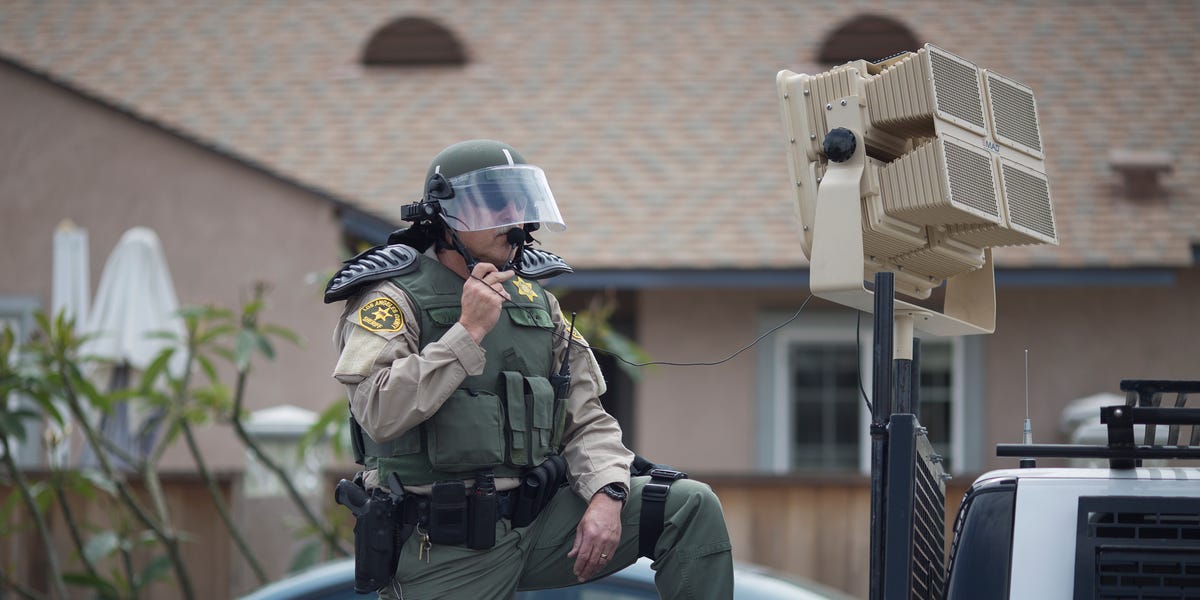

Imagine a loudspeaker that does not politely fill a room like a normal public-address system, but instead sends sound in a focused beam across a harbor, a border crossing, a disaster zone, or a noisy crowd. That, in plain American English, is the basic idea behind an LRAD sound cannon. LRAD stands for Long Range Acoustic Device, and while the nickname “sound cannon” sounds like something a movie villain would mount on a moon base, the real technology is more practical, more complicated, and more controversial.
An LRAD is a specialized acoustic hailing device designed to project highly intelligible voice messages and attention-commanding tones over long distances. It is used by military units, law enforcement agencies, emergency managers, maritime security teams, and critical infrastructure operators. In its safest and most defensible form, LRAD is a long-distance communication tool: “Move away from the restricted area,” “Evacuate this zone,” “This vessel is approaching a security perimeter,” and so on. In its most controversial form, it becomes a crowd-control device capable of producing painfully loud alert tones that may risk hearing injury.
So how does LRAD work? The short answer: it uses an array of acoustic drivers, waveguides, amplification, and directional sound physics to send a concentrated beam of audio farther and more clearly than ordinary speakers. The longer answer is where things get interesting. Grab your metaphorical ear protection; we are going in.
What Is an LRAD Sound Cannon?
An LRAD sound cannon is a high-output, directional loudspeaker system. It is not magic, not ultrasound, and not some secret invisible ray from a comic book. It works with audible sound, meaning the same general kind of sound waves humans hear every day. The difference is in intensity, focus, clarity, and range.
Traditional loudspeakers spread sound widely. That is great for a concert, a school auditorium, or a grocery store announcement about a suspiciously lonely minivan with its lights on. LRAD systems are different. They are built to keep sound energy concentrated in a narrower direction, so the message stays understandable farther away and does not spread as broadly to the sides.
This narrow projection is why people often describe LRAD as a “beam” of sound. That wording is not perfect because sound is not light, but it helps explain the experience. Stand in front of the device and the audio can be extremely loud and clear. Step far enough to the side and the level may drop significantly. The exact pattern depends on the model, distance, frequency, terrain, reflections, weather, and how the device is aimed.
Why Was LRAD Developed?
Modern LRAD systems grew from a real security problem: how do you warn people at a distance when normal radios, bullhorns, sirens, and hand signals are not enough? After the 2000 attack on the USS Cole, maritime and defense planners paid closer attention to the challenge of communicating with approaching vessels before they reached a dangerous standoff distance. A ship may need to warn a small boat, but a standard loudspeaker can be swallowed by engine noise, wind, waves, and distance.
That is where acoustic hailing devices found their niche. They could send clear warnings across water, around ports, and toward approaching vehicles or crowds. Over time, LRAD systems expanded into law enforcement, border security, emergency notification, wildlife control, disaster response, and commercial maritime protection. In other words, the technology moved from “please do not ram this warship” to “please evacuate the area before the hurricane turns this parking lot into an aquarium.”
How Does LRAD Work?
1. It Uses Multiple Acoustic Drivers
At the heart of an LRAD are acoustic drivers. A driver is the component that converts electrical energy into sound. Ordinary speakers have drivers too, but LRAD systems use specialized arrays arranged to reinforce sound in the intended direction.
Think of it like a choir. One person singing can be heard across a room. A group of trained singers facing the same way can fill a hall. If they are carefully arranged and synchronized, the sound becomes stronger and more focused. LRAD uses a similar principle, except the choir is made of engineered transducers and nobody is asking them to sing show tunes.
2. It Shapes Sound With Waveguides
Waveguides help control how sound leaves the device. In simple terms, a waveguide is a physical structure that channels acoustic energy. It can help reduce the amount of sound spilling off to the sides and support a more directional output.
This is one of the reasons LRAD differs from a normal PA speaker. A typical public-address speaker is usually designed to cover a wide area. LRAD is designed to send a message toward a specific zone. That directional control is useful for maritime warnings, checkpoint communication, and emergency instructions where the target audience may be far away or surrounded by background noise.
3. It Prioritizes Speech Intelligibility
One of the most important features of LRAD is not just loudness. It is clarity. A warning is not helpful if it sounds like a robot shouting through a ceiling fan. LRAD systems are engineered to make speech understandable over distance and competing noise.
Speech intelligibility depends on volume, frequency range, distortion control, background noise, and the listener’s position. LRAD systems often emphasize the frequency bands that make human speech easier to understand. That is why a spoken command from an LRAD can remain clearer than a message from a conventional loudspeaker at the same apparent distance.
4. It Can Broadcast Voice Messages or Alert Tones
LRAD devices can broadcast live voice, recorded messages, and alert tones. The voice mode is used for communication. The alert tone, sometimes called a deterrent tone, is the part most associated with the phrase “sound cannon.” It can be extremely loud, piercing, and difficult to ignore.
This difference matters. A device used to tell boaters they are entering a restricted zone is not the same as a device used at high output to disperse people. The technology is the same family, but the ethical, medical, and legal questions change dramatically depending on volume, duration, distance, environment, and purpose.
Why Is LRAD So Directional?
Sound spreads naturally. Clap your hands in a kitchen and the sound radiates outward, bounces off walls, and annoys anyone trying to nap nearby. To make sound directional, engineers use physical size, driver arrangement, wave interference, and frequency control.
Higher-frequency sound is easier to focus than low-frequency sound. That is why a small tweeter can seem more directional than a subwoofer. LRAD systems take advantage of this principle by using arrays and design features that concentrate useful speech frequencies. The result is a narrower acoustic pattern than a typical bullhorn or vehicle PA system.
Another key idea is constructive interference. When sound waves from multiple drivers line up in phase, they reinforce one another. When they do not line up, they may partially cancel. By arranging drivers carefully, engineers can strengthen sound in the forward direction and reduce it elsewhere. This is the same broad family of physics behind phased arrays, directional microphones, and some advanced concert sound systems.
How Loud Is an LRAD?
LRAD loudness depends on the model and setting. Small portable acoustic hailing devices may be designed for hundreds of meters, while larger systems can send intelligible communication across several kilometers under favorable conditions. Some manufacturer specifications describe ranges from hundreds of meters to several thousand meters, depending on the model.
Decibels can be confusing because they use a logarithmic scale. A 10-decibel increase is not “a little louder” in terms of sound energy; it represents a tenfold increase in intensity. That is why the jump from 85 dBA to 115 dBA is not like turning the TV from 8 to 11. It is a serious increase in acoustic energy.
Occupational safety guidance commonly treats repeated exposure at or above 85 dBA as potentially hazardous over time. At higher levels, safe exposure time shrinks quickly. Extremely loud bursts can cause immediate damage. Noise-induced hearing loss can occur when delicate hair cells in the inner ear are damaged, and once those cells are destroyed in humans, they do not grow back. The ear, sadly, is not a lizard tail.
LRAD vs. Bullhorn vs. Siren: What Is the Difference?
LRAD vs. Bullhorn
A bullhorn is portable, inexpensive, and simple. It amplifies a voice over a short to moderate distance. Its sound spreads fairly widely and often becomes distorted as volume increases. LRAD is more advanced, more directional, and more powerful. It is built for clearer long-distance messaging, especially in noisy outdoor environments.
LRAD vs. Public-Address System
A public-address system is usually designed to cover an area evenly. Stadium speakers, school speakers, and transit station announcements want broad coverage. LRAD aims sound more narrowly. That makes it useful when operators need to communicate with a specific target area rather than everyone within earshot.
LRAD vs. Siren
A siren warns people that something is happening, but it usually does not explain what to do. LRAD can send spoken instructions. In an emergency, that can be a major advantage. A siren says, “Uh-oh.” LRAD can say, “Evacuate east on Main Street and avoid the bridge.” The second message is clearly more helpful, unless your emergency plan is simply to panic with confidence.
Common Uses of LRAD Technology
Maritime Security
One of the best-known uses of LRAD is maritime communication. Ships, ports, coast guards, and security teams can use it to warn approaching vessels, issue instructions, and create distance before a situation becomes dangerous. Water carries sound in complex ways, and marine environments are noisy, so intelligible long-range communication can be valuable.
Emergency Management
LRAD systems can be used for mass notification during wildfires, floods, hurricanes, industrial accidents, and other emergencies. A mobile unit can broadcast instructions when power, cell service, or normal communication systems are unreliable. In a disaster, clear information can prevent confusion, and confusion is basically gasoline poured on a campfire.
Law Enforcement and Crowd Communication
Police departments have used LRAD devices to issue dispersal orders, traffic instructions, and crowd-control warnings. This is also where the controversy is strongest. Voice announcements can help clarify orders, but high-output alert tones can create pain, fear, and risk of injury. Civil-liberties advocates have criticized LRAD use at protests because bystanders, journalists, medics, and peaceful demonstrators may be exposed along with the intended audience.
Wildlife and Airport Safety
Some facilities use directional acoustic devices to discourage birds or wildlife from dangerous areas such as runways, industrial sites, and energy infrastructure. In these cases, the goal is not public order but safety: keeping animals away from places where collisions or contamination could occur.
Can LRAD Cause Hearing Damage?
Yes, depending on the sound level, distance, duration, frequency, and individual susceptibility, loud LRAD exposure can pose a risk to hearing. The main concern is noise-induced hearing loss, tinnitus, ear pain, dizziness, headaches, and stress responses. The alert tone is especially controversial because it is designed to be attention-commanding and unpleasant at high output.
Hearing risk is not determined by one number alone. A brief sound at moderate volume may be harmless, while repeated or intense exposure can be damaging. Distance matters because sound level generally decreases as you move away from the source, though reflections from buildings, streets, vehicles, and walls can create unpredictable hot spots. Duration matters because even a sound that is tolerable for a moment may become hazardous if exposure continues.
For public agencies, the responsible use of LRAD should include training, written policy, volume limits, minimum distances, clear documentation, medical awareness, and a preference for voice communication over deterrent tones. For people nearby, the most practical hearing-safety advice is simple: increase distance, move out of the beam, get behind a solid barrier if possible, and use hearing protection when entering high-noise environments.
Is LRAD Legal?
The legality of LRAD use depends on location, policy, context, and how the device is used. In the United States, agencies may own and deploy acoustic hailing devices, but lawsuits and settlements have shown that careless use can create legal consequences. Courts and communities often focus on whether the use was reasonable, whether people were given clear warnings, whether force was excessive, and whether constitutional rights were affected.
There is a major difference between using LRAD as a communication tool and using it as a pain-compliance device. A voice message delivered at a reasonable level may support public safety. A high-volume alert tone aimed at a dense crowd can raise medical, legal, and ethical red flags. The device itself is not the whole story; the policy and behavior around it matter just as much.
Myths About LRAD Sound Cannons
Myth 1: LRAD Is Inaudible
Most LRAD systems operate with audible sound. People can hear the voice messages and tones. The confusion may come from broader discussions of sonic, ultrasonic, or infrasonic weapons, but LRAD acoustic hailing devices are generally about projecting audible sound.
Myth 2: LRAD Only Affects the Target
LRAD is directional, but not magically selective. Sound can reflect, scatter, and spill beyond the intended path. People outside the main beam may still hear it, especially in urban environments where buildings bounce sound around like a racquetball with anger issues.
Myth 3: If It Is Called “Non-Lethal,” It Is Harmless
“Non-lethal” does not mean “safe.” Pepper spray, rubber projectiles, flash-bangs, and acoustic devices can all cause injury. LRAD may be less likely to cause fatal harm than firearms, but improper use can still damage hearing and create panic.
Myth 4: It Is Just a Big Speaker
An LRAD is a speaker, but that description is like calling a fire truck “a red car with confidence.” LRAD systems are engineered for directional long-range communication, high intelligibility, and powerful output. The design makes them different from ordinary loudspeakers in both capability and risk.
What Does LRAD Feel Like?
Reports from people exposed to LRAD vary. During voice announcements, some describe it as unusually clear, sharp, and loud, almost as if the sound is aimed directly at them. During high-output alert tones, people have reported pain, ringing ears, headaches, nausea, disorientation, and a strong urge to leave the area. The experience can be especially intense in streets or plazas where hard surfaces reflect sound.
The physical sensation is not only about volume. Certain frequencies are more irritating to human hearing. A tone that cuts through background noise can feel sharper than a low rumble at the same measured level. This is why an LRAD alert may feel more invasive than a loud truck, even when both are unpleasant.
How to Protect Yourself Around LRAD
If you are in an environment where LRAD may be used, hearing protection is wise. Foam earplugs, properly inserted, can reduce sound exposure. Earmuffs can add more protection, and combining plugs with muffs can improve attenuation. However, no hearing protection makes someone invincible, especially at very high levels or close distances.
Distance is one of the best protections. Move away from the device and avoid standing directly in front of it. If possible, move behind a solid barrier such as a building corner, concrete wall, or vehicle. Soft items like scarves and hoodies are not reliable hearing protection. They may make you feel prepared, but so does carrying a tiny umbrella into a hurricane.
After exposure, pay attention to symptoms. Ringing, muffled hearing, ear fullness, pain, dizziness, or sound sensitivity may indicate auditory stress or injury. If symptoms continue, an evaluation by a hearing professional is a smart step. Noise damage can be sneaky; it does not always announce itself with dramatic movie music.
Real-World Experiences and Practical Lessons About LRAD
The real-world experience of LRAD depends heavily on context. On a ship, it may be experienced as a lifesaving communication tool. A vessel approaching a restricted area may not hear radio calls or may not understand visual signals. A directional acoustic message can cut through engine noise and distance, giving the crew a clear warning before the situation escalates. In that setting, LRAD works like a long-distance voice with a very serious job: preventing confusion before it turns into danger.
In emergency management, the experience can be surprisingly ordinary but important. Picture a neighborhood threatened by wildfire smoke, a flooded road, or a chemical spill. Cell towers may be overloaded, power may be out, and people may not know which way to go. A mobile acoustic system can broadcast instructions block by block. The message is not glamorous, but it can be extremely useful: evacuate now, avoid this route, shelter indoors, move to higher ground. Nobody wants disaster communication to be exciting. Exciting disaster communication usually means something has already gone sideways.
At public demonstrations, the experience is far more complicated. Voice commands may help people understand police instructions, especially when a crowd is large and noisy. But when LRAD is used at painful levels, people may perceive it as punishment rather than communication. That distinction matters. A clear announcement gives people information. A piercing alert tone may create fear, pain, and confusion, particularly for children, older adults, people with hearing sensitivity, journalists, legal observers, medics, and bystanders who did not choose to be part of the situation.
Urban spaces can make LRAD exposure feel unpredictable. Sound bounces off glass, concrete, metal shutters, buses, and narrow streets. Someone standing directly in the beam may feel an intense blast, while another person only a short distance away may experience a lower level. Then reflections can create pockets where the sound seems to come from everywhere at once. This is one reason policies should not treat LRAD like a perfectly precise tool. It is directional, yes, but the real world is messy. Buildings do not politely cooperate with acoustic diagrams.
For operators, the biggest lesson is restraint. LRAD can be valuable when it is used to communicate clearly at the lowest effective volume. It becomes risky when treated like an intimidation machine. Good use should involve training, documented settings, short exposure times, attention to vulnerable people nearby, and strict limits on deterrent tones. The goal should be understandable instructions, not maximum discomfort.
For the public, the biggest lesson is awareness. If you see a rectangular acoustic device mounted on a vehicle, tripod, vessel, or building, do not assume it is just another speaker. Avoid standing directly in front of it. Carry earplugs if you work in journalism, event safety, legal observation, emergency response, or protest monitoring. If a loud directed tone begins, move away calmly, get out of the beam, and protect your ears. Your hearing is not dramatic; it is delicate. Treat it like expensive equipment, because replacement parts are not available at the mall.
Conclusion: LRAD Is Powerful, Useful, and Controversial
LRAD sound cannon technology is best understood as a powerful directional communication system. It works by combining acoustic drivers, waveguides, amplification, and sound-beam control to project clear voice messages and alert tones over long distances. Used responsibly, it can support maritime safety, emergency warnings, infrastructure protection, and public communication in noisy environments.
But LRAD is not harmless. High-output sound can cause pain, tinnitus, and hearing damage, especially when people are close, exposed for too long, or unable to leave. That is why the question “How does LRAD work?” cannot be answered only with physics. It also requires public-health awareness, legal caution, and ethical judgment.
The smartest view is balanced: LRAD is not science fiction, and it is not just a megaphone with a gym membership. It is a serious acoustic tool. Like any serious tool, its value depends on how carefully, transparently, and humanely it is used.
Note: This article is for public education and hearing-safety awareness. It does not provide instructions for building, modifying, or misusing acoustic devices.