
Note: This article is educational and should not replace medical advice from a rheumatologist or other qualified healthcare professional.
What Ankylosing Spondylitis Looks Like Inside the Body
Ankylosing spondylitis, often shortened to AS, is a form of inflammatory arthritis that mainly targets the spine and sacroiliac joints, the joints where the lower spine meets the pelvis. Think of the sacroiliac joints as the body’s back-pocket hinges. When they are calm, you bend, twist, sit, stand, and walk without much drama. When AS inflames them, those hinges can feel rusty, stubborn, and frankly a little rude.
The word “ankylosing” refers to stiffening or fusion, while “spondylitis” means inflammation of the vertebrae. Put together, ankylosing spondylitis describes a condition that can cause chronic inflammation, back pain, stiffness, posture changes, and in severe cases, new bone formation that may reduce spinal flexibility over time.
AS belongs to a larger disease family called axial spondyloarthritis. “Axial” means it affects the central skeleton, especially the spine and pelvis. Some people show visible changes on X-rays and are diagnosed with radiographic axial spondyloarthritis, commonly called ankylosing spondylitis. Others have symptoms and MRI inflammation but no X-ray damage yet; this is often called non-radiographic axial spondyloarthritis.
A visual guide matters because AS is easier to understand when you picture it. It is not just “back pain.” It is an inflammatory process that can involve joints, tendons, ligaments, eyes, ribs, hips, shoulders, and even energy levels. Yes, fatigue can be part of the picture too, because your immune system is not exactly sipping lemonade in a hammock.
The First Picture: Inflammatory Back Pain
The classic AS image begins with lower back or buttock pain that creeps in gradually, often before age 45. Unlike a pulled muscle from lifting a couch you absolutely should have asked someone to help with, inflammatory back pain usually improves with movement and worsens with rest.
Common visual clues of inflammatory back pain
- Morning stiffness that lasts longer than 30 minutes
- Pain that improves after stretching, walking, or light exercise
- Back or buttock pain that wakes a person during the second half of the night
- Symptoms that come and go in flares
- Stiffness after sitting for a long time, such as during travel or desk work
One helpful way to picture AS is as a dimmer switch, not an on-off button. Some days the inflammation is low and manageable. Other days it turns up the volume, and suddenly getting out of bed feels like negotiating with a tiny committee of angry bones.
The Sacroiliac Joints: Where the Story Often Starts
The sacroiliac joints sit deep in the pelvis. They do not move much, but they help transfer weight between the spine and legs. In AS, inflammation of these joints is called sacroiliitis. This can cause pain in the lower back, buttocks, hips, or upper thighs.
On imaging, doctors may look for swelling, erosions, sclerosis, or later-stage fusion around these joints. Early inflammation may not show clearly on a regular X-ray, which is why MRI can be useful when symptoms strongly suggest axial spondyloarthritis but X-rays look normal.
What sacroiliitis may feel like
People often describe sacroiliac pain as deep, dull, or alternating from one buttock to the other. It may not feel like a sharp injury. Instead, it can feel like a heavy ache that refuses to leave the party even after everyone else has gone home.
Spine Changes: From Stiffness to Reduced Flexibility
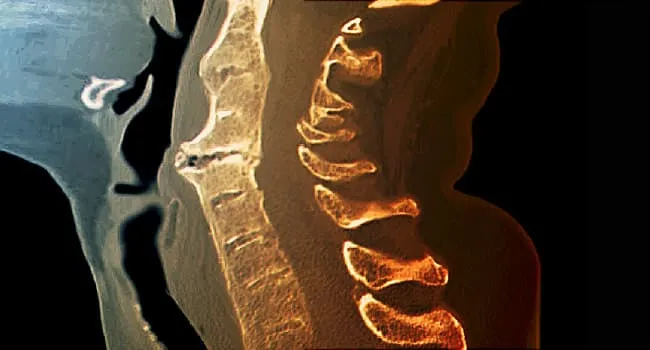
AS can affect the joints and ligaments of the spine. During ongoing inflammation, the body may try to repair itself by creating new bone. Over time, this new bone can bridge the spaces between vertebrae. In advanced cases, sections of the spine may fuse, reducing flexibility.
A spine affected by advanced AS may lose its natural motion. Some people develop a forward-stooped posture called kyphosis. Not everyone with AS develops severe spinal fusion, especially when the condition is recognized and treated early. Still, the possibility is why early diagnosis, exercise, posture care, and medical treatment matter.
The “bamboo spine” image
In medical imaging, advanced AS can sometimes create a “bamboo spine” appearance because the vertebrae become linked by bony growths. It is a dramatic phrase, but do not panic. A bamboo spine is usually associated with long-standing, advanced disease. The modern goal is to manage inflammation long before the spine starts auditioning for a garden theme.
Beyond the Back: A Head-to-Toe Visual Map
Ankylosing spondylitis may begin in the spine, but it does not always stay politely in its lane. Because it is a systemic inflammatory condition, symptoms can appear in other parts of the body.
Eyes
One of the most important AS-related complications is uveitis, an inflammation inside the eye. Warning signs include eye pain, redness, light sensitivity, and blurry vision. This is not a “wait and see” situation. Sudden eye symptoms deserve prompt medical attention.
Chest and ribs
AS can affect the joints where ribs meet the spine or breastbone. This may cause chest wall pain or make deep breathing feel restricted. People may notice discomfort when taking a deep breath, coughing, or stretching the upper body.
Hips and shoulders
Large joints such as the hips and shoulders can become painful or stiff. Hip involvement can affect walking, climbing stairs, or getting in and out of a car. The car does not care about your sacroiliac joints, but your sacroiliac joints definitely care about the car.
Heels and tendon attachments
Inflammation where tendons or ligaments attach to bone is called enthesitis. It often affects the heel, Achilles tendon, or bottom of the foot. A person may think they have a simple foot problem when the real issue is part of a larger inflammatory pattern.
Skin and gut
Some people with axial spondyloarthritis also have psoriasis or inflammatory bowel disease, such as Crohn’s disease or ulcerative colitis. Digestive symptoms, skin plaques, and joint pain can sometimes be connected through shared inflammatory pathways.
Who Gets Ankylosing Spondylitis?
AS often begins in teens, twenties, or early adulthood, though diagnosis may happen years later. It has historically been recognized more often in men, but women can absolutely develop axial spondyloarthritis too. In women, symptoms may sometimes be less classic, more widespread, or slower to be recognized, which can delay diagnosis.
Genetics also plays a role. Many people with AS carry a gene marker called HLA-B27. However, having HLA-B27 does not mean a person will definitely get AS. It is more like owning an umbrella in Seattle: relevant, but not the whole forecast. Doctors use HLA-B27 as one clue among many, not as a standalone diagnosis.
Family history can increase suspicion. If a first-degree relative has ankylosing spondylitis, psoriasis, inflammatory bowel disease, or related inflammatory arthritis, it is worth mentioning this during a medical visit.
How Doctors Diagnose Ankylosing Spondylitis
There is no single magic test for AS. Diagnosis usually combines the patient’s history, physical exam, blood tests, and imaging. A rheumatologist is the specialist most often involved because AS lives in the neighborhood of inflammatory arthritis, and rheumatologists know that neighborhood street by street.
Medical history
The doctor may ask when back pain started, whether it improves with exercise, whether it wakes you at night, how long morning stiffness lasts, and whether there are symptoms involving the eyes, skin, gut, heels, hips, or shoulders.
Physical exam
The exam may include checking spinal mobility, posture, chest expansion, hip movement, and tenderness around tendon attachment sites. These simple movement tests help create a visual picture of how inflammation is affecting function.
Blood tests
Blood work may include inflammatory markers such as C-reactive protein or erythrocyte sedimentation rate. HLA-B27 testing may also be used. Normal blood tests do not always rule out AS, and abnormal results do not automatically confirm it. Context is king.
Imaging
X-rays may show structural changes in the sacroiliac joints or spine. MRI can detect active inflammation earlier than X-rays in some patients. CT scans may show bony detail but are not typically the first choice for routine evaluation because they involve more radiation than standard X-rays.
Visual Signs on Imaging: What Doctors Look For
When doctors review imaging for suspected AS, they are looking for patterns. The goal is not just to find “something weird,” because human backs are excellent at collecting random weirdness. The goal is to identify findings that match inflammatory disease.
Possible imaging findings
- Sacroiliitis: inflammation or structural change in the sacroiliac joints
- Erosions: small areas of bone damage around inflamed joints
- Sclerosis: hardening or increased bone density near the joint
- Syndesmophytes: thin bony growths that can bridge vertebrae
- Ankylosis: fusion of joints or vertebrae in advanced disease
Imaging is powerful, but it is not perfect. Early AS can be missed on X-ray. MRI findings must be interpreted carefully because inflammation-like changes can have other causes. That is why the best diagnosis comes from matching the scan with the story, the exam, and the lab results.
Treatment: The Goal Is Motion, Not Marble
The main goals of ankylosing spondylitis treatment are to reduce pain and inflammation, preserve flexibility, prevent complications, protect posture, and help people live full lives. Treatment is usually personalized. What works beautifully for one person may be only “meh” for another.
Exercise and physical therapy
Movement is a cornerstone of AS care. Stretching, strengthening, posture training, and aerobic exercise can help maintain mobility and reduce stiffness. Physical therapy is especially useful because a therapist can design exercises that fit the patient’s symptoms, fitness level, and spinal mobility.
Good AS exercises often focus on spinal extension, hip mobility, core strength, shoulder opening, and breathing expansion. Swimming and walking can be excellent options. The best exercise is usually the one a person can do consistently without triggering a major flare.
NSAIDs
Nonsteroidal anti-inflammatory drugs, or NSAIDs, are commonly used as first-line medication to reduce pain and stiffness. Examples include ibuprofen, naproxen, celecoxib, diclofenac, and indomethacin. Because NSAIDs can affect the stomach, kidneys, heart, and blood pressure, they should be used under medical guidance, especially for long-term treatment.
Biologic medicines
If symptoms remain active despite NSAIDs and exercise, doctors may consider biologic medications. These drugs target specific inflammatory signals, such as tumor necrosis factor or interleukin-17. Biologics can be very helpful for many patients, but they require screening, monitoring, and discussion of infection risk.
Targeted synthetic medicines
Some patients may be candidates for targeted synthetic disease-modifying drugs, such as JAK inhibitors, depending on disease activity, medical history, and previous treatment response. These medications are not casual “take one and see” options; they require careful prescribing and safety monitoring.
Surgery
Surgery is uncommon for AS but may be considered in severe cases, such as major hip damage or significant spinal deformity. Most people with AS never need spine surgery. The everyday heroes of AS management are usually early diagnosis, consistent movement, smart medication, and regular follow-up.
Daily Life With AS: What the Condition Can Look Like
Living with ankylosing spondylitis often means learning your body’s patterns. A person may feel decent after a walk but stiff after a long movie. They may discover that a supportive mattress helps, that stress worsens flares, or that skipping stretches for a week turns the spine into a board meeting with no snacks.
Work life may require adjustments. Sitting for long periods can be difficult, so sit-stand desks, walking breaks, lumbar support, and gentle stretching can help. Travel can require planning, such as aisle seats, stretching during layovers, or packing heat wraps. Sleep can also be affected, especially if pain wakes someone in the early morning hours.
Red flags to take seriously
- Sudden painful red eye or light sensitivity
- New weakness, numbness, or loss of bladder or bowel control
- Severe chest pain or shortness of breath
- Unexplained fever or major weight loss
- Severe pain after a fall or injury
AS can be manageable, but new or severe symptoms deserve attention. A person should not try to “tough out” eye inflammation or neurological symptoms. Toughness is great for opening pickle jars; it is not a treatment plan.
Practical Visual Guide: What to Watch Week by Week
Tracking AS visually can make appointments more productive. Instead of saying, “My back is bad,” a patient can bring details: where it hurts, when it hurts, how long stiffness lasts, what helps, what worsens it, and whether symptoms involve eyes, heels, hips, skin, or digestion.
A simple symptom snapshot
- Morning stiffness: How many minutes before movement feels easier?
- Night pain: Does pain wake you after several hours of sleep?
- Movement response: Does walking or stretching improve symptoms?
- Flare map: Which areas hurt during flares?
- Energy level: Is fatigue mild, moderate, or couch-glue severe?
- Medication response: What helps, how much, and for how long?
Photos can also help track posture over time, especially side-view posture photos taken every few months under similar conditions. This is not about vanity. It is about noticing changes early, before the body starts quietly redecorating your alignment.
of Real-Life Experience: Seeing AS Beyond the Diagram
One of the biggest lessons from people living with ankylosing spondylitis is that the condition often hides in plain sight. A person may look completely fine while feeling as if their lower back has been replaced with a stubborn metal hinge. Friends may say, “But you seemed okay yesterday,” which is true and also not the full story. AS can fluctuate. Yesterday’s flexible human can become today’s slow-loading software update.
A common experience is the long road to diagnosis. Many people first assume they slept wrong, exercised wrong, sat wrong, or angered the mysterious chair gods. They may see several providers before someone recognizes the pattern: back pain that improves with movement, stiffness in the morning, symptoms beginning young, recurring buttock pain, heel pain, family history, or eye inflammation. That recognition can feel like someone finally turned on the lights in a room the patient had been stumbling through for years.
Another real-life theme is learning that rest is not always the answer. With many injuries, rest helps. With AS, too much stillness can make stiffness worse. This surprises people. It can feel unfair, because the body is tired but also demands movement. The trick is finding the right dose: gentle stretching in the morning, short walks, posture exercises, swimming, or physical therapy movements that keep the spine and hips active without overdoing it.
Work routines often need creative redesign. People with AS may set timers to stand, stretch during phone calls, use supportive chairs, avoid marathon sitting sessions, or place frequently used items where they do not require awkward bending. These changes may look small, but they can determine whether the end of the day feels manageable or miserable.
Sleep is another major battlefield. Some people wake around 3 or 4 a.m. with back or hip pain and feel better only after getting up and moving. This can affect mood, focus, patience, and energy. AS fatigue is not ordinary “I stayed up too late” tiredness. It can feel like the battery is draining while the phone is still plugged in.
Emotionally, AS can be frustrating because it is chronic and sometimes unpredictable. A person may cancel plans, modify workouts, or worry about future mobility. Support matters. So does humor. Nobody chooses inflammatory arthritis, but many people learn to build a life around smart treatment, movement, advocacy, and realistic pacing.
The most encouraging experience is that many people improve once they receive the right diagnosis and treatment plan. Medication can calm inflammation. Physical therapy can restore confidence. Better posture habits can reduce strain. Tracking symptoms can make doctor visits more useful. AS may be a lifelong condition, but it does not get to write the whole story. With the right care team and daily strategies, many people keep working, exercising, traveling, parenting, creating, and living fullywith occasional negotiations between the spine and the calendar.
Conclusion: The Big Picture of Ankylosing Spondylitis
Ankylosing spondylitis is more than ordinary back pain. It is an inflammatory arthritis that often begins in the sacroiliac joints and spine, causing stiffness, pain, fatigue, and sometimes symptoms in the eyes, hips, shoulders, ribs, heels, skin, or gut. The visual story of AS includes inflamed joints, limited mobility, possible imaging changes, posture challenges, and daily-life adjustments that are invisible to other people but very real to the person living them.
The good news is that AS is treatable. Early recognition, rheumatology care, physical therapy, exercise, posture work, and appropriate medication can help reduce symptoms and protect long-term function. The best approach is not panic and not denial. It is awareness, action, and a spine-friendly plan that keeps the body moving.