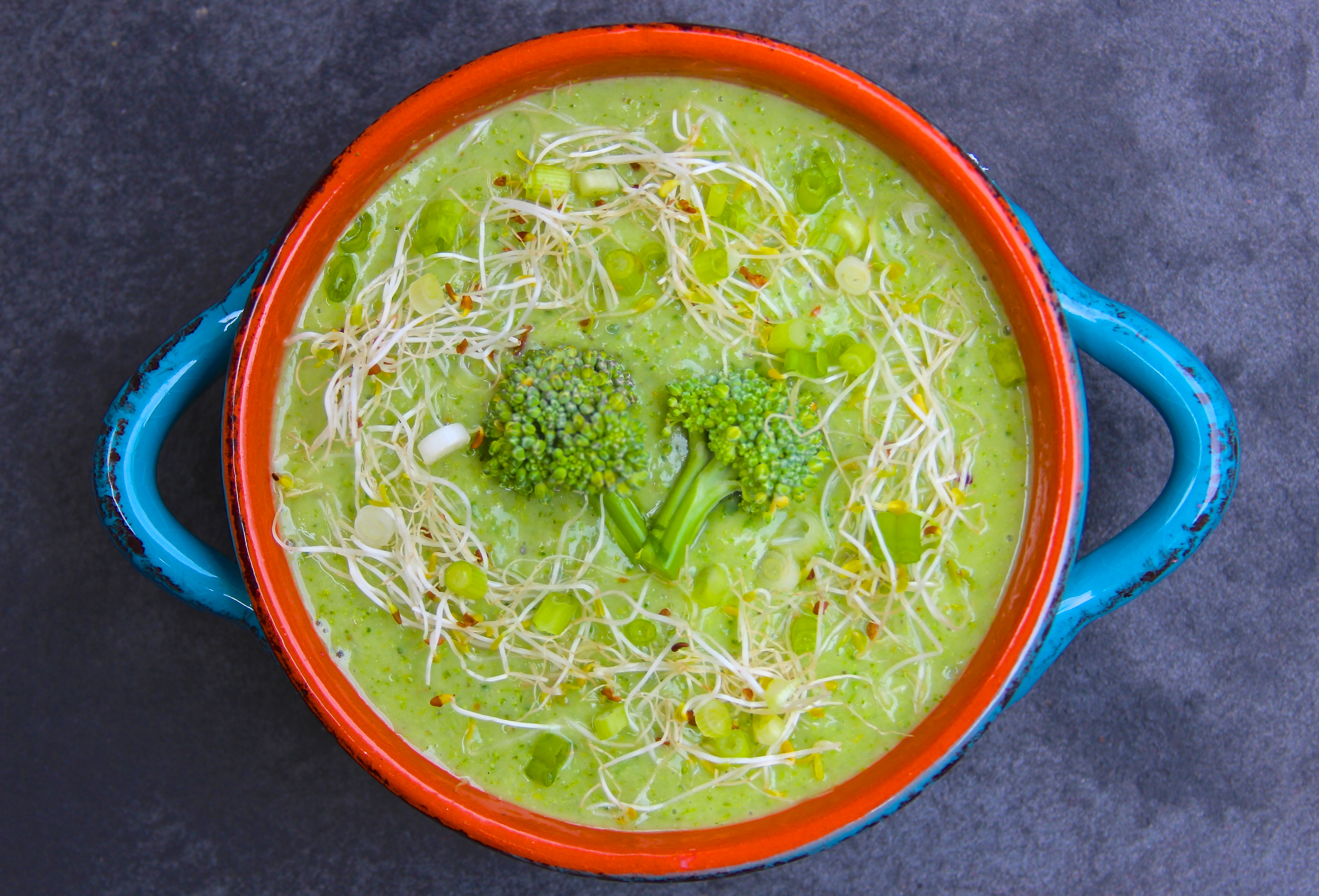

Some soups arrive bubbling, steaming, and practically demanding a wool sweater. Avocado and raw broccoli soup takes the opposite approach. It is cool, bright, creamy, fast, and unapologetically green. No stockpot. No simmering. No standing over the stove wondering why you chose soup on a Tuesday night.
This easy cold soup combines ripe avocado with fresh raw broccoli, citrus, herbs, and a few savory ingredients. Avocado supplies the silky texture normally created with cream, while broccoli brings freshness and a mild cruciferous bite. According to Harvard’s Nutrition Source, avocados provide fiber, potassium, folate, and fats that are predominantly monounsaturated. Raw broccoli is naturally rich in fiber and several vitamins, including vitamins C and K.
The result lands somewhere between a chilled vegetable soup, a drinkable salad, and a very sophisticated green smoothie that finally decided to stop pretending it enjoys bananas. Serve it as a light lunch, an appetizer, or alongside a sandwich or grain bowl for a more substantial meal.
Why Avocado and Broccoli Work So Well Together
At first glance, avocado and raw broccoli might seem like two ingredients introduced by a nutritionist rather than a chef. Fortunately, their personalities actually complement each other.
Avocado is rich, mild, and buttery. Broccoli is crisp, grassy, and slightly peppery. When blended together, avocado softens broccoli’s stronger edges while broccoli keeps avocado from becoming overly heavy. Lemon or lime juice then cuts through the richness and gives the whole mixture a cleaner finish.
The combination also makes sense nutritionally. Avocados contain mostly unsaturated fat, while broccoli contributes fiber, vitamin C, vitamin K, folate, potassium, and naturally occurring compounds associated with cruciferous vegetables. Dietary guidance from the American Heart Association and Mayo Clinic generally favors unsaturated plant fats over foods high in saturated fat.
Avocado and Raw Broccoli Soup Recipe
Ingredients
- 2 ripe medium avocados
- 2 cups fresh broccoli florets, chopped into small pieces
- 1 1/2 cups cold water, plus more as needed
- 1/2 cup loosely packed fresh cilantro or parsley
- 2 tablespoons fresh lime or lemon juice
- 1 small scallion, roughly chopped
- 1 small garlic clove
- 1 tablespoon extra-virgin olive oil, optional
- 1/4 teaspoon ground cumin
- 1/2 teaspoon fine salt, or to taste
- Freshly ground black pepper, to taste
- A few ice cubes, optional
Yield: About 4 appetizer servings or 2 larger lunch servings.
Step 1: Choose Good Broccoli
Look for broccoli with firm stalks and compact, dark green florets. Avoid heads with widespread yellowing, slimy spots, or a strong unpleasant odor. University of Maine Cooperative Extension recommends choosing broccoli with compact, firm flower buds and storing fresh broccoli refrigerated, ideally using it within several days.
Because the broccoli stays raw in this recipe, freshness matters more than it would in a casserole where cheese can heroically distract everyone.
Step 2: Wash the Produce Carefully
Rinse the broccoli thoroughly under clean running water. Pay particular attention to the florets because their tightly packed structure provides plenty of places for dirt to hide. Wash the avocado before cutting it as well, even though you will discard the peel.
The FDA recommends washing fresh produce under running water before preparing it, including produce with peels that will not be eaten. Soap, detergent, and commercial produce washes are not recommended. Clean hands, cutting boards, knives, and blender equipment also help reduce cross-contamination.
Step 3: Blend the Base
Add the broccoli, cold water, herbs, lime or lemon juice, scallion, garlic, cumin, salt, and pepper to a high-powered blender.
Blend until the broccoli is finely broken down. Starting with the broccoli and liquid before adding the avocado makes it easier to achieve a smooth texture instead of creating a blender full of tiny green confetti.
Step 4: Add the Avocado
Cut the avocados in half, remove the pits, scoop out the flesh, and add it to the blender.
Blend again until completely creamy. If the soup looks closer to guacamole than soup, add cold water a few tablespoons at a time. For an extra-cold result, blend in two or three ice cubes.
Step 5: Adjust the Flavor
Taste before serving. This is where a decent green soup becomes a very good one.
If it tastes flat, add more citrus or salt. If the broccoli flavor seems aggressive, add another quarter of an avocado or a little more water. If you want additional richness, blend in the optional tablespoon of olive oil.
Chill briefly or serve immediately.
How to Make Raw Broccoli Soup Taste Great
Raw broccoli has a stronger flavor than steamed broccoli, so balance matters. The goal is not to disguise the vegetable completely. If you wanted broccoli to disappear, chocolate cake would be an ambitious but interesting strategy.
Use Truly Ripe Avocados
A ripe avocado should yield gently when pressed without feeling mushy. Underripe avocado can leave the soup thin, slightly bitter, and less creamy.
Avocado’s neutral flavor and naturally smooth texture are particularly useful in blended recipes. Harvard notes that avocado works well in sauces, dressings, salads, and other dishes where richness is useful without relying entirely on dairy.
Do Not Skip the Acid
Fresh lemon or lime juice performs two jobs. First, acidity wakes up the mild avocado and balances the vegetal broccoli. Second, it helps slow the visible browning that occurs after avocado flesh is exposed to air.
Lime produces a slightly more lively, southwestern-style flavor. Lemon tastes cleaner and more neutral. Either works.
Give the Blender Enough Time
The difference between pleasantly creamy broccoli soup and something that feels like lawn clippings is often another 30 to 60 seconds in the blender.
If your blender is less powerful, chop the broccoli very finely first. You can also add the liquid gradually and scrape down the container between blending cycles.
Why Keep the Broccoli Raw?
Using raw broccoli gives this chilled soup its fresh flavor and eliminates cooking time, but there is also an interesting nutritional reason.
Broccoli belongs to the cruciferous vegetable family and naturally contains glucosinolates along with the enzyme myrosinase. Cutting and chewing broccoli allows these components to interact and form compounds such as isothiocyanates. Research has found that heat can reduce myrosinase activity, although the nutritional effects of cooking vary considerably according to temperature, duration, and cooking technique.
That does not mean cooked broccoli is somehow nutritionally useless. Far from it. Cooked broccoli remains a nutrient-rich vegetable, and steaming can preserve many nutrients effectively. The point is simply that raw broccoli offers a different nutritional and culinary profile.
Nutrition Highlights
Avocado Provides Satisfying Fat and Fiber
Avocado’s fat comes predominantly from monounsaturated fatty acids. It also supplies fiber, potassium, folate, vitamin E, vitamin K, and several carotenoids. Harvard reports that a medium avocado contains roughly 10 grams of fiber, although exact values vary with fruit size.
Observational research following more than 100,000 U.S. adults has also linked regular avocado intake with lower cardiovascular disease risk, particularly when avocado replaced certain foods high in saturated fat. Because the study was observational, it demonstrates an association rather than proving that avocado itself prevents cardiovascular disease.
Broccoli Packs Plenty Into a Small Package
A cup of chopped raw broccoli contains relatively few calories while contributing fiber and important micronutrients. Cleveland Clinic, citing USDA data, notes that raw broccoli is particularly rich in vitamin C and vitamin K and also supplies folate, potassium, and magnesium.
Both Ingredients Add Fiber
One advantage of blending whole vegetables rather than juicing them is that the fiber remains in the bowl. Dietary fiber contributes to digestive health and can help meals feel more satisfying. MedlinePlus lists fruits and vegetables among important dietary fiber sources and recommends increasing fiber gradually if a person’s usual diet is relatively low in it.
Easy Flavor Variations
Spicy Avocado Broccoli Soup
Add a small amount of jalapeño, crushed red pepper, or cayenne. Start cautiously. You can always add more heat; persuading cayenne to leave the blender is considerably harder.
Ginger-Lime Version
Replace the cumin with a teaspoon of grated fresh ginger and use lime juice instead of lemon. Cilantro is especially good in this variation.
Extra-Herby Green Soup
Add basil, parsley, mint, or a combination of herbs. Mint makes the soup especially refreshing during hot weather.
Creamier Version
Blend in a spoonful of plain Greek yogurt for tang or unsweetened yogurt for a dairy-free variation. A small handful of soaked cashews can also create a richer texture for people who eat nuts.
More Substantial Lunch Version
Top each bowl with chickpeas, pumpkin seeds, chopped cucumber, corn, diced tomato, or whole-grain croutons. This adds texture and transforms the soup from a starter into something closer to lunch.
What to Serve With Avocado and Raw Broccoli Soup
This soup’s fresh flavor works best beside foods that add contrast. Try it with a toasted whole-grain sandwich, grilled chicken, baked fish, a bean salad, roasted vegetables, or a simple grain bowl.
For an appetizer, pour small portions into chilled bowls or glasses and garnish with chopped herbs, thinly sliced radish, cucumber, broccoli florets, toasted seeds, or a drizzle of olive oil.
Presentation matters more than usual with very green food. Give the bowl a thoughtful garnish and it looks elegant. Dump it into a plastic cup without explanation and your family may assume you have started experimenting with pond water.
How to Store Avocado Broccoli Soup
This soup tastes best freshly blended because avocado gradually oxidizes and loses its brilliant green color.
If you have leftovers, transfer them promptly to a clean airtight container and refrigerate. Pressing food-safe wrap directly against the surface can reduce exposure to air. University of Maine Extension advises refrigerating cut or peeled produce promptly and keeping it in covered containers.
For the best flavor and appearance, eat avocado broccoli soup as soon as practical rather than preparing a giant week’s supply on Sunday. The soup is easy enough to make fresh that batch cooking offers little advantage.
Common Problems and How to Fix Them
The Soup Is Too Thick
Add cold water one or two tablespoons at a time and blend again. Vegetable broth can work too, although a strongly flavored broth can overwhelm the avocado.
The Broccoli Flavor Is Too Strong
Add more avocado, fresh herbs, citrus juice, or a little cucumber. Small, tender broccoli florets generally taste milder than older, tougher broccoli.
The Soup Tastes Bland
It probably needs acid, salt, or both. Add a teaspoon of citrus juice, blend, taste, and repeat if necessary.
The Texture Is Grainy
Blend longer. If necessary, add a little more liquid. A high-powered blender makes raw broccoli dramatically smoother, but even a basic blender can work if the broccoli is chopped into small pieces first.
The Soup Turned Darker
Some color change is normal once avocado is cut and exposed to oxygen. Fresh citrus and limiting air exposure help, but this is still a soup that prefers being eaten rather than admired in the refrigerator for three days.
Frequently Asked Questions
Can You Really Eat Broccoli Raw in Soup?
Yes. Fresh broccoli can be eaten raw after proper washing and preparation. Raw vegetables should be handled carefully because cooking is not available as a final step for reducing microorganisms. FDA and CDC guidance emphasizes thoroughly washing produce and preventing cross-contamination during preparation.
Do I Need to Peel Broccoli Stalks?
Not necessarily. Tender inner stalks are edible and can be blended into the soup. If the exterior is thick and fibrous, peel that portion first. Using the stalk reduces food waste and adds more broccoli to the recipe.
Can I Make This Soup Without Cilantro?
Absolutely. Parsley, basil, mint, or even a small amount of fresh dill can replace cilantro.
Can Frozen Broccoli Be Used?
Fresh broccoli is preferable here because the recipe is specifically designed around the flavor and texture of raw broccoli. Frozen broccoli is normally blanched before freezing, so it will produce a different flavor and consistency.
Can I Warm the Soup?
You can gently warm it, but avoid a hard boil if you want to preserve the fresh character of the recipe. Heating also changes avocado’s flavor and the behavior of some heat-sensitive compounds in broccoli.
Kitchen Experiences: What I Learned Making Avocado and Raw Broccoli Soup
The most important lesson with avocado and raw broccoli soup is that ingredient quality matters enormously when there is nowhere for mediocre produce to hide. In a long-cooked stew, an average carrot can quietly blend into the background. In a raw soup with only a handful of ingredients, every avocado and broccoli floret gets a speaking role.
The first practical lesson is to use more-ripe-than-firm avocado. A firm avocado may look beautiful when sliced, but it does not produce the same luxurious blended texture. When the avocado is properly ripe, the soup becomes creamy almost immediately and needs surprisingly little added oil.
The second lesson is to chop the broccoli before putting it into the blender. Technically, a strong blender can pulverize large florets. Technically, you can also mow a lawn with scissors. Neither option is particularly efficient. Smaller pieces blend faster and make it easier to judge how much liquid is required.
I also found that starting with less water produces better results. You can always thin the soup, but once you turn it into green vegetable water, restoring body means adding another avocado or more broccoli. Beginning with about three-quarters of the planned liquid and adjusting afterward gives much better control.
Citrus turned out to be one of the biggest flavor variables. Without enough lemon or lime, avocado and broccoli can taste surprisingly muted together. Add enough acidity and suddenly the herbs become brighter, the avocado tastes less heavy, and the broccoli becomes fresher rather than more bitter. A few teaspoons can completely change the bowl.
Temperature is another detail that makes a bigger difference than expected. This soup tastes dramatically better cold. Ingredients straight from the refrigerator are usually enough, but adding a few ice cubes during blending creates an especially refreshing texture during hot weather. It is the difference between “vegetables in a blender” and something that actually feels deliberately designed as a chilled soup.
The toppings also deserve attention. The completely smooth soup is pleasant for the first few spoonfuls, but texture makes it more interesting as a meal. Toasted pumpkin seeds provide crunch. Diced cucumber adds freshness. Chickpeas provide substance. Chopped cilantro or parsley reinforces the green flavor without overwhelming it.
Another discovery is that garlic should be treated with restraint. Raw garlic has considerably more attitude than cooked garlic. One small clove can flavor an entire blender. Two large cloves may result in a soup that introduces itself several minutes before you enter a room.
If raw broccoli is new to you, start with younger, tender florets and perhaps use slightly more avocado. After becoming familiar with the flavor, you can increase the broccoli-to-avocado ratio. There is no culinary medal awarded for making the greenest possible soup on your first try.
Finally, this is one recipe I would not make several days in advance. Freshly blended, it has a vivid color, clean aroma, and remarkably creamy texture. Time in the refrigerator gradually dulls those qualities. Preparing the ingredients ahead is fine, but cutting the avocado and blending everything shortly before eating gives the most satisfying result.
That simplicity may actually be the soup’s biggest advantage. There is almost no cooking equipment to clean, no hot pan, and no waiting for a pot to cool. From refrigerator to bowl can take roughly ten minutes once you know your preferred proportions.
Final Thoughts
Avocado and raw broccoli soup demonstrates that a nutritious vegetable dish does not have to feel like homework. Ripe avocado provides richness, broccoli supplies freshness and crunch-turned-creaminess, and citrus and herbs keep everything lively.
The basic recipe is simple enough for a quick lunch but flexible enough for experimentation. Make it spicy with jalapeño, aromatic with ginger, brighter with extra lime, or more substantial with chickpeas and seeds. Just remember the three rules that matter most: use ripe avocado, use fresh broccoli, and taste before you declare the blender’s work complete.
When those elements come together, you get a chilled green soup that is creamy without requiring heavy cream, packed with whole plant ingredients, and considerably more enjoyable than the phrase “raw broccoli soup” has any right to suggest.
Note: Nutrition varies according to ingredient size, serving portion, substitutions, and toppings. People who need individualized dietary advice or have medical dietary restrictions should consult an appropriate healthcare professional.