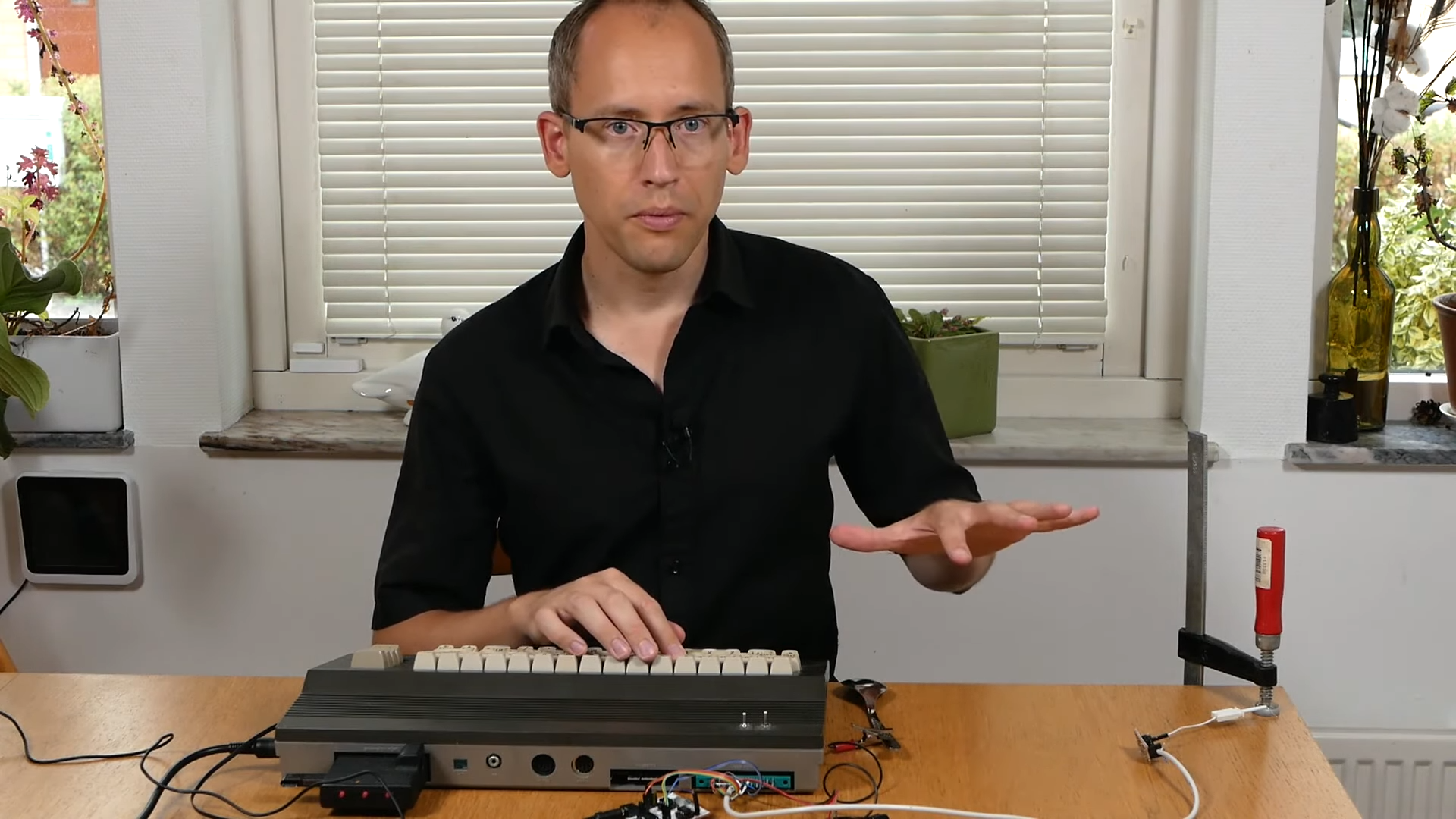

Note: This article is an original, rewritten synthesis based on real public information about the Qweremin, Commodore 64 music hardware, theremin history, SID chip culture, and related 8-bit instrument projects.
The Qweremin sounds like something a sleep-deprived inventor would name after spilling coffee on a keyboard, but the idea is beautifully serious: take the ghostly expressiveness of a theremin, marry it to a QWERTY keyboard, and let a Commodore 64’s legendary SID chip do the singing. The result is not merely another retro-computing party trick. It is a clever musical instrument that asks an oddly practical question: what if the hardest part of playing a thereminthe pitch accuracycould be shifted to a familiar keyboard while the performer kept the spooky hand-waving drama?
Created by Linus Åkesson, the Qweremin continues a long line of wonderfully strange C64-based instruments. It belongs to the same creative universe as the Sixtyforgan, Qwertuoso, and Commodordion, where old computers are not museum pieces gathering dust like beige office fossils, but living instruments with buttons, quirks, and enough personality to deserve their own dressing room. At its core, the Qweremin combines the tactile certainty of keys with the expressive motion control of a theremin. That makes it easier to play melodies, leaps, and chords while still allowing the performer to shape volume and vibrato with physical gestures.
What Is the Qweremin?
The Qweremin is best understood as a hybrid instrument: part QWERTY keyboard, part theremin, part chiptune synthesizer, and part “because why not?” engineering sculpture. A traditional theremin is played without touching it. The performer moves their hands near antennas, usually controlling pitch with one hand and volume with the other. This gives the instrument its famous gliding, otherworldly voice, but also makes it famously difficult to play in tune. There are no frets, keys, or friendly little stickers saying, “Put your finger here, genius.”
The Qweremin changes that relationship. Instead of asking the player to locate every pitch in midair, it assigns pitch to the QWERTY keyboard. The right hand can trigger notes from keys arranged in a musical layout inspired by chromatic button accordion logic. Meanwhile, the left hand controls expression, especially volume and vibrato, through proximity-based interaction. In plain English: your fingers handle the notes, your hand gestures handle the drama, and the Commodore 64 supplies the crunchy electronic soul.
The C-64 Heart: Why the SID Chip Still Matters
The Commodore 64, released in the early 1980s, became one of the most iconic home computers ever made. Part of its magic came from the MOS Technology SID chip, short for Sound Interface Device. Unlike many basic beepers of its era, the SID offered multiple voices, waveforms, envelopes, filtering, modulation tricks, and just enough analog weirdness to make every chip feel like it had opinions. It was not simply making sound; it was arguing with electricity in a charming accent.
For game composers and demoscene musicians, the SID chip was a compact playground. It could produce bass lines, leads, noise effects, arpeggios, and synthetic percussion with only a few voices available. That limitation became a creative engine. Musicians learned to fake chords, juggle rapid patterns, and exploit hardware quirks. The sound became instantly recognizable: bright, buzzy, warm, gritty, and futuristic in the way only 1982 could imagine the future.
That is why the phrase “C-64 heart” matters. The Qweremin does not merely imitate chiptune on a modern plugin. It uses the Commodore 64 as a real musical engine. The SID’s sonic character gives the instrument its voice: not a smooth studio synthesizer voice, but a slightly rebellious 8-bit voice that sounds like it escaped from an arcade cabinet and learned classical phrasing on the way out.
How the Qweremin Solves a Classic Theremin Problem
The theremin is one of the oldest electronic instruments, and it remains one of the most intimidating. Its magic is also its trap. Because it is played in empty space, tiny hand movements can create large pitch changes. A skilled thereminist can make it sing with violin-like elegance. A beginner often sounds like a confused mosquito trying to audition for a haunted-house soundtrack.
The Qweremin’s key innovation is separating pitch from freehand pitch hunting. By letting a QWERTY keyboard determine notes, the instrument gives the player reliable pitch positions. That opens the door to fast melodies, wide jumps, and even chordal playingthings that are extremely difficult on a conventional theremin. But Åkesson did not simply turn the theremin into a keyboard synth. The gesture-based control remains, which means the player can still shape musical expression with hand motion.
Pitch on Keys, Expression in the Air
This is the Qweremin’s secret sauce. The keyboard provides structure. The antenna-like controls provide feeling. The performer no longer needs to chase every note through invisible space, yet the performance still looks and feels physical. You can hear the difference between “pressing a note” and “performing a phrase.” Volume swells, vibrato, and articulation make the Qweremin more expressive than a simple note-on, note-off computer keyboard instrument.
That matters because electronic instruments often struggle with phrasing. A piano key has velocity and physical decay. A violin has bow pressure and finger vibrato. A singer has breath. A plain computer keyboard has, well, plastic rectangles that say F7 and Scroll Lock, which is less romantic. The Qweremin gives the old keyboard a new musical body language.
The Volume Control: Small Detail, Big Musical Difference
One of the most interesting technical challenges behind the Qweremin is volume control. The SID chip has a limited master volume register, and relying on it alone can create audible stepping. At low levels, a small numerical change can feel like a large jump in loudness. That is bad news for expressive playing, especially when the goal is to shape delicate phrases instead of sounding like someone is turning a flashlight on and off.
Åkesson’s earlier C64 theremin explored ways to use envelope behavior for smoother control, but feedback from an experienced thereminist highlighted a weakness: the volume response was too slow for precise phrasing. The Qweremin improves the experience with external digital-to-analog conversion connected through the Commodore’s user port. In practice, that means the C64 still processes control information, but the volume response can be smoother and more playable.
This is a classic maker-world solution: discover that the old machine cannot quite do what you need, then politely attach extra circuitry until it agrees. The beauty is that the Commodore 64 remains central. It is not a prop. It decodes pulses, processes control data, communicates with hardware, and produces sound. The machine is both performer and orchestra pit.
Why the QWERTY Layout Makes Musical Sense
At first glance, a computer keyboard looks like a terrible musical interface. It was designed for typing, not for Bach, chiptune solos, or anything involving emotional vibrato. But Åkesson’s earlier QWERTY instruments reveal a smart idea: the staggered rows of a keyboard can be mapped in a way that resembles the logic of a chromatic button accordion. Once arranged musically, the rows allow scales and chords to become patterns that can move across keys.
This pattern-based approach is powerful. On a traditional piano, playing the same shape in different keys often requires different fingerings because black and white keys interrupt the geometry. On a chromatic button-style layout, musical intervals can become more consistent shapes. That makes transposition easier. A chord shape learned in one key can often be moved elsewhere with less mental gymnastics. Your fingers get to say, “Ah, we have seen this neighborhood before.”
For the Qweremin, this means the performer can make use of the familiar computer keyboard while accessing a layout designed for musical movement. It is not just typing notes alphabetically. It is a deliberate mapping that turns a beige rectangle of office nostalgia into a serious performance surface.
A Theremin, But Not Exactly a Theremin
Purists may point out that if pitch is controlled by keys, then the Qweremin is not a true theremin in the strict historical sense. Fair enough. It is not trying to replace Clara Rockmore’s instrument or erase a century of touchless performance tradition. Instead, it borrows the theremin’s most expressive ideasound shaped by motionand adapts it to an 8-bit performance system.
That makes the Qweremin more of a philosophical cousin than a clone. It keeps the theatrical gesture, the live shaping of dynamics, and the sci-fi aura, but removes some of the pitch instability that makes theremins so unforgiving. It also introduces possibilities that traditional theremins do not naturally offer, such as quick melodic leaps and chord-friendly playing. Think of it as a theremin that went to keyboard school, passed music theory, and still wears a cape.
What It Sounds Like
The Qweremin’s sound sits at a delightful crossroads. It can be lyrical because the performer controls phrasing. It can be precise because pitch is keyboard-based. And it can be unmistakably retro because the SID chip gives it that C64 chiptune bite. When used for a classical-style melody, the instrument can feel both elegant and absurd in the best way. It is like hearing an old game console suddenly reveal it has been practicing vocal technique after everyone went to bed.
The SID tone gives notes a strong electronic identity. Depending on programming and performance choices, the sound may lean bright, nasal, warm, buzzy, or reed-like. Vibrato adds life. Volume shaping prevents the music from feeling like a spreadsheet of beeps. The result is more expressive than a simple chiptune tracker playback and more controlled than a conventional theremin in beginner hands.
Why Makers and Musicians Love This Kind of Project
The Qweremin lands in a sweet spot between engineering and art. It is technically interesting because it involves vintage hardware, timing, control signals, DAC behavior, and sound generation. It is musically interesting because it solves real performance problems. And it is culturally interesting because it gives old technology a new job instead of treating it as a decorative relic.
That is a major reason retro-computing projects continue to attract attention. The machines are limited, but their limits are visible. You can understand them. You can hear them working. Modern devices often hide complexity behind glossy screens and sealed cases. A Commodore 64-based instrument feels more like a mechanical creature. You press keys, wires carry signals, chips respond, and sound emerges with tiny imperfections intact.
The Joy of Constraints
Creative constraints are not obstacles; they are steering wheels. The SID chip’s limited voices push musicians toward clever arrangements. The QWERTY layout forces an inventive mapping. The theremin-style controls demand physical phrasing. Each limitation gives the Qweremin character. If everything were easy and unlimited, the result might be another capable but forgettable synthesizer. Instead, we get something memorable, specific, and delightfully strange.
Specific Examples of What Makes the Qweremin Special
Imagine playing a slow melody. On a normal computer keyboard instrument, each note might begin and end mechanically. On the Qweremin, the player can swell into a note with the left hand, add vibrato, and fade out naturally. That makes the line feel sung rather than typed. Now imagine a fast passage with wide leaps. A traditional theremin would make that brutally difficult because the performer must find each pitch in the air. On the Qweremin, keys handle the pitch jumps, so the player can focus on timing and expression.
Chords are another important example. Standard theremins are generally monophonic in performance style, built around a single continuously controlled pitch. The Qweremin’s keyboard approach allows more complex harmonic gestures. That does not mean it turns into a grand piano; the SID’s voice limitations still matter. But it does mean the instrument can explore musical territory that a conventional theremin would not easily reach.
Finally, consider stage presence. A laptop performance can be musically brilliant but visually mysterious: someone stares at a screen, clicks a trackpad, and the audience politely wonders whether they are making art or checking email. The Qweremin is visually legible. Keys are pressed. Hands move near controls. The old Commodore body sits there like a lovable beige spaceship. The audience can connect gesture to sound.
The Qweremin and the Future of Retro Instruments
The Qweremin suggests a broader lesson: old computers can be more than nostalgia machines. They can become interfaces for new musical ideas. Vintage hardware has limitations, but those limitations make design decisions meaningful. When an artist chooses a Commodore 64, they are choosing a sound, a workflow, a visual identity, and a set of constraints that shape the final instrument.
In an era when software synthesizers can emulate almost anything, the appeal of real retro hardware is partly emotional and partly practical. The emotional side is obvious: the C64 has history, texture, and a fan base that can identify its sound faster than some people identify their relatives at reunions. The practical side is subtler: a focused machine encourages focused creativity. You cannot drown in a million presets when the hardware itself says, “Here are three voices. Make them count.”
Hands-On Experience: What Playing a Qweremin-Style Instrument Might Feel Like
Spending time with an instrument like the Qweremin would likely feel different from playing a standard keyboard, a theremin, or a modern MIDI controller. The first sensation would be familiarity. A QWERTY keyboard is not exotic; most people have typed on one for years. Your hands understand the landscape. Then the surprise arrives: those keys are no longer letters, shortcuts, or accidental emails to your boss. They become pitches. The typing muscle memory must step aside and let musical geography take over.
The second sensation would be physical expression. With a normal keyboard, your musical control often depends on velocity, aftertouch, pedals, or knobs. With a Qweremin-style setup, the left hand becomes a sculptor. Moving near the volume field would feel less like turning a knob and more like shaping a sound in the air. You would quickly learn that small gestures matter. Raise the hand too abruptly and the phrase may jump forward. Move too cautiously and the note may feel timid. The instrument rewards attention, which is a polite way of saying it will notice when you are faking confidence.
There would also be a learning curve in coordinating the two hands. The right hand might be busy triggering pitches, while the left hand controls dynamics and vibrato. At first, the brain may complain. It already has enough to do, thank you very much. But after practice, the split could become natural: one hand chooses the musical words, the other adds tone of voice. That division is similar to many traditional instruments. A violinist fingers notes with one hand and bows expression with the other. An accordionist manages buttons and bellows. The Qweremin translates that old musical idea into retro-computing language.
The sound would influence how you play. The SID chip does not behave like a glossy modern synthesizer with endless polish. Its voice has edges. That encourages bold melodies, rhythmic phrasing, and playful articulation. Slow lyrical passages can work, but they carry a charming digital grain. Fast chiptune runs may feel completely at home, as if the instrument has been waiting forty years to sprint across a melody. The fun comes from leaning into that identity instead of trying to make it behave like something it is not.
For composers, the Qweremin offers a useful reminder: expression does not require expensive equipment or infinite options. Sometimes the most inspiring setup is a strange one with a clear personality. You could write a delicate arrangement of a classical melody, a goofy sci-fi theme, a melancholy game soundtrack, or an experimental drone piece. Each would sound unmistakably shaped by the instrument’s hybrid nature. The Qweremin is not neutral, and that is its advantage.
For audiences, the experience would be just as important. Watching someone play a Qweremin is not like watching a hidden sequencer run. The gestures are visible. The performer’s hands become part of the music. The old computer becomes a character on stage. Even people who know nothing about SID registers or DACs can understand the basic magic: press keys, move hand, sound changes. That clarity makes the performance inviting. It tells the audience, “Yes, this is weird, but you are allowed to enjoy it immediately.”
In practical use, a Qweremin-style instrument would be ideal for musicians who love expressive electronic sound but dislike sterile control surfaces. It would also appeal to makers who enjoy projects where hardware design and musical design are inseparable. The instrument proves that playability is not just about adding more features. It is about choosing the right kind of control for the right musical job. In this case, keys provide precision, proximity sensing provides expression, and the C64 provides a voice with history baked into every beep.
Conclusion
The Qweremin is more than a clever name. It is a thoughtful answer to a real musical problem: how to preserve the expressive motion of a theremin while making pitch control more practical and harmonically useful. By combining a QWERTY-based musical layout, theremin-style gesture control, and the unmistakable voice of the Commodore 64 SID chip, Linus Åkesson created an instrument that feels both retro and new.
Its charm comes from balance. It is not just nostalgia, although the C64 energy is impossible to miss. It is not just engineering, although the technical solutions are genuinely smart. It is not just performance art, although it looks wonderfully theatrical. The Qweremin works because all of those things meet in one playable object. It reminds us that electronic music history is not locked in the past. Sometimes it is sitting on a desk, wearing a QWERTY keyboard, waiting for someone to wave a hand and make the old silicon sing again.
SEO Tags