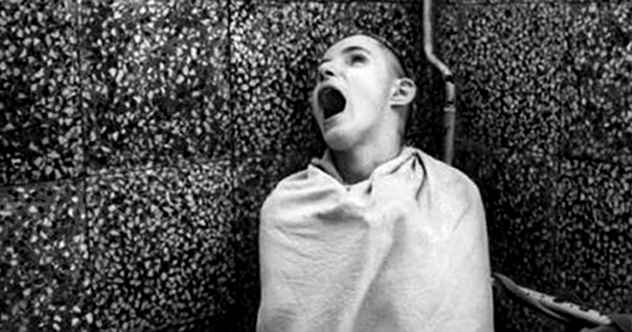

Psychiatry in the 19th century occupied a strange neighborhood between genuine humanitarian reform, bold medical experimentation, social control, and ideas that now sound as if they were invented during a particularly chaotic dinner party. Physicians were beginning to treat mental illness as a medical concern rather than simply a moral failure or supernatural punishment. Unfortunately, their scientific tool kit was still missing several important items, including modern neuroscience, reliable psychiatric medications, standardized diagnostic criteria, and, occasionally, common sense.
The century produced enormous institutions designed to heal people through sunlight and peaceful scenery. It also produced spinning machines, coffin-like restraint beds, skull-reading theories, and diagnoses rooted in sexism and racism. Patients might spend one afternoon gardening, reading poetry, or attending a danceand another being subjected to cold water, mercury, bloodletting, or prolonged confinement.
These facts about 19th-century psychiatry reveal more than a collection of bizarre treatments. They show how medical care can be shaped by architecture, politics, economics, gender expectations, racial prejudice, and whatever a society considers “normal.” Buckle uppreferably not in one of Benjamin Rush’s chairs.
1. Psychiatrists Were Commonly Called “Alienists”
During much of the 19th century, a physician specializing in mental disorders was often called an alienist. The name came from the concept of mental “alienation,” meaning that a person had become separated or alienated from ordinary reason, behavior, or society.
The profession itself was only beginning to take shape. In 1812, Philadelphia physician Benjamin Rush published Medical Inquiries and Observations upon the Diseases of the Mind, widely recognized as the first systematic American textbook devoted to mental diseases. It remained influential for decades.
By 1844, thirteen American asylum superintendents had formed the Association of Medical Superintendents of American Institutions for the Insane. This organization eventually evolved into the American Psychiatric Association. It was reportedly the first professional medical specialty organization established in the United States.
However, most alienists worked inside mental hospitals rather than private clinics. Their authority came partly from medicine and partly from their position as institutional managers. A superintendent might serve as doctor, administrator, disciplinarian, statistician, architect, public spokesperson, and stern Victorian father figureall before lunch.
2. Benjamin Rush Invented a Spinning Machine for Patients
Benjamin Rush is frequently called the father of American psychiatry. He argued that mental illness had physical causes, which was progressive compared with explanations based entirely on sin, possession, or weak character. His treatments, however, remind us that taking one step toward science does not prevent someone from immediately stepping onto a medical rake.
Rush believed mental disorders could result from irritation in the brain’s blood vessels. He prescribed bloodletting, purging, mercury, hot baths, and cold baths. He also developed the “tranquilizer chair,” which restrained a patient’s body and head in an upright position. The device was intended to reduce muscular activity and calm the circulation.
Even stranger was his gyrator, a rotating apparatus designed to spin a patient. Physicians believed the motion might redistribute blood, interrupt obsessive thoughts, or alter an agitated mental state. In modern terms, it was less “precision psychiatry” and more “human carnival ride with a medical invoice.”
Rush was not trying to be cruel by the standards of his own medical worldview. Bloodletting and purging were widely used for physical diseases, too. The disturbing part is how confidently speculative theories could be transformed into invasive treatment.
3. “Moral Treatment” Was Surprisingly Humane for Its Time
Not every 19th-century psychiatric development involved machinery or bodily fluids. One of the century’s most influential reforms was known as moral treatment. Here, “moral” did not simply mean preaching at patients about behaving properly. The approach emphasized dignity, predictable routines, respectful supervision, calm surroundings, useful activity, and reduced reliance on chains or punishment.
Moral treatment drew inspiration from European reformers and institutions such as the York Retreat in England. In the United States, it became central to the early asylum movement. Supporters believed people experiencing mental illness retained their humanity and could recover when removed from stressful environments.
Patients might read, sew, play games, exercise, garden, build furniture, attend lectures, walk outdoors, or participate in social gatherings. Some hospitals maintained libraries and organized concerts, dances, theatrical performances, and holiday celebrations.
It sounds almost modern: structure, meaningful occupation, recreation, social connection, and a therapeutic environment. The catch was that the system worked best in small, well-funded hospitals with enough staff to know patients individually. As institutions expanded, the gentle ideal often buckled under the weight of overcrowding, low budgets, and bureaucracy.
4. The Hospital Building Was Considered Part of the Treatment
Today, a hospital’s architecture affects comfort and safety. In the 19th century, some psychiatric reformers believed architecture could actively restore sanity.
American psychiatrist Thomas Story Kirkbride promoted a distinctive hospital design featuring a central administrative building with long, staggered wings extending outward. The arrangement allowed more rooms to receive sunlight, fresh air, and views of landscaped grounds. Patients could be separated into wards based on their needs and behavior.
Kirkbride hospitals were commonly placed outside crowded cities on large rural properties. They often included farms, gardens, workshops, walking paths, parlors, chapels, libraries, and recreation rooms. The overall goal was to create a peaceful refuge rather than a prison.
Many of these buildings resembled enormous palaces. Their towers, decorative brickwork, wide corridors, and sweeping lawns projected confidence that the environment could organize a disordered mind. For a time, an asylum could be advertised as a scientific healing community with excellent ventilation and extremely committed landscaping.
The design’s promise faded when hospitals admitted far more people than their planners had intended. Airy rooms became packed wards, and therapeutic landscapes could not compensate for insufficient staff or permanent institutional confinement.
5. Patients Gardened, Worked, Performedand Published a Magazine
Work was a major part of moral treatment. Male patients were often assigned to farms, gardens, barns, workshops, or maintenance crews. Female patients were more commonly directed toward sewing, laundry, cleaning, cooking, and other domestic labor, reflecting the gender roles of the period.
Doctors argued that work distracted patients from distressing thoughts, built confidence, restored discipline, and prepared them to return to society. In some cases, patients appreciated the routine and opportunities to develop skills. In others, “therapy” conveniently supplied the institution with an inexpensive workforce. The line between meaningful occupation and exploitation could become suspiciously thin.
The Patient-Written Opal
At the Utica State Lunatic Asylum in New York, patients wrote, edited, and printed a literary magazine called The Opal from 1851 to 1860. It included essays, poems, stories, commentary, drawings, and observations about asylum life.
The magazine is valuable because it preserves patient voices from a period when doctors and administrators usually controlled the official record. However, contributors tended to be educated residents from more privileged wards, so the publication did not represent every patient’s experience.
Still, the existence of a patient-produced magazine complicates the popular image of silent, passive asylum inmates. People living inside these institutions debated politics, made jokes, criticized society, created art, and documented their own worlds.
6. Asylums Became Tourist Attractions
Yes, asylum tourism was a real 19th-century activity. Visitors traveled to prominent psychiatric hospitals to admire their architecture, gardens, agricultural operations, and supposedly enlightened management.
Well-maintained institutions were civic showpieces. Their grounds could resemble public parks at a time when many growing cities lacked generous green space. Guests attended special events, toured selected wards, watched performances, or picnicked on the property.
Hospital leaders generally showed visitors the cleanest rooms and most peaceful residents, naturally. Nobody builds a public-relations strategy around the sentence, “Please continue down the hall to view our chronic staffing shortage.”
Tourism helped asylums attract public support and charitable donations. It also turned patients into objects of curiosity. The practice illustrates the contradiction at the heart of the asylum movement: these institutions were presented as protective refuges, yet the people inside could be displayed as evidence of medical progress.
7. Some Experts Tried to Diagnose Character by Feeling the Skull
Phrenology was one of the 19th century’s most fashionable pseudosciences. Its practitioners claimed that mental abilities and personality traits were located in distinct areas of the brain. They then made a dramatic and unsupported leap: supposedly, the development of those areas created detectable bumps or depressions on the skull.
A phrenologist might feel a person’s head or measure it with calipers before announcing conclusions about intelligence, parental affection, ambition, destructiveness, musical talent, spirituality, or criminal tendencies. Essentially, it was a personality test administered by someone gently pawing your scalp.
Phrenology influenced popular culture, education, criminal theory, and discussions about mental illness. It also fed racist and class-based claims that supposedly inferior character could be identified through physical measurements.
The theory was eventually discredited. Still, it contained one idea that pointed in a productive direction: different areas of the brain may perform different functions. Modern neuroscience confirms functional specialization in the brain, but personality cannot be read from the exterior shape of the skull. Your haircut remains diagnostically innocent.
8. A Husband Could Have His Wife Committed for Disagreeing With Him
Psychiatric commitment laws could be dangerously entangled with marriage, property rights, religion, and expectations of female obedience. Women who challenged husbands, rejected domestic roles, expressed sexual independence, pursued demanding intellectual work, or displayed anger could be described as unstable or insane.
Elizabeth Packard became one of the best-known critics of this system. In 1860, her clergyman husband had her committed to the Illinois State Hospital after she disagreed with his religious beliefs. Under Illinois law at the time, a married woman could be hospitalized at her husband’s request without the evidence required in many other cases.
Packard remained institutionalized for three years. After recovering her freedom, she wrote books about asylum life and campaigned for the legal rights of patients and married women. Her activism contributed to public pressure for stronger commitment protections.
Her story demonstrates how a psychiatric label could silence inconvenient speech. It also shows that patient-rights advocacy did not suddenly appear in the 20th century. Former patients were already challenging medical authority, exposing institutional abuse, and demanding due process during the 1800s.
9. Racist Physicians Invented a Disorder to Explain Escaping Slavery
One of the ugliest examples of 19th-century medical racism was drapetomania, a fabricated diagnosis proposed in 1851 by American physician Samuel A. Cartwright. He claimed that enslaved Black people who attempted to escape were suffering from a mental disease.
The diagnosis transformed a rational desire for freedom into supposed pathology. Rather than recognizing slavery as violent and dehumanizing, the theory framed resistance as evidence that something was wrong with the person being enslaved.
Cartwright also promoted another fabricated condition, dysaesthesia aethiopica, which purported to explain resistance to forced labor, perceived laziness, or destructive behavior among enslaved people. These ideas dressed white supremacy in medical vocabulary and presented social control as treatment.
Drapetomania is now discussed as a clear example of scientific racism. It remains relevant because it demonstrates that diagnosis is never produced in a cultural vacuum. When prejudice determines what counts as normal behavior, medicine can give injustice a respectable-looking label and a Latin-sounding name.
10. Asylum “Cure Rates” Reached 90 PercentUntil Someone Checked the Math
Early asylum promoters sometimes reported cure rates as high as 90 percent. These claims supported the belief that prompt institutional treatment could reliably restore mental health.
Psychiatrist Pliny Earle became skeptical. He noted that hospitals used inconsistent diagnostic categories and unreliable statistical methods. A patient admitted and discharged several times might be counted as multiple recoveries. Institutions also differed in how they classified improvement, cure, transfer, readmission, and chronic illness.
Earle’s 1877 work, The Curability of Insanity, challenged the rosy numbers and helped weaken exaggerated claims about asylum success. The statistical miracle, it turned out, sometimes depended on counting creatively enough to make a modern marketing department blush.
Overcrowding Changed the Entire System
Asylum populations grew rapidly during the second half of the century. Institutions designed for a few hundred residents expanded to house many more. Patients with long-term needs accumulated because community services, effective medications, and appropriate alternatives were limited.
By the 1880s, some hospitals had shifted from small therapeutic communities toward large custodial institutions. Undercover journalist Nellie Bly exposed the consequences in 1887 by pretending to be mentally ill and entering the women’s asylum on Blackwell’s Island in New York. She documented cold baths, inadequate clothing, poor food, forced inactivity, harsh treatment, and filthy conditions.
Her reporting, later published as Ten Days in a Mad-House, attracted national attention and helped secure increased funding for patient care. Bly also demonstrated a frightening reality: once authorities decided a woman was insane, ordinary behavior could be interpreted as further proof of insanity.
What These 19th-Century Psychiatry Facts Teach Us
The history of psychiatry in the 19th century cannot be reduced to a parade of ridiculous inventions. The period produced sincere reformers who rejected chains, defended patients’ humanity, created libraries, improved hospital environments, and argued that mental illness deserved medical attention. It also produced coercion, pseudoscience, forced labor, discriminatory diagnoses, unreliable statistics, and institutions that failed the people they were built to help.
The most important lesson is not that earlier doctors were uniquely foolish. It is that medical systems reflect the assumptions of their time. Good intentions do not automatically create good care, and scientific language does not guarantee scientific evidence. Patient testimony, legal safeguards, transparent statistics, humane staffing, cultural humility, and the willingness to question authority remain essential.
Bonus Experience: Stepping Into the World of a 19th-Century Asylum
Imagine approaching a newly constructed American asylum in the 1850s. The building rises above the countryside like a government palace that has misplaced its government. A central tower dominates the view, while long brick wings stretch outward in carefully staggered lines. The grounds are green, quiet, and deliberately distant from the noise of town.
Your first impression might be surprisingly positive. Sunlight enters through tall windows. The corridors are wider than those in many urban hospitals. The property includes trees, gardens, farmland, and walking paths. Reformers want you to believe that order outside the mind can encourage order within it.
During a supervised tour, you might enter a parlor furnished to resemble a respectable middle-class home. Patients read newspapers, sew, play board games, or listen to music. Another room contains shelves of books. In the recreation hall, chairs face a small stage where residents may watch a lecture, concert, magic-lantern presentation, or amateur theatrical performance.
For a visitor, this carefully arranged scene could look like proof that modern compassion had triumphed. Yet your experience would depend heavily on which doors the superintendent chose to open.
Behind another door, a ward may be crowded and loud. Some residents have lived there for years. Others were sent by relatives, courts, poor-law officials, or local authorities. A patient who arrived during a brief crisis may discover that leaving is far more complicated than entering.
The daily bell organizes nearly everything: waking, washing, meals, work, exercise, recreation, and sleep. Routine can be comforting, but it can also erase privacy. Men may spend hours farming, repairing furniture, or working in workshops. Women may sew uniforms, prepare food, scrub floors, and process endless mountains of laundry. Doctors describe occupation as therapy, while administrators quietly appreciate the reduced operating expenses.
You might hear diagnoses such as mania, melancholia, monomania, moral insanity, or general paralysis. These labels cover an enormous range of experiences. One resident may be experiencing severe psychosis. Another may have epilepsy, dementia, an intellectual disability, neurological damage from syphilis, postpartum distress, substance dependence, or a physical illness physicians cannot identify. A third may simply have violated the social expectations imposed on women, poor people, immigrants, or racial minorities.
Treatment varies. A compassionate attendant may offer conversation and encourage a walk in the garden. Another may respond to distress with isolation or restraint. Bathing might be soothing, compulsory, freezing, or all three. Medication options are limited, and some remedies are more likely to cause harm than relief.
Most unsettling is the loss of control over your own story. A physician writes the official case notes. A relative explains why you were admitted. Staff members decide whether your protests demonstrate clarity or illness. Calmness can be interpreted as concealed insanity; anger can be interpreted as mania. The institution possesses the keys, the records, and the legal credibility.
Then imagine finding a patient-written poem tucked into a magazine such as The Opal, or reading Elizabeth Packard’s determined defense of her sanity, or following Nellie Bly as she turns observation into public outrage. Suddenly, the asylum is no longer merely a dramatic old building. It becomes a collection of individual livessome helped, some harmed, and many struggling to be heard.
That is the most powerful experience offered by this history. The strangest artifacts may capture attention, but the human voices make the subject matter. Psychiatry advanced not only because doctors developed better theories, but because patients, journalists, reformers, and advocates demanded better evidence, greater dignity, and the right to participate in decisions about their own minds.
Research Note
This article synthesizes historical material from the U.S. National Library of Medicine, National Institutes of Health and PubMed Central, American Psychological Association, American Medical Association, U.S. National Park Service, University of Pennsylvania Digital Library, Carnegie Mellon University’s Encyclopedia of the History of Science, Virginia Commonwealth University’s Social Welfare History Project, Cambridge University Press, and archival editions of 19th-century patient and journalist writings.