
A range hood has one fairly unglamorous job: capture smoke, steam,this practical kitchen appliance can also become one of the room’s best design features.
Today’s range hood ideas go far beyond the familiar stainless-steel box. Designers are wrapping hood inserts in plaster, wood, tile, marble, copper, cabinetry, and sculptural metalwork. Some hoods practically introduce themselves when you enter the kitchen. Others disappear so completely that guests may wonder where the cooking odors went.
Below are 27 range hood styles for modern, traditional, farmhouse, transitional, coastal, industrial, and small-space kitchens. Each idea includes a suggested image path, SEO-friendly alternative text, and practical advice to help you balance appearance with ventilation performance.
What to Consider Before Choosing a Range Hood Style
Start with function, even when you are dreaming about hand-finished brass and dramatic arches. A hood should generally be at least as wide as the cooking surface. Choosing one slightly wider can improve its ability to capture rising smoke and steam, especially above powerful gas burners or an island cooktop.
Airflow is measured in cubic feet per minute, or CFM. The appropriate rating depends on the width and output of the range, the hood’s mounting position, the length of the duct run, and how often you fry, sear, grill, or accidentally turn garlic into charcoal. Wall-mounted hoods usually capture emissions more efficiently than island models because surrounding walls help contain the plume.
Whenever possible, choose a ducted hood that exhausts outdoors. Recirculating models can filter some grease and odors, but they return the air to the kitchen instead of removing heat, humidity, and cooking pollutants. Follow the appliance manufacturer’s mounting-height instructions, check local building requirements, and ask whether a high-powered system will require makeup air.
Noise matters too. A powerful hood that sounds like a helicopter preparing for takeoff may remain permanently switched off, which rather defeats the point. Compare sound ratings, inspect the filters, confirm that replacement parts are available, and plan a duct route with as few sharp turns as possible. tion>
27 Range Hood Ideas for a More Stylish Kitchen
1. Classic Stainless-Steel Chimney Hood

A stainless-steel chimney hood remains popular because it works with nearly every cabinet color and coordinates easily with modern appliances. Choose a simple rectangular model for a contemporary kitchen or a gently curved version for a softer transitional look. Fingerprints will visit regularly, so keep a microfiber cloth nearby.
2. Cabinet-Matched Built-In Hood

Hide a ventilation insert behind panels that repeat the color, molding, and door style of the surrounding cabinets. This approach works especially well in small kitchens, where one more contrasting appliance could make the room feel busy. The result is polished, architectural, and pleasingly free of visual shouting.
3. Soft Curved Plaster Hood

Rounded plaster hoods are ideal for organic-modern, Mediterranean, and quiet-luxury kitchens. Their smooth surfaces soften the hard lines of cabinets and countertops. Finish the hood in the wall color for an integrated appearance, or use a slightly warmer tone to give the cooking area subtle depth.
4. Full-Slab Marble Range Hood

Wrapping a hood in marble or marble-look stone creates a luxurious focal point, particularly when the same slab continues across the backsplash. Work with an experienced fabricator because stone is heavy and must be properly supported. Also consider staining, sealing, heat exposure, and future access to the blower.
5. Minimal Limestone Hood

Limestone has a quieter personality than heavily veined marble but still looks refined. A boxy limestone surround suits contemporary kitchens, while carved or flared edges lean traditional. Use the material selectively if budget or weight is a concern; a stone face over a lighter enclosure may provide a similar effect.
6. Warm Wood-Clad Hood

A wood-clad hood can connect cabinetry, flooring, beams, and furniture without requiring an exact match. White oak looks light and modern, walnut adds richness, and painted wood offers nearly unlimited flexibility. Select a finish that can tolerate routine wiping, because airborne cooking grease is not known for respecting fine craftsmanship.
7. Reclaimed-Wood Farmhouse Hood

Reclaimed boards, distressed beams, and visible grain make a hood feel appropriate in a farmhouse or rustic kitchen. Keep the shape relatively simple so the wood remains the star. Any material placed near a cooking surface should be installed with appropriate clearances and a properly specified metal liner.
8. Polished Copper Statement Hood

A polished copper hood glows against dark cabinets, cream walls, or colorful tile. Repeat the metal sparingly in cabinet hardware or lighting so the hood feels connected rather than dropped in from a different kitchen. Expect the finish to evolve unless it is protected with a durable clear coating.
9. Aged Copper or Patinated Metal Hood

For an older, less polished appearance, choose hammered or patinated copper. Brown, charcoal, blue-green, and bronze tones can complement stone counters and natural wood. Unlike mirror-bright metal, a living finish becomes more interesting as it ages, which is convenient for people who prefer character over constant polishing.
10. Zinc Hood with Brass Straps

Zinc has a soft gray appearance that fits traditional, industrial, and European-inspired kitchens. Brass straps, rivets, or edge details can emphasize the hood’s silhouette. Coordinate the brass with nearby lighting or hardware, but avoid matching every metal exactly; a layered kitchen usually looks more collected and less catalog-perfect.
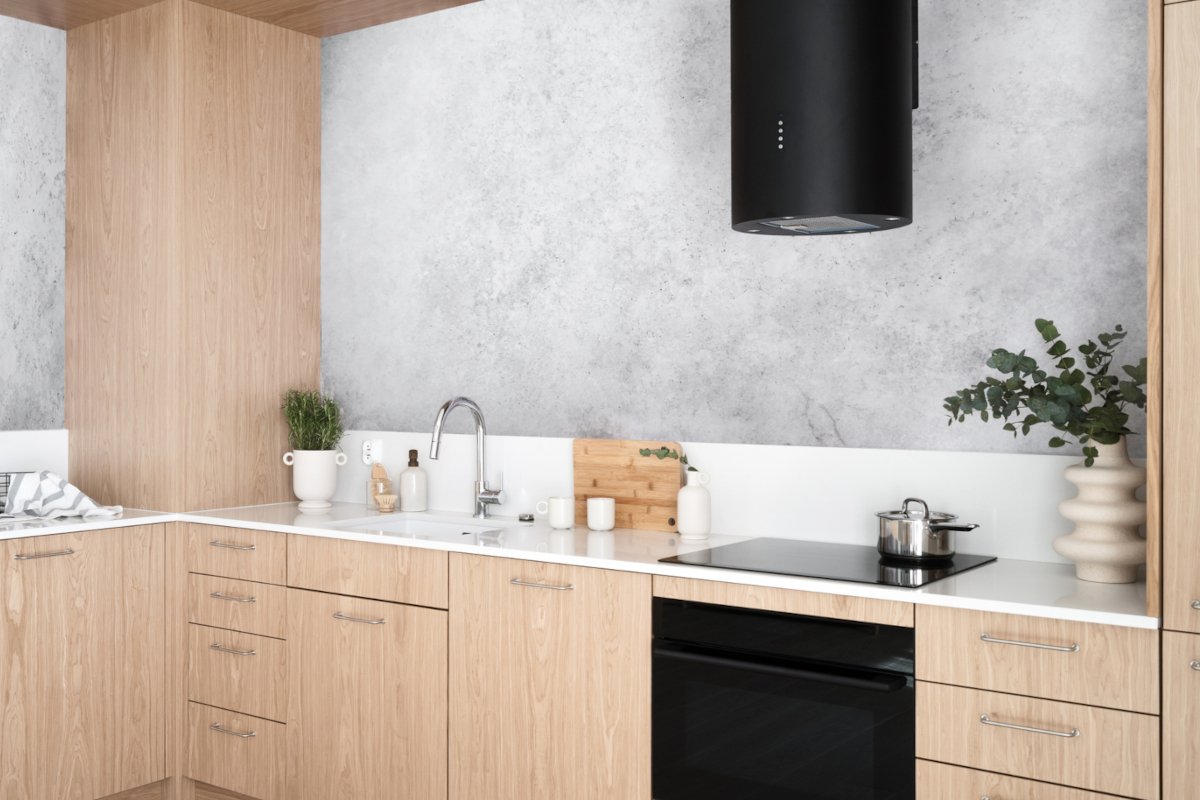
11. Matte-Black Range Hood

A matte-black hood is an easy way to give a white or pale-wood kitchen more definition. It can match black window frames, faucets, or cabinet pulls without requiring every appliance to be black. Choose a washable finish, since grease spots are sometimes more visible on flat dark surfaces than expected.
12. Color-Drenched Hood and Cabinets

Paint the hood enclosure and surrounding cabinets the same saturated shade of green, blue, burgundy, or charcoal. The continuous color makes even an elaborate hood shape feel organized. It is a strong choice for homeowners who want personality without introducing multiple competing finishes.
13. Brightly Colored Metal Hood

Powder-coated metal lets you treat the range hood as a true accent piece. Deep blue, tomato red, forest green, or even soft pink can energize an otherwise neutral room. Repeat the color once or twice in small accessories, then stop before the kitchen begins resembling a paint-sample convention.
14. Traditional Mantel-Style Hood

A mantel-style surround suits colonial, traditional, and formal transitional kitchens. Crown molding, corbels, side pilasters, and a shallow ledge can echo details found on the cabinets. Keep decorative elements proportionate; too many scrolls and columns may make dinner feel as though it is being prepared inside a courthouse.
15. English Country Arched Hood

An arched hood feels at home with inset cabinets, unlacquered brass, natural stone, and traditional range cookers. Add a narrow rail for decorative plates or frequently used seasonings, provided objects remain safely away from heat and grease. Gentle irregularities can make the room feel handcrafted rather than overly precise.
16. Sculptural Flared Hood

A hood that widens toward the bottom improves visual balance above a large range and can provide a generous capture area. Use plaster for softness, metal for a sharper silhouette, or painted millwork for a transitional effect. This design works best when surrounding cabinets remain relatively restrained.
17. Slim Under-Cabinet Hood

Not every kitchen needs a monumental hood. A slim under-cabinet model is practical, affordable, and visually quiet. Look for good lighting, accessible controls, removable filters, and sufficient capture depth. Concealing the front edge behind a cabinet rail can make the appliance appear even more integrated.
18. Invisible Insert Behind a Simple Box

Build a clean rectangular surround around a hood insert and finish it like the wall. This no-fuss strategy suits minimalist and contemporary kitchens where the backsplash, island, or lighting is already the main feature. Include removable panels so the blower and duct connections remain serviceable.
19. Hood with a Built-In Display Ledge

A slim ledge can hold a tiny framed print, a small ceramic piece, or a few attractive spice jars. Keep the display minimal and easy to clean. The cooking zone is not the ideal location for an elaborate collection of wicker baskets, dried flowers, and objects that fear both fire and dish soap.
20. Hood Integrated with Open Shelving

Continue shelves from one or both sides of the hood to create a cohesive composition. Display everyday plates, glasses, or cookware rather than fragile decorations that will require constant degreasing. Maintain safe clearances and avoid placing combustible objects too close to burners.
21. Tile-Wrapped Range Hood

Cover the enclosure in zellige, subway tile, mosaic, or handmade ceramic tile for texture and color. Extending the same tile across the backsplash produces a seamless look, while contrasting tile makes the hood stand out. Choose grout thoughtfully because numerous tiny joints can become enthusiastic collectors of cooking residue.
22. Brick Range Hood Surround

A brick surround works beautifully in industrial lofts, farmhouse kitchens, and renovated historic homes. Real brick, thin brick veneer, or convincing masonry tile can create the effect. Seal porous surfaces where appropriate, and make sure the enclosure does not interfere with access to filters or controls.
23. Glass Canopy Hood

A curved or flat glass canopy is useful when you want ventilation without a bulky visual block. It suits modern kitchens with glossy cabinets, stainless appliances, and clean lines. The tradeoff is obvious: clear glass proudly displays fingerprints, dust, and every airborne droplet until it is wiped.
24. Riveted Industrial Steel Hood

Dark steel, blackened metal, rivets, and exposed welds give a range wall serious industrial presence. Balance the weight with warm wood, pale stone, or soft lighting. This style is particularly effective above a large professional range where a delicate little hood would look like it had arrived at the wrong address.
25. Statement Island Range Hood

Because an island hood is visible from all sides, treat it like a suspended architectural feature. Stainless steel, glass, brass, and sculptural painted forms can work well. Confirm that the hood provides adequate coverage and airflow, since cross-drafts in an open room can make smoke more difficult to capture.
26. Extra-Wide Professional Hood

Pair a 36-, 48-, or 60-inch professional range with a hood that feels equally substantial. Extending the hood beyond the cooking surface can improve capture, particularly around front burners. Check blower capacity, duct size, noise levels, and makeup-air requirements before buying the most powerful model simply because the number looks impressive.
27. Compact Hood for a Small Kitchen

In an apartment, galley kitchen, or accessory dwelling unit, use a shallow under-cabinet hood or concealed insert that does not dominate the room. Matching the enclosure to the cabinets helps the upper wall feel continuous. Prioritize effective venting and easy filter access over decorative bulk.
Practical Experiences Homeowners Often Have with Range Hoods
The Beautiful Hood That Was Too Small
One of the most common renovation lessons is that a hood can look perfectly proportioned in a rendering and still perform poorly in daily life. Smoke rarely rises in a narrow, obedient column. It spreads outward, especially when someone is using front burners, a wok, a grill pan, or a large skillet. A hood that barely matches the width of the range may allow steam and grease to escape around its edges.
Homeowners who cook frequently are often happier when the hood extends slightly beyond the cooking surface and has a deep enough capture area. The extra width may seem unnecessary during the design stage, but it becomes valuable the first time steaks are seared for six people.
The Powerful Hood Nobody Used
Another familiar experience involves purchasing the highest-CFM blower available and then discovering that its loudest setting makes conversation nearly impossible. After a few weeks, family members stop turning it on unless the smoke alarm begins offering its opinion.
Real-world usability depends on more than maximum airflow. A hood with several speeds can run quietly for simmering and switch to higher power for frying. Remote blowers, properly sized ducts, smooth duct interiors, and shorter exhaust routes may reduce noise. Turning the hood on before cooking also helps establish airflow before smoke starts drifting through the room.
The Custom Cover That Complicated Maintenance
Custom wood, plaster, and stone surrounds can look spectacular, but homeowners sometimes forget that the equipment inside will eventually need cleaning or service. Filters must be removed. Lights may need replacement. Controls, wiring, duct connections, and the blower should remain accessible.
A thoughtful enclosure includes discreet access panels and enough room to remove the filters without performing advanced hand gymnastics. Before approving a custom design, ask the installer to demonstrate exactly how each serviceable component will be reached.
The Duct Route That Changed the Entire Plan
Many kitchen designs begin with the hood’s appearance and address the ductwork later. Unfortunately, ducts have opinions. Ceiling joists, plumbing lines, upper floors, exterior walls, and structural beams may determine where the exhaust can travel. Long runs and repeated elbows can reduce performance and increase noise.
Experienced remodelers investigate the route early, particularly when relocating a range or installing an island cooktop. Sometimes the most attractive solution is moving the range to an exterior wall. In other cases, a decorative soffit, deeper cabinet, or carefully planned ceiling chase can conceal the duct.
The Finish That Required More Cleaning Than Expected
Every hood material behaves differently in a working kitchen. Polished metal shows fingerprints. Dark matte paint may reveal oily spots. Textured tile has grout lines. Raw wood can absorb residue if inadequately protected. Intricately carved trim offers grease countless charming places to settle.
Homeowners who cook every day usually appreciate smooth, wipeable surfaces and filters that are easy to remove. Baffle filters are often favored in serious cooking spaces because they are durable and relatively straightforward to clean. Mesh filters can also work well, but they should not be allowed to accumulate thick layers of grease.
The most satisfying range hood is therefore not always the most dramatic one. It is the model that suits the way the household actually cooks, operates at a tolerable sound level, can be maintained without dismantling half the kitchen, and still looks good when dinner guests arrive. Running the hood during cooking and for a short period afterward can help remove lingering particles, moisture, and odors. tion>
How to Choose the Best Range Hood Idea for Your Kitchen
Begin with your range size, cooking habits, available duct route, ceiling height, and cabinet layout. Then decide whether the hood should disappear, coordinate with the cabinetry, or become the room’s main focal point.
For a timeless result, repeat materials and shapes already present in the kitchen. A curved plaster hood can echo an arched doorway. A wood hood can connect to ceiling beams or an island. A black metal hood can relate to window frames and lighting. A marble hood can continue the backsplash into one uninterrupted statement.
Above all, avoid choosing form at the expense of function. The best range hood ideas remove cooking emissions effectively, provide useful task lighting, remain reasonably quiet, allow convenient cleaning, and make the entire range wall look intentional. That is a lot of responsibility for one appliance, but at least it gets the best seat in the kitchen.
Current design collections show growing interest in plaster curves, natural wood, mixed metals, full-slab stone, bold color, and concealed inserts, while classic stainless-steel and mantel-style hoods remain reliable choices. de class=”publishing-note”>
Note: Replace the relative image paths with original or properly licensed photographs before publication. The supplied file names, captions, and alternative text can be retained or adapted for image SEO.