Artist Places Recognizable Characters In Scenes They Don’t Belong In, And It’s Hilarious (30 New Pics)

Note: This article is an original editorial exploration of Pixelfaker’s humorous character mashups, their artistic construction, and the strangely satisfying experience of seeing fictional universes collide.
Imagine James Bond walking confidently into a dangerous confrontation, only to discover that his opponent is Mr. Bean. Picture Ace Ventura wandering into Jurassic Park, where his unusual approach to animal communication may finally become either extremely useful or extremely edible. Now consider Batman and Spider-Man sharing a scene despite belonging to rival entertainment universes that normally guard their characters like dragons protecting a vault full of licensing agreements.
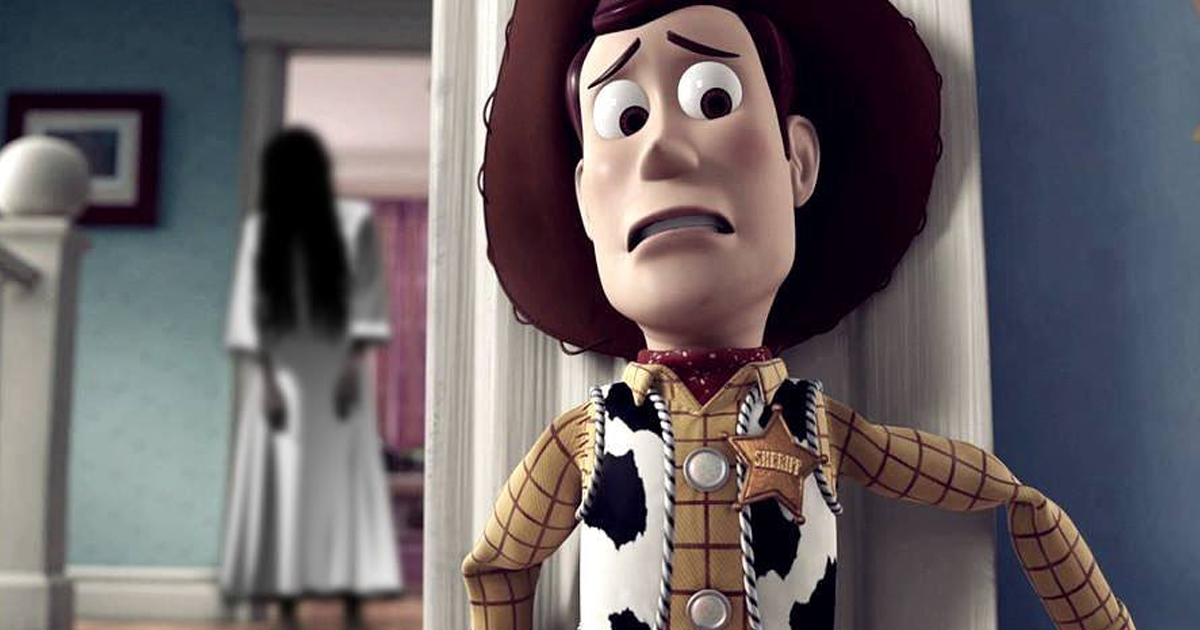
These are the wonderfully incorrect realities created by Pixelfaker, a digital artist known for placing recognizable characters into movie and television scenes where they clearly do not belong. The results are polished enough to look plausible, absurd enough to trigger immediate laughter, and clever enough to make viewers wonder why Hollywood has not already produced some of these spectacularly questionable crossovers.
This collection of 30 new pictures continues the artist’s playful experiment with pop-culture mashups. Heroes meet comedians, family-friendly characters stumble into dangerous thrillers, and serious cinematic moments are interrupted by personalities who seem determined to ruin the mood. It is visual fan fiction with excellent lighting and absolutely no respect for fictional boundaries.
Who Is Pixelfaker?
Pixelfaker is a freelance graphics artist whose identity remains largely private. Instead of turning personal biography into part of the brand, the artist prefers to let the finished images do the talking. Fortunately, those images have plenty to say, although much of it sounds like, “What would happen if we put this person over there and caused total cinematic confusion?”
The artist has worked with graphics for more than two decades, both professionally and through humorous personal projects. Movies from the 1990s played an important role in shaping this creative interest, but the inspiration does not stop there. New releases, cult classics, television comedies, superhero franchises, animated favorites, and older films all provide raw material for unexpected combinations.
Pixelfaker has expressed particular interest in seeing what characters look like after they swap places or enter stories that were never designed for them. That simple “what if?” question powers the entire series. It transforms passive movie watching into a creative scavenger hunt: Which two scenes share a similar camera angle? Which facial expression could gain a completely different meaning elsewhere? Which dramatic hero would look funniest standing next to the least dramatic person imaginable?
Why These Unexpected Character Mashups Are So Funny
Our Brains Recognize the Mistake Immediately
The humor begins with recognition. Viewers already understand how a familiar character is supposed to behave and what kind of fictional world that character occupies. Batman belongs in dark alleys, high-tech caves, and conversations delivered in a voice that sounds like gravel applying for a mortgage. Mr. Bean belongs in ordinary situations that become disasters because he cannot complete a simple task without accidentally reorganizing civilization.
When those two types of characters occupy the same visual space, the brain notices the mismatch instantly. The image breaks an expectation but does so harmlessly. Nobody is actually trapped in an incorrect movie. No studio executive has fainted onto a conference table. The violation is playful, understandable, and safe, which makes it ideal material for humor.
The Characters Bring Their Personalities With Them
A successful movie mashup does more than paste one famous face over another. It allows viewers to imagine the inserted character behaving exactly as expected.
Put Ace Ventura near dinosaurs, and audiences can practically hear him attempting to communicate with them. Insert Deadpool into a solemn action sequence, and the scene immediately gains an invisible layer of inappropriate commentary. Place Mr. Bean opposite an elite secret agent, and suddenly the fate of the world appears to depend on a man who may have forgotten why he entered the room.
That imagined continuation is important. The picture becomes the opening frame of a movie that exists only inside the viewer’s mind. The audience writes the next scene automatically, usually with disastrous and hilarious results.
Nostalgia Does Half the Work
Recognizable character art benefits from a powerful emotional shortcut: nostalgia. A viewer does not need a paragraph explaining who the characters are, what motivates them, or why their meeting is unusual. Years of movies, television episodes, memes, toys, quotes, and repeated holiday reruns have already completed that background work.
Seeing an old favorite in a fresh setting creates two pleasures at once. First comes recognition: “I know that character.” Then comes surprise: “That character should absolutely not be there.” The reaction is immediate, which makes these humorous Photoshop edits especially effective on social media, where an image often has only a second or two to earn attention.
The Art Behind the Apparent Nonsense
The concept may be silly, but producing a convincing digital composite requires serious visual judgment. Anyone can place one image over another. Making the combination look as though both characters were standing before the same camera is considerably harder.
Perspective Must Match
Every film frame has an implied camera position. The height of the camera, distance from the subject, focal length, and angle determine how bodies and objects appear. A character photographed from above will look strangely distorted when inserted into a scene filmed from below.
A skilled digital artist searches for source images with compatible poses and viewpoints. The inserted character must face the correct direction, occupy a believable amount of space, and relate naturally to nearby furniture, people, vehicles, or giant prehistoric reptiles.
When the perspective works, the audience focuses on the joke. When it fails, the character looks like a cardboard cutout that escaped from a movie theater lobby.
Lighting and Color Sell the Illusion
Light is one of the most demanding parts of compositing. A bright studio portrait cannot simply be dropped into a dark nighttime scene without adjustment. The direction, softness, intensity, and color temperature of the light all need to agree.
The artist may darken highlights, add reflected color, soften contrast, or reshape shadows so the new character appears affected by the environment. A warm orange scene should influence skin tones and clothing. A cold blue scene should not leave the inserted figure glowing like someone standing beneath supermarket lighting.
Color grading then helps unify the separate sources. Grain, sharpness, saturation, and black levels may also need correction. These details are easy to overlook individually, but together they determine whether the edit feels convincing.
Shadows Make Characters Feel Present
Shadows are the quiet employees of visual realism. They rarely receive applause, yet the entire operation collapses when they fail to report for work.
A character standing on a floor needs contact shadows around the feet. Someone positioned behind another person may need to be partially obscured. A figure near a bright object might require reflected light along one side. Without these interactions, the added character appears to float above the background instead of inhabiting it.
Expressions Create New Stories
The best source image is not always the cleanest or most famous one. It is often the frame containing exactly the right facial expression.
A suspicious glance can become a reaction to a completely different character. A heroic stare can look hilariously unnecessary in a domestic comedy. A frightened expression can transform a harmless animated figure into the most alarming creature in the room. By changing the context, Pixelfaker changes the meaning without altering the original performance.
More Than Photoshop: A Modern Form of Collage
Digital character mashups belong to a much longer artistic tradition. Long before image-editing software introduced layers, masks, and an undo button mercifully capable of erasing terrible decisions, artists were cutting apart printed material and recombining it into new compositions.
Collage and photomontage have been used to create fantasy, satire, political criticism, dreamlike imagery, and visual jokes. Dada artists rearranged mass-media photographs to disrupt familiar meanings. Surrealists combined unrelated objects and environments to make ordinary reality feel unstable. Later artists used advertising, comic imagery, celebrities, and consumer symbols to examine popular culture.
Pixelfaker’s work is lighter and more entertainment-focused, but the basic artistic strategy is related: take images that already carry meaning, remove them from their original context, and let the collision create a new idea.
The difference is speed and accessibility. Digital tools allow edges to be refined at the pixel level, colors to be adjusted repeatedly, and entire compositions to be shared with a global audience within minutes. The scissors have become selection tools, the glue has become layer masks, and the messy studio floor has become a desktop containing 47 files named “final,” “final2,” and “final_really_final_this_time.”
Why Some Pairings Work Better Than Others
A Shared Visual Detail
Strong mashups often contain a visual bridge between the two source materials. The characters may share similar poses, costumes, props, expressions, or positions within the frame. These similarities make the edit look natural enough to accept while the narrative difference supplies the joke.
A Clash of Tone
Comedy becomes stronger when the emotional tones are far apart. A goofy character inserted into horror can neutralize the threat. A terrifying villain placed in a cheerful family scene can turn innocent behavior into suspicious activity. A dignified hero entering a ridiculous comedy may seem unaware that everyone else is operating under completely different rules.
An Easy-to-Understand Premise
The most shareable edits do not require a film-studies degree and three flowcharts. Viewers should recognize the basic conflict quickly. Famous characters, iconic costumes, and familiar scenes allow the joke to land before someone scrolls away to watch a dog refuse to leave a bathtub.
A New Relationship Between Characters
A memorable edit makes viewers imagine chemistry between personalities who have never officially met. Would they become partners, enemies, roommates, or exhausted coworkers? Would a brilliant detective solve another character’s problems in ten minutes? Would a chaotic comedian make everything worse before accidentally saving the day?
The image succeeds when the fictional relationship feels strange but strangely possible.
Fan Art as Participation, Not Just Imitation
Fan art is sometimes dismissed because it begins with characters created by someone else. However, simply copying a promotional image and building a new scenario are very different activities. A mashup artist selects, reframes, edits, and connects existing visual material to create a fresh narrative.
Known characters can function like an established cast in improvisational theater. Their personalities are already understood, allowing the artist to concentrate on relationships, situations, and visual storytelling. The challenge becomes finding a combination that feels original instead of merely familiar.
These edits also demonstrate how audiences participate in pop culture. Fans do not always remain passive consumers waiting for the next official sequel. They create illustrations, alternative endings, costumes, memes, fictional conversations, and crossover worlds. Their work reveals which characters remain emotionally meaningful long after the original movie has ended.
Naturally, creators working with copyrighted characters must remain aware of intellectual-property rules, especially when selling or licensing their work. Parody and transformative creativity can be relevant considerations, but fair use in the United States depends on multiple factors rather than a magical “I changed it, therefore it is legal” button.
Thirty Pictures, Hundreds of Imaginary Movies
A collection of 30 edits offers much more than 30 isolated jokes. Each mashup suggests an entire alternative production that viewers can continue developing in their heads.
Batman versus Spider-Man becomes an impossible superhero event. Ace Ventura in Jurassic Park becomes a survival movie in which animal expertise may finally meet an animal too large to crawl out of a bathroom window. James Bond against Mr. Bean becomes an espionage thriller where sophisticated technology is defeated by confusion, stubbornness, and possibly a small green car.
Other combinations can unite different generations of entertainment. A character from a decades-old cult film may appear beside a modern superhero. An animated personality may interrupt live-action drama. A family comedy may suddenly inherit the visual language of science fiction, fantasy, or horror.
The pictures invite audiences to recognize both sources, understand the contrast, and invent the consequences. That makes viewing active rather than passive. You are not merely looking at an edit; you are mentally directing the movie that follows it.
A Personal Experience With Unexpected Character Mashups
The first time I encountered a convincing character mashup, I did not laugh immediately. I stared at it for a moment because something felt wrong, yet the technical editing was polished enough that my brain could not identify the problem at once. Then I recognized the intruding character, understood the collision, and laughed with the delayed force of someone finally noticing that a serious board meeting includes a Muppet.
That tiny pause became one of my favorite parts of the experience. A weak edit announces itself instantly as a rough cutout. A strong one briefly persuades you that the impossible scene might be real. Your visual system accepts the lighting and composition before your memory objects to the storyline.
Looking through a full collection becomes a game. I start by identifying the inserted character, then search for the original background, and finally imagine how the revised scene would unfold. Some combinations are funny because the personalities conflict. Others work because they fit surprisingly well. The most enjoyable examples often make me think, “This is ridiculous,” followed immediately by, “Actually, I would watch two hours of this.”
The images also change how I remember the original movies. Once a familiar scene has been interrupted by the wrong character, it can be difficult to remove that new version from memory. The next time the real scene appears, part of my brain expects the visitor to return. Digital collage has quietly vandalized the mental director’s cut, and I am not asking for repairs.
Sharing the pictures with friends creates another layer of entertainment. Different generations recognize different references. One person immediately understands a superhero joke but misses the older comedy. Someone else recognizes the classic film and needs help identifying the modern character. The mashup becomes a compact pop-culture quiz, followed by recommendations, arguments, impressions, and at least one person insisting that the unofficial crossover would be better than the latest sequel.
These artworks have also made me appreciate the technical discipline behind visual comedy. The funniest concept can collapse when the scale is wrong or the lighting conflicts. By contrast, careful masking, matching grain, subtle color correction, and believable shadows allow an absurd idea to feel temporarily authentic. The craftsmanship disappears into the joke, which is often the sign that it has done its job well.
Most importantly, the series encourages a playful way of looking at media. Instead of accepting every fictional universe as sealed and untouchable, it asks viewers to rearrange the pieces. What happens when the wrong detective investigates the case? Which comedian would survive a horror movie by annoying the villain? Which animated character would create the greatest confusion in a historical drama?
After spending time with these edits, ordinary movie watching becomes slightly more dangerous. A dramatic pause appears, and I automatically imagine who could enter the frame and destroy it. A villain begins a speech, and I wonder whether Mr. Bean is available. A dinosaur approaches, and somewhere in the distance, Ace Ventura is warming up.
Conclusion: The Best Crossovers May Never Reach Theaters
Pixelfaker’s recognizable character mashups prove that one clever image can create a larger imaginary world. By combining technical compositing skills with nostalgia, visual incongruity, and a deep knowledge of entertainment, the artist turns familiar movie scenes into alternate realities that feel both impossible and oddly convincing.
The humor does not come solely from seeing famous faces together. It comes from understanding their personalities, histories, genres, and emotional tonesand then watching all those carefully established rules collide. These 30 new pictures remind us that creativity often begins with a simple question: What would happen if the wrong character walked into the right scene?
Hollywood may never approve most of these crossovers, which is probably sensible from a legal, financial, and general public-safety perspective. Fortunately, digital art does not need a billion-dollar production budget. Sometimes it only needs imagination, patience, excellent masking skills, and the courage to send Mr. Bean on a mission clearly intended for James Bond.