How to Live with Collections: Art Director Sandy Suffield’s Vintage Filled London Flat

Note: This article is written for web publication in standard American English and is based on real interior design principles, vintage decorating practices, and publicly available information about art director and set designer Sandy Suffield’s North London flat.
A Home That Proves Collections Can Be Charming, Not Chaotic
Some homes whisper. Sandy Suffield’s vintage-filled London flat has a full conversation with you before you have even taken off your coat. It says, “Come in, look closer, yes that lamp has a story, and no, the chair is not from a catalog.” The home of the London art director and set designer is a masterclass in living with collections without letting them stage a small domestic uprising.
The phrase “living with collections” can make some people nervous. They picture dusty shelves, teetering piles of porcelain, and a hallway where guests must turn sideways like they are navigating a museum storage room. But Sandy’s flat offers a more elegant answer. It shows that vintage furniture, secondhand objects, handmade pieces, lamps, textiles, books, art, and curiosities can coexist beautifully when they are edited, displayed with intention, and given room to breathe.
Her North London home is not minimalist in the cold, empty, “where did all the humans go?” sense. It is personal, layered, warm, and full of evidence that someone with a sharp eye actually lives there. Yet it also feels navigable. The secret is not buying less personality. The secret is giving personality structure.
Who Is Sandy Suffield, and Why Is Her Flat So Inspiring?
Sandy Suffield is a London-based art director and set designer known for a strong visual point of view, a love of vintage finds, and a creative approach to reuse. Her work and personal projects reflect the same philosophy: old things are not leftovers; they are materials with memory. Instead of treating vintage objects as precious antiques that must sit frozen in time, she uses them as active parts of daily life.
Her long-time North London flat has been described as a two-bedroom home furnished almost entirely with vintage pieces. That matters because many people assume collections require a large house, a barn, or at least one mysterious locked room labeled “miscellaneous.” Sandy proves otherwise. In a city flat, where every square foot must earn its keep, collections can still shineif they are curated with discipline.
The flat’s appeal comes from tension: old and clean, full and calm, practical and poetic. A 1930s Czech chrome sofa can sit near a sculptural lamp. Pantry goods can look intentional in glass jars. Slim display ledges can turn small objects into visual rhythm. A dress, a mold, a print, or a lamp can become part of the home’s vocabulary instead of random background noise.
The Main Lesson: Collections Need Rules, Not Apologies
The biggest mistake collectors make is apologizing for their objects. They buy what they love, then hide it in cupboards because they fear the room looks too busy. Sandy’s flat suggests a better way: establish rules that let beloved things be seen.
A collection becomes clutter when it has no boundary, no relationship to the room, and no visual logic. But the same objects can become design when they are grouped, repeated, edited, and placed where they serve the space. The difference between “beautifully collected” and “did a flea market sneeze in here?” is usually arrangement.
1. Keep the Floor Plan Clear
One of the smartest ideas from Sandy’s approach is simple: keep rooms easy to move through. In a small flat, circulation is sacred. No matter how beautiful a vintage table is, it should not force guests to perform interpretive dance just to reach the sofa.
That means avoiding bulky pieces in the middle of tight rooms, choosing furniture with visible legs, and leaving negative space around key pathways. When you can see under furniture, a room often feels lighter and larger. A sofa raised on legs, a slim plant stand, or a glass-front cabinet can help collections feel airy instead of heavy.
2. Let Furniture Do Double Duty
Collectors need storage the way coffee needs a mug: without it, things get messy fast. The best vintage-filled rooms use furniture that works hard. A hutch can display ceramics and hide serving pieces. A chest can store textiles while acting as a coffee table. A narrow console can hold lamps, books, and a rotating tray of treasures.
In a collected home, every piece should ideally do at least two jobs. The chair offers seating and sculptural form. The lamp provides light and mood. The shelf holds objects and creates a visual frame. The cabinet stores useful things and prevents the room from looking like a decorative avalanche.
3. Group Similar Items for Impact
One vintage candlestick on a shelf may look lonely. Five candlesticks in different heights suddenly look intentional. A single old bottle may seem accidental. A row of bottles near a window can become a study in color, glass, and light. Collections become stronger when the eye understands the pattern.
This does not mean everything must match. In fact, the best vintage collections rarely match perfectly. The connection might be material, shape, color, period, or mood. You might group brass objects, white ceramics, botanical prints, striped textiles, old kitchen tools, or small lamps. The point is to create a family resemblance, not a furniture showroom lineup.
How to Display Collections Without Making a Room Feel Messy
Displaying collections is a design skill, but it does not require a degree, a giant budget, or a dramatic television reveal. It requires a little patience and the willingness to remove three things after adding five. Editing is not betrayal. Your favorite objects will look better when they are not fighting for oxygen.
Use the “Museum Shelf” Trick
Give special objects a dedicated shelf, ledge, or cabinet. Sandy’s use of skinny display shelves is a practical idea for small homes because ledges hold visual interest without eating up floor space. They are excellent for small artworks, framed pieces, molds, ceramics, and tiny oddities that deserve a stage but not an entire table.
Keep the background simple. White shelves, natural wood, or a restrained wall color can make collections feel calmer. If the objects are already colorful, patterned, or strangely shaped, the display surface should not compete with them. Think of the shelf as the quiet friend who lets the dramatic friend tell the story.
Rotate Instead of Cramming
You do not have to display every object at once. This is especially important if you collect small items such as matchbooks, ceramics, vintage tins, postcards, shells, books, or art. Put some pieces away and rotate them seasonally or whenever the room starts to feel stale.
Rotation keeps the home fresh and gives your eye a break. It also helps you rediscover what you own. Nothing humbles a collector faster than opening a box and saying, “Oh right, I bought seven of these.”
Create Breathing Room
Open space is not wasted space. It is what allows the objects you love to be noticed. On shelves, leave gaps between groups. On tabletops, use trays to gather smaller objects. On walls, keep artwork within a clear shape rather than scattering frames randomly across every available inch.
If a room feels too busy, try removing the smallest items first. Tiny objects can create visual static when spread everywhere. Group them in a bowl, cabinet, tray, or shadow box so they read as one idea rather than many interruptions.
Vintage Decorating Ideas Inspired by Sandy Suffield’s Flat
Sandy’s flat offers plenty of practical inspiration for anyone who loves old things but still wants a home that functions in real life. You do not need her exact pieces. The goal is to borrow the logic behind the look.
Choose Lighting with Character
Lamps are one of the easiest ways to add vintage personality without overwhelming a room. A collected home benefits from layered lighting: floor lamps, table lamps, wall lights, and task lights. Vintage lamps are especially useful because they act as sculpture even when switched off.
If you live in a small apartment, lighting can become your collection category of choice. Chairs take space. Cabinets take space. Large tables take space. Lamps can often be tucked onto shelves, desks, nightstands, or corners while adding instant atmosphere. The right lamp says, “I have taste,” even if the laundry basket nearby says, “I have priorities.”
Use Glass Jars for Practical Beauty
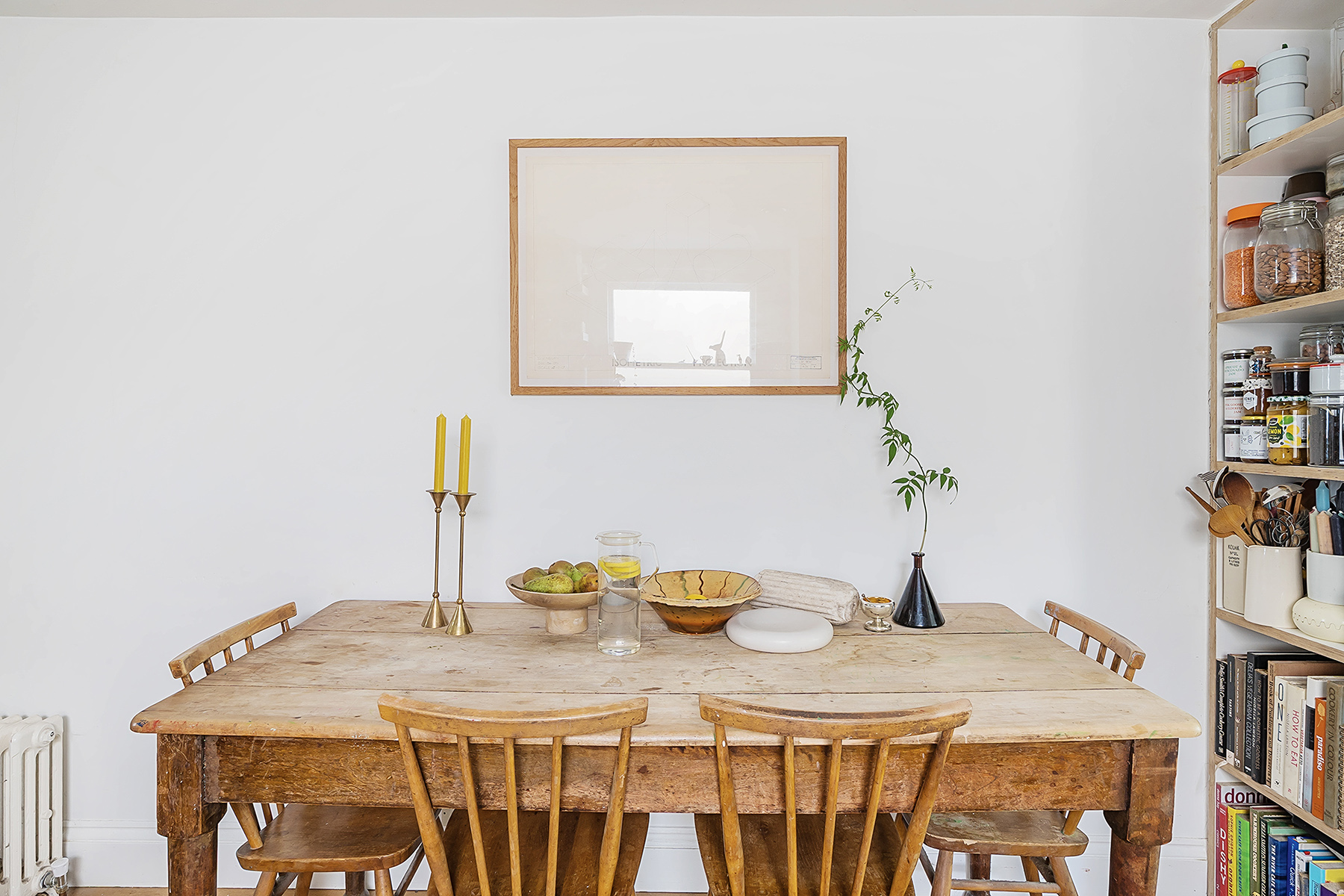
One of the most accessible ideas in a vintage-friendly home is decanting pantry goods into glass jars. It is not just about aesthetics. Clear containers help you see what you have, reduce packaging clutter, and make everyday ingredients look deliberate.
This trick works beyond the kitchen. Use jars for buttons, matchbooks, old keys, thread, pencils, shells, or small craft supplies. A jar turns “random pile” into “charming collection.” That is basically domestic magic, but cheaper than hiring a wizard.
Mix Old and New Carefully
A room filled only with vintage pieces can become too themed, especially if every item comes from the same era. The most livable collected interiors mix periods. Pair an antique table with a simple modern sofa. Put a contemporary artwork above a vintage dresser. Use plain white bedding with an old lamp or handmade quilt.
Contrast keeps the room alive. It also prevents your home from feeling like a movie set where someone might ask for your ticket at the door. The best vintage interiors feel accumulated over time, not purchased in one panicked weekend.
How to Build a Collection That Looks Intentional
Collecting is not the same as accumulating. Accumulating says, “I kept buying things.” Collecting says, “I am building a point of view.” The difference is intention.
Define Your Collection Categories
If you love everything, your home may eventually look like it is trying to host twelve personalities at once. Narrow your focus. You might collect vintage lighting, botanical art, blue-and-white ceramics, old mirrors, handmade baskets, modernist chairs, antique textiles, or quirky kitchenware. The category can be broad, but it should have some logic.
Before buying something, ask: Does this strengthen the collection, or is it just available? The hardest part of vintage shopping is walking away from an object that is wonderful but wrong for your space. Not every beautiful thing is your beautiful thing.
Buy for Use, Not Just Display
Sandy’s flat works because the vintage pieces are part of life. They are not sealed away like museum artifacts. This is a healthy approach for most homes. Use the old bowl. Sit on the reupholstered chair. Turn on the lamp. Store flour in the jar. Hang the print where you will see it every morning.
Objects become more meaningful when they participate in your routine. A collection that only exists to be admired can start to feel stiff. A collection that supports daily life feels generous, warm, and human.
Repair, Reupholster, and Reimagine
Vintage living rewards imagination. A tired chair may need new fabric. A trunk can become a coffee table. A dresser can work in a bathroom, hallway, or dining room. A simple plank and brackets can become a display ledge. Old objects often need adjustment, not replacement.
This is also a sustainable way to decorate. Choosing secondhand pieces reduces demand for new production and keeps useful, beautiful objects out of landfills. It is design with a conscienceand usually with better stories.
Small-Space Lessons from a Vintage-Filled London Flat
London flats are not famous for endless storage. That is why Sandy’s home is such a useful case study. The design challenge is familiar to anyone living in an apartment, condo, rental, or compact house: how do you keep beloved things visible without losing the ability to find your keys?
Think Vertically
Walls are valuable real estate. Slim ledges, wall-mounted shelves, hooks, peg rails, and tall bookcases can hold collections without crowding the floor. Vertical storage also draws the eye upward, making a small space feel taller.
For renters, lightweight shelves, picture ledges, and freestanding bookcases can offer flexibility. Just avoid overloading them. A wall of objects should still have rhythm, pauses, and a sense of order.
Keep the Color Palette Connected
Collections often include many shapes and textures, so color becomes the glue. You do not need a beige-only life. You simply need repetition. If your vintage finds include warm wood, brass, cream, black, and soft green, repeat those tones across the room. If you love bright colors, choose two or three dominant shades and let neutrals calm the rest.
A connected palette helps mismatched pieces feel like friends rather than strangers trapped in an elevator.
Let Some Things Stay Hidden
Open display is beautiful, but closed storage is sanity. Not every object deserves a spotlight every day. Use baskets, cabinets, boxes, drawers, and under-bed storage for backup collections, seasonal pieces, tools, cables, and less attractive necessities.
A home can be expressive and still have secrets. In fact, it should. Nobody needs to see your spare batteries having a social event next to the vintage candlesticks.
How to Make a Collected Home Feel Personal
The most memorable interiors are not perfect. They are specific. Sandy Suffield’s flat stands out because it reflects her eye, her work, her values, and her willingness to choose old things with character. That is the real takeaway: a collected home should reveal the person who lives there.
Personal does not mean messy. It means the objects have a reason to be there. A framed textile from a trip, a lamp found on eBay, a set of thrifted glasses, a handmade print, or a rescued chair can all become part of the story. The home becomes a biography written in wood, metal, glass, paper, and fabric.
For web readers searching for vintage decorating ideas, small apartment inspiration, or ways to display collections, this is the heart of the lesson: do not decorate to impress imaginary guests with imaginary clipboards. Decorate to support the life you actually live.
Extra Experiences: Living with Collections in Real Homes
Living with collections is a bit like living with a friendly, stylish pet. It brings joy, takes up space, and occasionally requires discipline. The most successful collectors I have seen are not the ones with the most objects. They are the ones who know when to pause, edit, repair, and rearrange.
One practical experience many collectors share is the “surface problem.” You begin with one lovely bowl on a sideboard. Then a postcard joins it. Then three small ceramics. Then a candle. Then a stone from a beach vacation. Suddenly the sideboard has become a tiny airport for sentimental objects. The solution is not to remove all personality. The solution is to create zones. Use one tray for small items, one lamp for height, one artwork for background, and leave the rest of the surface clear.
Another useful experience is learning that collections need maintenance. Dust is not romantic. A shelf full of vintage treasures can look magical on Monday and haunted by Thursday if it is ignored. Choose display methods you can actually clean. Glass-front cabinets protect delicate pieces. Picture ledges are easier to dust than deep shelves filled three rows back. Fewer, larger groupings are usually easier to maintain than dozens of tiny scattered displays.
There is also an emotional side to collecting. People often keep objects because they represent travel, family, creativity, or a former version of themselves. That is beautiful, but it can also become heavy. A good habit is to review collections once or twice a year. Ask which pieces still feel alive to you. Some objects may be ready for a new home. Donating, selling, or gifting them does not erase the memory. It simply makes space for the next chapter.
Small homes require even more honesty. If you collect chairs but live in a compact apartment, you may need to admire most chairs from afar and collect smaller things instead: lamps, prints, textiles, ceramics, books, or hardware. Sandy’s preference for lighting is a smart example of adapting desire to space. A collection should work with your home, not bully it.
Finally, the best collected interiors usually evolve slowly. They are not completed in one shopping trip. They grow through flea markets, charity shops, family hand-me-downs, online finds, repairs, mistakes, and happy accidents. That slow process is what gives them soul. A room filled with meaningful vintage pieces has a texture that fast decorating rarely achieves. It feels lived-in because it has, in fact, been lived into.
Conclusion: The Art of Living Beautifully with Beloved Things
Sandy Suffield’s vintage-filled London flat is not just a pretty interior; it is a lesson in thoughtful collecting. It proves that a home can be full without feeling frantic, old without feeling dated, and practical without losing its sense of wonder.
The key is intention. Keep pathways clear. Group objects with purpose. Use shelves, ledges, trays, and cabinets to create boundaries. Mix eras. Repeat colors. Rotate displays. Buy what you love, but make sure your home still has room for actual living.
Collections should not make you feel trapped by your belongings. They should make your home feel more like you. When handled well, vintage finds become more than decor. They become memory, texture, humor, sustainability, and storyall sitting comfortably under one roof.