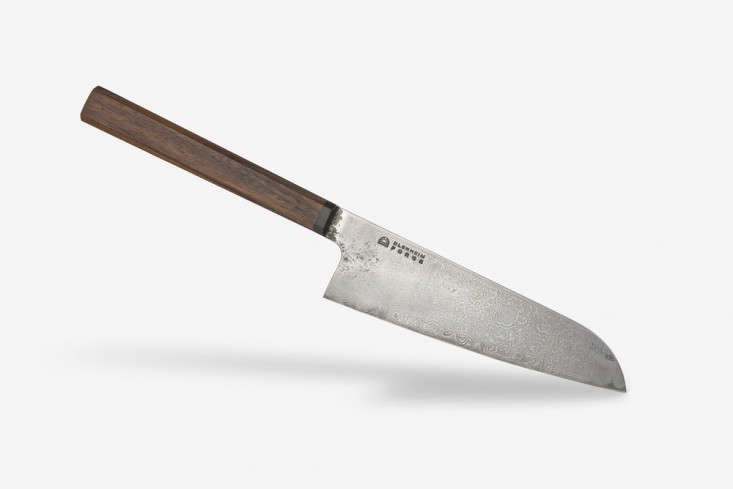

A Santoku chef’s knife is the kitchen tool that quietly walks in, does three jobs before coffee, and never asks for applause. Shorter and lighter than many Western chef’s knives, the santoku is famous for clean slicing, fast chopping, and precise dicing. It is the knife you reach for when an onion needs taming, a tomato needs civilized treatment, or a pile of herbs needs to become confetti without turning into green sadness.
The word “santoku” is commonly translated as “three virtues” or “three uses.” Depending on who you ask, those virtues refer to slicing, dicing, and mincing, or to handling meat, fish, and vegetables. Either way, the message is clear: this Japanese-style kitchen knife is built to be an everyday workhorse, not a decorative blade that sits in a block looking important.
For home cooks, the santoku chef’s knife offers a beautiful balance of control and versatility. It feels approachable, especially for people who find a large 8- or 10-inch chef’s knife a little dramatic. Think of it as the compact SUV of kitchen knives: practical, nimble, and ready for weeknight traffic.
What Is a Santoku Chef’s Knife?
A santoku chef’s knife is a multipurpose kitchen knife that originated in Japan and became popular worldwide because it fits the way many modern cooks actually prepare food. Most santoku knives have a blade between 5 and 7 inches long, though some models stretch closer to 8 inches. The blade is usually wider than a utility knife, flatter along the cutting edge, and shaped with a rounded or “sheepsfoot” tip that curves downward toward the edge.
This design gives the santoku its signature cutting personality. Instead of relying on a big rocking motion like many Western chef’s knives, a santoku performs best with push cuts, pull cuts, and short up-and-down chopping motions. The flatter edge makes strong contact with the cutting board, which helps create neat, even cuts through vegetables, boneless meat, fruit, herbs, and cooked proteins.
Many santoku knives also feature hollow-edge indentations, sometimes called Granton-style dimples. These shallow grooves help reduce drag and encourage sliced food to release from the blade. They are especially useful when cutting sticky or moist ingredients such as cucumbers, potatoes, cheese, salmon, and thin slices of cooked chicken.
Santoku Knife vs. Western Chef’s Knife
The santoku chef’s knife and the Western chef’s knife are close cousins, but they do not behave exactly the same way. A Western chef’s knife usually has a longer blade, a more pointed tip, and a curved belly designed for rocking back and forth. That makes it excellent for mincing parsley, breaking down large vegetables, and powering through bigger cuts of meat.
A santoku is typically lighter, shorter, and flatter. This makes it feel more controlled in tight spaces and easier to guide through precise cuts. If your cutting board is small, your hands are small, or your patience for oversized tools is small, a santoku may feel like a breath of fresh air.
Where a Santoku Knife Excels
A santoku knife shines when the task calls for clean, repeatable cuts. It is excellent for slicing mushrooms, chopping carrots, dicing onions, mincing garlic, cutting boneless chicken, shaving cabbage, slicing apples, and making thin cuts of fish or cooked meat. Its wide blade can also help scoop chopped ingredients from the board into a pan, although you should use the spine of the blade or a bench scraper when possible to protect the edge.
Where a Chef’s Knife May Be Better
A traditional chef’s knife may be better for heavy-duty jobs such as splitting dense winter squash, carving large roasts, or cutting through thick-skinned produce. A santoku is not a cleaver, a bone saw, or a tool for frozen food. Asking it to hack through bones is like asking a sports car to pull a tractor: dramatic, expensive, and probably avoidable.
Key Features to Look For in a Santoku Chef’s Knife
Blade Length
For most home cooks, a 6- to 7-inch santoku chef’s knife is the sweet spot. It is long enough to handle everyday prep but short enough to feel nimble. A 5-inch santoku can be comfortable for quick tasks or smaller hands, while an 8-inch version gives more reach for larger ingredients.
Blade Steel
Stainless steel santoku knives are popular because they resist rust, clean easily, and require less maintenance. High-carbon stainless steel offers a nice balance of sharpness, durability, and stain resistance. Carbon steel can take an extremely sharp edge, but it needs more care because it can discolor or rust if left wet or exposed to acidic foods.
Edge Angle and Sharpness
Many Japanese-style santoku knives use a thinner edge angle than heavier Western knives. This helps them glide through ingredients with less resistance. The trade-off is that thinner edges can be more delicate, so they should be used with proper technique and a friendly cutting board.
Handle Comfort
A good santoku should feel secure without forcing your hand into an awkward position. Handles may be Western-style, Japanese wa-style, wood, pakkawood, resin, or stainless steel. The best choice is the one that feels stable, balanced, and natural in your grip. A knife can have glamorous steel and a price tag with main-character energy, but if the handle feels wrong, it will not become your favorite.
Hollow Edge or Smooth Blade?
A hollow-edge santoku can make slicing easier by reducing food stickage. This is helpful for potatoes, squash, apples, and other clingy ingredients. A smooth-blade santoku can still perform beautifully, especially if the blade is thin and well-polished. The hollow edge is useful, but it is not magic. Potatoes may still cling occasionally, because potatoes enjoy drama.
How to Use a Santoku Chef’s Knife Properly
The santoku chef’s knife rewards a calm, controlled cutting style. Instead of exaggerated rocking, use a forward-and-down push cut or a straight chopping motion. Keep the tip low, guide the blade with your knuckles, and let the sharp edge do the work. If you must force the knife, either the ingredient is too tough, the knife is dull, or dinner has become a negotiation.
For vegetables, square off one side first so the ingredient sits flat on the board. This makes cutting safer and more consistent. For herbs, gather them into a compact pile and slice with short, smooth motions. For boneless meat or fish, use long strokes rather than sawing aggressively. The goal is clean separation, not a workout routine.
Best Foods to Cut With a Santoku Knife
The santoku is especially good for everyday ingredients. It handles onions, peppers, cucumbers, zucchini, mushrooms, cabbage, tomatoes, carrots, celery, apples, pears, herbs, garlic, ginger, boneless chicken, cooked steak, tofu, cheese, and fish fillets. If your meal starts with “chop one onion,” the santoku is already halfway out of the knife block.
It also works beautifully for meal prep. A santoku can turn a farmers market haul into neatly chopped vegetables for stir-fries, soups, sheet-pan dinners, salads, and grain bowls. Its wide blade gives you enough height for knuckle clearance, while the shorter length gives you control when making repeated cuts.
What Not to Cut With a Santoku Knife
Do not use a santoku chef’s knife to cut bones, frozen foods, hard shells, or anything that requires twisting the blade. Avoid cutting on glass, stone, marble, ceramic plates, or metal surfaces. These materials can dull or damage the edge quickly. A wood, bamboo, or quality plastic cutting board is a much better partner.
Also, never use the knife as a screwdriver, can opener, box cutter, pry bar, or emergency gardening tool. Every knife has a purpose, and the santoku’s purpose is food. Treat it well and it will reward you with smoother prep, safer cutting, and fewer muttered kitchen complaints.
How to Care for a Santoku Chef’s Knife
Hand wash your santoku knife with warm, soapy water after use, then dry it immediately with a clean towel. Do not leave it soaking in the sink. A knife hidden under bubbles is a surprise no one wants, especially not your fingers. Dishwashers are also a bad idea because harsh detergent, heat, and rattling can damage the blade and handle.
Store the knife in a knife block, blade guard, drawer insert, or on a secure magnetic strip. Tossing it loose into a drawer is bad for the edge and even worse for anyone reaching in before coffee. For carbon steel santoku knives, wipe the blade during long prep sessions, especially after cutting acidic ingredients like tomatoes, citrus, or onions.
Sharpening and Honing: Keeping the Edge Alive
A sharp santoku chef’s knife is safer than a dull one because it requires less pressure and gives you more control. Honing helps realign the edge between sharpenings, while sharpening removes metal to create a fresh edge. Some santoku knives respond well to whetstones, while others can be maintained with guided sharpeners designed for Asian-style blade angles.
If you are new to sharpening, practice patiently or use a professional service. The goal is not to grind your expensive knife into a shiny letter opener. Maintain the correct angle, use light pressure, and sharpen only when needed. A simple test is the tomato test: if the knife glides through tomato skin without crushing the flesh, it is probably in good shape.
How to Choose the Right Santoku Chef’s Knife
Start with comfort. Hold the knife if possible. Check whether the handle feels secure, whether the blade feels balanced, and whether the weight suits your style. Some cooks prefer feather-light Japanese knives; others like a bit more heft. Neither is automatically better. The right knife is the one you will reach for every day.
Next, consider your cooking habits. If you prep vegetables constantly, a hollow-edge santoku with a thin blade may be ideal. If you want low maintenance, choose stainless steel. If you love sharpening and do not mind extra care, carbon steel may appeal to you. If you cook in a busy family kitchen, durability and easy cleaning may matter more than artisan flair.
Price also matters. Excellent santoku knives exist at budget, mid-range, and premium levels. A more expensive knife can offer better steel, balance, handle materials, and craftsmanship, but price alone does not dice onions. A well-made, properly maintained mid-range santoku can outperform a neglected luxury knife every night of the week.
Common Mistakes People Make With Santoku Knives
The first mistake is using too much force. A santoku should slice, not smash. If you are pressing down hard enough to negotiate with the cutting board, the edge may be dull or the task may require a different knife.
The second mistake is rocking too aggressively. While some santoku knives can handle a mild rocking motion, their flatter edge is designed more for push cuts and chopping. Trying to use one exactly like a curved Western chef’s knife can feel clumsy.
The third mistake is poor storage. Blade edges are delicate. Letting a santoku bang around in a drawer can dull the knife and create safety risks. A blade guard costs far less than a new knife or a bandage collection.
The fourth mistake is skipping food safety basics. Use separate cutting boards for raw meat and ready-to-eat foods, or wash boards and knives thoroughly between tasks. Clean technique is part of good cooking, even when nobody is watching.
Real Kitchen Experience: Living With a Santoku Chef’s Knife
Using a santoku chef’s knife for everyday cooking changes the rhythm of prep. The first thing many cooks notice is the control. A santoku does not feel like it is trying to dominate the cutting board. It feels quick, tidy, and cooperative. When slicing cucumbers for a salad, the blade moves in even strokes, and the pieces fall away with satisfying consistency. When chopping onions, the flatter edge helps finish each cut cleanly, so you do not end up with those annoying onion strips still attached at the bottom like they signed a group contract.
In a small home kitchen, the santoku is especially pleasant. Not everyone has a giant butcher-block island and studio lighting. Some of us are chopping garlic next to the toaster while a pot boils over with the confidence of a volcano. A shorter santoku fits better on modest cutting boards and gives better control in cramped spaces. It is easy to move from mincing shallots to slicing mushrooms to cutting cooked chicken without feeling like you are wielding a sword in a phone booth.
The knife also encourages better habits. Because a santoku works best with smooth push cuts, it teaches you to slow down just enough to cut more accurately. You start noticing how ingredients behave. Carrots need a firm, stable grip. Tomatoes reward a sharp edge. Herbs bruise if you bully them. Potatoes cling to the blade because apparently they have separation issues. Over time, the santoku becomes less of a tool and more of a cooking coach with a sharp personality.
One practical experience stands out: meal prep becomes less annoying. A bowl of vegetables for stir-fry can go from whole produce to neat slices quickly. Bell peppers become strips, zucchini becomes half-moons, cabbage becomes ribbons, and garlic becomes tiny fragrant pieces that make everyone wander into the kitchen asking what smells good. The santoku’s wide blade helps transfer ingredients from board to pan, and its light weight keeps your wrist from feeling tired after twenty minutes of chopping.
That said, the santoku also teaches boundaries. Try to force it through frozen meat or a chicken bone and it will remind you, very expensively, that it is not a cleaver. Use it on a glass cutting board and the edge will lose enthusiasm fast. Leave it wet in the sink and you are not caring for a tool; you are auditioning for a kitchen safety warning poster. The best experience comes when you treat the knife with respect: wash it by hand, dry it immediately, store it safely, and sharpen it before it becomes dull.
For many cooks, the santoku chef’s knife becomes the first knife they truly enjoy using. It is approachable for beginners, efficient for experienced home cooks, and versatile enough to earn permanent counter-space status. It may not replace every knife in the kitchen, but it can easily become the one you miss when someone else is using it. And that, in a kitchen drawer full of gadgets, is high praise.
Conclusion: Is a Santoku Chef’s Knife Worth It?
A santoku chef’s knife is absolutely worth considering if you want a versatile, comfortable, and precise everyday kitchen knife. It is ideal for slicing vegetables, dicing fruit, mincing herbs, and cutting boneless proteins with control. Compared with a Western chef’s knife, it usually feels lighter, shorter, and more agile, making it a strong choice for home cooks who value accuracy and ease of use.
The best santoku knife is not necessarily the most expensive one. It is the knife that fits your hand, matches your cooking style, holds a sharp edge, and makes prep feel smoother. Choose a quality blade, use it on the right cutting board, wash and dry it by hand, and keep it sharp. Do that, and your santoku chef’s knife will become more than another kitchen purchase. It will become the quiet hero of soups, salads, stir-fries, weeknight dinners, and every onion that thought it had a chance.