
Note: This article synthesizes practical guidance from U.S.-based career writing resources, university career centers, HR best practices, and youth sports communication principles. It is written for athletes, parents, students, and team members who want to leave a coach or sports program respectfully, clearly, and without turning the locker room into a courtroom drama.
Introduction: Leaving a Coach Without Burning the Team Bus
Writing a letter of resignation to your coach can feel strangely dramatic. You are not quitting a Fortune 500 company, and yet your palms may sweat like you are handing a CEO your two-week notice while a marching band plays in the background. Whether you are leaving a school team, club program, private training group, travel squad, or college roster, the goal is the same: communicate your decision clearly, respectfully, and in writing.
A resignation letter to a coach is not just a formality. It gives your coach a clear record of your decision, helps the team adjust, protects your reputation, and keeps future opportunities open. Sports communities can be smaller than they look. Today’s coach may become tomorrow’s reference, tournament contact, camp director, or person who remembers whether you left with maturity or vanished like a sock in the dryer.
The best resignation letters are short, honest, and calm. They do not include a 900-word emotional documentary about every missed substitution, every misunderstood text, or the one time the coach called “one more sprint” and then absolutely lied. A good letter says what is happening, when it is happening, why it is happening if you choose to share, and how you plan to leave responsibly.
Below are five effective ways to write a letter of resignation to your coach, with examples, format rules, tone tips, and practical advice for athletes and parents.
What Is a Letter of Resignation to a Coach?
A letter of resignation to a coach is a formal written message stating that an athlete is leaving a team, program, training group, or coaching relationship. It may be sent by the athlete, a parent or guardian, or both, depending on the athlete’s age and the team’s policies.
This letter can be used when an athlete is switching clubs, focusing on academics, recovering from injury, dealing with burnout, moving to another city, transferring schools, changing sports, or simply choosing a different path. In college athletics, additional rules may apply, especially if transfers, scholarships, team contracts, or eligibility requirements are involved. In youth sports, parents should usually be included in communication, especially when the athlete is a minor.
Think of the letter as the handshake after the final whistle. It does not need to be long. It needs to be clear.
Why a Written Resignation Letter Matters
Many athletes wonder, “Can’t I just tell my coach in person?” Yes, and in many cases, you should. A face-to-face conversation can show maturity and respect. But a written letter still matters because it confirms the details. It gives the coach your final date, explains the transition, and prevents confusion later.
A written resignation also helps if emotions run high. Sports are personal. Coaches invest time, athletes invest energy, and parents often invest enough money to make their wallets ask for therapy. A calm letter keeps the conversation grounded. It gives everyone something factual to refer to after the meeting ends.
5 Ways to Write a Letter of Resignation to Your Coach
1. Write a Simple and Direct Resignation Letter
The simplest resignation letter is often the best choice. This format works well when you have already spoken with your coach, your reason is private, or you want to avoid overexplaining. It is polite, brief, and impossible to misinterpret.
A direct letter should include three basic elements: your decision to resign, your final date with the team, and a thank-you message. If you want to offer help with the transition, such as returning gear or finishing administrative tasks, add one sentence.
Simple Resignation Letter Example
Dear Coach Williams,
I am writing to formally resign from the Tigers Soccer Club, effective May 20. Thank you for the time, coaching, and support you have given me during my time with the team.
I will return all team equipment by the end of this week and will complete any remaining team responsibilities. I appreciate the opportunity to have been part of the program.
Sincerely,
Jordan Lee
This version works because it does not wander. It does not blame, argue, or invite debate. It simply states the decision and keeps the door open for a respectful goodbye.
2. Write a Grateful Resignation Letter
If your coach has made a meaningful impact on your life, a gratitude-focused resignation letter can be a classy way to leave. This is especially useful when you are graduating, moving up to another level, transferring for practical reasons, or leaving because your schedule has changednot because the relationship has gone cold.
A grateful tone does not mean you need to write a marble statue tribute. Be sincere, specific, and brief. Mention one or two things you learned: discipline, confidence, leadership, teamwork, resilience, or how to survive conditioning without seeing your ancestors.
Grateful Resignation Letter Example
Dear Coach Martinez,
I am writing to let you know that I will be resigning from the swim team, with my final practice being June 3. This was not an easy decision, but I have decided to step away so I can focus on school and other commitments.
I want to thank you for helping me grow as an athlete and as a person. Your coaching taught me how to be more disciplined, how to handle pressure, and how to keep working even when progress felt slow.
I am grateful for my time with the team and wish you and the swimmers continued success this season.
Respectfully,
Avery Thompson
The key is balance. Gratitude should feel warm, not exaggerated. If the coach helped you, say so. If the experience was mixed, keep the thank-you general and professional.
3. Write a Resignation Letter That Explains Your Reason Briefly
Sometimes it helps to explain why you are leaving. Maybe you are dealing with an injury, changing schools, moving, managing mental health, focusing on college applications, accepting a spot on another team, or realizing that your schedule has become a three-ring circus with cleats.
You do not have to share deeply personal details. A resignation letter is not a diary entry, medical report, or group chat confession. Keep the explanation short and respectful. The coach may appreciate the context, but the main purpose is still to communicate your decision.
Reason-Based Resignation Letter Example
Dear Coach Harris,
Please accept this letter as my formal resignation from the varsity basketball team, effective March 15. After careful thought, I have decided to step away from the team so I can focus on my academic workload and college preparation.
I appreciate the opportunities I have had to train, compete, and learn under your leadership. This decision was difficult, but I believe it is the right one for my current priorities.
I will return my uniform and team gear this week. Thank you again for your support and for the lessons I have gained from being part of the program.
Sincerely,
Morgan Carter
This kind of letter works because it gives enough information without creating unnecessary drama. It explains the reason, acknowledges the coach, and closes cleanly.
4. Write a Parent-Assisted Resignation Letter for a Minor Athlete
When the athlete is under 18, parents or guardians should usually be involved. Many youth sports organizations encourage transparent communication, especially when coaches and athletes communicate electronically. If the athlete is a minor, copying a parent or sending the letter jointly can help keep the process clear and appropriate.
A parent-assisted letter should still center the athlete’s decision and experience. The parent should avoid turning the resignation into a complaint festival. If there are safety, bullying, harassment, or misconduct concerns, those should be handled through the organization’s official reporting process, not buried inside a resignation letter.
Parent-Assisted Resignation Letter Example
Dear Coach Anderson,
We are writing to let you know that Riley will be resigning from the Eagles Volleyball Club, effective April 10. After discussing Riley’s schedule, school responsibilities, and overall well-being, we have decided that stepping away from the team is the best choice at this time.
Riley appreciates the opportunity to have trained and competed with the club. Thank you for the time and instruction you have provided throughout the season.
Please let us know the best way to return uniforms, equipment, or any remaining team materials.
Sincerely,
Riley Parker and Dana Parker
This format is especially useful for club sports, middle school teams, high school teams, and private coaching programs. It is calm, respectful, and parent-aware without sounding like a legal notice delivered by a referee.
5. Write a Transition-Focused Resignation Letter
If you play an important role on the team, leaving may affect lineups, relay assignments, travel plans, leadership roles, or team morale. A transition-focused resignation letter shows that you understand your decision has an impact and that you want to exit responsibly.
This type of letter works well for team captains, college athletes, travel team players, and athletes leaving midseason. It should include your final date, what you can still complete, and how you will handle equipment, paperwork, or team communication.
Transition-Focused Resignation Letter Example
Dear Coach Bennett,
I am writing to formally resign from the Falcons Track and Field Team, effective after the April 28 meet. I wanted to provide notice now so the coaching staff has time to adjust relay planning and event assignments.
I appreciate the opportunity to compete with the team and the support you have given me during the season. I am committed to finishing my remaining responsibilities professionally and supporting my teammates through my final meet.
Please let me know if there are any forms, equipment returns, or team procedures I should complete before my departure.
Respectfully,
Chris Nguyen
This approach is mature and practical. It shows that you are not disappearing without warning. You are making a decision and handling it like someone who understands teamwork, even while leaving the team.
How to Format a Letter of Resignation to Your Coach
A strong resignation letter follows a simple format. It does not need fancy fonts, dramatic spacing, or inspirational quotes about eagles unless your team mascot is actually an eagle and even then, proceed carefully.
Use This Basic Format
- Your name and contact information
- The date
- Coach’s name and team or organization name
- A professional greeting
- A clear statement of resignation
- Your final date with the team or program
- A brief reason, if appropriate
- A thank-you sentence
- A transition sentence about equipment, paperwork, or final responsibilities
- A respectful closing and your name
Best Subject Line for an Email Resignation
If you are sending your letter by email, use a clear subject line. Do not write something vague like “Update,” “Important,” or “Please Read,” because those sound like either spam or a school announcement about parking.
Good subject lines include:
- Resignation from [Team Name] – [Your Name]
- Notice of Resignation – [Your Name]
- Team Resignation Effective [Date]
- Resignation Letter for [Sport/Program]
What to Say in a Resignation Letter to a Coach
The most important sentence is the one that states your decision. Make it direct. Do not hide your resignation inside five paragraphs of background information. Coaches are used to reading lineups, schedules, and stats. They will appreciate clarity.
Strong opening lines include:
- “I am writing to formally resign from the team, effective [date].”
- “Please accept this letter as notice of my resignation from [team/program].”
- “After careful consideration, I have decided to step away from [team name].”
- “I am resigning from my position as a member of [team name], with my final day being [date].”
Then add a short explanation if needed. Keep your reason simple: academics, family, relocation, health, schedule conflicts, personal priorities, or a new opportunity. If the reason is conflict with the coach, keep the letter neutral. Save detailed feedback for an appropriate meeting with an athletic director, club administrator, or parent representative if necessary.
What Not to Include in Your Letter
A resignation letter should not be used as a scoreboard for every frustration. Even if your experience was difficult, avoid insults, accusations, sarcasm, or emotional one-liners that feel satisfying for six minutes and embarrassing for six years.
Leave out:
- Personal attacks against the coach or teammates
- Long explanations of every disagreement
- Threats, gossip, or rumors
- Private medical details you do not want shared
- Complaints better handled through official channels
- Unclear language such as “I might be leaving” if your decision is final
If there is a serious issue such as harassment, discrimination, unsafe training, hazing, emotional abuse, or inappropriate communication, document it separately and contact the appropriate authority within the school, club, league, or governing body. A resignation letter can mention that you are leaving, but it should not be your only safety report.
Should You Talk to Your Coach Before Sending the Letter?
In many cases, yes. A respectful conversation before or at the same time as the letter can help preserve the relationship. You might say, “Coach, I wanted to speak with you first because I respect the time you have invested in me. I have decided to step away from the team, and I will send a written letter today with the details.”
However, a meeting is not always possible or appropriate. If the relationship is tense, if you are uncomfortable, or if you are a minor and need a parent present, an email may be the better first step. For youth athletes, parent involvement can help keep communication transparent and safe.
How Much Notice Should You Give?
There is no universal rule for sports resignation notice because every team is different. A recreational player leaving after a season may simply notify the coach before registration closes. A team captain leaving midseason should give as much notice as possible. A college athlete may need to follow school, conference, NCAA, scholarship, or transfer procedures.
As a practical guideline, give notice as soon as your decision is final. Do not wait until five minutes before warmups unless there is an emergency. Coaches need time to adjust rosters, lineups, travel plans, and team communication. A little notice can prevent a lot of chaos.
Full Template: Letter of Resignation to Your Coach
[Your Name]
[Your Email Address]
[Your Phone Number]
[Date]Dear Coach [Last Name],
Please accept this letter as formal notice of my resignation from [Team/Program Name], effective [Final Date]. After careful consideration, I have decided to step away from the team due to [brief reason, if you want to include one].
I appreciate the time, coaching, and opportunities I have received while being part of the program. Thank you for the lessons, support, and experience.
Please let me know how I should return any team equipment, uniforms, or materials, and whether there are any final steps I should complete before my departure.
Sincerely,
[Your Name]
Experience-Based Advice: What Leaving a Coach Really Feels Like
On paper, writing a resignation letter to your coach looks simple. In real life, it can feel emotionally messy. Athletes often worry about disappointing people. Parents worry about saying the wrong thing. Coaches may feel surprised, frustrated, or even hurt. The team may ask questions. And somewhere in the background, a group chat is probably already typing.
One common experience is guilt. Many athletes stay longer than they should because they do not want to let down teammates. Loyalty is admirable, but staying in a program that no longer fits can lead to resentment, burnout, or poor performance. Leaving respectfully is not betrayal. It is a decision. The way you communicate that decision is what shows character.
Another real-world challenge is fear of the coach’s reaction. Some coaches handle resignations with grace. They thank the athlete, wish them well, and move on. Others take it personally. If you are worried about an emotional response, keep your letter especially brief. Do not overexplain. The more reasons you give, the more openings there may be for debate. A sentence like “I have decided to step away for personal and academic reasons” is often enough.
Parents also learn quickly that tone matters. A resignation letter written in anger may feel powerful in the moment, but it can create headaches later. Youth sports networks overlap. Coaches talk. Club directors talk. Families talk in parking lots with the intensity of congressional hearings. A calm, respectful letter protects the athlete from unnecessary drama.
Athletes who leave well often follow three steps. First, they decide privately and make sure the decision is final. Second, they tell the coach directly, preferably with a parent involved if they are a minor. Third, they send a written letter that confirms the final date and any transition details. This sequence feels mature because it is mature.
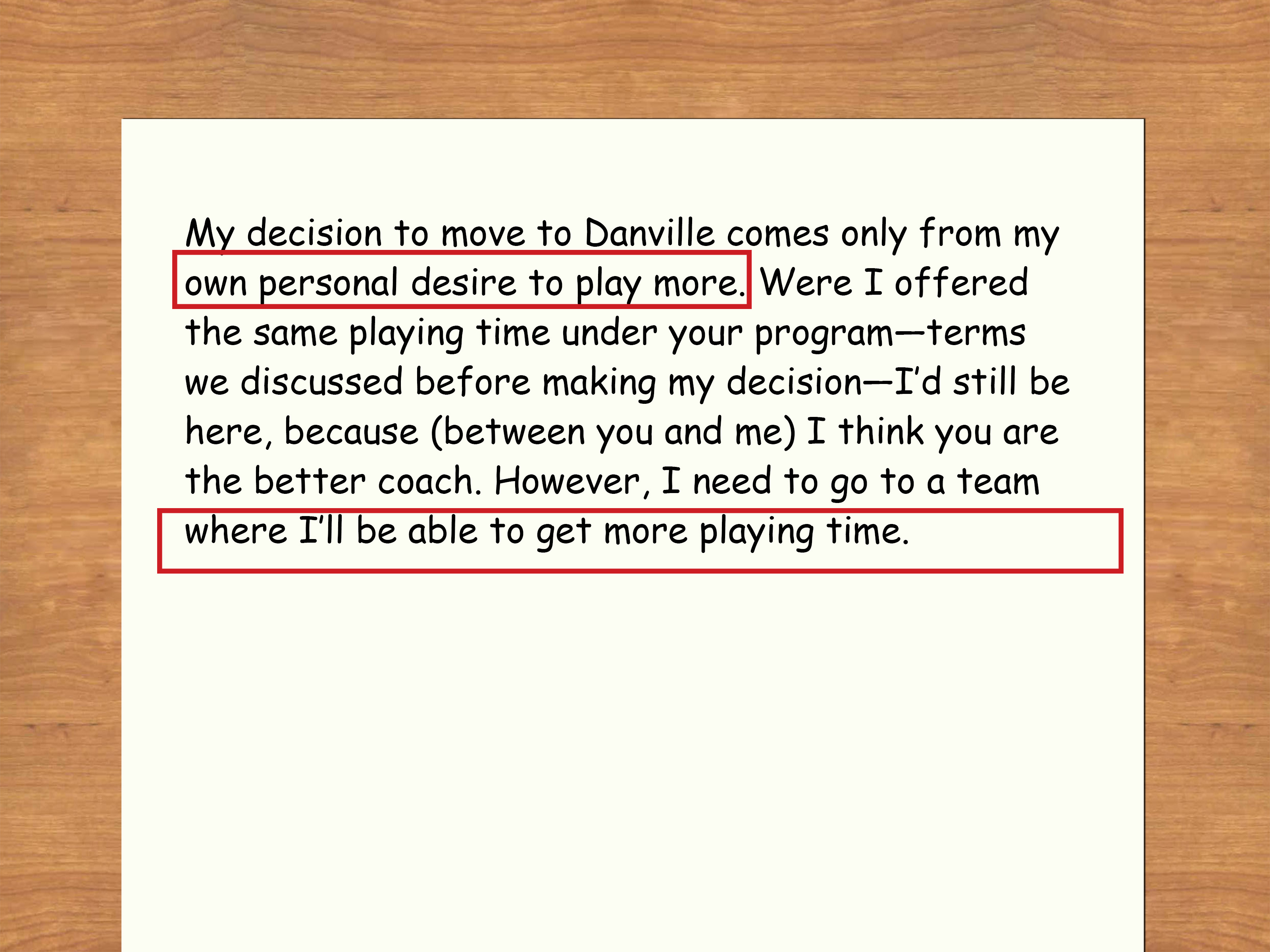
Another useful experience-based tip: do not use the resignation letter to announce your next team in a flashy way. If you are transferring to a rival club, the coach does not need a promotional brochure. You can simply say you are pursuing another opportunity. Be honest if asked, but do not make the letter sound like a victory lap.
Finally, remember that endings are part of sports. Athletes change teams, coaches change jobs, seasons end, priorities shift, bodies need rest, and sometimes the joy just disappears for a while. A resignation letter is not proof that you failed. It is proof that you are learning how to make decisions and communicate them responsibly. That lesson may matter long after the final score is forgotten.
Conclusion: Leave With Clarity, Respect, and Your Head Up
A letter of resignation to your coach should be clear, respectful, and simple. State that you are leaving, include your final date, give a brief reason if appropriate, express appreciation, and explain any transition steps such as returning uniforms or equipment. Whether you are a student-athlete, club player, parent of a minor athlete, or college competitor, the goal is to leave in a way that protects your reputation and honors the time you spent with the team.
The best resignation letters do not try to win an argument. They close a chapter. They help your coach plan, help your teammates adjust, and help you move forward without carrying unnecessary drama in your gym bag. Keep it professional, keep it kind, and remember: leaving a team does not erase what you learned there.