
A small dining room has a funny way of keeping everyone honest. Push your chair back too far, and you meet the wall. Buy a table that is “just a little bigger,” and suddenly dinner feels like a traffic jam with forks. But here is the good news: a compact dining area can be stylish, comfortable, and surprisingly flexible when every inch has a job.
The best small dining room ideas are not about making the room pretend to be huge. They are about choosing smarter furniture, improving flow, adding visual breathing room, and sneaking in storage without making the space feel like a closet wearing lipstick. Whether you have a separate dining room, a kitchen nook, a corner in a studio apartment, or a living-dining combo, these ideas will help you maximize space while keeping the room warm, personal, and ready for actual mealsnot just staged bowls of lemons.
Note: This article is original, web-ready content based on practical small-space design principles and current home decor guidance. No external source links are included in the article body.
How to Think About a Small Dining Room Before Decorating
Before buying anything, measure the room and think about movement. A dining space needs room for chairs to slide out, people to pass through, and dishes to travel from kitchen to table without a heroic obstacle course. In many small dining rooms, the problem is not the square footage itselfit is furniture scale, clutter, and poor layout.
Start with three questions: How many people eat here daily? How often do you host? What else does the space need to do? A dining area that doubles as a homework station, laptop spot, or game-night table should be planned differently from a formal room used twice a month. Once you know the real job of the space, choosing the right small dining room furniture becomes much easier.
30 Small Dining Room Ideas to Maximize Your Space
1. Choose a Round Table for Better Flow
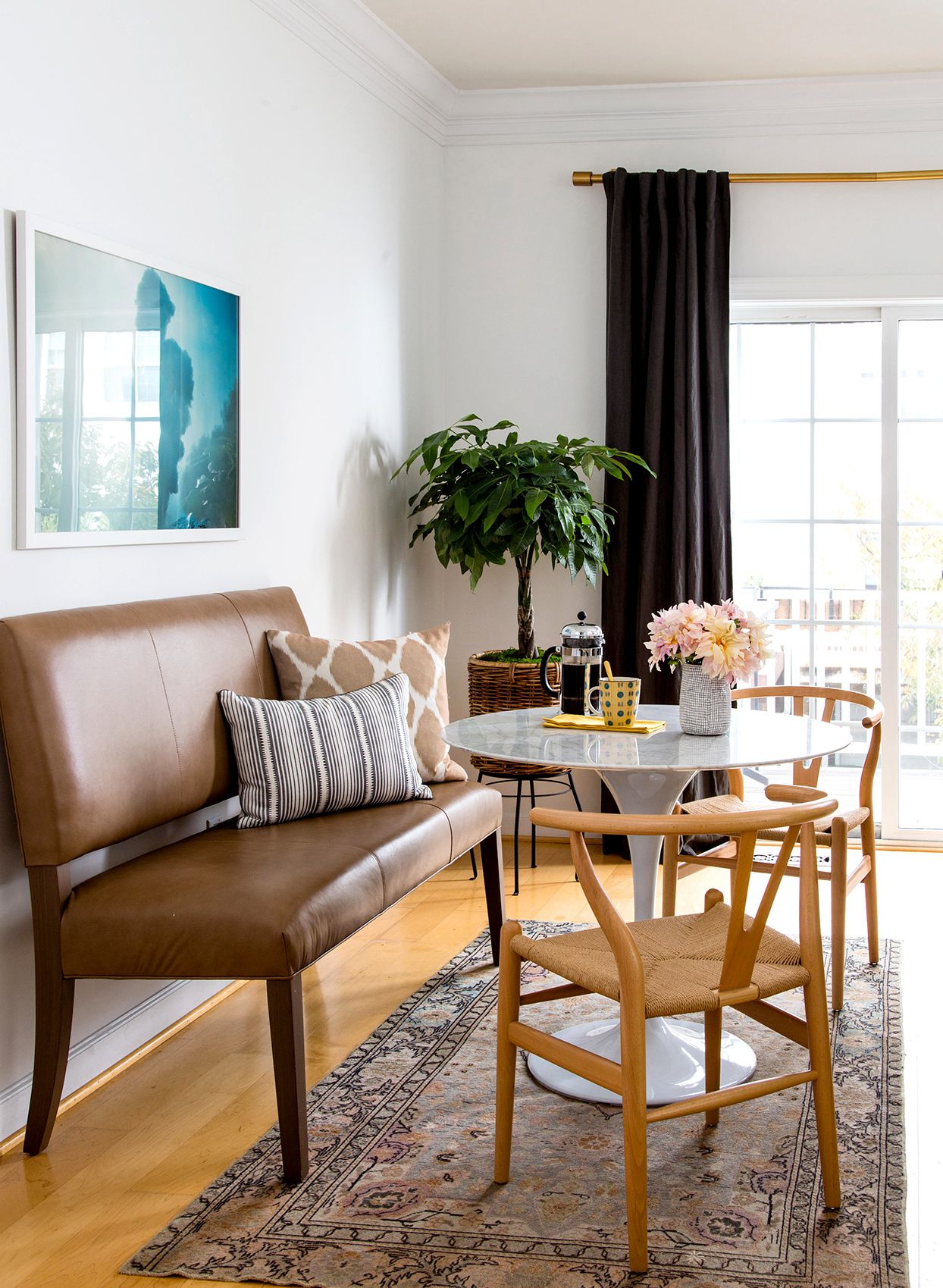
A round dining table is a small-space hero because it softens corners and makes movement easier. It works especially well in square rooms, breakfast nooks, and apartment dining areas. A pedestal base is even better because it frees up legroom and lets chairs tuck in more neatly.
2. Try an Oval Table in a Narrow Room
If your dining room is long and slim, an oval table gives you the length of a rectangular table without the sharp corners. It creates a graceful look while helping people slide around the table more comfortably.
3. Use a Drop-Leaf Table
A drop-leaf table is perfect when your dining area changes jobs during the day. Keep one or both leaves down for everyday meals, then open it up when guests arrive. It is basically the dining room equivalent of “business casual.”
4. Invest in an Extendable Table
An extendable dining table lets you live small most days and host bigger when needed. Look for slim profiles, hidden leaves, or compact round-to-oval designs that expand without taking over the room permanently.
5. Place the Table Against a Wall
For a two-person household or a tiny apartment, pushing one side of the table against the wall can instantly improve floor space. Pull it out only when extra seating is needed. Add wall art or a mirror above it so the setup feels intentional, not like the table was sent to timeout.
6. Build a Corner Banquette
A corner banquette turns an underused corner into a cozy dining nook. It also seats more people than separate chairs in the same footprint. Add cushions, washable upholstery, and a small table, and suddenly your corner has café energy.
7. Pick a Storage Bench
Storage benches are brilliant for small dining rooms because they combine seating and hidden storage. Use them for table linens, candles, board games, seasonal decor, or the placemats you bought with high hopes and use twice a year.
8. Use Backless Benches
Backless benches can slide fully under the table when not in use. This keeps walkways open and makes the dining area look cleaner. They are especially helpful in narrow spaces where chair backs create visual clutter.
9. Choose Open-Back Chairs
Open-back dining chairs feel lighter than solid, bulky chairs. Spindle, cane, ladder-back, or slim metal styles allow light to pass through, making the room feel less crowded.
10. Avoid Oversized Dining Chairs
Big upholstered chairs may look luxurious, but in a small dining room they can eat the room alive. Choose comfortable chairs with slimmer armsor no arms at all. Comfort matters, but your chair should not need its own zip code.
11. Hang a Mirror to Reflect Light
A mirror is one of the easiest ways to make a small dining room look larger. Place it across from a window or near a light source to bounce brightness around the room. Round, arched, or rectangular mirrors all work depending on your style.
12. Use a Light Color Palette
Soft whites, warm neutrals, pale grays, muted greens, and gentle blues can make a small dining area feel airier. Light colors reflect more brightness and help walls visually recede.
13. Try Color Drenching
Color drenching means painting walls, trim, and sometimes the ceiling in one continuous color. In a small room, this can reduce visual breaks and make the space feel more intentional. Deep colors can work beautifully when paired with good lighting.
14. Add One Bold Accent Wall
A small dining room can handle personality. Wallpaper, painted paneling, or a bold wall color behind the table can create a focal point without cluttering the floor. Keep the rest of the room simple so the wall gets to be the star.
15. Use Vertical Storage
When floor space is limited, look up. Floating shelves, wall-mounted cabinets, plate rails, or tall narrow shelving can hold glassware, serving pieces, cookbooks, or decor without crowding the room.
16. Replace a Bulky Cabinet with Floating Shelves
A heavy china cabinet can overwhelm a compact dining area. Floating shelves offer storage and display space while keeping the floor open. Style them with a mix of practical items and decorative pieces for a curated look.
17. Choose a Slim Sideboard
If you need dining storage, choose a narrow sideboard or console. It can hold napkins, serving bowls, extra cutlery, and barware while also giving you a surface for lamps, art, or a small coffee station.
18. Use a Rug to Define the Dining Zone
In an open living-dining room, a rug helps define the dining area. Choose one large enough for chairs to remain on the rug when pulled out. A too-small rug can make the room feel awkward and trip-prone, which is not the kind of dinner drama anyone ordered.
19. Pick Furniture with Exposed Legs
Tables, chairs, and benches with exposed legs create a sense of openness. Furniture that sits heavily on the floor can make a small dining room feel boxed in.
20. Add a Statement Light Fixture
A small dining room still deserves great lighting. A pendant, chandelier, or sculptural fixture centered above the table gives the area purpose. Choose a fixture scaled to the table, not the entire room.
21. Use Wall Sconces Instead of Floor Lamps
Floor lamps can steal precious inches. Wall sconces add atmosphere without taking up floor space. Plug-in sconces are a renter-friendly option if hardwiring is not possible.
22. Keep Window Treatments Simple
Natural light makes a compact dining room feel larger. Use sheer curtains, Roman shades, or slim blinds that frame the window without overwhelming it. Hang curtains higher and wider than the window to create the illusion of height.
23. Create a Bistro Corner
A small round table with two chairs can feel charming rather than cramped when styled like a café. Add a small vase, framed art, and warm lighting. Suddenly your tiny corner is not “limited space”it is “Parisian-inspired.” Very fancy. Possibly still next to the fridge.
24. Mix Seating Types
Combine a bench on one side with chairs on the other. This keeps the arrangement flexible and often saves space. It also makes the dining room feel more relaxed and collected over time.
25. Use Clear or Low-Profile Furniture
Acrylic chairs, glass tabletops, and low-profile silhouettes can reduce visual weight. These pieces are useful when the room already has strong architecture, dark floors, or busy decor.
26. Turn a Window Area into a Dining Nook
If you have a bay window, alcove, or sunny corner, use it. A small table near natural light feels inviting and makes the dining area feel connected to the outdoors.
27. Keep the Tabletop Uncluttered
A small table cannot handle a mountain of decor. Choose one centerpiece, such as a low bowl, candle, vase, or tray. Keep it easy to move so the table can actually be used for eating.
28. Add Built-In Storage Where Possible
Built-ins can make a small dining room work harder. Consider a shallow cabinet, banquette drawers, wall niches, or custom shelving around a doorway. Built-ins look polished because they are designed to belong.
29. Let the Dining Room Do Double Duty
A small dining room may also work as a home office, homework zone, craft table, or reading corner. Add nearby outlets, a storage basket, and a comfortable chair so the space supports daily life.
30. Edit Ruthlessly but Decorate Joyfully
Small spaces need editing, but they should not feel empty. Keep only what serves the room or makes you happy. A great print, a beautiful pendant, a patterned cushion, or a cheerful plant can make the space feel alive without making it feel packed.
Best Layout Tips for Small Dining Rooms
The best layout depends on the shape of your room. In a square room, a round or square table usually feels balanced. In a narrow room, an oval or slim rectangular table often works better. In a corner, a banquette or bench setup can save space and increase seating. For open-plan homes, use a rug, pendant light, or wall color to define the dining zone without adding walls.
Always protect the pathway. If people need to squeeze sideways past the table every day, the layout is too tight. Try removing one chair, rotating the table, choosing a bench, or swapping in a pedestal base. A good small dining room should feel easy to use, not like a puzzle you solve before breakfast.
Small Dining Room Furniture That Works Hard
Smart furniture makes the biggest difference. Look for extendable tables, stackable chairs, nesting stools, storage benches, wall-mounted shelves, and narrow sideboards. Avoid pieces that are too deep, too ornate, or too heavy for the room. In small spaces, furniture should earn its keep.
Materials matter, too. Light woods, painted finishes, glass, cane, and metal frames can keep the room feeling open. Dark wood can also work, especially when paired with pale walls, strong lighting, and reflective accents. The goal is balance: enough visual weight to feel grounded, not so much that the room feels stuffed.
Decor Ideas That Make a Small Dining Room Feel Bigger
Decor can change how a room feels without changing its size. Mirrors add depth. Vertical art draws the eye upward. A statement light gives the table importance. A well-scaled rug creates a zone. Cohesive colors reduce visual noise. Plants bring freshness without requiring much floor space, especially if placed on shelves or in hanging planters.
One common mistake is using too many tiny accessories because the room is small. This can make the space feel busier. Instead, choose fewer, better pieces. A large piece of art may work better than six small frames. One sculptural vase may look cleaner than a collection of small objects. Small room, strong choices.
Common Small Dining Room Mistakes to Avoid
The first mistake is buying a table before measuring. The second is choosing chairs that do not fit under the table. The third is using a rug that is too small. Another common issue is ignoring lighting; one dim ceiling bulb can make even the cutest dining nook feel like a waiting room.
Also avoid treating the dining area as a storage overflow zone. Mail, backpacks, laptops, and random “I’ll deal with this later” piles can quickly turn a small dining room into a command center of chaos. Add a nearby basket, cabinet, or wall hook system so the table stays ready for meals.
Real-Life Experience: What Actually Works in a Small Dining Room
After working through many small dining room layouts, one lesson becomes clear: the room usually improves most when you remove one thing before adding anything new. A bulky chair, an oversized cabinet, a second storage piece, or a too-large rug can make the entire dining area feel tense. Once that piece is gone, the room can breathe again.
In one compact apartment dining corner, the original setup had a rectangular table with four heavy chairs. Technically, everything fit. Emotionally, it felt like the furniture was arguing. Swapping the table for a round pedestal style changed the whole experience. People could move around more easily, the chairs tucked in better, and the room looked softer. No construction, no dramatic makeover, no one wearing safety gogglesjust the right shape.
Another practical experience: benches are underrated. A bench along the wall can make a small dining room feel more casual and more spacious. It also helps when guests arrive because people are more willing to scoot together on a bench than on separate chairs. Add a cushion and a couple of pillows, and it becomes the seat everyone wants. Add hidden storage, and now it is basically furniture doing a side hustle.
Lighting is another game changer. Many small dining spaces rely on one overhead fixture that is either too dim, too harsh, or mysteriously placed nowhere near the table. Centering a pendant above the dining surface, even a plug-in pendant with a ceiling hook, gives the area a clear identity. It tells the room, “This is where dining happens.” Rooms appreciate direction. So do humans holding plates.
Mirrors also work, but placement matters. A mirror reflecting natural light or a pretty view can expand the space visually. A mirror reflecting clutter, laundry, or a sink full of dishes simply doubles the problem. Before hanging one, stand where the mirror will go and check what it will reflect. This tiny step prevents a lot of decorative regret.
The best small dining rooms are not perfect showroom spaces. They are flexible, comfortable, and honest about how people live. A family may need wipeable chairs and storage for school supplies. A couple in a studio may need a table that doubles as a desk. Someone who loves hosting may need an extendable table and stackable chairs tucked in a closet. The right solution is the one that makes daily life easier.
Most importantly, a small dining room should still feel special. Light a candle on a Tuesday. Use the good napkins. Put flowers in a mug if you do not have a vase. A small dining room can hold big memories, loud laughter, great takeout, slightly overcooked pasta, and conversations that last longer than planned. That is the real goalnot just maximizing space, but making the space worth using.
Conclusion
Small dining rooms are not design problems; they are design invitations. With the right table shape, flexible seating, smart storage, layered lighting, and a few visual tricks, even the tiniest dining area can feel stylish and functional. Whether you choose a round pedestal table, a cozy banquette, floating shelves, or a bold mirror, the key is to make every piece useful and every detail intentional.
The best small dining room ideas do more than save space. They create a place where people want to sit, eat, talk, work, laugh, and linger. And if your chair still bumps the wall occasionally? Congratulations. Your dining room has character.
SEO Tags