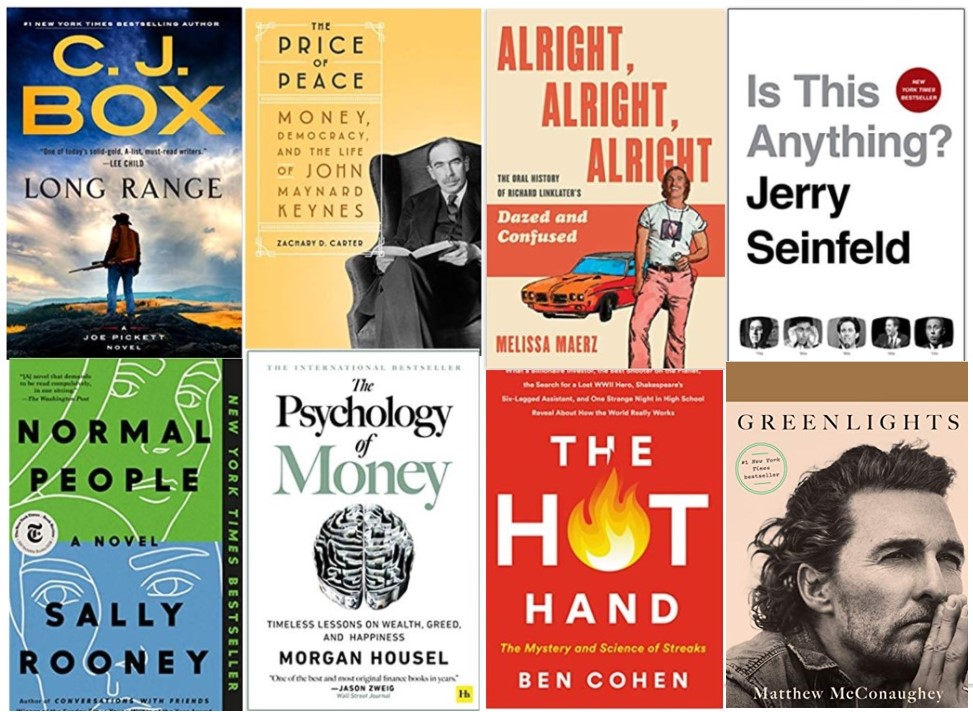

Some years are remembered by vacations, promotions, weddings, or that one heroic attempt to learn sourdough. For many readers, 2020 was remembered by books. While the world outside felt unpredictable, a good novel or nonfiction book offered something rare: a door that still opened. The best books I read in 2020 did not simply “help pass the time.” They made time feel richer, stranger, funnier, heavier, and sometimes wonderfully less lonely.
This list is not a cold trophy shelf of famous titles. It is a reader’s map through an unusual year, shaped by critically praised books, reader favorites, award winners, and the kind of stories that keep tapping your shoulder long after you close the cover. From literary fiction and memoir to history, social analysis, and speculative storytelling, these books captured the mood of 2020 without being trapped by it.
Why 2020 Was Such a Powerful Reading Year
Reading in 2020 felt different. A book was not just entertainment; it was structure, comfort, education, escape, and occasionally a socially acceptable excuse to avoid another video call. Many of the best books of 2020 explored identity, family, race, grief, ambition, memory, and survival. That made them especially resonant in a year when many people were rethinking what mattered most.
The strongest titles of the year shared one thing: they refused to be simple. They asked difficult questions without acting like they had swallowed an answer key. They gave readers complex characters, layered histories, and moral situations that could not be solved with a motivational quote printed on a mug.
1. The Vanishing Half by Brit Bennett
The Vanishing Half was one of the standout novels of 2020, and for good reason. Brit Bennett tells the story of twin sisters, Desiree and Stella Vignes, who grow up in a small Louisiana town and later choose dramatically different lives. One sister lives as a Black woman; the other passes as white. That single divergence becomes the emotional engine of a novel about race, identity, family secrets, and the cost of reinvention.
What makes the book so memorable is that it never reduces its characters to symbols. Stella’s choice is painful, morally complicated, and deeply human. Desiree’s return home carries its own ache. Bennett writes with elegance and restraint, allowing the story to move across generations while still feeling intimate. The novel is both page-turning and thoughtful, which is basically the literary equivalent of finding fries at the bottom of the takeout bag.
2. Caste: The Origins of Our Discontents by Isabel Wilkerson
Isabel Wilkerson’s Caste is the kind of nonfiction book that changes the furniture in your mind. Instead of discussing inequality only through the familiar language of race, Wilkerson examines America through the framework of caste: a deeply rooted social ranking system that shapes opportunity, treatment, power, and belonging.
The book is ambitious, carefully argued, and often uncomfortable in the best possible way. Wilkerson connects American history with caste systems in other parts of the world, encouraging readers to see patterns that are easy to miss when viewed too closely. Caste is not a light read, but it is a necessary one. It asks readers to look beneath the surface of social life and notice the hidden architecture holding old assumptions in place.
3. Shuggie Bain by Douglas Stuart
Douglas Stuart’s Shuggie Bain is a devastating debut novel set in working-class Glasgow. At its center is Hugh “Shuggie” Bain, a boy growing up with a mother he adores and cannot save. The novel explores poverty, addiction, shame, tenderness, and the fierce, complicated love between parent and child.
This is not a cheerful book in the “bring it to the beach and sip lemonade” category. It is more of a “clear your afternoon and keep tissues nearby” experience. Yet its beauty lies in its compassion. Stuart writes hardship without turning characters into case studies. Shuggie is vulnerable, observant, and unforgettable. The novel hurts, but it hurts honestly.
4. Deacon King Kong by James McBride
If some novels whisper, Deacon King Kong bursts through the door carrying groceries, gossip, and possibly a trumpet. James McBride’s comic, generous novel begins with a shocking act of violence in a Brooklyn housing project in 1969, then expands into a bustling story of community, memory, faith, crime, baseball, and second chances.
The cast is large, lively, and beautifully chaotic. McBride’s gift is making every character feel like they wandered in from a fully lived life. The book is funny without being shallow and serious without becoming stiff. It has the rhythm of neighborhood storytelling, where one incident leads to ten histories, three arguments, and a surprisingly moving revelation before dinner.
5. Transcendent Kingdom by Yaa Gyasi
Yaa Gyasi followed her acclaimed debut Homegoing with a quieter but equally powerful novel. Transcendent Kingdom follows Gifty, a neuroscience PhD candidate studying reward-seeking behavior while trying to understand her family’s pain. Her brother’s addiction, her mother’s depression, her Ghanaian American upbringing, and her complicated relationship with faith all shape the book’s emotional landscape.
The novel works because it respects both science and spirituality without forcing them into a boxing ring. Gifty wants answers, but the book understands that data can explain many things without fully healing them. Transcendent Kingdom is reflective, precise, and deeply moving. It is the kind of book that feels quiet until you realize it has been quietly rearranging your heart.
6. A Promised Land by Barack Obama
A Promised Land is a political memoir with the scale of a history book and the introspection of a long conversation. Barack Obama reflects on his early political career, presidential campaign, first years in office, and the pressures of governing during crises. The book is detailed, sometimes surprisingly candid, and written with a careful awareness of both policy and personality.
Readers looking for quick gossip may find the book more measured than explosive. But its strength is in the way it explains decision-making from the inside. Obama writes about ambition, compromise, race, family, public service, and the emotional weight of leadership. It is a long book, yes. Your bookmark may need a fitness plan. But for readers interested in modern American politics, it is absorbing and valuable.
7. The Splendid and the Vile by Erik Larson
Erik Larson’s The Splendid and the Vile brings Winston Churchill’s first year as British prime minister to life with dramatic detail. Focusing on the Blitz and Britain’s fight for survival during World War II, Larson combines political history with domestic scenes, diary entries, and vivid character portraits.
The result reads almost like a novel, though it is grounded in historical research. Churchill appears not as a statue but as a complicated leader surrounded by family, advisers, fear, fatigue, and enormous stakes. Larson reminds readers that history is not just made in speeches and war rooms; it is also made in bedrooms, dinner conversations, letters, and moments of private doubt.
8. Hidden Valley Road by Robert Kolker
Hidden Valley Road tells the true story of the Galvin family, in which six of twelve children were diagnosed with schizophrenia. Robert Kolker combines family narrative with the history of psychiatric research, creating a book that is both intimate and scientifically informative.
What makes this book stand out is its balance. It never treats the family merely as a medical mystery, and it never reduces mental illness to a neat explanation. Kolker writes with empathy about parents, siblings, researchers, and patients, showing how love and confusion can exist in the same household. The book is difficult, but it is also humane and deeply reported.
9. The Midnight Library by Matt Haig
Matt Haig’s The Midnight Library became a reader favorite because it turns a universal question into an imaginative story: What if you could experience the lives you might have lived? The novel follows Nora Seed, who finds herself in a library between life and death, where each book offers a different version of her existence.
The premise is instantly appealing, like a philosophical buffet with better lighting. Yet the book’s emotional center is simple: regret can distort how we understand our own lives. While some readers may find the message direct, many found comfort in its hopeful approach. In a year filled with uncertainty, a story about second chances landed with real force.
10. Hamnet by Maggie O’Farrell
Hamnet by Maggie O’Farrell imagines the family life of William Shakespeare, focusing especially on grief, marriage, motherhood, and the death of his young son. Rather than making Shakespeare the blazing sun around which everyone orbits, O’Farrell gives profound attention to Agnes, his wife, and to the domestic world that history often leaves in shadow.
The prose is lush, sensory, and emotionally precise. The novel captures how grief moves through a household: not politely, not quickly, and certainly not on anyone’s preferred schedule. Hamnet is historical fiction that feels alive because it is less interested in famous-name worship than in human feeling.
11. Minor Feelings by Cathy Park Hong
Cathy Park Hong’s Minor Feelings is a sharp, genre-blending essay collection about Asian American identity, language, art, racism, and cultural invisibility. The title refers to the emotional dissonance that can arise when personal experience clashes with dominant narratives that deny or minimize it.
Hong’s writing is intellectually bold and stylistically alive. She moves between criticism, memoir, history, and observation with impressive control. The book does not ask to be comfortably inspirational. It asks to be read carefully. That is part of its power. Minor Feelings gives language to experiences that are often flattened, ignored, or misunderstood.
12. Leave the World Behind by Rumaan Alam
Rumaan Alam’s Leave the World Behind is a tense literary thriller about two families stranded together during a mysterious crisis. A white couple and their children are vacationing in a remote rental house when the Black owners arrive, claiming that a massive blackout has hit New York City. From there, uncertainty spreads like fog.
The novel is unsettling because it withholds easy answers. It is about disaster, but also about class, race, trust, parenting, and the fragile systems that make modern life feel stable until they suddenly do not. Reading it in 2020 felt almost too appropriate, like the book had looked at the calendar and said, “Let me make this weirder.”
What These Books Had in Common
The best books I read in 2020 were not identical in genre, style, or mood. Some were sweeping; others were intimate. Some were funny; others could emotionally body-check a reader before breakfast. But they shared a commitment to complexity. They trusted readers to sit with ambiguity.
They Explored Identity Without Easy Labels
The Vanishing Half, Minor Feelings, and Transcendent Kingdom all examine identity as something shaped by family, history, culture, and choice. These books show that identity is not a tidy form you fill out once and file away. It evolves, fractures, hides, returns, and occasionally knocks over the furniture.
They Made History Feel Personal
Caste, The Splendid and the Vile, and A Promised Land remind readers that history is not abstract. It is lived through policy, fear, ambition, resistance, and ordinary human decisions. These books succeed because they connect large forces to individual lives.
They Treated Pain With Compassion
Shuggie Bain, Hidden Valley Road, and Hamnet are emotionally heavy, but not exploitative. They do not use suffering as decoration. Instead, they explore how people endure, misunderstand each other, forgive imperfectly, and continue carrying love even when love is not enough to fix everything.
My Personal Reading Experience in 2020
Reading these books in 2020 felt less like finishing a checklist and more like building a small shelter. The year had a strange texture: quiet rooms, loud news, delayed plans, and a general sense that time had become soup. Books gave shape to days that otherwise blurred together. A chapter in the morning made the day feel more intentional. A chapter at night helped my brain stop running laps around the same worries.
The books that stayed with me most were not always the easiest ones. Shuggie Bain was emotionally draining, but it reminded me that tenderness can survive in harsh places. Caste made me pause often, not because it was confusing, but because it demanded reflection. The Vanishing Half gave me the pleasure of a beautifully constructed story while also pushing me to think about identity, performance, and inheritance.
I also learned that my attention span had moods. Some days, I wanted the energy of Deacon King Kong, with its crowded scenes and comic momentum. Other days, I needed the calm intelligence of Transcendent Kingdom. There were nights when The Midnight Library felt exactly right because it spoke to regret and possibility in a direct, comforting way. Not every book has to arrive wearing a tuxedo and carrying a Nobel Prize acceptance speech. Sometimes a book earns its place by meeting you where you are.
Another experience I associate with reading in 2020 is the return of slow attention. With so much digital noise everywhere, books asked for something different. They asked me to sit still, follow a sentence, remember a character, and care about a scene that did not refresh every twelve seconds. That felt almost rebellious. Reading became a way of saying, “No, I will not spend this entire evening scrolling through headlines until my soul turns into a loading icon.”
These books also reminded me that variety matters. A reading life built from only one genre can become a hallway with no doors. In 2020, moving between fiction, memoir, history, essays, and literary suspense kept reading fresh. After a heavy nonfiction book, a novel offered emotional oxygen. After a fast-paced story, essays offered sharper thought. The mix mattered as much as the individual titles.
Most importantly, the best books I read in 2020 helped me feel connected to other lives. That is the quiet magic of reading. You sit alone, but you are not alone. You enter Glasgow, Brooklyn, Washington, D.C., a mysterious rental house, a family home shaped by illness, a library of alternate lives, or a historical moment under bombardment. You return to your own room slightly changed. Maybe not dramatically. No orchestra plays. The furniture does not applaud. But something inside you has moved.
Final Thoughts: The Best Books I Read in 2020 Still Matter
The best books I read in 2020 continue to matter because they were never only about one year. They were about the questions people keep carrying: Who am I? What do I owe my family? How does history shape the present? Can regret be survived? What does leadership cost? How do communities hold together? How do we keep tenderness alive when life is doing push-ups on our patience?
That is why these books remain worth reading. They are beautifully written, widely discussed, and emotionally durable. Whether you want literary fiction, serious nonfiction, memoir, history, or a novel that makes you stare at the wall for a respectful amount of time, this 2020 reading list offers an excellent place to start.
Note: This article is written as an original SEO-friendly reading essay based on real books, major 2020 book coverage, reader-award trends, and widely recognized literary discussions. It contains no copied passages, no source-code references, and no unnecessary publication artifacts.