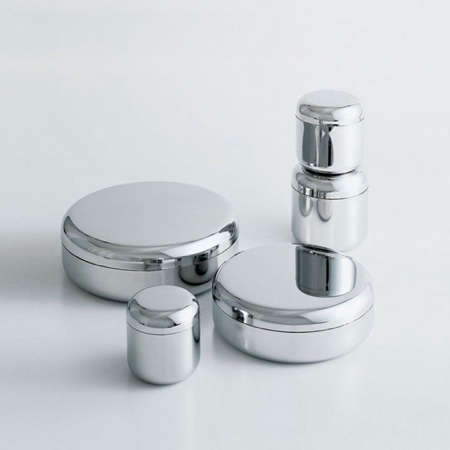

Some kitchen objects shout for attention. They arrive with chunky handles, neon labels, complicated lids, and the emotional energy of a small appliance trying to become famous. Tin Family Containers do the opposite. Designed by Jasper Morrison for Alessi, they are quiet, polished, practical, and oddly charminglike the calm person at a dinner party who says very little but somehow knows where everyone left their keys.
The name “Tin Family Containers” may sound like a row of old biscuit tins on a grandmother’s pantry shelf, but the design is more refined than nostalgic. These are minimalist stainless steel kitchen containers, created as a family of sizes for everyday storage. They hold dry goods, snacks, tea, coffee, sugar, small kitchen tools, and those mysterious loose items that always end up in a drawer: clips, rubber bands, birthday candles, and one lonely screw nobody dares throw away.
At their best, Tin Family Containers show what good design can do in the kitchen. They do not merely store things. They reduce visual clutter, bring order to open shelving, and make ordinary ingredients feel intentionally placed. In a world where pantry organization can sometimes look like a competitive sport, these containers offer a gentler approach: simple shapes, durable materials, and no screaming labels required.
What Are Tin Family Containers?
Tin Family Containers are designer kitchen storage canisters associated with Jasper Morrison’s work for Alessi. The collection was introduced in 1998 and is known for its spun stainless steel construction, clean cylindrical form, and availability in multiple sizes. Although the word “tin” appears in the name, the well-known Alessi version is not a flimsy tinplate cookie box. It is a stainless steel design object made for long-term household use.
This distinction matters. Traditional tin containers are usually made from tinplate, which means steel coated with a thin layer of tin to help resist rust. Tinplate has a long history in packaging, especially for food cans, tea tins, and decorative gift boxes. Tin Family Containers, however, belong more to the world of modern kitchen design than disposable packaging. Their appeal comes from stainless steel’s durability, smooth finish, and ability to look at home in both traditional and contemporary kitchens.
Think of them as the stylish cousins of pantry jars. Glass jars show everything. Plastic bins are lightweight and cheap. Ceramic canisters feel warm and decorative. Stainless steel containers, especially ones as restrained as Tin Family, create a different mood: tidy, cool, architectural, and slightly professional without turning your kitchen into a laboratory.
The Design Story: Jasper Morrison and Alessi
Jasper Morrison is widely known for simple, functional objects that avoid unnecessary drama. His work often celebrates the idea that the best household products are the ones you use comfortably for years, not the ones that perform a visual drum solo on the countertop. Alessi, the Italian design company, has long collaborated with major designers to turn everyday household tools into objects worth noticing.
Tin Family Containers fit neatly into Morrison’s design language. They are not covered in patterns. They do not rely on novelty. Their form is elemental: container, lid, curve, shine, proportion. The “family” idea is important because the containers work best as a group. Different sizes create rhythm on a shelf, while the shared material and shape keep the look unified.
The result is a rare kind of kitchen storage: practical enough for daily use, elegant enough to leave out, and modest enough not to boss around the room. That balance is harder to achieve than it looks. Minimal design can easily become cold. Decorative storage can become fussy. Tin Family Containers sit in the middle, where simplicity still has personality.
Why Stainless Steel Works So Well in Kitchen Storage
Stainless steel has become a favorite kitchen material for good reason. It is strong, easy to clean, resistant to corrosion, and visually compatible with many appliances, utensils, and fixtures. A stainless steel container can sit next to a coffee machine, a chrome faucet, a brushed nickel handle, or a white marble counter without looking lost.
For dry storage, stainless steel offers several advantages. It blocks light, which can help protect ingredients such as tea, coffee, spices, and nuts from quality loss caused by exposure. It is also less visually busy than clear containers. If your pantry contains five types of pasta, three bags of flour, and a cereal that looks suspiciously like packing material, hiding everything behind a clean metal surface can be a small act of domestic mercy.
Another benefit is durability. A stainless steel canister is less likely to crack than glass or become cloudy like older plastic. It can develop tiny marks over time, but those marks often read as patina rather than damage. In other words, it ages like a useful object, not like a sad leftover container that has seen too many tomato sauces.
Tin Family Containers vs. Traditional Tin Containers
The phrase “tin containers” can mean several things. In packaging, it often refers to tinplate boxes, tins, or cans. These are commonly used for cookies, candies, tea, cosmetics, promotional gifts, and collectible packaging. They are lightweight, decorative, and recyclable in many municipal systems because the steel base is magnetic and sortable.
Tin Family Containers are different because they are designed as durable kitchen canisters rather than temporary packaging. A decorative tin might be used for holiday cookies and then repurposed for sewing supplies. A Tin Family Container is more like a permanent pantry companion. It has the polish and material quality expected from designer kitchenware.
That said, both traditional tin containers and stainless steel containers share a common appeal: they make storage feel more intentional. A box of tea becomes nicer when decanted into a metal canister. Coffee feels more ceremonial. Sugar stops looking like a half-open paper bag slowly collapsing in the cabinet. Even dog treats gain dignity, which is more than most dogs require but still nice.
Best Uses for Tin Family Containers
Dry Pantry Staples
Tin Family Containers are ideal for dry ingredients that you reach for often. Coffee beans, loose-leaf tea, sugar cubes, cocoa powder, rice, dried fruit, and wrapped sweets are all good candidates. Because stainless steel blocks light, it is especially helpful for ingredients that benefit from a darker environment.
Kitchen Counter Organization
Not everything stored in a kitchen is food. These containers can hold measuring spoons, reusable coffee filters, tea infusers, wooden clips, small utensils, or packets of sweetener. On an open shelf, a matching group of stainless steel containers can make miscellaneous items look curated rather than chaotic.
Snack Control
A container with a lid creates a natural boundary. Cookies, crackers, roasted nuts, and granola bars feel more organized when placed in a canister. It may not stop anyone from eating six cookies while “checking whether they’re still fresh,” but at least the counter will look civilized.
Design Display
Because Tin Family Containers are design objects, they do not need to hide inside a cabinet. They work well on floating shelves, kitchen islands, breakfast nooks, coffee stations, and dining room sideboards. Their reflective surface can brighten a small kitchen and add a clean metallic accent without overwhelming the space.
How to Style Tin Family Containers in a Modern Kitchen
The easiest way to style Tin Family Containers is to group them in odd numbers or arrange them by height. A small, medium, and large container placed together creates a natural visual rhythm. If you own several sizes, line them up from tallest to shortest for a tidy, architectural look.
They pair beautifully with natural materials. Stainless steel next to wood feels balanced: cool beside warm, polished beside organic. Place them near a walnut cutting board, oak shelf, linen towel, or ceramic bowl to soften the metallic shine. In a white kitchen, they add definition. In a darker kitchen, they catch light. In a colorful kitchen, they calm everything down like a responsible adult.
Avoid overcrowding them with too many other shiny objects. A little reflection is elegant; too much can make the counter feel like a meeting of spoons. Give each container some breathing room. Minimal storage looks best when the surrounding space is allowed to participate.
Care and Maintenance Tips
Stainless steel is low-maintenance, but it is not maintenance-free. Wipe the containers with a soft damp cloth and dry them promptly to prevent water spots. For fingerprints, a microfiber cloth usually works well. If needed, use mild dish soap and warm water, then dry thoroughly.
Avoid harsh abrasive pads, bleach-based cleaners, and gritty powders that can scratch or dull the finish. If the container has a polished surface, scratches may show more easily than on a satin or brushed finish. Treat it like a good pan or a favorite watch: use it often, but do not attack it with the cleaning equivalent of sandpaper.
For food storage, make sure ingredients are dry before placing them inside. Stainless steel is excellent for dry goods, but moisture trapped in any closed container can lead to clumping, stale smells, or spoilage. If you are storing coffee, tea, or spices, keep the container away from direct heat and sunlight to preserve flavor.
Are Tin Family Containers Food Safe?
Food safety depends on material, coating, intended use, and manufacturer specifications. Stainless steel is widely used in kitchens because it is durable, cleanable, and suitable for many food-contact applications. In the United States, food-contact materials are regulated through FDA systems that evaluate substances used in packaging and surfaces that may touch food.
For everyday household use, Tin Family Containers are best understood as dry storage canisters. They are suitable for pantry items, wrapped foods, and non-liquid kitchen goods. They are not the same as vacuum-sealed jars, freezer containers, or canning equipment. If you need airtight storage for long-term preservation, check the lid design carefully and choose containers specifically made for that purpose.
In short: use them for what they do best. They are excellent for stylish, accessible, dry kitchen organization. They are not magical anti-staleness vaults guarded by tiny stainless steel dragons, although that would be a delightful product extension.
Sustainability and Reusability
One of the strongest arguments for high-quality metal containers is reusability. A well-made stainless steel container can serve for years, which reduces the need for disposable packaging and short-lived plastic storage. While no product is automatically sustainable just because it is shiny and expensive, long service life is a meaningful advantage.
Metal packaging also has a strong recycling story. Steel containers are commonly recovered through magnetic separation in recycling systems, and U.S. environmental data has historically shown steel packaging as one of the more successfully recycled packaging categories. Stainless steel itself is also a valuable recyclable material when it eventually reaches the end of its useful life.
The most sustainable container is often the one you actually keep using. Tin Family Containers earn points here because they are not trend-dependent. Their plain shape and durable material help them avoid the “looked cute for one season, then got donated” problem that haunts many decorative kitchen items.
Buying Considerations Before You Choose Tin Family Containers
Before buying, think about what you plan to store. If you want containers for flour, cereal, or bulk rice, check capacity carefully. Designer canisters are sometimes smaller than they appear in photos. If you want them mainly for coffee, tea, sugar, or countertop organization, smaller sizes may be more useful.
Also consider finish. A mirror-polished container looks glamorous but shows fingerprints more easily. A satin or matte finish is quieter and may be more forgiving in daily use. Both can look beautiful; the choice depends on whether your kitchen personality is “sleek gallery” or “I cook here and occasionally fling flour.”
Finally, decide whether you want one accent piece or a coordinated set. A single container can work as a coffee canister. A group creates the full “family” effect and makes the design feel intentional. If your shelves are visible, the set approach usually has stronger visual impact.
Experience Notes: Living With Tin Family Containers
The real test of any kitchen container is not how it looks in a product photo. Product photos live in a fantasy world where counters are spotless, lemons are always fresh, and nobody owns a phone charger. The real test begins on a normal Tuesday morning when someone is trying to make coffee while half-awake and the kitchen drawer refuses to close.
In everyday use, Tin Family Containers shine because they simplify small routines. A coffee station, for example, becomes easier when beans, filters, sugar, and tea bags each have a dedicated home. Instead of rummaging through half-open bags and cardboard boxes, you reach for a smooth metal canister. The gesture feels neat and slightly luxurious, even if you are wearing slippers and negotiating with a toaster.
They also help reduce visual noise. Many kitchens suffer from package clutter: bright labels, plastic windows, torn bags, twist ties, and boxes competing for attention. Moving frequently used items into matching stainless steel containers instantly quiets the space. The pantry may still contain chaos behind closed doors, but the counter looks like it has its life together. Sometimes that is enough.
Another enjoyable experience is the flexibility. One month, a container might hold loose tea. The next, it might hold cookie cutters, espresso pods, or small bags of specialty salt. Because the design is not labeled or overly specific, it adapts as your habits change. This is where minimalist design becomes genuinely useful. It does not force a single purpose on you. It simply says, “Put something in me, preferably not soup.”
There is also a tactile pleasure in using metal containers. The cool surface, the slight weight, and the fitted lid create a sense of permanence. Plastic storage can feel temporary. Cardboard packaging feels disposable. Stainless steel feels settled. It gives the humble act of grabbing coffee or sugar a small ritual quality, and kitchens benefit from rituals. They make daily chores feel less like maintenance and more like living.
Of course, there are practical realities. Fingerprints happen. Polished steel reflects the room, including things you may not want reflected, such as the mountain of dishes waiting behind you. If the lid is not airtight, certain foods may need an inner bag or a different container for maximum freshness. And if you are the type of person who forgets what you stored where, labels may be necessary. Minimalism is lovely, but guessing whether a canister contains flour or powdered sugar can lead to exciting pancakes.
The best experience comes from using Tin Family Containers for items you touch often. Do not save them for “special storage.” That defeats their purpose. Put them where your daily routine happens: beside the coffee maker, near the baking zone, on an open shelf, or by the breakfast area. Their beauty is not fragile. It is practical beauty, meant to be handled.
Over time, these containers become part of the kitchen’s background in the best possible way. You stop noticing them as objects and start relying on them as quiet helpers. That is the secret charm of Tin Family Containers. They are not trying to transform your kitchen into a showroom. They are trying to make ordinary storage feel better, cleaner, and more considered. For a simple canister, that is a pretty impressive résumé.
Conclusion
Tin Family Containers are a reminder that storage does not have to be boring, bulky, or visually loud. Designed by Jasper Morrison for Alessi, they bring together stainless steel durability, minimalist form, and everyday usefulness. Whether used for coffee, tea, snacks, baking supplies, or countertop organization, they offer a refined way to manage kitchen clutter without turning the pantry into a personality test.
Their greatest strength is restraint. They do not chase trends, rely on decoration, or demand attention. Instead, they make the kitchen feel calmer and more intentional. For homeowners, design lovers, and anyone who has ever fought a collapsing bag of flour, Tin Family Containers offer a small but meaningful upgrade: storage that works hard, looks good, and quietly improves daily routines.