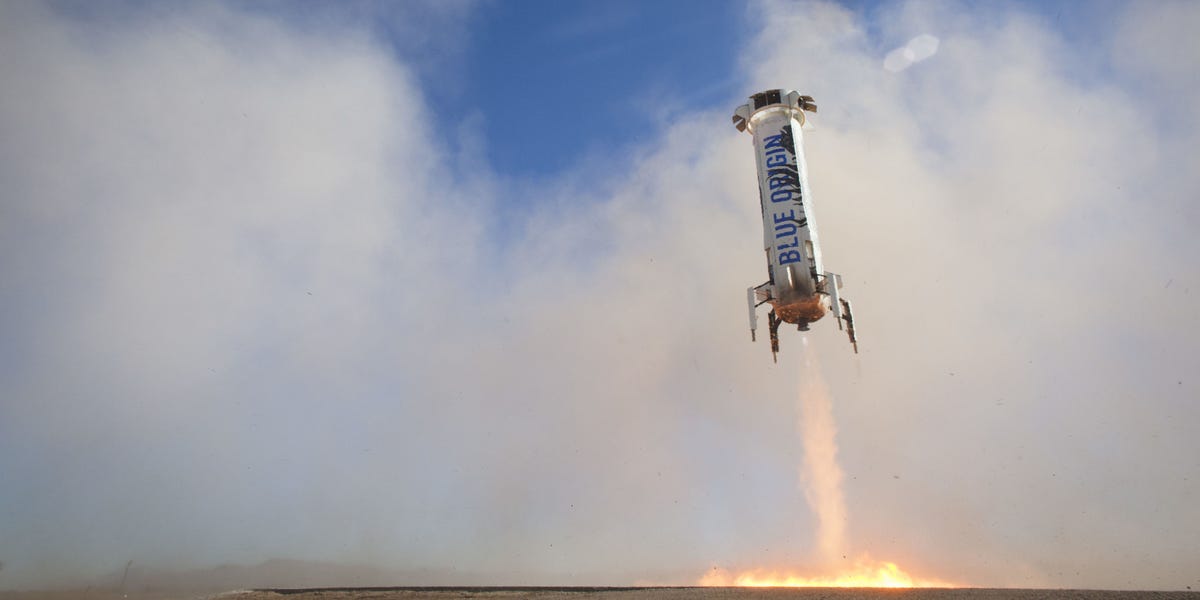

Blue Origin has spent years turning one of the most science-fiction-sounding ideas in modern spaceflight into something that looks increasingly like a shipping label with rocket engines: a cargo spaceship for the Moon. The concept began with a bold promisedeliver supplies to the lunar surface so future astronauts could do more than plant flags, bounce heroically, and leave footprints for history books. Today, that idea has grown into Blue Moon, a family of lunar landers tied to NASA’s Artemis program, commercial lunar payloads, and the long-term dream of building real infrastructure beyond Earth.
In plain English, Blue Origin wants to help make the Moon less like a once-in-a-generation field trip and more like a destination with logistics. Not exactly “two-day shipping,” unless your calendar is extremely optimistic, but the philosophy is familiar: before humans can live and work on the Moon, somebody has to deliver the stuff. Habitats, science gear, power systems, rovers, tools, communications equipment, spare parts, and probably an alarming number of zip ties all need a ride.
The phrase “cargo spaceship for a Moon base” may sound like it belongs on the cover of a 1960s pulp magazine, ideally with a silver-suited astronaut pointing at a suspiciously shiny crater. But the real story is more practicaland more exciting. Blue Origin’s lunar cargo plans are part of a broader shift in space exploration: NASA is no longer trying to build every vehicle itself. Instead, it is working with commercial partners to create reusable, scalable, and increasingly routine access to the Moon.
From Moon Tease to Moon Hardware
The original buzz around Blue Origin’s lunar cargo ambitions dates back to 2017, when Jeff Bezos and his company began discussing a Blue Moon cargo lander that could support a “future human settlement” on the Moon. At the time, the proposal felt ambitious enough to make even seasoned space watchers raise an eyebrow. Blue Origin talked about delivering thousands of pounds of cargo to the lunar surface and partnering with NASA to support permanent human presence.
Back then, the early target dates were aggressive. Like many space timelines, they had the smooth confidence of a gym membership purchased on January 2. Reality, as it often does in aerospace, brought engineering challenges, funding complexity, program reshuffling, and a reminder that the Moon is still inconveniently far away. But the important part is that the concept did not disappear. It matured.
Blue Moon is now no longer just a dreamy sketch on a presentation slide. Blue Origin has developed the Blue Moon Mark 1, often called MK1, as a single-launch lunar cargo lander. It is designed to ride inside the seven-meter fairing of Blue Origin’s New Glenn rocket and deliver up to three metric tons of cargo to the lunar surface. Three metric tons may not sound like much if you are thinking in warehouse terms, but on the Moon, that is a serious delivery. It is enough to carry scientific payloads, technology demonstrations, supplies, and hardware that can help prepare for larger missions.
What Is Blue Moon Mark 1?
Blue Moon Mark 1 is the cargo-first member of Blue Origin’s lunar lander family. It is uncrewed, built to land autonomously, and intended to remain on the lunar surface after touchdown. That last detail matters. Unlike a crewed lander that must bring astronauts back to lunar orbit, MK1 is a delivery truck with no return ticket. It goes down, lands safely, unloads its value, and becomes part of the landscapehopefully in a useful way, not in the “oops, new crater” way.
Blue Origin says MK1 is meant to provide safe, reliable, and affordable access to the lunar environment. The vehicle is expected to test and demonstrate critical systems, including its BE-7 engine, cryogenic propulsion systems, avionics, continuous communications, autonomous guidance, and precision landing. Precision landing is especially important near the lunar south pole, where future missions will need to touch down close to specific terrain, payloads, habitats, or resource-rich areas without giving everyone on Earth a group heart attack.
The first MK1 vehicle, named Endurance, represents a demonstration mission. It is intended to prove that Blue Origin can send a large cargo lander to the Moon, manage complex propulsion in deep space, communicate during descent, and land with the accuracy needed for future lunar operations. If successful, later MK1 landers could serve government, scientific, institutional, and commercial customers looking to place payloads on the Moon.
Why Cargo Matters More Than the Glamour Shot
Human spaceflight gets the dramatic music. Cargo gets the job done. Every lunar base concept depends on a simple truth: astronauts cannot build a sustainable presence with bravery alone. They need equipment, shelter, mobility, energy, communications, tools, experiments, replacement parts, and supplies. Even the most heroic moonwalker cannot science their way out of a missing power cable.
This is why lunar cargo landers are so important. A Moon base is not a single object; it is an ecosystem. It requires many deliveries over time. The first missions may bring instruments and technology demonstrations. Later missions may bring power units, landing pads, communications relays, habitat modules, construction systems, rovers, and eventually larger infrastructure for long-duration stays.
Think of the Moon as the world’s most remote construction site. There is no hardware store around the corner. There is no delivery driver calling to say, “I’m outside by the gray rock.” If a mission forgets a critical component, the replacement is roughly 238,855 miles away and attached to a launch campaign that costs more than several professional sports teams. In that environment, cargo logistics are not boring. They are survival.
How Blue Origin Fits Into NASA’s Artemis Plan
NASA’s Artemis program aims to return astronauts to the Moon and build the foundation for long-term exploration, including future missions to Mars. Unlike Apollo, which was designed around short visits, Artemis is meant to develop recurring access and surface operations. That means NASA needs more than one lander, more than one mission, and more than one company carrying the whole burden.
Blue Origin became NASA’s second human landing system provider when the agency awarded the company a major contract to develop the Blue Moon lander for Artemis V. NASA had already selected SpaceX’s Starship-based Human Landing System for earlier Artemis missions. Adding Blue Origin gives NASA a second provider, which is important for competition, redundancy, schedule flexibility, and long-term lunar access.
The crewed version, Blue Moon Mark 2, is separate from MK1 but connected by technology and program logic. MK2 is being developed to ferry astronauts from lunar orbit to the surface and back. MK1, meanwhile, helps Blue Origin test cargo delivery, landing, propulsion, and surface operations before crewed flights depend on related systems. In other words, the cargo lander is not just a delivery vehicle. It is also a rehearsal, a technology validator, and a confidence builder.
The New Glenn Connection
Blue Origin’s lunar ambitions depend heavily on New Glenn, the company’s heavy-lift orbital rocket. MK1 is designed to fit inside New Glenn’s large payload fairing, which gives Blue Origin room to launch a substantial lunar cargo vehicle in a single shot. That matters because lunar missions are already complex. Reducing the number of launches, dockings, and in-space assembly steps can simplify operations and reduce risk.
New Glenn is also central to Blue Origin’s broader strategy. The company wants to compete not only in lunar landers but in heavy-lift launch services, commercial payload delivery, national security launches, and deep-space infrastructure. If New Glenn becomes reliable and repeatable, Blue Origin’s Moon plans look much more realistic. If New Glenn struggles, the lunar roadmap becomes more complicated. Rockets, like coffee machines, are only exciting when they work consistently.
For MK1, the concept is straightforward: launch the lander on New Glenn, send it toward the Moon, descend autonomously, and place cargo on the lunar surface. That simplicity is part of the appeal. Future, larger systems may involve more complex refueling and lunar-orbit operations, but MK1 is meant to demonstrate an early cargo capability without needing astronauts on board.
NASA Testing: Endurance Gets Serious
One of the clearest signs that Blue Moon has moved beyond the “cool rendering” stage is testing. NASA announced in May 2026 that Blue Origin’s Blue Moon Mark 1 lander had completed environmental testing inside Thermal Vacuum Chamber A at NASA’s Johnson Space Center in Houston. That chamber is famous in the space world because it can simulate the harsh thermal and vacuum conditions spacecraft face beyond Earth.
Testing in a vacuum chamber is not glamorous, but it is essential. Spacecraft must survive extreme temperature swings, vacuum conditions, electronics stress, and propulsion system demands. A lander that behaves beautifully in a clean facility on Earth still has to prove it can handle the Moon, which is not known for being generous with second chances.
Endurance is expected to carry NASA payloads under the Commercial Lunar Payload Services initiative. These include instruments designed to study how the lander’s engine plume interacts with lunar soil during descent and landing, as well as a laser retroreflector array that can help spacecraft and instruments locate positions more precisely. That may sound technical, because it is. But the practical benefit is simple: future landers need to understand how rocket exhaust kicks up dust, affects nearby hardware, and changes the landing environment.
The Lunar South Pole: Prime Real Estate With Terrible Weather
Much of the modern Moon race focuses on the lunar south pole. This region is scientifically valuable because permanently shadowed areas may contain water ice, while nearby peaks can receive long periods of sunlight. Water ice could eventually support life, fuel production, cooling systems, and other mission needs. Sunlight supports solar power. Put those together and you get the closest thing the Moon has to a desirable neighborhood.
Of course, “desirable” is relative. The lunar south pole is rugged, shadowy, cold, and difficult to navigate. Landing there is not like pulling into a suburban driveway. It is more like parking a bus on a frozen mountain ridge while wearing oven mitts and receiving instructions from someone three seconds away by radio.
That is why precision landing matters. Future cargo missions may need to land near previously delivered hardware. A habitat delivered too far from a rover, power source, or communications unit is not helpful. The Moon does not have sidewalks, forklifts, or friendly neighbors with pickup trucks. Every meter matters.
Blue Origin’s Larger Cargo Future
MK1 can deliver up to three metric tons, but NASA is also looking further ahead. The agency has asked both SpaceX and Blue Origin to work on cargo versions of their human landing systems capable of delivering much larger payloadsroughly 12 to 15 metric tonsto the lunar surface. These bigger cargo landers could transport major infrastructure, including pressurized rovers and surface habitats.
NASA has already indicated a future division of labor: SpaceX is expected to deliver a pressurized rover no earlier than fiscal year 2032, while Blue Origin is expected to deliver a lunar surface habitat no earlier than fiscal year 2033. Those dates are far enough away for schedules to evolve, but the direction is clear. NASA is planning not just for astronaut landings, but for the heavy equipment required to make those landings meaningful.
This is where the phrase “Moon base” becomes less of a slogan and more of a checklist. A base needs a habitat. It needs power. It needs mobility. It needs cargo flow. It needs repeatable landings. It needs companies that can deliver hardware without NASA reinventing every bolt. Blue Origin’s cargo landers are part of that larger supply chain.
Why This Tease Still Matters Years Later
The 2017 Blue Moon tease mattered because it framed lunar exploration as logistics, not just exploration. Bezos described a future where cargo delivery could support human settlement. That was a subtle but important shift. Apollo was about proving humans could go to the Moon. Artemis is about proving humans can keep going back. A Moon base is not built by one heroic landing; it is built by many practical deliveries.
Blue Origin has taken criticism over the years for moving slowly compared with its ambitions. Some of that criticism is fair. Spaceflight rewards results, not press releases, and the Moon is not impressed by elegant branding. Still, the company’s recent progress on Blue Moon hardware, NASA testing, and Artemis integration suggests that the original idea has developed into a more concrete program.
The company’s challenge now is execution. It must prove New Glenn can support lunar missions reliably. It must prove MK1 can land successfully. It must prove its systems can scale from cargo demonstrations to crewed landers and eventually large cargo deliveries. Each step is difficult. None are optional.
The Space Economy Angle
Blue Origin’s cargo spaceship is not only about NASA. It is also about the emerging lunar economy. If companies can provide regular delivery services to the Moon, customers could include space agencies, universities, research institutions, technology companies, and perhaps future mining or construction ventures. The first customers will likely be scientific and governmental. Over time, commercial payloads may grow.
This is similar to what happened in low Earth orbit. NASA’s commercial cargo and crew programs helped create a market for private spacecraft serving the International Space Station. The Moon is harder, farther, and more expensive, but the pattern is familiar: government becomes an anchor customer, industry develops capability, and new markets slowly appear.
No one should pretend this will be easy. Lunar economics are still fragile. Demand is uncertain. Hardware is expensive. Launch schedules shift. Political priorities change. But the direction is unmistakable. NASA wants commercial partners to carry more responsibility, and companies like Blue Origin want to turn deep-space transportation into a business.
Challenges Blue Origin Must Overcome
Reliability
A lunar cargo lander must work the first time, or at least very close to it. There is no repair crew waiting on the Moon. The vehicle must launch, navigate, communicate, descend, avoid hazards, manage propulsion, and land safely. Reliability is the difference between a historic delivery and a very expensive dust sculpture.
Schedule Pressure
Artemis timelines have shifted multiple times, and lunar lander development is one of the most difficult pieces of the puzzle. Blue Origin must coordinate lander development with New Glenn readiness, NASA requirements, payload schedules, and future crewed mission needs. Space schedules are famous for slipping, usually while wearing a very serious expression.
Cryogenic Propulsion
Blue Moon uses cryogenic propulsion technology, which offers performance advantages but creates storage and management challenges. Keeping extremely cold propellants stable and usable during mission operations is technically demanding, especially for longer missions and future refueling architectures.
Surface Operations
Landing is only part of the job. Future cargo systems must also support payload deployment. A habitat or rover is not useful if it arrives safely but cannot be unloaded, activated, connected, or positioned. Cargo handling on the Moon may become one of the least glamorous but most important technologies of the Artemis era.
Specific Examples of What Blue Moon Could Enable
A successful cargo lander could deliver scientific instruments to study lunar geology, radiation, dust behavior, seismic activity, and the presence of water ice. It could place communications equipment near the south pole, supporting future astronauts and robotic missions. It could deliver power systems that allow hardware to survive long lunar nights or operate in shadowed regions.
Later, larger cargo vehicles could land habitat modules. Imagine a lunar surface habitat arriving before the crew, already positioned and checked out by robots or ground controllers. Astronauts could land nearby and move into a prepared workplace instead of starting from scratch. That is the kind of logistics step that turns exploration from camping into infrastructure.
Large cargo landers could also bring pressurized rovers. A pressurized rover would allow astronauts to travel farther while remaining protected from radiation, temperature extremes, and vacuum. It would be the lunar equivalent of an RV, except the road trip includes no roadside diners and the tires are having a very unusual day.
Experience Section: Watching a Moon Delivery System Become Real
For anyone who has followed spaceflight for years, Blue Origin’s cargo spaceship story feels like watching a slow-motion trailer finally become a movie. At first, Blue Moon sounded like another grand space promise: impressive, shiny, and slightly allergic to calendars. The idea of an Amazon-like delivery service to the Moon was irresistible, partly because it was bold and partly because everyone could immediately imagine the jokes. “Your lunar habitat has shipped.” “Your rover is out for delivery.” “We attempted delivery, but nobody was home because nobody lives on the Moon yet.”
But the longer you watch the program, the more the joke gives way to genuine engineering interest. Space exploration is full of dramatic moments, but the real progress often happens in test chambers, factory floors, interface documents, and design reviews. A thermal vacuum test is not as cinematic as a launch, but it may be more revealing. It says the hardware is being treated like a spacecraft, not a concept poster. It says engineers are checking how systems behave under conditions that resemble deep space. It says the dream has entered the paperwork-and-wrenches phase, which is where space dreams either grow up or quietly leave the room.
There is also something refreshing about cargo taking center stage. Human missions inspire people, and they should. Astronauts walking on the Moon again will be a historic moment. But cargo is what makes the second, third, and tenth missions matter. A base is not built by applause. It is built by deliveries. Watching Blue Origin move from a teased lunar delivery service to a tested cargo lander makes the Moon feel less like a destination for rare national spectacles and more like a place where planning, logistics, and industrial rhythm could eventually exist.
The most interesting experience is seeing how public expectations have changed. In the Apollo era, simply reaching the Moon was the miracle. Today, people ask harder questions: Can we go back repeatedly? Can we stay longer? Can we use local resources? Can commercial companies reduce costs? Can multiple providers compete? Can the Moon become a stepping stone to Mars? Blue Origin’s cargo lander sits right in the middle of those questions.
Of course, optimism needs a seatbelt. Blue Origin still has to prove that its systems work in flight. New Glenn must become dependable. Blue Moon MK1 must land successfully. Larger cargo variants must evolve from concept to hardware. Spaceflight is famously rude to overconfidence. Still, the progress is real enough to make the original tease worth revisiting. What once sounded like a futuristic delivery pitch is now part of the practical conversation about how humans might build a lasting presence on the Moon.
In that sense, Blue Origin’s cargo spaceship is not just about one lander. It is about the idea that lunar exploration depends on supply chains. The Moon base of the future may begin not with astronauts waving beside a flag, but with robotic landers dropping off the unromantic essentials: cameras, reflectors, cables, tanks, tools, batteries, solar arrays, and habitats. It turns out the future of the Moon may arrive in cargo form first. Honestly, that feels right. Even the grandest adventure has to start with someone remembering to pack the equipment.
Conclusion
Blue Origin’s teased cargo spaceship for a Moon base has evolved from an ambitious 2017 idea into a serious lunar transportation program. Blue Moon Mark 1 is designed to deliver meaningful cargo to the lunar surface, test key technologies, and support NASA’s Artemis goals. Its connection to New Glenn, CLPS payloads, human landing systems, and future large cargo missions makes it more than a standalone spacecraft. It is one piece of a larger lunar logistics network.
The big promise is not simply that Blue Origin can land something on the Moon. The bigger promise is that cargo delivery can become routine enough to support habitats, rovers, science stations, and eventually a sustained human presence. That future is not guaranteed, and it will not arrive without delays, tests, failures, fixes, and probably many nervous launch-day coffees. But the direction is clear: the next Moon race is not only about who gets there first. It is about who can keep delivering.