
Puerto Rican slang is fast, musical, expressive, and occasionally so dramatic it sounds like someone added a drum solo to regular Spanish. If you have ever listened to Puerto Rican music, watched an interview with a Boricua artist, or tried to follow a conversation in San Juan, Ponce, Mayagüez, or the Bronx, you already know one thing: Puerto Rican Spanish has flavor.
This guide breaks down more than 70 Puerto Rican slang terms and phrases in standard American English, with meanings, context, and examples. Some words are playful. Some are affectionate. Some are rude enough that you should not test them on your abuela unless you enjoy being spiritually corrected by a sandal. The goal is simple: help you understand Puerto Rican slang naturally, respectfully, and without sounding like a tourist reading from a laminated phrase card.
What Makes Puerto Rican Slang So Unique?
Puerto Rican slang, often called Boricua slang, reflects the island’s history and identity. Puerto Rican Spanish includes influences from Taíno heritage, Spanish colonization, African linguistic rhythms, Caribbean culture, and English contact. That is why you will hear words like janguear, which comes from “hang out,” alongside deeply local expressions like ay bendito and al garete.
Pronunciation also matters. Puerto Rican Spanish often shortens words, drops certain sounds, and moves quickly. Para may become pa’, muchacho may become acho or chacho, and a casual sentence can feel like it took the express lane. Once you learn the rhythm, the slang becomes easier to recognize.
Puerto Rican Slang for People, Friends, and Identity
1. Boricua
A Puerto Rican person, or anything proudly connected to Puerto Rican identity. Example: “She is Boricua and proud.”
2. Pana
A close friend, buddy, or pal. “Ese es mi pana” means “That’s my friend.”
3. Corillo
Your crew or group of friends. If the corillo is going to the beach, bring sunscreen and emotional flexibility.
4. Mano
Short for hermano, meaning bro, dude, or man. Example: “Mano, let’s go.”
5. Nene / Nena
Boy, girl, baby boy, baby girl, or an affectionate way to address someone younger or familiar.
6. Jevo / Jeva
A boyfriend, girlfriend, or romantic partner. It can also refer casually to an attractive person.
7. Jíbaro
A rural Puerto Rican, especially someone associated with mountain culture, traditional music, and country life. It can be proud, nostalgic, or descriptive depending on tone.
8. Cangri
A boss, cool person, powerful figure, or someone with status. Popularized heavily through urban music culture.
9. Caco
A slang label often associated with flashy urban style. It can sound judgmental, so use carefully.
10. Babilloso
Someone bold, gutsy, or full of confidence. It comes from babilla, meaning courage or nerve.
Common Puerto Rican Expressions You Will Hear Everywhere
11. ¡Ay bendito!
A classic Puerto Rican expression meaning “Oh my goodness,” “poor thing,” “bless your heart,” or “wow,” depending on tone. It is emotional duct tape: it fixes almost any reaction.
12. ¡Wepa!
An excited shout used for celebration, joy, dancing, good news, or general Puerto Rican happiness.
13. ¡Diache!
A softer way to express surprise, frustration, or amazement. Similar to “dang!” or “wow!”
14. ¡Wao!
The Puerto Rican spelling and pronunciation of “wow.” Example: “¡Wao, qué vista!”
15. Acho / Chacho
Shortened forms of muchacho. Used like “dude,” “man,” or even as a filler word.
16. Tú sabes
“You know.” A common conversational filler that keeps the sentence moving while the brain loads the next thought.
17. O sea
“I mean” or “in other words.” Used all over the Spanish-speaking world, but very common in casual Puerto Rican speech.
18. Pues
A flexible filler meaning “well,” “so,” or “then.” Small word, big workload.
19. Más na’
Short for más nada, meaning “nothing else” or “that’s it.”
20. Pa’ que tú lo sepas
“Just so you know.” It adds flair, attitude, and a tiny imaginary microphone drop.
Puerto Rican Slang for Cool, Good, and Excellent
21. Brutal
In Puerto Rican slang, brutal often means awesome, amazing, or impressive. “La fiesta estuvo brutal” means “The party was awesome.”
22. Nítido
Cool, clear, excellent, or all good. Example: “Todo está nítido.”
23. Chévere
Cool, nice, or great. Common across parts of Latin America, but very natural in Puerto Rican conversation.
24. A fuego
Awesome, exciting, or on fire in the good way. “Ese tema está a fuego” means “That song is fire.”
25. Chulería
Something stylish, charming, cool, or beautiful. “Qué chulería” means “How cute” or “That’s awesome.”
26. Tumbao
Rhythm, groove, swagger, or style, especially in music and movement.
27. Vacilón
A fun time, joke, party vibe, or playful situation. “Fue un vacilón” means “It was a blast.”
28. Mamey
Something easy. “Eso está mamey” means “That’s a piece of cake.”
29. Fino
Fine, classy, smooth, or good-quality. It can describe clothes, music, plans, or someone’s style.
30. Duro
Hard, strong, impressive, or excellent. In music or sports, “está duro” is high praise.
Puerto Rican Slang for Problems, Drama, and Bad Vibes
31. Al garete
Out of control, adrift, chaotic, or going badly. If your plans went al garete, the universe chose violence.
32. Revolú
A mess, commotion, or chaotic situation. Example: “Hay un revolú en la cocina.”
33. Bochinche
Gossip, drama, or juicy talk. A bochinche travels faster than Wi-Fi in a family group chat.
34. Enfogonao / Enfogoná
Angry, annoyed, or irritated. Used for someone who is visibly upset.
35. Quillao / Quillá
Mad, frustrated, or annoyed. Similar to enfogonao.
36. Pichear
To ignore, dismiss, or not care about something. “Pichéalo” means “Ignore it.”
37. Pichaera
The act of ignoring someone or something. If your text gets no reply for three days, you may be experiencing pichaera.
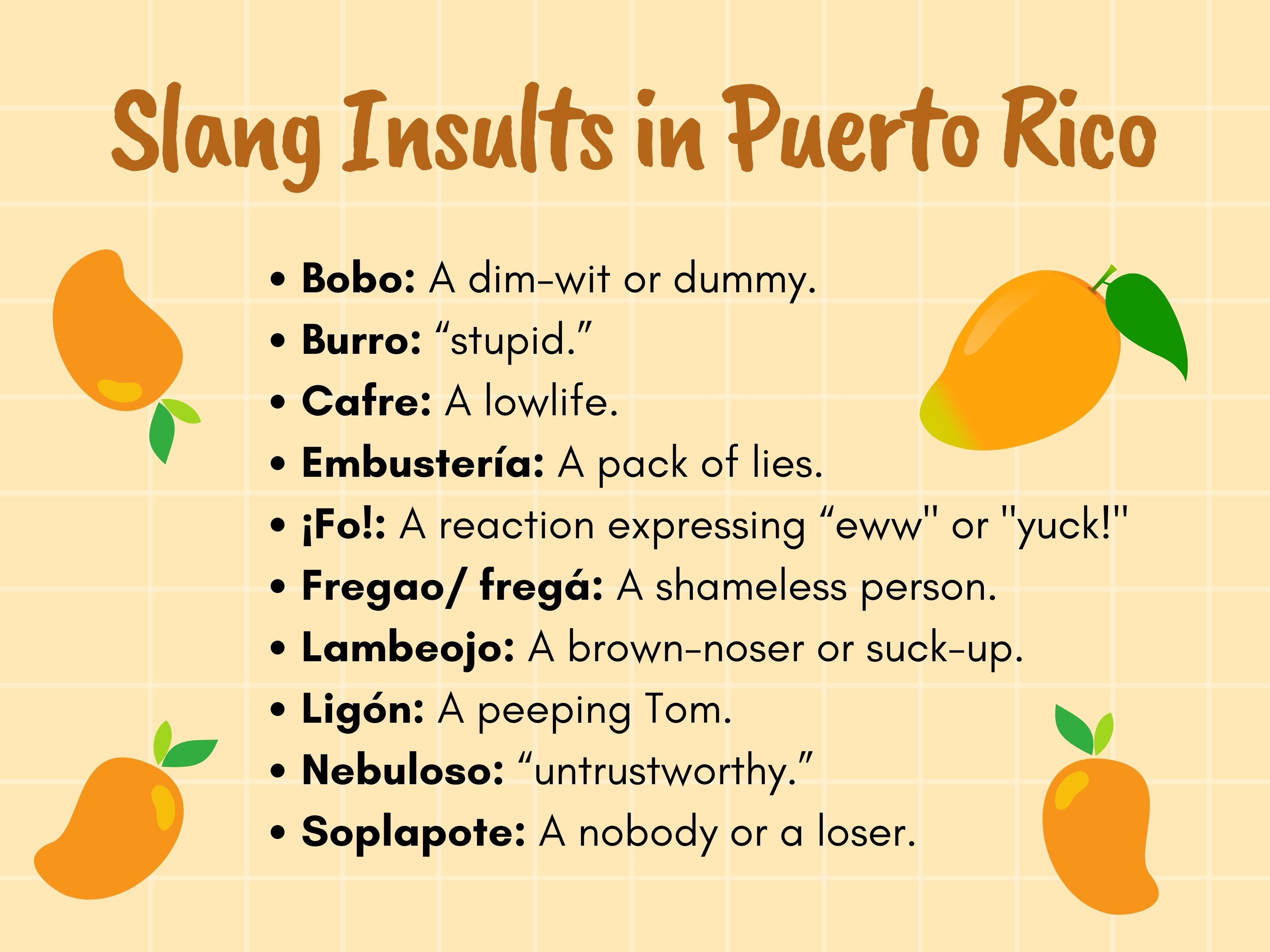
38. Embuste
A lie, exaggeration, or nonsense. “Eso es embuste” means “That’s a lie.”
39. Come mierda
A rude insult for someone arrogant, foolish, or useless. Use with caution. Very caution.
40. Sangano
A fool, lazy person, or someone acting ridiculous. Tone can range from teasing to insulting.
Puerto Rican Slang for Money, Work, and Daily Life
41. Chavos
Money. “No tengo chavos” means “I don’t have money.” A tragic sentence in any language.
42. Bregar
To deal with, work through, manage, struggle, or handle something. “Tengo que bregar con eso” means “I have to deal with that.”
43. Meter mano
To get to work, take action, or handle a task. Example: “Vamos a meter mano.”
44. Guagua
A bus or van. In Puerto Rico, waiting for the guagua is a cultural patience test.
45. Zafacón
Trash can. A very Puerto Rican word you will hear in homes, schools, and offices.
46. Tapón
Traffic jam. “Hay un tapón” means “There’s traffic.” In other words, bring snacks.
47. Chinchorro
A casual roadside bar, food stand, or small local restaurant. Chinchorrear means to hop between these spots.
48. Pitorro
Traditional Puerto Rican moonshine, often associated with holidays and strong opinions from uncles.
49. Fiebrú
Someone obsessed with a hobby, car, sport, or activity. A car enthusiast may be a fiebrú de carros.
50. Pelotero
A baseball player. Baseball is deeply loved in Puerto Rico, so this word appears often.
Puerto Rican Slang Verbs and Action Phrases
51. Janguear
To hang out. Example: “Voy a janguear con mis panas.”
52. Gufear
To goof around, joke, or act silly. It comes from English influence.
53. Tirar
Besides “to throw,” it can mean to diss, flirt, call, or make a verbal jab depending on context.
54. Tiraera
A diss, verbal feud, or lyrical battle, especially in reggaeton and urban music.
55. Guayarse
To scrape, get hurt, or suffer an emotional hit. It can be physical or metaphorical.
56. Cogerlo suave
To take it easy. “Cógelo suave” means “Relax” or “Don’t stress.”
57. Pa’ lante
Forward, onward, keep going. A phrase of resilience and encouragement.
58. Dale pa’ bajo
Eat it, drink it, finish it, or go for it. Often used with food or action.
59. Montarla
To make a scene, start drama, or exaggerate a situation.
60. Esmandarse
To go overboard, act wildly, or do too much.
Food, Feelings, and Everyday Puerto Rican Flavor
61. Fo
An expression of disgust, like “ew.” Short, powerful, and useful near questionable leftovers.
62. Jartera
The feeling of being very full after eating. Common after mofongo, arroz con gandules, or a heroic plate at a family party.
63. Empalagao
Overly sweet, emotionally or literally. A dessert can be empalagao, and so can a couple that needs to blink separately.
64. Fufú
A mashed plantain dish in some Caribbean contexts, though usage varies. It may also appear in cultural food conversations.
65. Gandules
Pigeon peas. Not slang exactly, but essential Puerto Rican vocabulary because arroz con gandules deserves respect.
66. Tripleta
A famous Puerto Rican sandwich usually loaded with three meats. It is less a sandwich and more a delicious architectural project.
67. Limber
A frozen homemade treat, similar to an ice pop served in a cup. A childhood classic.
68. China
In Puerto Rico, china can mean orange, while jugo de china means orange juice.
69. Guineo
Banana. This word is common in Puerto Rico and the Caribbean.
70. Frappé
A blended icy drink, often sweet, creamy, and dangerously easy to finish too fast.
More Puerto Rican Slang Worth Knowing
71. Carifresco
Someone shameless, bold, or nervy. Literally suggests a “fresh face,” but the attitude is the point.
72. Bembé
A party, gathering, or lively celebration. It can also have Afro-Caribbean cultural associations.
73. Perreo
A dance style associated with reggaeton. It is not formal ballroom dancing, unless your ballroom has subwoofers.
74. Mai
Mom or mother, from mami or English “my/mom” influence depending on usage.
75. Pai
Dad or father, similar in casual style to mai.
76. Bicho
Important warning: In many countries, bicho means bug. In Puerto Rico, it is a vulgar word for male genitalia. Handle with care.
77. Abombao
Stale, smelly, or spoiled, often used for food or unpleasant odors.
78. Chorro
A lot or plenty. “Un chorro de gente” means “a lot of people.”
79. Ligón
A flirt or someone who tries to pick people up romantically.
80. La guagua aérea
A humorous phrase for the airplane connecting Puerto Rico and the mainland United States, especially in diaspora conversations.
How to Use Puerto Rican Slang Without Sounding Awkward
The best way to use Puerto Rican slang is to start small. Try words like wepa, pana, brutal, nítido, and corillo before jumping into sharper phrases. Slang is social. It depends on age, region, relationship, tone, and setting. A word that sounds friendly between cousins may sound strange coming from a visitor in a formal meeting.
Also, remember that Puerto Rican slang is not a costume. Use it because you appreciate the culture, not because you want to perform it. Listen first. Notice how people use expressions. Pay attention to who says what, when they say it, and how others react. That is the difference between sounding warm and sounding like you downloaded “Boricua Mode” five minutes ago.
Experience Notes: What Puerto Rican Slang Feels Like in Real Conversation
Learning Puerto Rican slang is not just about memorizing words. It feels more like learning the rhythm of a place. Imagine arriving at a beach kiosk, hearing salsa in the background, and catching a conversation where someone says, “Mano, el tapón estaba brutal, pero llegamos pa’ lante.” A literal translation only gets you halfway there. The real meaning is in the mood: “Bro, traffic was terrible, but we made it and kept going.” That is Puerto Rican slang doing what it does best: turning daily life into a story with movement.
One of the first expressions many learners remember is ay bendito. It is soft, funny, caring, dramatic, and flexible. Someone drops their ice cream? Ay bendito. A child falls asleep at a party? Ay bendito. Your friend tells you they paid too much for parking in Old San Juan? Big ay bendito. It is not just a phrase; it is a tiny emotional blanket.
Then there is wepa, which belongs to celebration. You hear it at birthdays, concerts, parades, weddings, and moments when people suddenly remember that life deserves volume. Unlike textbook Spanish, wepa cannot be fully explained by grammar. It is closer to a spark. Someone shouts it, and the room understands: something good is happening.
Puerto Rican slang also teaches humility. You may know standard Spanish well and still feel lost when a group of Boricuas starts speaking quickly. That is normal. Slang compresses meaning. It drops sounds. It borrows from English. It bends words into local shapes. At first, janguear, pichear, bochinche, and revolú may sound like they belong to four different dictionaries. After a while, they begin to connect: hanging out, ignoring drama, gossip spreading, and chaos arriving right on schedule.
The most useful experience tip is to learn slang through scenes, not isolated flashcards. Picture chavos when paying for food, guagua when talking about transportation, chinchorro when planning a weekend, and jartera after eating too much. The words stick better when they have a place to live.
Finally, Puerto Rican slang reminds learners that language is identity. Words like boricua and pa’ lante carry pride, resilience, humor, and community. They are not just vocabulary items. They are little cultural postcards. Learn them with respect, use them with warmth, and when in doubt, ask a Puerto Rican friend. There is a good chance they will explain the word, give you three examples, correct your pronunciation, and then teach you five more terms you were not ready for. That, too, is part of the experience.
Conclusion
Puerto Rican slang is colorful, fast-moving, and packed with personality. From pana and corillo to wepa, al garete, chavos, and pa’ lante, these terms help you understand real conversations, music, jokes, family gatherings, and everyday Boricua culture. The key is not to memorize everything overnight. Start with the words you are most likely to hear, practice them in context, and respect the difference between casual, affectionate, rude, and vulgar expressions.
If you want to sound more natural in Puerto Rican Spanish, listen closely and let the language teach you its rhythm. Learn the slang, enjoy the humor, and remember: when life gets messy, keep going pa’ lante.
SEO Tags