
Apple cider doughnuts may look like a cozy old farmhouse invention, the kind of snack you imagine cooling on a windowsill beside a pumpkin and a suspiciously photogenic plaid blanket. But their true story is more surprising. These cinnamon-sugar rings belong partly to New England orchards, partly to early American cider culture, and partly to a 20th-century doughnut business that knew a good fall marketing idea when it smelled one.
Today, apple cider doughnuts are a seasonal ritual across the United States, especially in the Northeast. They appear at cider mills, farm stands, pick-your-own apple orchards, farmers markets, bakeries, roadside stores, and increasingly, grocery chains that know shoppers are powerless against anything labeled “limited fall flavor.” Yet behind their soft crumb and crunchy sugar coating is a long timeline: apples brought by European settlers, cider becoming a daily drink in colonial America, fried dough traditions crossing the Atlantic, doughnut machines changing food production, and orchards turning a humble cake doughnut into an autumn celebrity.
Why Apple Cider Doughnuts Feel Older Than They Are
The first trick apple cider doughnuts play on us is emotional. They taste ancient. One bite suggests weathered barns, wool sweaters, wooden barrels, and a grandmother who somehow owns both a cast-iron skillet and all the answers. That old-timey feeling is not totally fake. Apples and cider have deep roots in American food history, especially in New England and the Mid-Atlantic. Early colonists planted apple orchards not just for eating fruit, but for pressing cider, preserving harvests, and making use of apples that were too bitter, bruised, or odd-looking for the table.
In colonial America, cider was practical. Apples grew well in many regions, and cider was easier to store than fresh fruit. It also helped stretch the value of an orchard. A farmer could sell apples, press cider, cook with cider, turn cider into vinegar, and use leftover pomace for animals or compost. Nothing says “early American efficiency” quite like making one apple work three jobs and still expecting it to be cheerful.
So when modern eaters assume apple cider doughnuts must date straight back to colonial kitchens, the instinct makes sense. Apples were there. Cider was there. Fried cakes existed. Cinnamon, nutmeg, and sugar were treasured flavorings. The atmosphere was ready. But the specific treat we now call the apple cider doughnut has a more modern, more commercial, and honestly more interesting backstory.
The Doughnut Before the Cider Doughnut
To understand the history of apple cider doughnuts, we need to step back and meet the broader American doughnut. Fried dough has appeared in many cultures, but in the American story, Dutch settlers are often connected with early “olykoeks,” or oily cakes. These were balls or lumps of dough fried in fat, sometimes with fruit or nuts. They were not yet the neat rings we know today. They were more like doughnut ancestors: delicious, slightly chaotic, and probably difficult to eat politely.
By the 19th century, doughnuts had become increasingly recognizable in the United States. Cooks used chemical leaveners, spices, and regional ingredients to create cake-style doughnuts. The ring shape became popular because it cooked more evenly than a solid ball of dough. That hole in the middle was not just a cute design choice; it solved the classic fried-dough problem of cooked edges and stubbornly raw centers.
New England played an important role in doughnut culture. The region had the right combination of cold-weather cooking, strong baking traditions, orchards, cider, and a taste for spiced sweets. A plain cake doughnut already paired beautifully with a mug of cider. From there, adding cider directly into the batter was not a wild leap. It was the baking equivalent of saying, “What if fall could be round?”
Enter Adolph Levitt and the Doughnut Machine
The apple cider doughnut’s commercial story becomes especially interesting in the early 20th century. Adolph Levitt, a Russian immigrant in New York City, helped change the doughnut industry by developing an automatic doughnut-making machine around 1920. Before machines like this, doughnuts were mostly handmade in smaller batches. Automation allowed bakeries, shops, and food businesses to produce consistent doughnuts faster and in higher volume.
This may sound like a dry business detail, but it matters. The modern cider doughnut needed more than nostalgia; it needed repeatability. Farm stands and bakeries could not become famous for warm cider doughnuts if every batch required heroic labor and the emotional stamina of a frontier cook. Machines made it easier to fry doughnuts in front of customers, keep lines moving, and turn the smell of hot dough into a sales strategy.
Levitt later became connected with the Doughnut Corporation of America, a company that promoted doughnut mixes, machines, and marketing campaigns. The DCA understood something that modern food brands still chase: seasonal products sell because they feel urgent. A plain doughnut is nice. A fall-only cider doughnut? That is not a snack. That is a deadline with cinnamon.
The 1951 Moment: The “Sweet Cider Doughnut” Goes Public
The best-documented commercial debut of the apple cider doughnut arrived in 1951, when the Doughnut Corporation of America introduced the “Sweet Cider Doughnut” as part of a fall sales campaign. Contemporary reporting described it as a spicy round cake with natural autumn appeal. That phrase may be one of the most understated food predictions in American history. Natural autumn appeal? That little cake was about to become the unofficial edible mascot of leaf-peeping season.
The 1951 version was not necessarily invented from absolutely nothing. Local bakers may have experimented with cider doughnuts before that, and some references suggest cider-flavored doughnuts or homemade versions existed earlier. But the DCA campaign helped push the idea into broader public awareness. It gave bakeries and doughnut shops a seasonal product that made perfect sense: familiar enough to understand, different enough to crave, and tied directly to fall.
The formula was simple but brilliant. Start with a cake doughnut. Add apple cider to the batter. Bring in warm spices like cinnamon and nutmeg. Fry until golden. Coat in cinnamon sugar or glaze. Sell while warm. Watch customers lose all sense of portion control.
Why Orchards Became the Perfect Home for Cider Doughnuts
Apple cider doughnuts did not become iconic only because of clever marketing. They became beloved because orchards were the perfect stage. A cider mill already had the key ingredient: fresh apple cider. It also had visitors looking for a full seasonal experience. People came to pick apples, buy pumpkins, drink cider, take family photos, and pretend they were not mostly there for the doughnuts.
Farm stands discovered that cider doughnuts turned apple season into a sensory event. The smell of frying dough drifting across an orchard is basically edible advertising. Unlike apples, which customers might take home and ignore in the crisper drawer for two weeks, doughnuts create instant satisfaction. They are hot, portable, shareable, and easy to sell by the half-dozen.
The rise of car travel also helped. As Americans drove more in the 20th century, roadside farm stands and orchards became weekend destinations. Families could leave the city, visit the countryside, buy local produce, and return home with cider, apples, pies, and a paper bag stained with the noble grease of fresh doughnuts. In this way, apple cider doughnuts became part food, part souvenir, and part proof that you had successfully participated in autumn.
What Makes an Apple Cider Doughnut Different?
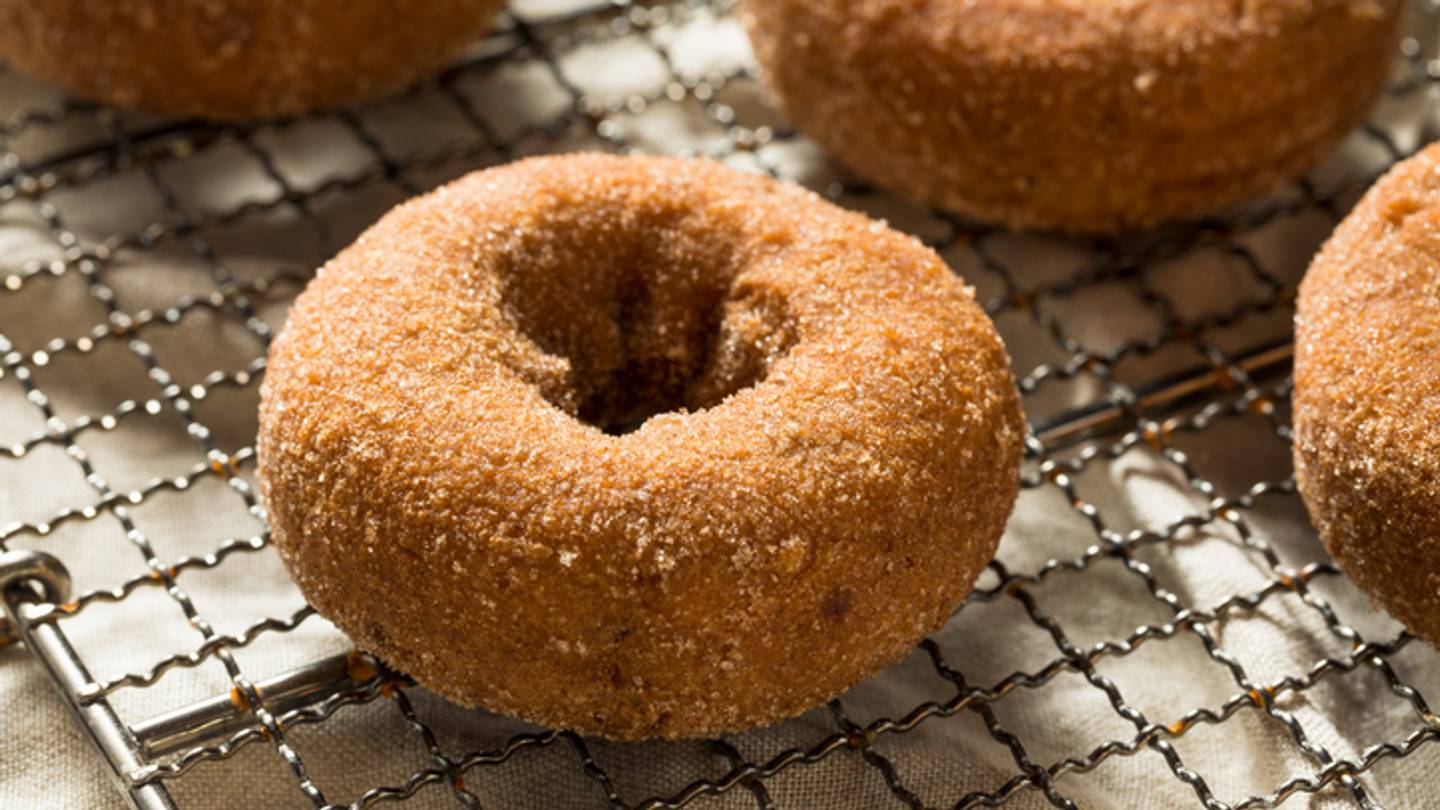
An apple cider doughnut is usually a cake doughnut, not a yeast-raised doughnut. That means it has a tender, cakey crumb rather than a stretchy, airy interior. The flavor typically comes from apple cider, cinnamon, nutmeg, sometimes allspice or cloves, and a coating of cinnamon sugar. Some recipes use buttermilk for tang, while others rely on boiled cider or reduced cider to intensify the apple flavor.
This last point matters. Fresh cider tastes wonderful, but it contains a lot of water. If a baker pours too much regular cider into doughnut batter, the result may be moist but not deeply apple-flavored. Reducing cider concentrates its sweetness, acidity, and apple character. That is why many modern recipes simmer cider down before adding it to the dough. It is not fussy; it is flavor math, and for once, math ends with doughnuts.
Texture is also central. The best apple cider doughnuts are crisp at the edges, tender inside, and fragrant with spice. They should taste like apples without tasting like apple-scented candle wax. They should be sweet but not frosting-level sweet. Most importantly, they should be eaten fresh. A cider doughnut can survive until the next day, but it loses some of its magic, like a jack-o’-lantern after Halloween.
New England’s Claim to Cider Doughnut Fame
Although apple cider doughnuts now appear across the country, New England has a particularly strong claim on their cultural identity. The region’s orchards, cider mills, cool fall weather, and long apple-growing traditions created the ideal environment for the treat to become legendary. In Massachusetts, Vermont, New Hampshire, Maine, Connecticut, and Rhode Island, cider doughnuts are not merely baked goods. They are seasonal infrastructure.
New England cider doughnuts often come with an unwritten set of expectations. They should be fresh. They should be warm if possible. They should come from somewhere with apples nearby. They should leave cinnamon sugar on your fingers, your jacket, and possibly your steering wheel. They should be eaten outdoors, ideally while pretending the wind is “refreshing” and not “actively rearranging your face.”
Still, the apple cider doughnut is not locked inside New England. New York orchards, Pennsylvania farm markets, Michigan cider mills, Virginia orchards, and Midwest apple farms have all helped spread the tradition. Wherever apples grow and fall tourism thrives, cider doughnuts have a way of appearing, usually next to hot cider and a line of customers quietly calculating whether twelve doughnuts is “for the family” or “for the drive home.”
The Role of Nostalgia in the Apple Cider Doughnut’s Success
Part of the apple cider doughnut’s power is that it tastes nostalgic even to people who did not grow up eating it. The combination of apple, spice, sugar, and fried dough speaks a language Americans already associate with comfort: apple pie, spice cake, county fairs, school bake sales, and holiday kitchens. The doughnut compresses all that into one handheld circle.
It also arrives at exactly the right time of year. Fall is a season built on rituals. People want pumpkin patches, football snacks, flannel shirts, Halloween decorations, Thanksgiving planning, and foods that make the house smell like someone responsible lives there. Apple cider doughnuts fit neatly into that emotional calendar. They are not just dessert; they are a mood.
Food trends come and go, but apple cider doughnuts have stayed popular because they connect local agriculture with immediate pleasure. They make apples feel exciting. They make cider feel snackable. They make orchards feel like destinations rather than just places where fruit has a job.
Fried, Baked, Glazed, or Sugared: The Modern Cider Doughnut Family
The classic apple cider doughnut is fried and rolled in cinnamon sugar, but modern versions vary widely. Some are baked in doughnut pans, creating a lighter, muffin-like texture. Some are glazed with maple, cider, vanilla, or brown butter. Some use apple butter, applesauce, or boiled cider for extra flavor. Others are made as doughnut holes, mini doughnuts, or even cider doughnut cakes.
Purists often prefer fried doughnuts because frying creates a crisp exterior and deep flavor. Baked versions, however, have earned a place in home kitchens because they are easier, cleaner, and less intimidating. Not everyone wants to stand over hot oil like a cinnamon-sugar firefighter. Baked cider doughnuts let home bakers enjoy the flavor without turning the kitchen into a county fair booth.
The best version depends on context. At an orchard, fried and hot is king. At home on a rainy Saturday, baked doughnuts with reduced cider and cinnamon sugar can be excellent. In a bakery case, a maple-glazed cider doughnut may win hearts. The common thread is apple-forward flavor, warm spice, and a texture that invites a second bite before the first one is fully discussed.
Why the History Still Matters
The little-known history of apple cider doughnuts reminds us that American food traditions are often layered. They are rarely invented in one perfect moment by one person wearing an apron and dramatic lighting. Instead, they develop through agriculture, migration, technology, marketing, local taste, and repeated human weakness in the presence of sugar.
Apple cider doughnuts combine old and new. The old part is the orchard, the cider press, the spice cabinet, and the American habit of turning harvests into celebration. The new part is 20th-century food production, doughnut machines, seasonal advertising, and roadside tourism. That mix is exactly why they feel timeless while still having a modern documented rise.
They also show how local food can become national without losing its regional charm. A cider doughnut from a grocery store may be tasty, but a hot cider doughnut at an orchard carries the full setting with it: the smell of apples, the crunch of gravel, the paper bag warming your hands, and the tiny moral debate over whether you should eat one before leaving the parking lot. History is important, but so is honesty. You are eating one before leaving the parking lot.
Experience Notes: What Apple Cider Doughnuts Teach You at the Orchard
The best way to understand apple cider doughnuts is not only to read their history, but to experience the environment that made them famous. Visit an orchard on a cool fall morning and the story becomes easier to taste. Before you even see the doughnut counter, you usually smell it: hot oil, cinnamon, sugar, apple cider, and that unmistakable bakery warmth that makes everyone in line suddenly friendlier. It is the scent of autumn performing a magic trick.
One of the most memorable parts of eating apple cider doughnuts at a farm stand is the contrast between simplicity and excitement. The doughnut itself is not fancy. It is not decorated with gold leaf, filled with imported cream, or served on a plate the size of a sled. It is usually handed over in a plain paper bag, sometimes still warm enough to fog the inside. Yet that modest presentation is exactly the point. The pleasure comes from freshness, place, and timing.
There is also a social rhythm around cider doughnuts. Families buy them after apple picking. Couples split a half-dozen and then immediately regret not buying a dozen. Kids get cinnamon sugar on their cheeks. Adults pretend they are buying extra “for later,” even though later often means the next six minutes. The doughnut becomes part of the orchard memory, as important as the apples in the basket or the photo in front of the pumpkin display.
For food lovers, the experience is a lesson in how setting changes flavor. A cider doughnut eaten at home can be delicious, but a cider doughnut eaten beside the orchard that pressed the cider has a different emotional weight. You connect the ingredient to the landscape. You see the apple trees, the cider jugs, the bakery window, and the people waiting in line. The doughnut stops being just a recipe and becomes a tiny edible map of the season.
There is also a practical lesson: freshness matters. Apple cider doughnuts are at their best shortly after frying or baking. The outside has texture, the spice is lively, and the apple flavor feels bright. Hours later, they can still be good, especially with coffee or hot cider, but the peak moment is brief. That short window is part of their charm. Like fall foliage, they ask you to pay attention now.
Trying different orchards can become its own hobby. One farm may make a dense, deeply spiced doughnut. Another may favor a lighter crumb and a heavy cinnamon-sugar coating. Some taste strongly of apple; others lean more toward nutmeg and brown sugar. A few offer cider doughnut sundaes with ice cream, caramel, or whipped cream, which is both unnecessary and completely understandable. Each version reveals how local tradition keeps evolving.
In the end, the apple cider doughnut experience is about more than dessert. It is about the way Americans turn harvest into ritual. We pick fruit, press cider, fry dough, sprinkle sugar, and call it a tradition. Then we repeat it every year because, frankly, it works. The apple cider doughnut is small, but it carries a big seasonal message: fall is here, apples are ready, and happiness may be waiting in a warm paper bag.
Conclusion: A Small Doughnut With a Big American Story
The history of apple cider doughnuts is more complex than their humble shape suggests. They are connected to colonial apple orchards, early cider culture, Dutch-style fried dough, New England baking, 20th-century doughnut machinery, and the clever seasonal marketing of the Doughnut Corporation of America. Their documented commercial breakthrough in 1951 helped transform a fall-flavored cake doughnut into a beloved orchard tradition.
That is why apple cider doughnuts still matter. They are not just sweet rings dusted in cinnamon sugar. They are edible history: part agriculture, part invention, part nostalgia, and part extremely persuasive snack. Whether you find them at a New England cider mill, a Midwest apple farm, a Virginia orchard, or your own kitchen, the best apple cider doughnuts tell the same story. Apples became cider, cider became batter, batter became doughnuts, and doughnuts became one of fall’s most irresistible traditions.
SEO Metadata