
Potty training a parakeet sounds like one of those ideas people invent after staring at a favorite shirt with fresh bird poop on the shoulder. But yes, with patience, timing, and a sense of humor, many parakeets can learn to use a chosen potty spot more often. Will your budgie become a tiny feathered roommate who politely asks for the restroom like a hotel guest? Probably not. Birds are not dogs, and parakeets have fast metabolisms, which means droppings happen often. Very often. Blink twice and your bird may have already signed the paperwork.
Still, parakeet potty training can reduce mess during out-of-cage time, make cleaning easier, and strengthen your bond with your bird. The secret is not punishment, pressure, or forcing your bird to “hold it.” The secret is observation, routine, positive reinforcement, and respecting your parakeet’s natural body signals. This guide walks you through 12 practical steps to potty train a parakeet safely and kindly.
Can You Really Potty Train a Parakeet?
Yes, many parakeets can learn to poop in a predictable place when handled gently and trained consistently. However, “potty trained” does not mean your bird will never have an accident. A realistic goal is to teach your parakeet that a certain perch, paper towel, cage area, or stand is the preferred potty location.
Parakeets, also called budgies, are intelligent, social birds. They respond well to short training sessions, positive reinforcement, and clear routines. Because they are prey animals, they can become frightened if grabbed, scolded, rushed, or pressured. A relaxed bird learns faster. A scared bird learns that your hand is a suspicious featherless claw monster. Not ideal.
What to Know Before You Start
Parakeets poop frequently
Small birds digest food quickly. Your parakeet may poop many times per day, and some birds relieve themselves every few minutes during active periods. This is normal. The goal of potty training is not to reduce normal droppings. It is to guide where they happen when your bird is out with you.
Droppings are health clues
Bird droppings usually include three parts: feces, white urates, and clear urine. Diet can affect color and moisture. Fresh fruits and vegetables may make droppings wetter, while pellets or certain foods can change color. However, sudden changes, strong odor, black or red droppings, extreme watery output, or a major change in frequency can signal illness. If something looks wrong, contact an avian veterinarian.
Never punish accidents
Scolding a bird for pooping is confusing and can damage trust. Your parakeet is not being rude. It is being a bird. Positive reinforcement works far better than fear, and it helps your bird associate the potty spot with good things.
How to Potty Train a Parakeet: 12 Steps
Step 1: Choose one safe potty spot
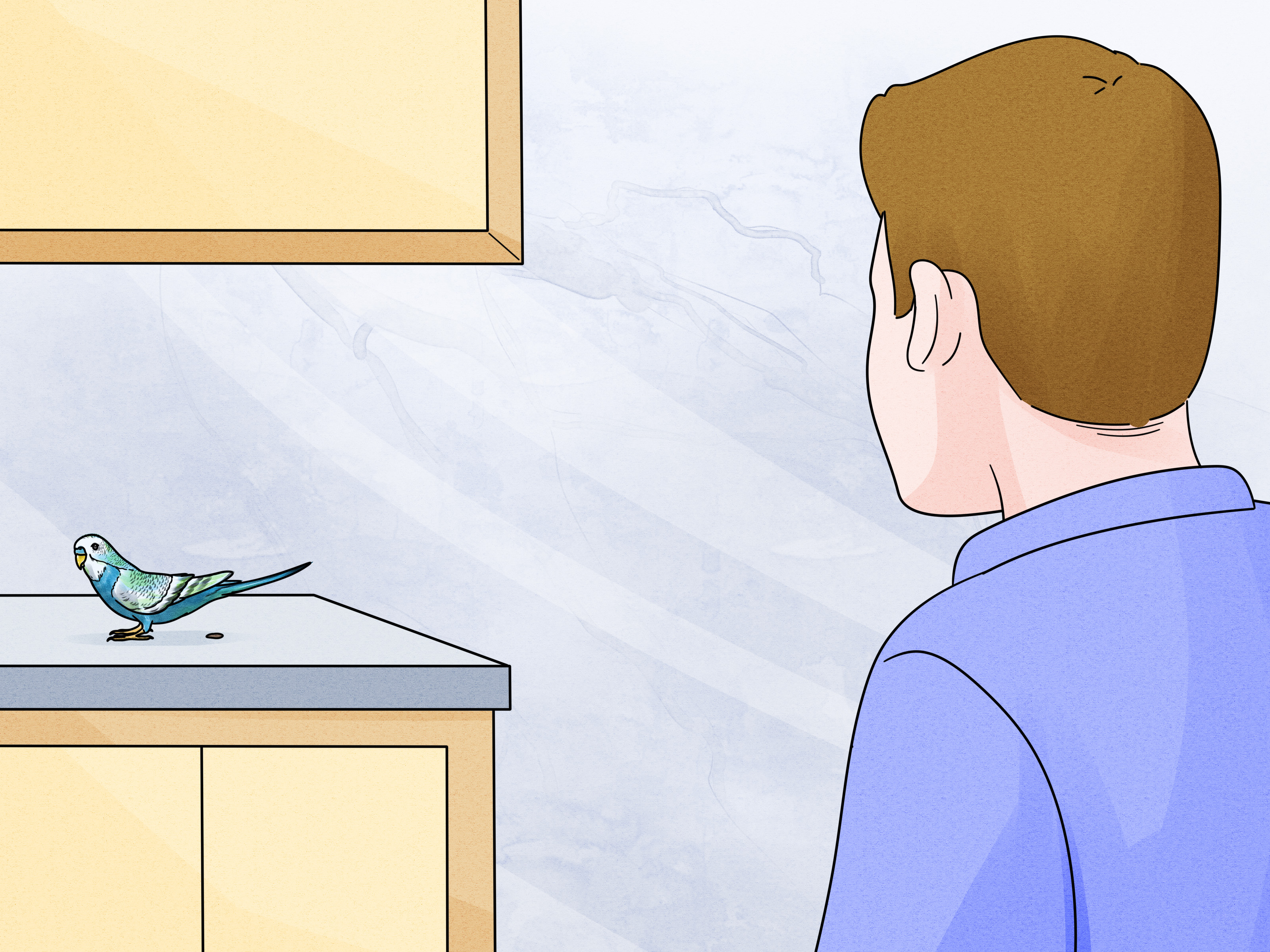
Pick a place where you want your parakeet to go. Good options include a paper towel, a small washable tray, a tabletop play stand, a perch over newspaper, or a specific corner of the cage. Keep it simple and easy to clean. Avoid scented pads, harsh cleaners, or anything your bird may chew and swallow.
Consistency matters. If Monday’s potty spot is a paper towel, Tuesday’s is a napkin, and Wednesday’s is your math homework, your bird will not appreciate the creative direction. Choose one main location and stick with it.
Step 2: Observe your bird’s natural schedule
Before teaching anything, watch your parakeet for a few days. Notice how often it poops after waking, eating, playing, stepping out of the cage, or sitting on your hand. Many birds relieve themselves soon after coming out of the cage or after a period of activity.
Write down the timing if needed. For example, your bird may poop every 8 to 12 minutes during shoulder time or almost immediately after breakfast. This schedule becomes your training map. Without it, you are just guessingand your shirt becomes the unfortunate weather forecast.
Step 3: Learn the body language
Many parakeets give small signals before pooping. They may squat slightly, lift the tail, fluff briefly, pause movement, or shift their feet. The signs can be subtle, so pay close attention. Once you can predict the moment, you can gently move your bird to the potty spot before it happens.
Do not rush or snatch your bird. Move calmly. A frightened bird may resist training or avoid your hands. The best training feels like a normal routine, not a dramatic airport evacuation.
Step 4: Use a simple verbal cue
Choose one short phrase such as “Go potty,” “Poop here,” or “Do your business.” Use the same cue every time your parakeet is placed over the potty spot. Say it in a calm, friendly voice.
The cue should happen right before or as your bird uses the spot. Over time, your parakeet may connect the words, the location, and the action. Do not repeat the cue endlessly like a broken robot. One or two calm repetitions are enough.
Step 5: Place your parakeet on the potty spot at the right time
Based on your observations, bring your bird to the potty spot just before it is likely to go. If your bird usually poops every 10 minutes, try moving it to the spot around minute 8 or 9. If your parakeet often poops after leaving the cage, place it on the potty perch before shoulder time begins.
Give your bird a minute or two. If nothing happens, let it return to play and try again shortly. Do not keep your bird waiting too long. Holding a bird in place until it poops can create stress and resentment. Potty training should be quick, calm, and voluntary.
Step 6: Reward immediately
When your parakeet uses the potty spot, reward it right away. Use cheerful praise, a tiny favorite treat, or a brief happy interaction. The reward must come immediately so your bird connects the action with the result.
Training treats should be small. A tiny bit of millet, a small seed, or another bird-safe favorite can work. The point is not to host an all-you-can-eat buffet. The point is to say, “Excellent job, tiny bathroom champion.”
Step 7: Keep training sessions short
Parakeets learn best with frequent, short practice. Try a few minutes at a time during regular out-of-cage sessions. Watch the clock, move your bird to the potty spot when the timing makes sense, cue calmly, reward success, and continue playing.
Long sessions can bore or stress your bird. A good rule: stop while things are still going well. If your parakeet is tired, distracted, or cranky, end the lesson and try again later. Even birds have days when they are spiritually unavailable.
Step 8: Use the cage routine wisely
Many birds naturally poop in their cage, especially after resting. You can use this to your advantage. Before taking your parakeet out, wait a moment and see if it poops first. Then praise calmly and begin playtime.
You can also return your bird to a cage perch or play stand potty spot every few minutes during handling. This helps your parakeet learn that potty breaks are part of the routine, not the end of fun.
Step 9: Protect favorite furniture during training
While your parakeet is learning, use washable covers, paper towels, cage liners, or dedicated bird-safe play areas. Keep your bird away from delicate fabrics, electronics, paperwork, and food preparation surfaces. Potty training reduces mess, but it does not eliminate biology.
Set yourself up to stay calm. If an accident lands on an old towel, no big deal. If it lands on your laptop keyboard, suddenly everyone in the room discovers new vocabulary. Prevention keeps training positive.
Step 10: Clean accidents without drama
If your bird misses the spot, clean it quietly. Do not shout, glare, tap the beak, shake your finger, or make a big scene. Some birds enjoy dramatic human reactions and may accidentally learn that pooping outside the spot gets attention. Others become afraid. Neither result helps.
Use bird-safe cleaning methods. Avoid strong fumes, aerosol sprays, bleach-heavy odors, and harsh chemicals around birds. Their respiratory systems are sensitive, and good ventilation matters. A damp cloth, plain paper towel, and safe cleaner recommended for bird areas are usually better choices.
Step 11: Gradually increase freedom
Once your parakeet starts using the potty spot reliably, slowly increase the time between reminders. For example, if you were offering a potty break every 8 minutes, try 10 minutes. If that works, try 12. If accidents increase, go back to the previous successful interval.
Training is not a straight line. Some days your bird will seem like a genius with wings. Other days, it will act as if the entire concept of “location” is brand-new. Stay patient and adjust.
Step 12: Maintain the habit with consistency
After your parakeet understands the routine, keep rewarding occasionally. You do not need to give a treat every single time forever, but praise and periodic rewards help maintain the behavior. Keep the potty spot clean, easy to access, and familiar.
If your schedule changes, your bird may need a refresher. Travel, new rooms, cage changes, diet changes, illness, hormones, or stress can affect potty habits. Return to the basics: observe, cue, reward, and keep things calm.
Common Mistakes to Avoid
Expecting perfection
A parakeet is not a tiny housebroken dog with feathers. Even well-trained birds have accidents. Expect improvement, not perfection. When your expectations are realistic, you will enjoy the process more and clean fewer things with emotional intensity.
Waiting too long between potty breaks
Because parakeets poop frequently, beginners often wait too long. If your bird has an accident at minute 12, try offering a potty break at minute 8 or 9 next time. Training works best when you help your bird succeed before mistakes happen.
Using punishment
Punishment can make your parakeet fearful and less willing to interact. It may also teach your bird to hide signals instead of cooperating. Reward the right behavior and quietly manage the wrong one.
Choosing an inconvenient potty spot
If the potty spot is far away, unstable, scary, or hard to clean, you will not use it consistently. Choose a location that works for both of you. A washable play stand near the main activity area often works well.
How Long Does Parakeet Potty Training Take?
Some parakeets understand the pattern within days. Others need weeks or months. Age, personality, trust level, previous handling, routine, and reward value all matter. A hand-tame bird that enjoys stepping up may learn faster than a shy bird still building confidence.
Progress may look small at first: one successful potty break, then two, then a cleaner afternoon. Celebrate those wins. Bird training is built on tiny moments repeated consistently. Also, tiny birds deserve tiny trophies, even if the trophy is just you whispering, “Nice work, captain.”
Health and Safety Notes for Potty Training
Potty training should never involve making your parakeet hold droppings for long periods. Birds need to eliminate frequently. If your bird seems strained, fluffed up, lethargic, not eating, pooping much less than usual, or producing unusual droppings, stop training and contact an avian veterinarian.
Also remember that droppings are part of daily health monitoring. A clean white paper towel under the usual perch can help you notice changes. Healthy droppings vary, but sudden or extreme changes deserve attention. Your parakeet cannot text you, “My digestion feels weird,” so the evidence may appear on the cage paper instead.
Best Potty Training Supplies for Parakeets
You do not need fancy equipment. Helpful supplies include plain paper towels, unscented cage liners, a stable tabletop perch, a small washable tray, bird-safe treats, and a timer. A clicker can also help if your bird already understands clicker training, but your voice can work just fine.
Keep the setup simple. The easier it is to clean and repeat, the more consistent you will be. Consistency is the magic ingredient. Well, consistency and the ability to laugh when your bird misses by one inch with the confidence of an Olympic archer.
of Real-World Experience: What Potty Training a Parakeet Actually Feels Like
Potty training a parakeet is less like teaching a formal classroom lesson and more like becoming a detective in a very small, feathery mystery. At first, you may feel ridiculous watching your bird’s posture every few minutes. You will learn the tail wiggle. You will learn the pause. You may even develop the intense focus of someone defusing a movie bomb, except the “bomb” weighs about one gram and is sitting on your sleeve.
One of the most useful experiences many bird owners discover is that timing beats enthusiasm. You can have the best treats, the sweetest voice, and the most beautiful potty perch in the world, but if you miss your bird’s natural schedule, training becomes messy. A simple timer can be surprisingly helpful. During early sessions, set it for the interval you observed. When it buzzes, calmly place your parakeet on the potty spot, say the cue, wait briefly, and reward success. This turns chaos into a routine.
Another real-life lesson: your bird’s trust matters more than speed. A shy parakeet may not want to step onto your hand quickly, let alone cooperate with potty training. In that case, focus first on hand-taming, step-up practice, and calm interaction. A bird that feels safe with you is more likely to accept being moved to a perch or paper towel at the right time. If your parakeet backs away, pins its body low, bites, or flutters in panic, slow down. Training should feel like teamwork, not a tiny rodeo.
It also helps to create “potty stations” in places your bird already likes. For example, if your parakeet spends time on a play gym, place paper or a washable tray directly below a favorite perch. If your bird loves sitting on your desk lamp, redirect it to a nearby bird-safe stand instead. Birds repeat habits in locations where they feel secure. Use that natural preference rather than fighting it.
Accidents are part of the process. The best mindset is practical and slightly amused. Keep paper towels nearby. Wear washable clothes during early training. Avoid letting your bird sit on expensive fabric, pillows, curtains, or anything with the words “dry clean only.” Nothing tests a person’s commitment to pet ownership like bird poop on a decorative cushion.
Owners also learn that success is not always permanent unless the routine stays consistent. A parakeet may do beautifully for two weeks and then regress after a cage move, new diet, loud visitors, or a stressful event. This does not mean training failed. It means your bird needs a refresher. Go back to shorter intervals, easy rewards, and familiar cues.
Finally, potty training can become a bonding ritual. You learn to read your parakeet’s body language, your bird learns that your cues predict rewards, and both of you become better at communicating. The clean shirt is a nice bonus, of course. But the real win is a calmer, happier bird who trusts you enough to participate in daily routines.
Conclusion
Learning how to potty train a parakeet takes patience, observation, and a forgiving attitude toward the occasional aerial accident. Start with one safe potty spot, watch your bird’s natural schedule, use a simple cue, and reward immediately when your parakeet succeeds. Keep sessions short, avoid punishment, and remember that your goal is better habitsnot impossible perfection.
Most importantly, protect your bird’s health. Potty training should never force a parakeet to hold droppings or replace good hygiene and veterinary care. When done kindly, it can make out-of-cage time cleaner, easier, and more fun for both of you. Your parakeet gets praise and treats. You get fewer surprise decorations. Everybody wins.
Note: This article is for educational bird-care content only. If your parakeet’s droppings suddenly change in color, smell, consistency, or frequency, or if your bird seems weak, fluffed, quiet, or not eating, consult an avian veterinarian promptly.