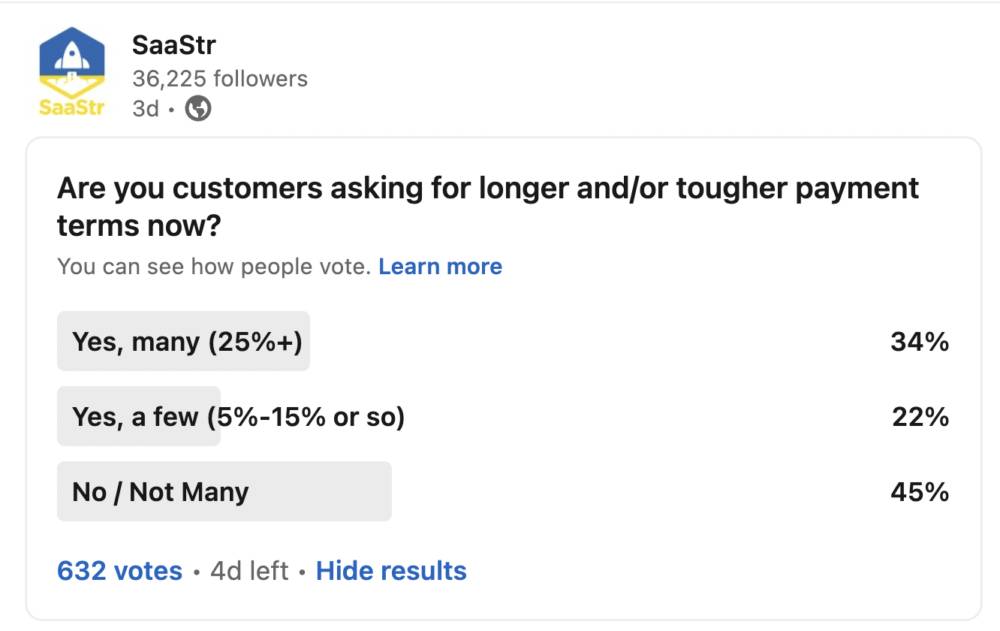

At some point, nearly every growing business meets a customer who loves the product, respects the price, signs the proposal, and then casually asks for longer payment terms as if they are requesting extra napkins. “Can we do Net 60?” they ask. Or Net 90. Or, if they are feeling especially Olympic, “payment upon internal approval.” That last one is not a payment term; it is a haunted house.
Longer payment terms are common in B2B sales, especially when selling to larger companies with formal procurement departments. The buyer wants flexibility. Their accounts payable team wants time. Their cash flow team wants to hold onto cash longer. None of that is automatically unfair. But here is the part sellers often forget: when you extend payment terms, you are not just being nice. You are financing your customer.
So, should you push back when customers ask for longer payment terms? The answer is: sometimes yes, sometimes no, and almost always with a calculator nearby. Longer terms can help close bigger deals, strengthen customer relationships, and make your offer more competitive. They can also crush cash flow, increase credit risk, and turn a profitable sale into a slow-motion stress sandwich.
This guide breaks down how to evaluate longer customer payment terms, when to negotiate, when to say no, and how to protect your business without sounding like the villain in a spreadsheet-themed movie.
What Longer Payment Terms Really Mean
Payment terms define when a customer must pay after receiving an invoice. Net 30 means payment is due within 30 days. Net 60 gives the customer 60 days. Net 90 gives them three months, which is basically enough time for a houseplant to develop trust issues.
In B2B transactions, longer terms are a form of trade credit. The customer receives goods or services now and pays later. That delay may help the buyer manage its own cash flow, especially if it needs time to resell inventory, complete internal approvals, or collect from its own customers. For the seller, however, the same delay ties up working capital in accounts receivable.
That is the central tension. Your customer sees longer terms as flexibility. You may experience them as payroll pressure, delayed supplier payments, and the exciting weekly hobby of checking your bank balance with one eye closed.
Why Customers Ask for Longer Payment Terms
Customers usually ask for extended payment terms for practical reasons, not because they enjoy making your finance team sigh dramatically. Large companies often have structured approval workflows. Some invoices must pass through purchasing, receiving, department approval, finance review, and payment scheduling before money moves. Even when a contract says Net 30, the actual payment cycle can stretch longer if the invoice is missing a purchase order number, sent to the wrong inbox, or trapped in the ancient cave system known as “pending approval.”
Other customers request longer payment terms because they are trying to improve their own working capital. Holding cash longer gives them more liquidity. It may allow them to pay their employees, buy inventory, fund growth, or simply keep more money on hand. From their perspective, longer terms are smart cash management. From yours, they may be an interest-free loan.
Some customers also ask because competitors offer it. If another vendor says yes to Net 60 or Net 90, your customer may treat those terms as a market standard. That does not mean you must match them blindly. It means you need to understand whether the deal is still attractive after the cost of waiting is included.
The Cash Flow Problem: Profit Is Not the Same as Cash
A sale can look profitable on paper and still hurt your business in real life. Suppose you sell a $50,000 project with a 30% gross margin. That sounds great. But if you must pay employees, contractors, materials, software, taxes, and rent before the customer pays, your cash is doing push-ups while your income statement is taking a victory lap.
This is why longer payment terms can be especially dangerous for growing companies. Growth increases the amount of money tied up in receivables. A business can win more contracts, book more revenue, and still run short of cash because collections lag behind expenses. In other words, sales are applause; cash is oxygen.
Longer terms also affect your cash conversion cycle. The longer it takes to collect from customers, the longer your money is unavailable for inventory, payroll, marketing, debt payments, and new opportunities. If suppliers require payment in 15 or 30 days while customers pay in 60 or 90, you are funding the gap.
Should You Push Back? Start With the Math
Before accepting longer payment terms, calculate what the request actually costs. The customer may frame it as a harmless administrative preference, but every extra day has a financial impact.
1. Estimate the working capital gap
Ask: how much cash must leave your business before this invoice is paid? Include labor, materials, shipping, subcontractors, platform fees, financing costs, and overhead. If you need to spend $35,000 to deliver a $50,000 order and payment arrives in 90 days, your business must carry that $35,000 gap for three months.
2. Consider your cost of capital
If you use a line of credit, credit card, invoice financing, or other funding to bridge the gap, longer terms have a direct cost. Even if you do not borrow, there is still an opportunity cost. Cash locked in receivables cannot be used elsewhere.
3. Check the customer’s payment behavior
A reliable customer asking for Net 45 may be very different from a new customer asking for Net 90 before the first invoice has even learned to walk. Review payment history, references, credit risk, order size, and whether the customer has a habit of paying on time. A longer term for a trustworthy account may be strategic. A longer term for an unknown account may be a trap wearing a blazer.
4. Look at your margins
Low-margin deals cannot absorb much delay. If your profit margin is thin, a longer payment cycle can erase the benefit of the sale. Higher-margin work gives you more room to negotiate, but even then, cash flow matters.
When You Should Push Back on Longer Payment Terms
You should push back when the requested terms create a cash flow risk your business cannot comfortably carry. That does not mean being rude. It means protecting the machine that allows you to serve customers in the first place.
Push back if the customer is new, the order is large, the margin is low, or your upfront costs are significant. Also push back if the customer already pays late under existing terms. A client who pays Net 30 invoices in 55 days is not asking for Net 60; they are asking for permission to pay in 85.
You should also push back if the customer is using vague language. Terms such as “pay when paid,” “upon approval,” or “after reconciliation” can create uncertainty. Clear due dates matter. If a customer wants flexibility, define it in writing. Ambiguity is not a payment strategy. It is where invoices go to become folklore.
When Longer Payment Terms May Make Sense
Longer payment terms are not always bad. They can be a useful sales tool when used carefully. If the customer is financially stable, strategically important, and likely to generate repeat business, extended terms may be worth considering.
They may also make sense when your business has strong cash reserves, low delivery costs, predictable collections, and enough margin to support the delay. For example, a wholesaler with efficient inventory financing may offer Net 60 to retailers because it helps win volume orders. A software company with low incremental delivery costs may offer annual contracts with flexible terms to enterprise customers. A service firm, however, may need deposits because labor costs arrive long before the final check.
The key is not whether Net 60 or Net 90 is “good” or “bad.” The key is whether the term fits the economics of the deal.
Smart Alternatives to Simply Saying Yes or No
Payment term negotiations do not have to be a dramatic showdown between “absolutely not” and “sure, please use our bank account as a mattress.” There are several middle-ground options that protect your cash flow while giving customers flexibility.
Ask for a deposit
A deposit reduces your upfront risk. For project work, custom orders, consulting, manufacturing, design, or implementation, consider asking for 25% to 50% upfront. This aligns commitment and gives you working capital to begin delivery.
Use milestone billing
Instead of invoicing everything at the end, break the project into stages. For example: 30% at contract signing, 40% at delivery of the first milestone, and 30% upon completion. This keeps cash moving and prevents one large invoice from becoming a collection adventure.
Offer early payment discounts
Some businesses use terms such as 2/10 Net 30, meaning the customer receives a 2% discount if they pay within 10 days, otherwise the full amount is due in 30 days. Discounts should be priced carefully, but they can encourage faster payment from customers who have the cash available.
Charge more for longer terms
If a customer wants Net 60 instead of Net 30, consider building that cost into the price. Longer terms are a financial benefit to the buyer. It is reasonable for that benefit to have a price.
Use credit limits
Do not extend unlimited credit. Set a maximum outstanding balance based on the customer’s payment history and your risk tolerance. If the customer reaches the limit, pause new work or shipments until payment is received.
Require automatic payment methods
For recurring services, ACH authorization, card-on-file arrangements, or scheduled payments can reduce collection delays. Make sure the method is clearly disclosed and agreed upon in writing.
How to Push Back Without Losing the Customer
Many business owners avoid pushing back because they fear losing the deal. That fear is understandable, especially when the customer is large and the revenue looks attractive. But a confident, professional response can protect your business while keeping the relationship positive.
Try language like this:
“We understand your preference for Net 60. For this order size, our standard terms are 50% upfront and Net 30 on the balance because we have significant delivery costs before final payment. If Net 60 is required, we can revise the pricing to reflect the extended financing period.”
That response does three important things. It acknowledges the request, explains the business reason, and offers options. You are not saying, “No, because we feel like it.” You are saying, “Here are the terms that allow us to deliver well and remain financially healthy.” That is not pushy. That is adult supervision for cash flow.
Put Payment Terms in Writing
Verbal agreements are where payment expectations go to become arguments. Every deal should clearly state invoice timing, due date, accepted payment methods, late fees if applicable, dispute windows, required purchase order information, and consequences for nonpayment.
Be especially specific about when the clock starts. Does Net 30 begin on the invoice date, delivery date, customer acceptance date, or receipt of a correct invoice? Those details matter. If the customer requires a purchase order number, vendor portal upload, tax form, or specific invoice format, get that information before work begins.
A clean invoice also helps. Include the customer’s legal name, billing contact, purchase order number, invoice number, due date, payment options, itemized charges, and any agreed discount or deposit. The easier you make it for accounts payable to approve the invoice, the fewer excuses there are for delay.
Track Days Sales Outstanding
Days Sales Outstanding, often called DSO, measures how long it takes to collect payment after a sale. If your stated terms are Net 30 but your average collection time is 52 days, your real terms are not Net 30. Your contract says one thing; your bank account says another, and the bank account is usually the more honest narrator.
Monitor DSO by customer, not just overall. Some customers pay like clockwork. Others treat due dates as inspirational quotes. Segmenting customers helps you decide who deserves flexible terms and who needs deposits, shorter terms, or tighter credit limits.
Also review accounts receivable aging reports every week. Invoices that are 1 to 15 days late require a different response than invoices that are 60 or 90 days overdue. The longer an invoice ages, the harder it often becomes to collect.
Create a Payment Terms Policy
A payment terms policy prevents every negotiation from becoming an emotional custom sculpture. Your policy might define standard terms by customer type, order size, credit profile, and project category.
For example:
- New customers: 50% deposit, balance due before delivery or Net 15.
- Established customers with good history: Net 30.
- Strategic accounts: Net 45 or Net 60 with approved credit review.
- Custom work: milestone billing required.
- Late-paying customers: no new work until overdue balances are resolved.
This kind of policy gives your sales team room to negotiate without accidentally turning your company into a nonprofit lender.
Real-World Example: The Big Customer With Big Terms
Imagine a small manufacturer receives a $120,000 order from a national retailer. The retailer asks for Net 90. The manufacturer’s gross margin is 25%, but it must buy materials, schedule labor, and pay shipping long before payment arrives. The order looks impressive, but the business would need to carry roughly $90,000 in costs for three months.
If the manufacturer accepts without adjustment, it may need to draw on a line of credit. Interest costs reduce profit. If the retailer pays late, the business may struggle to fund other orders. The smarter response might be: 30% deposit, 40% due at shipment, and 30% Net 45. Or the manufacturer may accept Net 90 only if the price increases enough to cover financing and risk.
The lesson is simple: big revenue is not always good revenue. A large sale that destabilizes cash flow can be more dangerous than a smaller sale that pays on time.
Experiences and Practical Lessons From the Payment Terms Trenches
One of the most common experiences business owners share is that customers rarely ask for longer payment terms at the beginning of a casual conversation. The request usually appears near the finish line, after pricing has been discussed, the proposal has been admired, and everyone is emotionally shopping for confetti. That timing can make the seller feel trapped. Saying no feels risky. Saying yes feels expensive. The best lesson is to bring up payment expectations earlier, before the deal becomes a hostage negotiation with fonts.
Another real-world lesson is that payment behavior matters more than company size. A famous customer can still pay slowly. A small customer can pay the same day. Many suppliers learn this the hard way after giving generous terms to a large account because the logo looked impressive. The invoice then disappears into a procurement portal, where it is apparently raised by wolves. Before offering longer terms, ask practical questions: Who approves the invoice? What documents are required? What day of the month are payments released? Is there a vendor portal? Will one missing field restart the approval clock?
Experienced business owners also learn to separate good customers from good payers. A customer may be polite, enthusiastic, and pleasant on calls, yet still create cash flow strain if payment is always late. That does not make them a bad person, but it may make them a risky account. A strong relationship should include honest payment conversations. If a customer values your work, they should understand that reliable payment helps you keep serving them well.
Many companies discover that deposits improve not only cash flow but customer commitment. When buyers pay something upfront, they tend to respond faster, provide needed information sooner, and take the project more seriously. The deposit is not just money; it is momentum. For service businesses, creative firms, consultants, contractors, and custom product companies, deposits can prevent the painful situation where the seller does weeks of work while the buyer remains financially uncommitted.
Another hard-earned lesson: do not let the sales team promise terms that finance cannot support. Salespeople are often rewarded for closing deals, so they may view extended terms as a harmless concession. But operations and finance must live with the delay. Businesses should define approval rules. For instance, sales may offer Net 30 freely, but anything beyond Net 45 requires management approval. This keeps flexibility available without turning every deal into a cash flow surprise party.
Some businesses also find success by offering choices instead of ultimatums. Instead of saying, “We cannot do Net 60,” say, “We can offer three options: standard pricing with Net 30, a 2% discount for payment within 10 days, or Net 60 with adjusted pricing.” This changes the conversation. The customer is not being rejected; they are choosing the payment structure that fits them best. More importantly, your business is not giving away financing for free.
The most painful experiences usually come from ignoring early warning signs. If a customer argues about deposits, resists written terms, refuses to provide billing details, or says, “Don’t worry, we always pay eventually,” pause. Eventually is not a date. Hope is not a collection strategy. A customer who is difficult before the first invoice may become a full-time hobby after delivery.
Finally, businesses that manage payment terms well treat accounts receivable as a strategic function, not clerical cleanup. They invoice quickly, follow up before the due date, keep customer billing contacts updated, review aging reports weekly, and escalate overdue accounts consistently. The goal is not to be aggressive. The goal is to be predictable. Customers learn what you allow. If your business treats due dates as optional, some customers will too.
Final Verdict: Push Back, But Do It Strategically
So, should you push back when customers ask for longer payment terms? Yes, if the terms threaten your cash flow, increase risk without compensation, or turn your business into the customer’s free financing department. No, if the customer is reliable, the deal is profitable, the relationship is strategic, and your business can comfortably support the delay.
The best approach is not automatic rejection. It is structured negotiation. Know your cash flow. Price the risk. Use deposits, milestone billing, early payment discounts, credit limits, and clear contracts. Longer payment terms can be a useful tool, but they should never be handed out like promotional pens at a trade show.
Remember: revenue is exciting, profit is important, but cash keeps the lights on. If customers want more time to pay, they should be ready to discuss terms that work for both sides. A healthy business relationship is not built on one company quietly financing the other until someone’s bookkeeper starts stress-eating granola bars.
SEO Tags