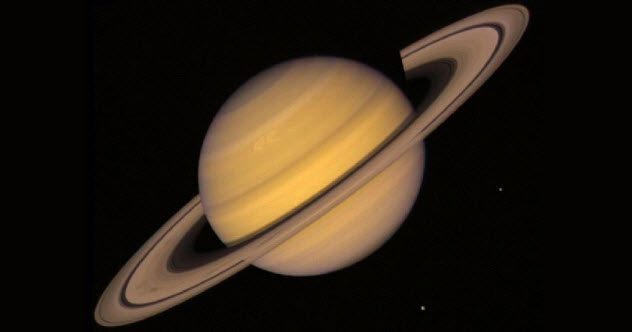

Saturn is already dramatic enough without help from the internet. It has a glittering ring system, a moon with methane seas, another moon that sprays ocean water into space, and a polar storm shaped like a hexagon. Honestly, if a science-fiction writer invented Saturn from scratch, editors might ask them to “tone it down a little.”
But because Saturn is so visually strange, it has also become a magnet for wild claims, cosmic rumors, occult interpretations, and conspiracy theories. Some are harmlessly bizarre. Some misread real science. Others take ancient mythology, astronomy, and modern space images, toss them into a blender, and serve the result as “hidden truth.”
This article explores ten outlandish conspiracies, claims, and theories about Saturnwhile separating the weird from the real. Saturn may not be a secret alien machine, but the actual planet is far more fascinating than most conspiracy theories give it credit for.
Why Saturn Attracts So Many Strange Theories
Saturn sits in a perfect storm of mystery. It is the sixth planet from the Sun, the second-largest planet in the solar system, and one of the farthest worlds visible to the unaided human eye. Ancient civilizations watched it crawl slowly across the sky, which made it feel heavy, distant, and symbolic. Later, telescopes revealed its rings, and spacecraft revealed details so strange they looked almost designed.
Modern science has only made Saturn more interesting. NASA’s Cassini spacecraft orbited Saturn from 2004 to 2017, sending back extraordinary images and data about the planet, its rings, and its moons. Cassini showed us Titan’s methane lakes, Enceladus’s icy plumes, Saturn’s violent storms, and the famous north-pole hexagon. For scientists, these discoveries are evidence of atmospheric physics, orbital dynamics, chemistry, and planetary evolution. For conspiracy-minded corners of the internet, they are “clues.”
1. The Saturn Hexagon Is an Alien Megastructure
Few Saturn features have inspired more speculation than its north-pole hexagon. A six-sided storm system sitting on top of a gas giant sounds suspiciously like something engineered by cosmic architects with a taste for geometry.
The Claim
Some conspiracy theories argue that Saturn’s hexagon is not a natural storm at all, but an alien base, a portal, a giant antenna, or the top of a hidden machine inside the planet. The argument usually goes like this: nature does not make perfect hexagons, therefore someoneor somethingmust have built it.
The Reality Check
Nature makes hexagons all the time. Honeycombs, basalt columns, snowflakes, and fluid patterns can all form six-sided shapes under the right conditions. Saturn’s hexagon is understood as a massive atmospheric jet stream. The planet has no solid surface like Earth, so its atmospheric flows can settle into long-lasting patterns that look shockingly tidy from space.
In other words, the hexagon is not proof of aliens. It is proof that fluid dynamics has a flair for drama.
2. Saturn Is a Giant Cosmic Broadcasting Tower
Another popular Saturn conspiracy claims the planet broadcasts signals that influence Earth, human consciousness, or even reality itself. This theory often points to Saturn’s radio emissions, magnetic field, and geometric polar storm as “evidence.”
The Claim
According to this theory, Saturn functions like a cosmic transmitter. Some versions say it sends frequencies through the Moon. Others claim it projects a simulated reality. The more ambitious versions basically turn Saturn into the solar system’s Wi-Fi router, except instead of giving you slow internet, it allegedly controls your thoughts.
The Reality Check
Saturn does produce radio emissions, and spacecraft have recorded plasma waves and electromagnetic activity from the Saturn system. Scientists can convert some of these signals into audio, which makes them sound eerie and otherworldly. But “eerie audio” does not mean “mind-control broadcast.” It means instruments measured natural space plasma phenomena and translated data into sound humans can hear.
Saturn is magnetically active and scientifically fascinating. That is not the same as being a planetary brainwashing station.
3. The Rings Are Artificial Machinery
Saturn’s rings are so beautiful they almost look too good to be natural. They stretch across hundreds of thousands of miles, yet in many places they are surprisingly thin. That combination has inspired claims that the rings are artificial structures, energy collectors, or even ancient alien technology.
The Claim
Some theorists argue that Saturn’s rings are not made of ice and rock, but are engineered bands used to stabilize the planet, store information, harvest energy, or broadcast signals. The ring divisions and sharp edges are presented as signs of intelligent design.
The Reality Check
Saturn’s rings are made mostly of countless icy particles, ranging from tiny grains to large chunks. Their structure is shaped by gravity, collisions, orbital resonance, and the influence of Saturn’s moons. Some moons act like shepherds, helping maintain ring edges and gaps.
Scientists still debate details about the rings, including their age. Some studies suggest the rings may be relatively young; other research argues they could be much older than they appear. That debate is real sciencenot evidence that Saturn is wearing alien jewelry.
4. The “Black Cube of Saturn” Controls the World
This theory is one of the internet’s favorite rabbit holes. It connects Saturn with cubes, ancient religion, corporate logos, architecture, occult symbolism, and world control. It is also a classic example of pattern-hunting gone wild.
The Claim
The “Black Cube of Saturn” theory says that Saturn has been secretly worshiped through cube symbolism across cultures and that powerful groups use Saturn-related symbols to signal hidden control. Anything black and cube-shaped can get dragged into the theory: buildings, logos, monuments, movie scenes, and sometimes even furniture. Yes, your minimalist coffee table may be innocentbut in this theory, it never stood a chance.
The Reality Check
Saturn was important in Roman religion and mythology. The Roman god Saturn was associated with agriculture, sowing, time, abundance, and the festival Saturnalia. But connecting every cube-shaped object to a secret Saturn cult requires giant leaps in logic.
Human cultures reuse simple shapes because simple shapes are useful. Cubes are stable, easy to build, and visually powerful. A cube does not automatically equal Saturn, and Saturn does not automatically equal a hidden world government.
5. Saturn Was Once Earth’s Original Sun
One of the stranger alternative cosmology claims says Saturn once occupied a central position in Earth’s sky and functioned like a small sun. This idea appears in some “electric universe” and myth-based theories that reinterpret ancient symbols as records of planetary arrangements.
The Claim
The theory suggests that Earth once existed in a radically different celestial configuration, with Saturn appearing enormous and radiant in the sky. Ancient myths about a golden age, a great god, or a central cosmic light are treated as memories of this lost Saturn-dominated world.
The Reality Check
Saturn is a gas giant, not a star. It does not have the mass required to sustain nuclear fusion. While Saturn emits some internal heat, it is nowhere near capable of replacing the Sun. Planetary orbits are governed by gravity, and there is no accepted astronomical evidence that Earth once orbited Saturn or lived under a Saturn “sun.”
Ancient myths are valuable cultural records, but they are not automatically literal astronomy textbooks. Sometimes a god of time is a god of time, not a misplaced fusion reactor.
6. Saturn and the Moon Create a Reality Matrix
This is where Saturn theories leave astronomy class, sprint past philosophy, and dive headfirst into cosmic cyberpunk. The Saturn-Moon matrix theory claims reality is a kind of projected illusion controlled through Saturn and amplified by the Moon.
The Claim
In this theory, Saturn emits a frequency or code that the Moon receives and broadcasts to Earth, trapping human consciousness inside a false reality. Some versions add reincarnation traps, artificial timelines, or hidden beings feeding on human energy.
The Reality Check
There is no scientific evidence that Saturn or the Moon projects reality, controls consciousness, or traps souls. The Moon affects Earth through gravity, especially tides, and Saturn influences objects through gravity like every planet does. But gravity is not a secret operating system for existence.
The theory is compelling to some people because it gives a dramatic explanation for suffering, confusion, and social control. But emotionally powerful stories are not the same as evidence. The real universe is mysterious enough without turning it into a bad customer-service simulation.
7. NASA Destroyed Cassini to Hide Evidence
NASA’s Cassini mission ended on September 15, 2017, when the spacecraft deliberately plunged into Saturn’s atmosphere. The official reason was planetary protection: Cassini was running low on fuel, and NASA wanted to avoid any future crash into potentially habitable moons like Enceladus or Titan.
The Claim
Some conspiracy theories argue that NASA destroyed Cassini because it had discovered evidence of aliens, artificial structures, or forbidden physics. According to this view, Cassini’s “Grand Finale” was not a responsible mission endingit was a cover-up with thrusters.
The Reality Check
Cassini’s ending was planned, public, and scientifically explained. The spacecraft had spent years studying Saturn and its moons. Because Enceladus has a subsurface ocean and Titan has complex organic chemistry, mission planners did not want an uncontrolled spacecraft potentially contaminating those environments with Earth microbes.
If NASA wanted to hide Saturn, spending over a decade releasing stunning images and data was a very strange strategy. That is less “cover-up” and more “please enjoy this enormous archive of planetary science.”
8. Titan Is a Secret Alien Base
Titan, Saturn’s largest moon, is one of the most intriguing worlds in the solar system. It has a thick nitrogen-rich atmosphere, clouds, rain, rivers, lakes, and seasbut its surface liquids are methane and ethane, not water. Naturally, this has inspired theories that Titan is hiding alien life, alien cities, or secret operations.
The Claim
Some people claim Titan’s haze hides artificial structures. Others suggest methane lakes could support advanced life or that NASA already knows Titan is inhabited. The moon’s orange atmosphere adds to the mystery, because it literally looks like it is keeping secrets.
The Reality Check
Titan is genuinely important for astrobiology, but not because scientists have found alien cities there. Its chemistry may resemble some conditions of early Earth, and NASA’s Dragonfly mission is planned to explore Titan’s surface in the 2030s. Scientists want to study prebiotic chemistry, habitability, and how complex organic molecules behave in such an unusual environment.
That is exciting enough. We do not need to invent Titan apartment complexes with methane lake views.
9. Enceladus’s Plumes Are Alien Exhaust
Enceladus is a small icy moon that shocked scientists when Cassini detected jets of water vapor and icy particles spraying from its south polar region. Later analysis found salts, organic molecules, and phosphorus-related chemistry connected to its subsurface ocean. That makes Enceladus one of the best places to study potential habitability beyond Earth.
The Claim
Some outlandish theories claim the plumes are not natural geysers but exhaust from alien machines, underwater civilizations, or hidden bases beneath the ice. A few versions argue that NASA has already detected life but refuses to announce it.
The Reality Check
Enceladus’s plumes are best explained by geologic activity, tidal heating, and a subsurface ocean beneath an icy shell. Saturn’s gravity and orbital interactions flex the moon, generating heat that helps maintain liquid water below the surface.
Scientists have found ingredients associated with habitability, but habitability does not equal confirmed life. A kitchen with flour, sugar, and eggs is promising; it is not yet a birthday cake.
10. Saturn’s Disappearing Rings Signal an Apocalypse
Every so often, headlines announce that Saturn’s rings are “disappearing.” This sounds terrifying until you learn the fine print: sometimes the rings appear edge-on from Earth, making them temporarily hard to see. Separately, scientists have also studied “ring rain,” a process by which ring material slowly falls into Saturn over extremely long timescales.
The Claim
Conspiracy versions turn these events into apocalyptic signs. The rings vanishing from view are interpreted as a cosmic warning, planetary activation, timeline shift, or end-times countdown.
The Reality Check
Saturn’s ring plane crossing is a predictable viewing effect caused by the geometry of Saturn, its rings, and Earth. The rings are not suddenly vanishing in a supernatural event; we are simply seeing them from a thin angle. As for ring rain, it unfolds over tens or hundreds of millions of yearsnot exactly breaking-news apocalypse speed.
So if Saturn’s rings seem to disappear, do not panic. The universe is not ending. Your telescope is just dealing with geometry.
Why These Saturn Theories Feel So Tempting
Outlandish Saturn theories often begin with a real mystery. The hexagon is real. Titan’s methane lakes are real. Enceladus’s ocean chemistry is real. Saturn’s radio emissions are real. Cassini’s final plunge was real. The problem starts when people treat “real mystery” as permission to insert any conclusion they like.
Good science asks: What evidence would prove or disprove this? Conspiracy thinking often asks: How can every detail be made to fit the story? That is why Saturn theories can become so sticky. The planet is visually strange, historically symbolic, scientifically complex, and far away enough that most people cannot check the details for themselves.
But the best antidote to bad Saturn theories is not boredom. It is better wonder. Saturn does not need to be a prison planet, alien server, or occult battery to be amazing. It is a hydrogen-helium giant with rings made of ice, storms larger than Earth, moons that may hold oceans, and atmospheric patterns that look like geometry homework assigned by a thunderstorm.
Experience: What Saturn Teaches Curious Stargazers
The first time many people see Saturn through a backyard telescope, the reaction is almost always the same: silence, then disbelief. It looks fake. Not fake in the conspiracy sensefake in the “someone taped a tiny sticker to the eyepiece” sense. The rings are so crisp and elegant that your brain briefly refuses to accept them as a real object hanging in space. That emotional jolt is important because it explains why Saturn is such fertile ground for big stories.
Imagine standing outside on a cool night, waiting for your eyes to adjust, while the telescope wobbles because someone bumped the tripod with their knee. Then Saturn slides into view. It is small, pale, and impossibly graceful. You are not seeing a digital rendering. You are seeing sunlight reflected from a planet roughly 800 million miles away, depending on where Earth and Saturn are in their orbits. That moment can make a person feel tiny, lucky, and slightly suspicious of reality.
That feeling is where healthy curiosity and conspiracy thinking split paths. Healthy curiosity says, “How do the rings stay there? What are they made of? Why does Titan have lakes? How can a moon like Enceladus spray water into space?” Conspiracy thinking says, “This looks too strange, so someone must be hiding the truth.” One path leads to astronomy. The other leads to a six-hour video with ominous music and a thumbnail of a glowing cube.
The best personal experience with Saturn is not memorizing facts but learning how wonder matures. At first, the planet is simply beautiful. Then it becomes strange. Then it becomes understandable in pieces: gravity shapes the rings, moons carve gaps, methane cycles through Titan’s atmosphere, tidal heating warms Enceladus, and fast-moving gases create powerful storms. Understanding does not ruin the magic. It sharpens it.
There is also something humbling about Saturn’s timescales. A human life is brief; Saturn takes about 29.5 Earth years to orbit the Sun. Its seasons last more than seven years each. Its rings may be ancient, young, temporary, or some complicated mix scientists are still working to understand. When you spend time with Saturn, even from Earth, you start to feel how impatient humans can be. We want instant answers, dramatic revelations, and secret meanings. Saturn offers slower rewards.
For writers, skywatchers, students, and casual space fans, Saturn is a perfect lesson in balancing imagination with evidence. Let imagination ask wild questions. Let evidence decide which answers survive. That way, you get the thrill of mystery without falling for every cosmic rumor wearing a black robe and carrying a hexagon.
Conclusion: Saturn Is Weird Enough Without the Conspiracies
Saturn has inspired mythology, science fiction, spiritual speculation, and some truly outlandish conspiracy theories. The planet’s beauty makes it symbolic; its distance makes it mysterious; its real scientific oddities make it easy to misinterpret. But when we look closely, the truth is richer than the rumors.
The Saturn hexagon is not an alien landing pad. The rings are not hidden machinery. Titan is not confirmed alien real estate. Enceladus has not been officially declared inhabited by secret ocean engineers. And Cassini was not destroyed to hide the truthit ended its mission in a way designed to protect future science.
The real Saturn is a world of storms, ice, chemistry, gravity, ancient questions, and future missions. It does not need conspiracy theories to be extraordinary. Saturn already has rings. That is basically the planet version of arriving at a party wearing a crown.