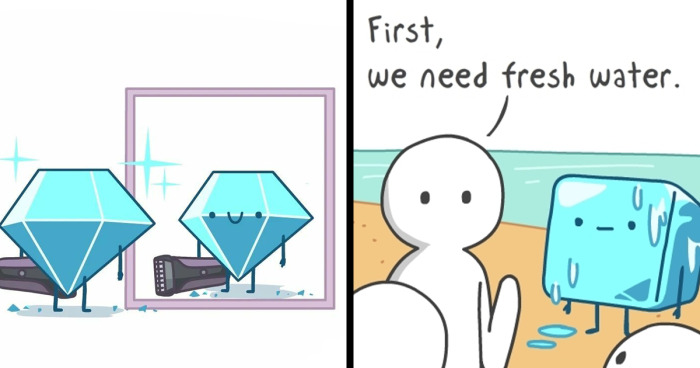

Some comic characters are born with capes, swords, radioactive spider bites, or suspiciously perfect hair. CubeMelt, on the other hand, was born with a much tougher assignment: exist as an ice cube in a world that is very committed to being room temperature. That tiny tragedy is exactly what makes the webcomic so funny, oddly comforting, and surprisingly wise.
Created by Singapore-based illustrator, comic artist, and animation director Peng Ven Wong, also known as Ven Wong, CubeMelt follows a cheerful little ice cube trying to enjoy life before becoming a puddle with feelings. The premise is simple enough to explain in one sentence, but the emotional effect is bigger than expected. These comics turn everyday struggles into bite-sized visual jokes: social awkwardness, deadlines, fear, friendship, digital life, bad luck, romance, and the eternal enemy of all frozen beingssunlight.
The newest CubeMelt comics continue what fans already love about the series: clean art, gentle humor, quick punchlines, and a main character who somehow makes melting look like a personality trait. The result is a collection of funny ice cube comics that feel light on the surface but carry a warm message underneath. Yes, warm. Sorry, CubeMelt.
Who Is CubeMelt?
CubeMelt is a living ice cube with a big heart, tiny legs, and the worst possible body chemistry for adventure. He wakes up in an ice tray, steps out into the world, and immediately starts losing the battle against physics. That built-in countdown gives every story a natural sense of urgency. A walk outside becomes a survival mission. A simple conversation becomes a race against evaporation. Even relaxing can be dangerous when your entire body is basically a beverage in progress.
What makes CubeMelt stand out is not just that he melts. It is that he keeps trying anyway. His personality is optimistic, curious, and sweet without becoming sugary enough to require a dental appointment. He is brave in small ways. He makes friends. He panics. He fails. He helps. He melts. Then, somehow, he returns for another round of tiny disasters.
The Artist Behind the Melting Magic
Peng Ven Wong’s idea for CubeMelt grew from a deeper personal feeling: the awareness that life is short. Instead of turning that thought into something heavy or gloomy, he transformed it into a cute webcomic character whose literal limitation becomes a source of comedy and reflection. That is the secret ingredient. CubeMelt is not just a joke about ice. He is a soft, funny reminder that time matters.
Wong’s background in illustration, comics, and animation helps explain why the series works so well visually. CubeMelt’s design is extremely simple, but simplicity is not the same as emptiness. The character’s tiny expressions, body language, and changing shape allow readers to understand the emotion instantly. A wide-eyed stare can say panic. A drooping corner can say exhaustion. A puddle can say, “Well, that meeting could have been an email.”
Why These Ice Cube Comics Are So Relatable
The best CubeMelt comics begin with something ordinary. A difficult task. A misunderstanding. A friendship moment. A pop-culture gag. A tiny inconvenience that becomes huge because the hero has the structural durability of a drink garnish. The newest comics continue using everyday situations, but they twist them through CubeMelt’s fragile little body.
That is why the jokes land. Readers are not laughing only because an ice cube is in trouble. They are laughing because they recognize the feeling. We have all been the person melting under pressure. We have all tried to stay cool when life brought a blowtorch. We have all started a day with optimism and ended it looking emotionally like a puddle near a refrigerator.
Small Problems Become Big Comedy
In CubeMelt’s world, the smallest inconvenience can become a full dramatic event. A sunny day is not pleasant weather; it is a horror movie. A straw in a drink is not just a straw; it can become an awkward physical obstacle. A trust fall can go badly when your body is breakable. A workday can look like a mountain of paperwork slowly defeating a cube-shaped employee who is doing his best.
These examples show the clever structure behind the humor. The setup is familiar, the character limitation is clear, and the punchline usually arrives with a visual twist. The comic does not need long explanations because the reader understands the rules immediately: CubeMelt wants to live fully, but the world keeps being inconveniently warm.
The “Life Is Short” Message Under the Jokes
CubeMelt is adorable, but the series is not empty cuteness. Its central idea is quietly philosophical. The character’s short lifespan becomes a metaphor for how people spend their own time. That does not mean every strip is trying to deliver a motivational poster wearing mittens. Most of the comics are simply funny. Still, the theme is always nearby: enjoy the moment, try anyway, be kind, and do not wait forever to start living.
This is why CubeMelt has emotional staying power. Many webcomics get attention because of a clever joke. CubeMelt keeps attention because the joke has a heartbeat. The reader wants the little ice cube to succeed even when success is unlikely. When he fails, it is funny. When he keeps going, it is sweet. When he melts, it is both a punchline and a tiny existential crisis wearing a smile.
How the Newest Comics Expand the CubeMelt Universe
The newer CubeMelt comics broaden the character’s world with more interactions, more situational humor, and more playful uses of shape, temperature, and everyday objects. The series often pairs CubeMelt with characters whose physical properties create instant comedy: a Rubik’s cube, sugar cube, light bulb, snowman, cookie, sausage, strawberry, or even the sun itself. Each character adds a new rule to the joke.
A Rubik’s cube naturally suggests complication. A light bulb suggests ideas, warmth, and occasionally trouble. A sugar cube creates a sweet contrast. A snowman introduces friendship, coldness, and the tragedy of climate control. These pairings are effective because they are visual puns with emotional potential. The reader can understand the joke before reading much text, which is ideal for fast-scrolling social media audiences.
Visual Humor That Works Without Overexplaining
CubeMelt’s best moments depend on visual clarity. The panels usually show cause and effect in a compact sequence. Something happens, CubeMelt reacts, and his body pays the price. This is classic comic timing: setup, escalation, reveal. The art style keeps backgrounds simple so the reader’s eye stays focused on action and expression.
That approach also makes the comic highly shareable. A good CubeMelt strip can be understood quickly on Instagram, Facebook, Pinterest, or a mobile screen during a coffee break. The jokes are clean, family-friendly, and emotionally accessible. You do not need to know years of lore. You just need to understand that ice melts and life is rude.
Why CubeMelt Fits the Modern Webcomic Era
Webcomics thrive when they are easy to enter, easy to share, and emotionally specific. CubeMelt checks all three boxes. The character design is instantly recognizable. The central problem is universal. The themes are flexible enough to include office stress, friendship, romance, seasonal jokes, internet culture, and little moments of self-doubt.
Social media has changed how many readers discover comics. Instead of waiting for a newspaper strip or buying a collection, audiences often meet characters in a single image on a feed. That means the first panel has to work fast. CubeMelt does this beautifully. A cube with a face already raises a question. A cube with a face standing under the sun raises a better one: “Oh no, how long does this poor guy have?”
The newest comics also show why short-form humor remains powerful. In a noisy online world, a small emotional story can feel refreshing. CubeMelt does not shout. He melts politely. Somehow, that is enough.
The Art of Making a Simple Character Feel Alive
One of the hardest things in character design is making something simple feel expressive. CubeMelt is basically a square with rounded charm, but Wong gives him enough emotional range to carry entire stories. The trick is limitation. Because CubeMelt has such a simple body, every change matters. A wobble suggests weakness. A drip suggests panic. A puddle suggests defeat, relief, or comedic timing depending on the scene.
The character’s physical vulnerability also creates empathy. Readers care because CubeMelt is always at risk. His world is not evil; it is just built for non-ice beings. That difference creates endless humor. A normal person can sit outdoors. CubeMelt experiences outdoor seating as a high-stakes endurance sport.
What Readers Can Learn From CubeMelt
CubeMelt’s struggles may be silly, but they carry useful lessons for artists, writers, and readers. First, a strong character does not need a complicated design. A clear concept is more important than visual clutter. Second, limitations can create better stories. CubeMelt is funny because he cannot do everything easily. His weakness is the engine of the comic.
Third, humor can make serious themes easier to approach. The idea that life is short can sound heavy. Through CubeMelt, it becomes playful and digestible. The comic invites reflection without trapping readers in gloom. It says, in effect: yes, time is passing; yes, everything changes; now please enjoy this ice cube trying to survive a picnic.
Specific Examples of CubeMelt’s Comedy Style
Many of the newest comics use contrast as the main joke. CubeMelt wants something ordinary, but his nature makes it complicated. When he interacts with hot environments, the danger is obvious. When he meets objects with their own symbolic meanings, the joke becomes smarter. A Rubik’s cube can turn a conversation about life into a gag about complexity. A light bulb can make warmth and ideas feel risky. A snowman can become both a friend and a reminder that cold comfort is still comfort.
Some strips lean into physical comedy. CubeMelt may try sports, work, games, or simple daily activities, only to discover that movement creates heat, pressure, or disaster. Other strips are more emotional, focusing on friendship, kindness, or loneliness. The balance keeps the series from feeling repetitive. Even though melting is the recurring problem, the emotional flavor changes from comic to comic.
Why Fans Keep Coming Back
Fans return to CubeMelt because the comic offers a rare combination: cute art, fast humor, and emotional sincerity. It is wholesome without being bland. It is funny without being mean. It is philosophical without wearing a tiny professor hat and lecturing everyone near the freezer.
The newest CubeMelt comics also reward repeat readers. Once you understand the character, every new scenario becomes a little game: how will this situation go wrong for an ice cube? That expectation builds anticipation. The fun is not only in the punchline but in watching how cleverly the comic uses the character’s limitation.
Experience Section: What CubeMelt’s Struggles Feel Like in Real Life
The reason “30 Of The Newest Comics This Artist Made About The Struggles Of An Ice Cube” feels so enjoyable is that CubeMelt’s problems are ridiculous versions of real human experiences. Nobody wakes up worried about literally melting on the way to work, unless they are carrying groceries in July and forgot where they parked. But almost everyone knows what it feels like to slowly lose energy in an environment that does not fit them.
Think about the first time you tried to act calm during a stressful day. Maybe your inbox was multiplying like a science experiment. Maybe your phone battery was at 3 percent while you were waiting for an important call. Maybe you walked into a meeting with confidence and walked out feeling like a sad puddle in business casual clothing. That is CubeMelt energy.
The comics work because they turn burnout into something visible. When people say, “I’m melting,” they usually mean they are overwhelmed, tired, embarrassed, or emotionally cooked. CubeMelt makes that metaphor literal. He does not just feel pressure; his corners soften. He does not just panic; he drips. He does not merely fail; he becomes evidence on the floor.
There is also something comforting about watching a character with an impossible disadvantage remain cheerful. CubeMelt cannot control the sun, heat, or the basic laws of thermodynamics. Still, he keeps showing up. That small optimism is strangely practical. Real life often asks people to function in conditions they did not choose: difficult jobs, awkward social moments, changing technology, family stress, creative blocks, and the constant feeling that there are not enough hours in the day. CubeMelt does not solve those problems with heroic speeches. He simply keeps trying, one tiny adventure at a time.
The experience of reading these comics is also refreshingly low-pressure. You do not need to decode a complicated plot. You do not need to remember a cast of 47 characters, three alternate timelines, and a prophecy involving a haunted toaster. You can read one strip, smile, and move on with your day slightly lighter than before. That is a real strength in modern webcomics.
For creators, CubeMelt offers a useful reminder: a small idea can become rich if the rules are clear. “An ice cube struggles with life” sounds tiny, but the concept can stretch into jokes about work, love, friendship, climate, fear, technology, time, and self-worth. For readers, the message is even simpler: enjoy your moments before they melt away. Take the walk. Text the friend. Start the project. Laugh at the mess. And when life gets too hot, find your freezerwhatever that means for you.
Conclusion
CubeMelt proves that a great comic does not need a complicated hero. Sometimes all it needs is a small ice cube, a big heart, and a world full of inconvenient warmth. Peng Ven Wong’s newest comics about the struggles of an ice cube continue to blend cute visual storytelling with relatable humor and a gentle philosophy about time.
Whether CubeMelt is battling sunlight, navigating friendship, facing work stress, or simply trying not to become a puddle before lunch, his adventures remind readers that vulnerability can be funny, limitations can become creativity, and short moments can still matter. The comic is charming because it is silly. It lasts because it is true.
In the end, CubeMelt is not just an ice cube. He is every person trying to stay cool under pressure. He is every creative soul making something cheerful from a difficult season. He is every overworked reader who has whispered, “I cannot do this today,” and then did it anyway. That is why these comics continue to melt heartsone tiny, chilly struggle at a time.
Note: This article is an original, rewritten SEO analysis based on publicly available information about CubeMelt, Peng Ven Wong, webcomic storytelling, social media comic culture, and the broader appeal of humorous visual narratives.