
Focus keywords: physicians’ anxieties, patient safety, physician burnout, medical ethics, doctor-patient communication
When a Doctor’s Anxiety Enters the Exam Room
Every patient wants a physician who is careful. Careful is good. Careful checks the allergy list twice, listens before prescribing, and does not treat a lab result like a fortune cookie. But there is a line between healthy caution and unmanaged anxiety. When physicians’ anxieties begin shaping care in ways that silence patients, delay treatment, trigger unnecessary testing, or turn compassion into defensiveness, the problem is no longer private. It becomes a patient safety issue.
This does not mean doctors are supposed to be emotionless medical robots with excellent handwriting and no coffee dependency. Physicians are human beings. They work in high-pressure systems, face uncertainty daily, carry the weight of life-and-death decisions, and often operate inside schedules that seem designed by someone who believes lunch is a myth. Anxiety, stress, grief, burnout, and fear are real. But none of these should be allowed to spill onto patients in harmful ways.
Medicine is built on trust. Patients undress, confess, worry, ask embarrassing questions, and sometimes cry under fluorescent lighting that flatters absolutely no one. In return, physicians owe them competence, honesty, respect, and a clinical plan guided by evidence rather than fear. When anxiety takes the wheel, the patient can become less of a person and more of a threat: a threat of being wrong, sued, challenged, judged, or emotionally uncomfortable. That is where harm begins.
What “Physicians’ Anxieties” Really Means
In this discussion, physicians’ anxieties do not refer only to a formal anxiety disorder. The phrase can include many pressures: fear of missing a diagnosis, fear of malpractice claims, fear of patient complaints, fear of uncertainty, fear of prescribing controlled medications, fear of difficult conversations, fear of appearing incompetent, fear of administrative punishment, or fear of being emotionally overwhelmed.
Some anxiety can protect patients. A doctor who worries about a possible pulmonary embolism may ask better questions. A surgeon who respects risk may prepare more carefully. But unmanaged anxiety can distort judgment. A physician may over-order tests to feel safer, under-treat pain to avoid scrutiny, dismiss a patient’s symptoms because complexity feels threatening, or rush the conversation because vulnerability makes them uncomfortable.
The issue is not whether physicians feel anxiety. Of course they do. The issue is whether they recognize it, manage it, and keep it from becoming the invisible author of the patient’s care plan.
How Physician Anxiety Can Harm Patients
1. It Can Lead to Dismissive Communication
Patients often know when they are being brushed off. A physician may not say, “Your concerns are inconvenient,” but a rushed tone, crossed arms, and a hand already on the doorknob can translate beautifully. Dismissal can be especially damaging for patients with chronic illness, pain, rare conditions, mental health symptoms, or histories of being ignored by the health care system.
When a physician feels anxious about not having an immediate answer, the temptation may be to minimize the problem: “It is probably stress,” “Your labs are normal,” or “Let’s just watch it.” Sometimes watchful waiting is appropriate. But if it becomes a polite way of avoiding uncertainty, the patient pays the billin worry, delayed diagnosis, or worsening symptoms.
2. It Can Create Defensive Medicine
Defensive medicine happens when clinical decisions are driven more by fear than by patient need. A physician may order excessive imaging, specialist referrals, or lab work not because the evidence supports it, but because anxiety whispers, “What if something goes wrong and someone blames you?”
Extra testing can seem harmless, but it is not always harmless. False positives can lead to more tests, procedures, radiation exposure, cost, and stress. Patients may leave with a folder full of results and no clearer answer. A medical system already drowning in complexity does not need anxiety tossing more paperwork into the pool.
3. It Can Cause Avoidance
Some of the most important moments in medicine are emotionally difficult: explaining a diagnosis, discussing uncertainty, apologizing after an error, addressing weight without shame, talking about substance use without moral judgment, or acknowledging that a treatment is not working. If a physician’s anxiety makes them avoid these conversations, patients lose the chance to understand, decide, and participate in their care.
Avoidance can also appear as delayed callbacks, vague documentation, or passing a difficult patient from one clinician to another without a clear plan. The patient experiences this as abandonment or confusion. The physician may experience it as self-protection. Both can be true, but only one person is lying awake wondering whether their symptoms are being taken seriously.
4. It Can Feed Bias
Anxiety often looks for shortcuts. In a busy clinic, shortcuts can become assumptions: “This patient is exaggerating,” “This patient is noncompliant,” “This patient is just anxious,” or “This patient is difficult.” These labels are sticky. Once they appear in a chart or a clinician’s mind, they can influence future care.
Patients from marginalized groups may be especially vulnerable when clinician stress, implicit bias, and rushed communication collide. A physician’s anxiety about conflict or uncertainty can make them less curious, less warm, and less willing to slow down. Good medicine requires the opposite: curiosity, humility, and enough self-awareness to ask, “Am I reacting to the patient, or to my own discomfort?”
Medical Ethics: Patient Welfare Comes First
The ethical foundation of medicine is simple enough to fit on a coffee mug and serious enough to build a profession around: the patient’s welfare comes first. Physicians are trusted because society grants them unusual access to people’s bodies, fears, private histories, and life-changing decisions. That trust cannot depend on whether the doctor is having a calm day.
Ethical medicine does not demand perfection. It demands accountability. If a physician is too overwhelmed, impaired, or emotionally reactive to provide safe care, the answer is not to pretend everything is fine and hope the stethoscope absorbs the tension. The answer is to seek support, adjust duties when necessary, use peer consultation, and involve the health system before patients are harmed.
This is also why professionalism matters. A physician who snaps at staff, belittles patients, ignores concerns, or refuses feedback is not merely “having a personality.” In health care, behavior affects safety. Teams that are afraid to speak up are teams where errors can hide. Patients do not need a doctor who performs calmness like theater; they need one who practices self-regulation like a clinical skill.
Burnout Is Real, But It Is Not a Permission Slip
Physician burnout is a serious problem in the United States. Many doctors face crushing administrative work, short visit times, understaffed teams, electronic health record overload, and moral distress when they cannot provide the kind of care they trained to give. Burnout can reduce attention, empathy, patience, and communication quality. That matters because medicine is not only a science of diagnosis; it is also a practice of listening.
Still, burnout cannot become a universal excuse for harmful behavior. A burned-out physician deserves support. A patient deserves safety. These two truths are not enemies; they are roommates who need a better floor plan.
The best approach is not to shame physicians for struggling. Shame drives problems underground. Instead, health systems should build environments where clinicians can ask for help early, reduce unsafe workloads, improve staffing, simplify documentation, and create cultures where speaking up is normal. Physician well-being and patient safety are connected. Protecting one helps protect the other.
Specific Examples: When Anxiety Changes Care
The Over-Testing Spiral
Imagine a patient with low-risk symptoms and a reassuring exam. The physician is worried about missing something rare, so they order a broad panel of tests “just to be safe.” One result comes back slightly abnormal. Now there is a scan. The scan finds an incidental spot. The spot leads to a biopsy. Weeks later, the original issue is still unresolved, and the patient has acquired a new hobby: refreshing the patient portal at 2 a.m.
Careful evaluation is essential. But anxiety-driven testing can create harm through false alarms, cost, and unnecessary procedures. Good physicians explain uncertainty instead of trying to bury it under a mountain of lab orders.
The Dismissed Symptom
A patient says, “Something feels wrong.” The physician feels pressure: the schedule is behind, the symptoms are vague, and the chart is long enough to qualify as light cardio. Instead of slowing down, the physician says, “It is probably anxiety.” Sometimes anxiety is part of the picture. But using it as a diagnostic trash can is lazy medicine with a white coat.
A better response is, “Anxiety can cause real physical symptoms, but we should make sure we are not missing something else. Let’s talk through the pattern.” That sentence costs a little time and buys a lot of trust.
The Fearful Refusal
Another patient has legitimate pain after a procedure. The physician is anxious about prescribing, regulatory scrutiny, or being manipulated. Caution is appropriate, but fear can become cruelty if it leads to automatic suspicion. Safe prescribing requires assessment, boundaries, documentation, and follow-upnot reflexive disbelief.
What Responsible Physicians Can Do
Practice Emotional Check-Ins
Before entering the room, a physician can ask: “What am I bringing into this encounter?” Irritation? Fear? Fatigue? A previous difficult case? The patient in room three should not receive the emotional leftovers from room two. A ten-second pause can prevent a ten-minute repair job later.
Use Shared Decision-Making
Anxiety thrives when the physician feels solely responsible for controlling every outcome. Shared decision-making brings the patient into the process. The doctor explains risks, benefits, alternatives, and uncertainty. The patient shares values and concerns. Together, they choose a plan that makes clinical and human sense.
Document Clearly, Not Fearfully
Good documentation protects patients and clinicians. Fearful documentation, however, can become defensive, judgmental, or bloated. Notes should describe facts, reasoning, patient preferences, and follow-up plans. They should not turn patients into villains because the physician felt uncomfortable.
Ask for Help Early
Consultation is not weakness. It is medicine with more brains in the room. When uncertainty, emotional strain, or personal anxiety begins to cloud judgment, responsible physicians involve colleagues, supervisors, ethics teams, mental health resources, or patient safety channels.
What Health Systems Must Do
It is tempting to frame this issue as one physician’s personal failure. Sometimes it is. But often the soil is systemic: rushed appointments, understaffed clinics, poor leadership, hostile cultures, broken technology, productivity pressure, and little room for recovery. If the system keeps putting clinicians in impossible conditions, anxiety will keep leaking into patient care.
Health care organizations should treat clinician distress as a safety signal, not a public relations inconvenience. That means confidential support, realistic workloads, team-based care, strong handoff processes, psychological safety, and leadership that listens before the exit interviews pile up like unread portal messages.
A safe culture also requires clear reporting pathways. If a physician’s behavior threatens patient safety, colleagues must know how to escalate concerns without fear of retaliation. The goal is not punishment for its own sake. The goal is prevention, accountability, and repair.
What Patients Can Do Without Becoming Their Own Full-Time Case Manager
Patients should not have to manage their doctor’s emotions. Still, practical communication can help. Bring a concise symptom timeline. Ask, “What else could this be?” Request clear return precautions. If you feel dismissed, say, “I am worried my concern is not being fully addressed. Can we review the reasoning?” Calm, specific questions can reopen a conversation that is starting to close too soon.
If harm occurs or the interaction feels unsafe, patients can seek a second opinion, contact the clinic’s patient relations office, request corrections to the medical record when appropriate, or use formal complaint pathways. The point is not to treat every imperfect visit as malpractice. The point is to remember that patients are allowed to expect respectful, evidence-based care.
Experience-Based Reflections: What This Looks Like in Real Life
In real clinical settings, anxiety rarely announces itself dramatically. It does not burst through the door wearing a cape labeled “I am about to distort this appointment.” It shows up quietly. It shows up when a doctor interrupts after eight seconds because the schedule is collapsing. It shows up when a resident avoids calling a family because they fear being asked a question they cannot answer. It shows up when a senior physician becomes sharp with a nurse who points out a possible error. It shows up when a patient with a complicated history receives a sigh before receiving a greeting.
Many patients have experienced the strange loneliness of being physically present in an exam room but emotionally absent from the decision-making. The doctor types. The patient talks. The keyboard wins. The patient leaves with instructions but no confidence. Sometimes the medical plan is technically correct, yet the interaction still causes harm because the patient does not understand it, trust it, or feel safe enough to follow up.
A common experience involves diagnostic uncertainty. Patients often arrive hoping for clarity, while physicians know that the body is not a vending machine where symptoms go in and answers drop out. A thoughtful doctor can say, “I do not know yet, but here is what we are watching for.” An anxious doctor may instead sound annoyed that the patient’s body failed to read the textbook. The difference is enormous. Uncertainty shared honestly can build trust. Uncertainty hidden behind arrogance can break it.
Another common experience involves “difficult” patients. In many clinics, that label travels faster than lab results. A patient who asks many questions, has chronic pain, has trauma, brings internet research, or has been previously dismissed may be marked as challenging. But sometimes “difficult” simply means “not easy to process in a twelve-minute visit.” Physicians need support for complex care, but patients should not be punished for complexity. No one chooses to become a paperwork-heavy medical mystery for fun. There are easier hobbies, like sourdough or assembling furniture without crying.
Physicians also have experiences worth naming. Many entered medicine because they wanted to help. Then they discovered inboxes that refill like magical curses, insurance rules that turn care into negotiation, and documentation requirements that make a normal human sentence look suspiciously under-billed. Anxiety can grow in that environment. A doctor may fear that one missed result, one angry message, or one bad outcome will define their career. That fear is understandable. But it must be processed in supervision, peer support, therapy, workflow redesign, or leadership conversationsnot transferred to the patient as coldness, suspicion, or avoidance.
The best experiences happen when physicians are honest without being helpless. A doctor might say, “I can see this has been frustrating. I want to make sure we do not miss anything important. Here is what I think is most likely, here is what would change my mind, and here is when I want you to contact us.” That approach does not require magic. It requires presence. Patients usually do not expect omniscience. They expect effort, respect, and a plan.
The most encouraging truth is that small changes can matter. Sitting down for thirty seconds can make a visit feel less rushed. Naming uncertainty can reduce fear. Apologizing for a delay can restore dignity. Asking, “What worries you most?” can reveal the real reason for the appointment. A physician who manages anxiety well does not become less human. They become more trustworthy.
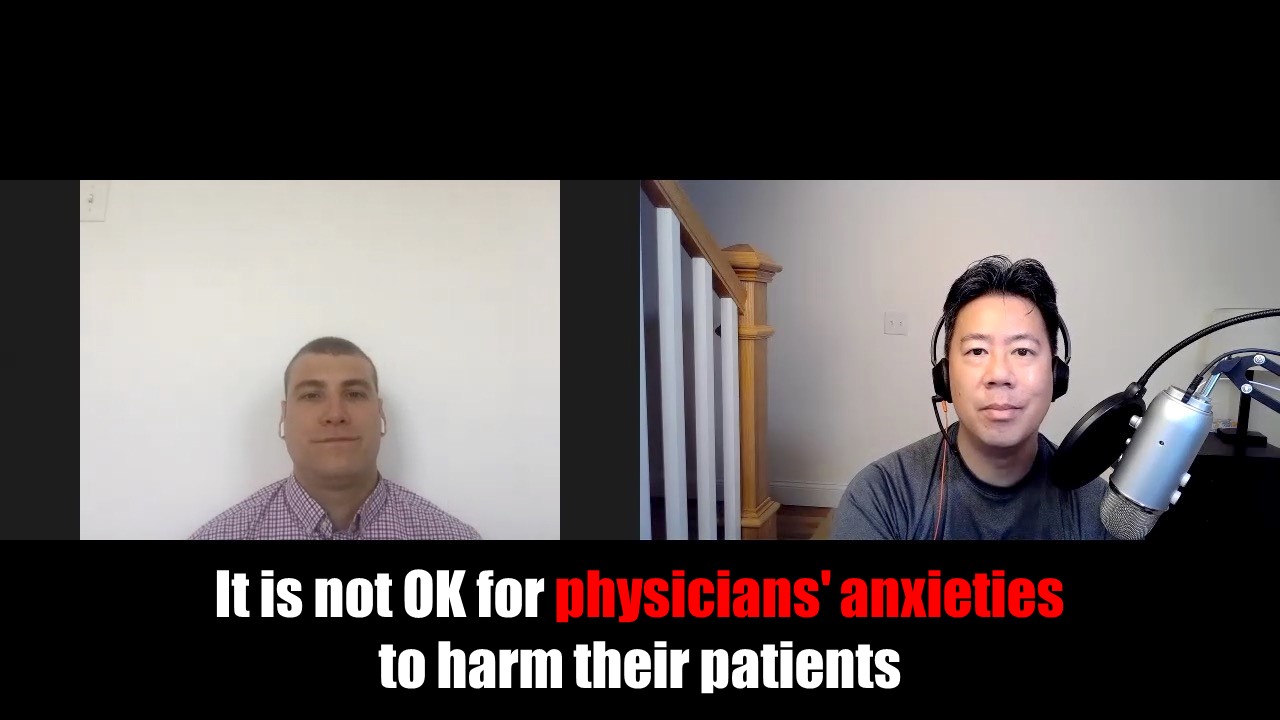
In the end, patients and physicians are stuck in the same storm, but they are not in the same boat. Physicians have authority, training, and institutional power. Patients have vulnerability, symptoms, and the uncomfortable gown that opens in the back for reasons history has not adequately explained. Because the power is unequal, the responsibility is unequal too. It is not OK for physicians’ anxieties to harm their patients. It is OK for physicians to need help. It is necessary for systems to provide it. And it is essential for patients to remain at the center of care, where they belonged all along.
Conclusion
Physicians’ anxieties are real, but patient harm is real too. The ethical answer is not denial, blame, or superhero medicine. The answer is mature professionalism: self-awareness, honest communication, support for clinician well-being, and health care systems designed around safety rather than frantic survival.
A doctor’s fear should never become a patient’s burden. A physician may be anxious, tired, uncertain, or under pressure, but the patient still deserves evidence-based care, respectful communication, and a plan that is not secretly written by panic. When clinicians and organizations take anxiety seriously, everyone benefits: doctors breathe easier, teams speak more freely, and patients receive safer care.
SEO Tags