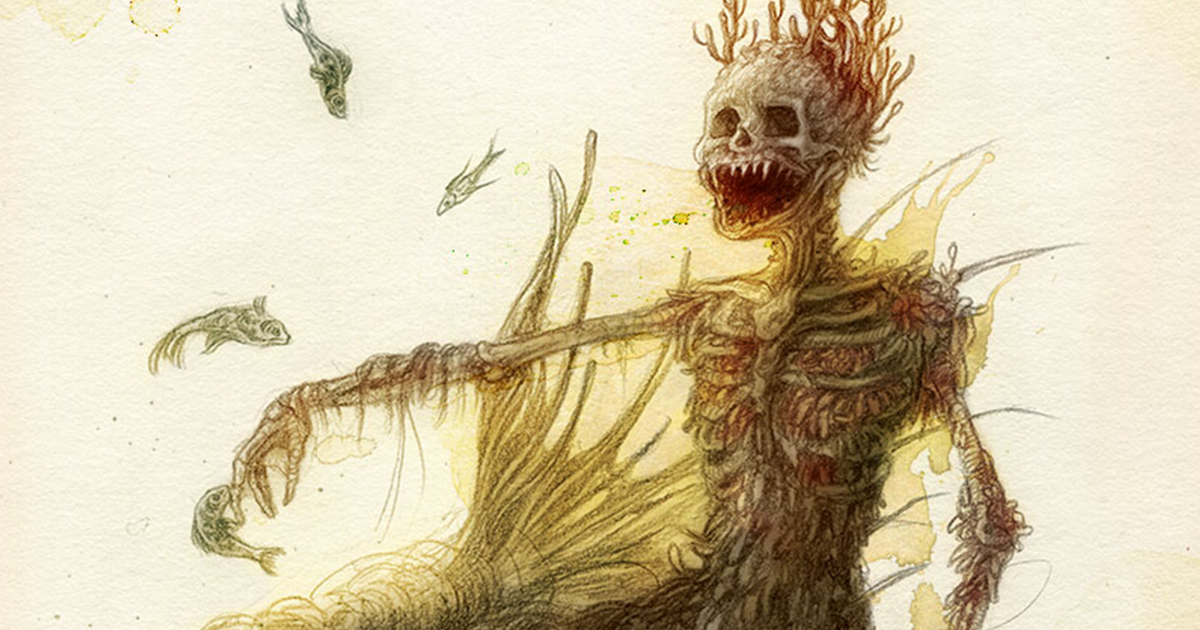

Note: This original article is written in an editorial, artist-journal style inspired by real mermaid folklore, marine life, illustration practice, and the documented long-form mermaid project by illustrator Jana Heidersdorf.
There are easy mermaids, and then there are mermaids that look as if they crawled out of a shipwreck, borrowed a pearl necklace from a ghost, and politely asked whether you have seen their missing eel. This series belongs to the second category. Over two years, the act of illustrating 30 mermaids became less like drawing pretty ocean princesses and more like building a tiny, damp mythologyone graphite sketch, strange tail, and glowing eye at a time.
The project’s real-world creative anchor comes from artist Jana Heidersdorf, whose “100 Mermaids” challenge began as a weekly drawing project in 2016 and grew into a broader illustrated sirenology concept. The original process combined graphite drawing, digital color, and, at times, liquid paint textures that gave the work a hand-touched, almost watercolor-like atmosphere.
What makes the result memorable is not simply that the mermaids are beautiful. Beauty is the easy bait. The real hook is the tension: eerie yet whimsical, delicate yet dangerous, familiar yet biologically suspicious. These mermaids do not look like they would sing at a seashell concert. They look like they would keep detailed notes on your bones.
Why Mermaids Still Work as an Art Subject
Mermaids are one of those mythological creatures everyone thinks they know. Long hair. Shimmering tail. Rock. Moonlight. Dramatic staring. Possibly a shell bra if the branding department got involved. But the deeper history of mermaids and sirens is far darker, stranger, and more useful for artists than the polished pop-culture version suggests.
Smithsonian Ocean notes that Greek sirens were not originally fish-tailed women at all; they were often described as bird-bodied figures associated with danger, song, and sailors who really should have invested in better workplace safety training. Over time, sirens and mermaids became visually tangled in art, language, and folklore.
The Library of Congress also points out that familiar, child-friendly mermaid stories often sit on top of older, darker traditions. That shadow is important. A strong mermaid illustration does not need to choose between wonder and unease. It can hold both in the same wet hand.
The Eerie Part: Designing Beauty With Teeth
The eerie quality of these mermaids comes from treating them as creatures first and symbols second. Instead of asking, “How do I draw a pretty mermaid?” the better question becomes, “What kind of environment made this being necessary?” A deep-sea mermaid should not look like a beach influencer with fins. She should look adapted: translucent skin, reflective eyes, strange spines, ribbon-like fins, and gestures that make viewers lean in while also considering a respectful retreat.
Real ocean life gives fantasy artists an endless buffet of weirdness. Bioluminescence, for example, is light produced by organisms through chemical reactions, and NOAA describes it as a feature found in many marine creatures. Smithsonian Ocean also highlights estimates that bioluminescence is widespread among animals living in open-ocean waters below 500 meters. That single fact can inspire glowing freckles, lantern-like lures, luminous hair strands, or a tail that looks like someone spilled starlight into ink.
That is where the series becomes more than decorative fantasy art. A mermaid based on a jellyfish can feel fragile, ancient, and slightly allergic to human nonsense. A mermaid inspired by an eel can become serpentine and sly. One modeled after a deep-sea anglerfish might turn seduction into a trap. Suddenly, the drawing has rules. The viewer may not know those rules, but they can sense them.
The Whimsical Part: Letting the Strange Stay Playful
Eerie art becomes exhausting if it forgets delight. The whimsical side of the series comes from small acts of visual mischief: a mermaid with an absurdly long tail curling around herself like a scarf, another with seaweed hair arranged like a dramatic Victorian hat, another who appears offended that anyone would call her “cute.” Whimsy is not the absence of darkness. It is darkness wearing tiny embroidered slippers.
Color theory helps this balance. Canva’s color resources explain that color relationships shape harmony, contrast, and mood. For an eerie yet whimsical mermaid palette, muddy greens can sit beside coral pinks, moonlit blues can glow against warm gold, and pale skin tones can be interrupted by toxic-looking turquoise. The goal is not realism; the goal is emotional believability.
A good palette can make a mermaid feel like a lullaby sung from a cave. Too much sweetness, and the image becomes predictable. Too much darkness, and the viewer stops breathing comfortably. The magic happens in the middle, where sea foam meets shadow.
How 30 Mermaids Become a Cohesive Series
Drawing one mermaid is an illustration. Drawing 30 is a visual ecosystem. The challenge is keeping the collection cohesive without making every character look like cousins from the same suspicious aquarium family reunion.
Strong character design often begins with silhouette, shape, and readable personality. Character design guides emphasize that a memorable figure should communicate clearly before the small details arrive. The same principle works beautifully for mermaids: one may have a heavy triangular shape like a predator; another may be thin and drifting like kelp; another may curl into a circle like a secret.
To keep the series unified, an artist can repeat certain visual ingredients: soft graphite textures, moody gradients, delicate linework, muted oceanic colors, and a consistent relationship between human anatomy and marine exaggeration. To keep it alive, each mermaid needs one clear surprise. Maybe the tail is too long. Maybe the mouth is too calm. Maybe the eyes glow like a polite warning.
Graphite, Digital Color, and the Pleasure of Mixed Media
One reason this kind of project feels tactile is the meeting of traditional and digital methods. Graphite gives the drawings a bone structure. Digital painting adds atmosphere, depth, and control. Liquid paint or watercolor-like texture can interrupt the smoothness just enough to remind the viewer that the ocean is never cleanly rendered. It blooms, stains, bleeds, and misbehaves. As oceans and sketchbooks both know, edges are suggestions.
Digital tools make iteration easier. Procreate’s beginner resources focus on brushes, color, layers, and effects as core tools for digital art, while Adobe’s MerMay coverage points to the popularity of mermaid drawing challenges and digital brush workflows. The lesson is simple: the medium matters less than the system. A long project survives when the artist can repeat a process without flattening the imagination.
For a two-year challenge, process becomes a lifeboat. Sketch first. Decide the creature logic. Build the silhouette. Add the mood. Color with restraint. Step away before adding seventeen unnecessary sparkles. Return. Add three necessary sparkles. Artists are allowed to be dramatic, but the drawing still needs to pay rent.
The Best Mermaids Tell Tiny Stories
The most compelling illustrations in a themed series feel as if they were caught mid-scene. A mermaid looking over her shoulder is fine. A mermaid looking over her shoulder because something below her just whispered her old name is better.
Illustration portfolio advice often stresses narrative: images should show characters doing, feeling, reacting, or existing inside a story moment. That applies perfectly to mermaid art. A character floating beautifully is decorative; a character guarding eggs inside a sunken cathedral is narrative.
In this series, each mermaid can act like a field-note entry from a fictional naturalist. One might be venomous and shy. Another might collect ship bells. Another might imitate drowned voices but only to complain about the weather. These details do not need full paragraphs in the image. They only need enough visual evidence for viewers to invent the rest. That is the sweet spot: the art gives a door, and the audience supplies the haunted hallway.
Why the Project Feels Modern
The internet loves art challenges because they turn private practice into public momentum. MerMay, one of the most recognizable mermaid-themed drawing events, encourages artists to create mermaid art during May, often using prompts and hashtags to build community. Challenges like this work because they transform “I should draw more” into a calendar with fins.
Still, the best challenge projects go beyond productivity. They reveal obsession. Thirty mermaids over two years is not just a portfolio exercise; it is a study of variation. How many ways can a creature be half-human and still surprise us? How many times can a tail become a story? How many moods can fit between “enchanted” and “please do not touch that glowing thing”?
What Artists Can Learn From This Mermaid Series
1. Pick a Theme With Deep Roots
Mermaids work because they belong to folklore, maritime fear, childhood fantasy, classical art, and internet culture all at once. The Met’s collection description of Paul Delvaux’s The Great Sirens shows how siren imagery can be seductive, mysterious, and threatening within fine art. A strong theme gives the artist room to wander without getting lost.
2. Use Research Without Becoming a Textbook
Marine biology, folklore, fashion history, antique medical diagrams, and old maps can all feed a mermaid design. But research should season the image, not drown it. Nobody wants to look at a mermaid and feel like they are being tested on mollusk anatomy. Unless the mermaid is the professor, in which case good luck.
3. Let Consistency and Surprise Coexist
Professional portfolio advice often recommends cohesive bodies of work that still show range. A mermaid series can do exactly that by repeating process, mood, and craft while changing species inspiration, posture, expression, and story.
4. Make the Viewer Feel Two Things at Once
The best eerie whimsical illustration creates emotional double vision. The viewer thinks, “That is adorable,” then immediately thinks, “That adorable thing knows where the shipwrecks are.” That tension is memorable, shareable, and unusually hard to fake.
The Result: A Small Ocean of Beautiful Uncertainty
After two years, 30 mermaids become more than a collection of drawings. They become evidence of patience. They show the artist learning which ideas repeat, which details matter, and which mistakes are secretly invitations. Some designs may feel delicate as lace. Others may look like they were discovered in a forbidden tide pool behind a museum. Together, they form a strange chorus.
That is the real charm of the project. It does not try to replace the classic mermaid. It opens the aquarium lid and lets in the unknown. The result is not simply eerie, not simply whimsical, but something better: a body of work that understands fantasy is strongest when it feels like it has been hiding in the real world all along.
Experience Notes: What Two Years of Drawing Mermaids Taught Me
The first lesson is that a long illustration project changes your relationship with time. At the beginning, every drawing feels like an event. You sharpen the pencil like a sword. You arrange references like a tiny academic shrine. You tell yourself this mermaid will be elegant, original, and finished by dinner. Then midnight arrives, the tail looks like a confused banana, and you realize the ocean has jokes.
By the tenth mermaid, the fear starts to loosen. You stop waiting for perfect inspiration and begin trusting the routine. Some days produce a graceful creature with luminous fins and a tragic expression. Other days produce a swamp goblin with excellent cheekbones. Both are useful. The point of a series is not to make 30 masterpieces in a row; that would be suspicious and possibly illegal under the laws of creative humility. The point is to keep returning until the work becomes deeper than your first idea.
The second lesson is that constraints are secretly generous. “Draw a mermaid” sounds narrow until you realize a mermaid can be based on a lionfish, a seal, a jellyfish, a ribbon eel, a drowned queen, a lighthouse rumor, or the feeling of hearing music through a wall. The half-human, half-sea-creature structure becomes a playground. Every limitation asks a question: What kind of hands? What kind of tail? What does she eat? What does she fear? Would she collect buttons? Why do I suddenly believe she would absolutely collect buttons?
The third lesson is that mood matters as much as anatomy. A technically correct mermaid can still feel empty if she has no atmosphere. But add a dim green glow, a curve of defensive posture, hair drifting like ink, and a facial expression that says, “I know a secret and it is damp,” and the image wakes up. Eerie whimsy depends on that awakening. It is the moment a drawing stops being a design and starts behaving like a creature.
The fourth lesson is that repetition reveals taste. After enough mermaids, patterns appear. You notice the shapes you love, the colors you avoid, the textures you keep chasing, and the stories you return to when no one is supervising. That awareness is gold. It helps an illustrator build a recognizable voice without forcing a style. Style is not a costume you put on the work. It is the trail of breadcrumbs left by hundreds of choices.
The final lesson is that finishing a themed series is less about discipline than devotion. Discipline gets you to the desk. Devotion keeps you curious when the sketch is ugly, the reference folder is chaos, and the mermaid looks personally disappointed in you. Two years later, the reward is not only the finished art. It is the proof that imagination grows when you give it a habitat, feed it regularly, and occasionally let it bite.
Conclusion
I Illustrated 30 Mermaids For Two Years And Here Is The Eerie Yet Whimsical Result is more than a catchy title. It is a reminder that familiar myths still have unexplored depths. By mixing folklore, marine strangeness, character design, traditional sketching, digital color, and a patient weekly practice, a mermaid series can become a miniature worldbeautiful enough to invite us in and strange enough to make us check the water twice.