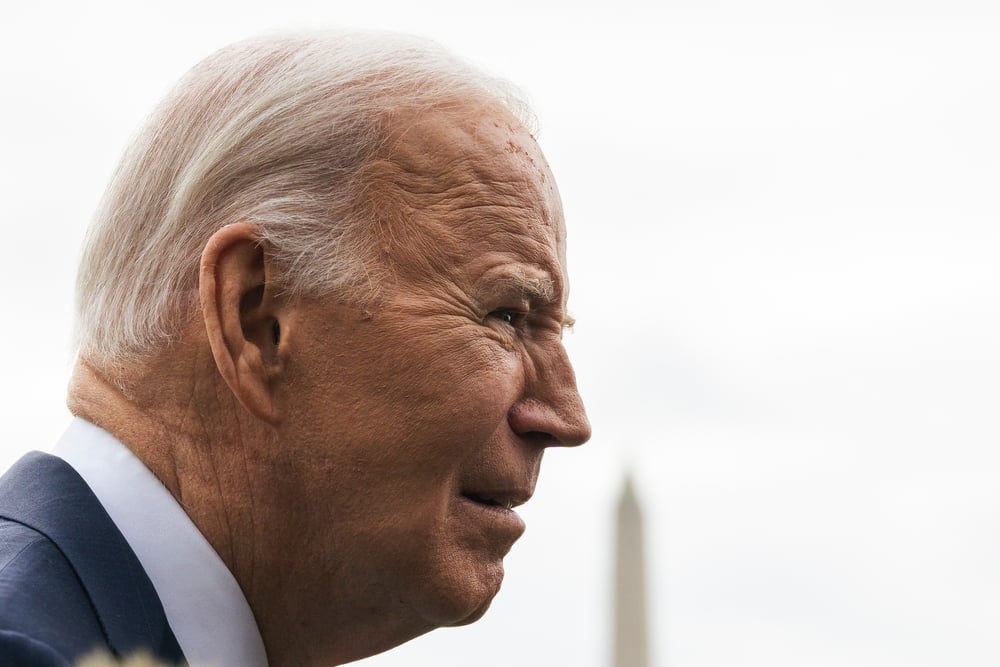

President Biden remains one of the most discussed American political figures of the modern era, not only because of what he did in office, but because of what his presidency revealed about leadership, dignity, aging, public trust, and the very human limits of power.
Introduction: When Leadership Meets the Clock
American politics has never been shy about drama. It has given us landslides, recounts, scandals, soaring speeches, and enough cable-news panels to power a small city. But the presidency of Joe Biden added something different to the national conversation: a deeply personal question about age, stamina, service, and dignity in public life.
Joseph R. Biden Jr., the 46th president of the United States, entered the White House in January 2021 at age 78. He brought with him more than five decades of public service, including 36 years in the U.S. Senate and eight years as vice president under Barack Obama. That long résumé was both his strength and his burden. Supporters saw experience, empathy, institutional memory, and a leader shaped by grief and resilience. Critics saw an aging politician whose verbal stumbles and uneven public appearances raised fair questions about whether America’s highest office had become too demanding for leaders in their eighties.
The truth is more interesting than either bumper sticker. Biden’s presidency was not simply a story about age. It was a story about how age changes leadership, how leadership can preserve dignity, and how a democracy decides when experience becomes an asset, a liability, or both at the same time. In other words, it was less like a neat civics textbook and more like real life: complicated, emotional, sometimes inspiring, sometimes uncomfortable, and occasionally in need of stronger coffee.
Who Is President Biden? A Brief but Meaningful Context
Joe Biden was born on November 20, 1942, in Scranton, Pennsylvania, and later grew up in Delaware. His political career began early. In 1972, he won a U.S. Senate seat from Delaware at age 29, becoming one of the youngest people ever elected to the Senate. Soon after, tragedy struck when his first wife, Neilia, and young daughter, Naomi, died in a car accident. Biden was sworn into the Senate from his sons’ hospital room, a moment that became central to the public understanding of his life.
That story matters because Biden’s leadership style has always leaned heavily on personal connection. He often spoke like someone who had known loss up close, because he had. He built a political brand around empathy, family, endurance, and the belief that public service should not require emotional armor so thick that no human warmth can get through.
Before becoming president, Biden chaired important Senate committees, worked on foreign policy, ran for president more than once, and served as vice president from 2009 to 2017. By the time he won the 2020 election, he was not introducing himself to America. He was more like the uncle who had been at every family gathering since the 1970s: familiar, talkative, sometimes meandering, but impossible to pretend you had never met.
Leadership in a Time of Exhaustion
Biden took office during a period of national exhaustion. The COVID-19 pandemic had disrupted nearly every part of American life. The economy was still recovering. Political trust had been battered. The January 6 attack on the U.S. Capitol had happened just two weeks before his inauguration. The country did not feel like it was entering a fresh chapter so much as stumbling into the next room while looking for the light switch.
In that environment, Biden’s leadership pitch was deliberately calming. He did not sell himself as a revolutionary. He promised a return to competence, alliances, procedure, and basic presidential normalcy. To his supporters, this was exactly what the moment required. To critics, it sometimes felt too slow, too nostalgic, or too attached to the institutions that many Americans believed had already failed them.
Still, Biden’s presidency produced major legislative achievements. The American Rescue Plan helped respond to the pandemic-era economic shock. The Bipartisan Infrastructure Law directed historic funding toward roads, bridges, broadband, public transit, ports, airports, clean water, and energy systems. The CHIPS and Science Act aimed to strengthen domestic semiconductor manufacturing and technological competitiveness. The Inflation Reduction Act invested heavily in clean energy, health care savings, and climate-related programs. These were not tiny administrative footnotes. They were large, structural laws with effects meant to unfold over many years.
Leadership, however, is not only about passing laws. It is also about whether people feel led. Here Biden’s record becomes more mixed. Many Americans benefited from a strong labor market, infrastructure investments, and pandemic recovery measures. Yet inflation, high living costs, border concerns, foreign-policy crises, and partisan division weighed heavily on public opinion. Biden often governed like a legislative dealmaker from an earlier Washington, but he had to communicate in an attention economy that rewards fireworks, conflict, and viral one-liners. He was a Senate-era politician in a TikTok-speed world. That is not automatically bad, but it does make for awkward choreography.
Dignity as a Political Strategy
One of the central themes of Biden’s public life has been dignity. The word can sound old-fashioned, like something stitched onto a pillow in a government guest room. But dignity mattered to Biden’s appeal. He emphasized decency, respect for institutions, loyalty to allies, and compassion for ordinary people dealing with grief, illness, unemployment, addiction, or loss.
His speeches often returned to the idea of “the soul of America.” That phrase was not just campaign poetry. It reflected Biden’s view that politics is not merely about policy outcomes but about national character. Whether one agrees with him or not, Biden treated the presidency as a moral office as well as an executive one. He believed the president should model empathy, restraint, and respect for democratic norms.
In foreign policy, this emphasis showed up in efforts to repair relationships with allies, strengthen NATO, support Ukraine after Russia’s full-scale invasion, and reassert American participation in global partnerships. Supporters viewed this as steady and responsible. Critics argued that the Afghanistan withdrawal in 2021 was chaotic and damaging, and that the administration’s handling of conflicts abroad exposed limits in planning and communication. Again, the Biden story resists easy packaging. It includes both restored alliances and painful controversy.
Dignity also shaped Biden’s personal response to age criticism. He joked about being old, pointed to his experience, and often argued that wisdom matters more than the number on a birth certificate. There is truth in that. Age can bring patience, perspective, and a better sense of which political battles are real and which are just inflatable lawn decorations flapping in the media wind. But age can also bring slower movement, reduced stamina, and a public appetite for transparency. Dignity does not cancel accountability. It simply asks that accountability be delivered without cruelty.
Aging in Public: The Biden Question Becomes America’s Question
The debate over Biden’s age became unavoidable during the 2024 campaign. His June 2024 debate performance against Donald Trump intensified concerns among Democrats, independents, commentators, and voters. Biden appeared hoarse and halting at times, and the performance turned private anxiety into a national alarm bell. For many Americans, the issue was no longer whether Biden had accomplished significant things as president. It was whether he could credibly campaign for and serve another four-year term.
On July 21, 2024, Biden announced that he would not seek reelection and said he would focus on completing his term. The decision was historic. Sitting presidents almost never give up the chance to seek another term after winning their party’s nomination path. His withdrawal reshaped the election, elevated Vice President Kamala Harris as the Democratic standard-bearer, and forced the country to confront a hard truth: modern presidential campaigns are endurance contests, not merely job interviews.
But the larger issue was never Biden alone. America has an aging political class. Voters have watched senators, representatives, presidents, judges, and party leaders remain in power well into their seventies and eighties. Some have performed effectively. Others have raised serious concerns. The public debate around Biden became a proxy for a broader question: Should leadership be measured by age, performance, transparency, or some combination of all three?
The fair answer is that age should not be used as an insult, but it also should not be treated as irrelevant. A 40-year-old leader can be reckless, uninformed, or exhausted. An 80-year-old leader can be wise, disciplined, and effective. But the presidency is physically and mentally punishing. It demands constant briefings, crisis response, travel, negotiation, public communication, and emotional resilience. Voters have a legitimate interest in whether any candidate, young or old, can do the work.
What Biden’s Presidency Reveals About Experience
Biden’s defenders often argued that his experience helped him pass legislation that a less seasoned president might not have managed. There is a strong case for that. The infrastructure law, for example, required bipartisan negotiation in a Congress where bipartisanship often looks like a rare bird spotted in the woods. Biden understood legislative relationships, regional concerns, committee politics, and the value of persistence.
His long career also gave him a deep understanding of foreign policy. As president, he leaned on alliances and traditional diplomacy, especially in response to Russia’s war against Ukraine. He framed the conflict as a test of democratic unity and used NATO as a central tool of American strategy. Even critics who disagreed with parts of his foreign policy often acknowledged that Biden approached international affairs with decades of background knowledge.
At the same time, experience can become a trap if it turns into attachment to old assumptions. Biden’s communication style sometimes struggled to meet the urgency and fragmentation of modern media. His administration achieved more than many voters seemed to recognize, but achievements that are not clearly communicated can become like expensive furniture stored in the garage: technically valuable, but not doing much for the living room.
This is one of the most important lessons of Biden’s presidency. Leadership requires not only doing things, but helping people understand what has been done, why it matters, and how it improves their lives. In a noisy democracy, results need translation. Biden often had the policy. He did not always have the perfect microphone.
The Human Side of Power
One reason Biden remained personally compelling, even to some people who disagreed with his politics, was that he never fully hid the human side of power. He spoke openly about grief. He referenced his late son Beau Biden often. He connected with families who had lost loved ones. He seemed most natural not during grand political theater, but in smaller moments of consolation.
This emotional availability was part of his dignity. It also made him different from the stereotype of the polished, untouchable politician. Biden’s public speaking could wander. He sometimes stumbled over words. He occasionally produced sentences that seemed to take scenic routes before reaching the destination. Yet that very imperfection contributed to the sense that he was human rather than manufactured.
Of course, humanity is not a substitute for effectiveness. A president must be judged by decisions, outcomes, judgment, and accountability. But Biden’s example reminds us that leadership is not only a performance of dominance. Sometimes it is a practice of presence. Sometimes it means showing up after loss, listening before speaking, and treating people as citizens rather than props.
Criticism, Accountability, and the Limits of Sympathy
A serious look at President Biden must include criticism. His administration faced sharp scrutiny over inflation, immigration, the Afghanistan withdrawal, student loan policy battles, the handling of classified documents, and the politics of transparency around his age and health. Critics argued that the White House and Democratic allies were too slow to acknowledge public concern about his stamina. After the 2024 debate, many voters felt they were being asked to ignore what they had seen with their own eyes.
That reaction matters. Dignity does not mean asking the public to stop asking questions. In a democracy, respect for a leader and scrutiny of that leader are not opposites. They are partners. The presidency belongs to the people, not to any one person’s résumé, party, or inner circle.
Biden’s eventual decision to step aside can be read in different ways. Some saw it as delayed and politically damaging. Others saw it as an act of humility and patriotism. Both interpretations can contain truth. He resisted leaving the race, then left it. He believed he could continue, then accepted that the country and his party had reached a different conclusion. The timing will remain debated. The symbolism will remain powerful.
Leadership, Dignity, and Aging: The Bigger Lesson
The Biden presidency invites America to grow up a little in how it talks about aging. Too often, age is treated either as a joke or as a taboo. Neither approach is useful. Older adults are not punchlines. They are workers, parents, grandparents, leaders, volunteers, caregivers, mentors, and neighbors. Many remain sharp, creative, and deeply capable. At the same time, aging is real. Bodies change. Energy changes. Memory can change. Stamina can change. Pretending otherwise is not respectful; it is evasive.
The more mature conversation is about capacity, transparency, support systems, and standards. What should voters know about a president’s health? How should parties evaluate candidates before a crisis? How can institutions make room for both experienced elders and rising generations? How do we honor service without turning public office into a lifetime parking space?
Biden’s story suggests that leadership should not be measured by youthfulness alone. America does not need presidents who can win a push-up contest, though cable news would absolutely cover it for six straight hours. It needs leaders with judgment, honesty, stamina, humility, and the ability to build trust. Sometimes older leaders have those qualities. Sometimes younger leaders do. The challenge is not to worship youth or age. The challenge is to recognize readiness.
Experiences and Reflections: What Biden’s Story Teaches Beyond Politics
The topic of President Biden, leadership, dignity, and aging reaches far beyond Washington. It speaks to families deciding when an aging parent should stop driving at night. It speaks to workplaces trying to respect older employees without quietly pushing them aside. It speaks to young people learning that experience matters, and to older people learning that letting go can also be a form of wisdom.
One practical experience many families understand is the delicate conversation about capacity. Nobody enjoys telling someone they love, “Maybe this is too much now.” It feels uncomfortable, even disloyal. The same emotional difficulty appears in politics, only with cameras, polls, donors, and millions of strangers forming opinions before breakfast. Biden’s 2024 decision showed how hard it can be for any accomplished person to separate identity from role. After decades of service, stepping back is not simply a schedule change. It can feel like surrendering a piece of oneself.
But stepping back can also protect dignity. In everyday life, the most respected leaders are often not the ones who cling to authority until the room goes quiet. They are the ones who know when to mentor, when to delegate, and when to bless the next person’s chance to lead. A great teacher does not become less great because a former student takes the podium. A founder does not erase a legacy by appointing a capable successor. A public servant does not lose honor by recognizing limits. Sometimes the final act of leadership is making room.
Biden’s life also teaches that dignity is built long before the crisis. His reputation for empathy did not appear in 2024 as a campaign accessory. It came from decades of personal loss, public service, and one-on-one connection. That matters for anyone who wants to lead. People rarely trust your character in a difficult moment if they have never seen evidence of it before. Dignity is like a savings account; you make deposits through small acts of respect, honesty, and responsibility long before you need to withdraw from it.
Another experience connected to this topic is the workplace challenge of balancing age and performance. Older workers may bring judgment, patience, and pattern recognition. Younger workers may bring speed, fresh tools, and new cultural fluency. The healthiest organizations do not force these strengths into combat like a reality show called “Boomer vs. Zoomer: Conference Room Edition.” They combine them. Biden’s presidency reminds us that institutions need generational teamwork, not generational warfare.
For readers watching aging leaders in their own lives, the lesson is to be honest without being harsh. Ask what the role requires. Ask what support exists. Ask whether the person is thriving or merely enduring. Ask whether the next chapter could be meaningful rather than humiliating. Aging with dignity does not mean pretending nothing changes. It means ensuring that change is met with respect, planning, and humanity.
In the end, President Biden’s legacy will be debated for years. Historians will measure laws, crises, approval ratings, foreign policy, party politics, and the consequences of his decision to run and then step aside. But beyond the scorecard, his presidency leaves a human lesson: leadership is not separate from aging. It is tested by it. The question is not whether leaders grow older. They do, unless they have discovered a constitutional amendment against birthdays. The real question is whether they can age with honesty, serve with humility, and leave the stage in a way that strengthens the country they once led.
Conclusion
President Biden’s story is a study in contrasts: experienced yet vulnerable, empathetic yet politically stubborn, legislatively successful yet publicly doubted, dignified yet repeatedly tested by the realities of age. His presidency reminds Americans that leadership is not a glossy portrait hanging in a hallway. It is a living responsibility shaped by judgment, communication, health, humility, and timing.
To look closely at Biden is to look closely at the country itself. America values experience, but fears decline. It praises public service, but often struggles to create graceful exits. It wants dignity, but rewards spectacle. Biden’s time in national leadership does not settle these tensions. It exposes them. And perhaps that is why his presidency will remain important: not because it gives easy answers, but because it forces better questions.