
The U.S. Marine Corps is not exactly famous for chasing shiny gadgets just because they look cool in a demo video. Marines tend to ask one blunt question: “Will this help a small unit win when things get ugly?” That is why the Corps’ new generation of loitering munitionsoften called kamikaze drones or suicide drones in everyday languagematters. These systems are not simply flying grenades with a camera. They are part of a bigger shift in how Marines plan to fight: lighter, more dispersed, more precise, and less dependent on waiting for big artillery or aircraft to solve a small team’s immediate problem.
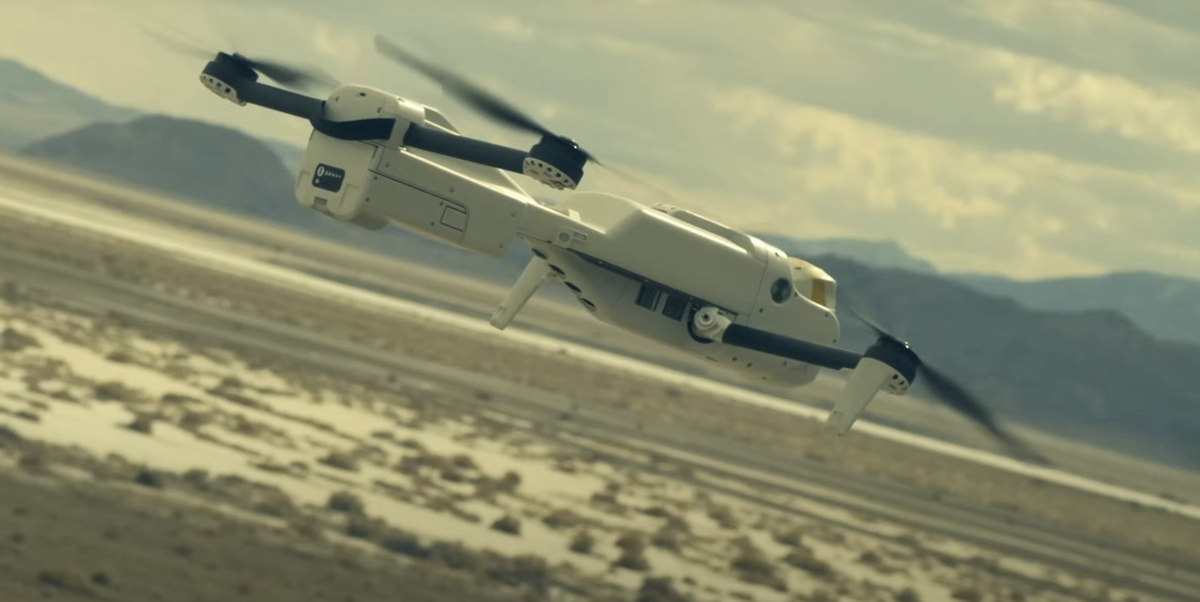
At the center of the recent buzz is Teledyne FLIR’s Rogue 1, a vertical-takeoff loitering munition selected for the Marine Corps’ Organic Precision Fires-Light program, better known as OPF-L. The “twist” is what makes it interesting: Rogue 1 is designed for lethal one-way missions, but it can also be safely recovered and reused if a target is not found or if the mission is aborted. In other words, it can fly like a kamikaze drone without always being forced to end like one. That may sound like a small engineering detail, but on a battlefield where every pound, battery, warhead, and backpack slot matters, reusability can change the math.
What Is a Loitering Munition?
A loitering munition sits somewhere between a drone and a missile. A traditional missile is usually fired at a known target. A regular reconnaissance drone is typically designed to come home after collecting information. A loitering munition can search, watch, wait, and then strike when the operator identifies the right target. That gives infantry units a rare combination: surveillance and precision firepower in one portable package.
The nickname “kamikaze drone” is catchy, but it can be misleading. Modern loitering munitions are not just crude flying bombs. They use cameras, thermal sensors, data links, guidance software, and often some level of automated target tracking. The operator can observe the battlefield, select a target, andin many systemscancel the attack before impact. That last point is important because precision weapons are not only about hitting something. They are also about not hitting the wrong thing.
The Marine Corps’ OPF-L Program: Small Units, Bigger Reach
The Marine Corps created Organic Precision Fires-Light to give rifle squads and platoons a man-packable precision strike capability against targets beyond line of sight. Translated from Pentagon language into human language: a small Marine unit should be able to hit a threat it cannot directly see with rifles, machine guns, or shoulder-fired weapons.
This fits neatly into Force Design, the Corps’ modernization effort focused on distributed operations, contested littorals, unmanned systems, precision fires, and survival under electronic attack. The Marine Corps has publicly emphasized adding precision fires and loitering munitions to infantry units so Marines can remain lethal in austere environments. The Corps has also moved toward a 13-Marine rifle squad structure that includes a precision fires Marine to operate small lethal drones. That is not a cosmetic change. It means drones are becoming part of the basic infantry toolkit, not just a specialist toy stored in a distant headquarters.
In April 2024, the Department of Defense announced that AeroVironment, Anduril Federal, and Teledyne FLIR Detection received contracts tied to OPF-L, with a combined potential value of up to $249 million. AeroVironment is providing the Switchblade 300 Block 20, Anduril is providing Bolt-M, and Teledyne FLIR is providing Rogue 1. This three-vendor approach suggests the Marines are not betting everything on one magic drone. They are building a family of options, because battlefields have an annoying habit of refusing to behave like PowerPoint slides.
Meet Rogue 1: The Recoverable Kamikaze Drone
Rogue 1 is a small vertical takeoff and landing drone, meaning it does not need a runway, catapult, or wide-open launch area. That is a big deal for Marines operating from tree lines, urban ruins, ship decks, island terrain, or temporary fighting positions. A quadcopter-style launch lets the operator get the system airborne from places where a fixed-wing drone might be awkward or impossible.
Publicly released details describe Rogue 1 as a lightweight system with about 30 minutes of flight time, burst speeds above 70 mph, and a range greater than six miles. It carries electro-optical and thermal imaging sensors, including FLIR thermal technology, to support day and night reconnaissance. Its modular payload options include effects for different target types, such as armored vehicles, soft-skinned vehicles, or personnel threats. A training payload can also be used, which matters because nobody becomes good at drone warfare by reading the manual once and whispering, “Semper Fi” at the controller.
The Twist: Safe Recovery and Reuse
The most distinctive feature is Rogue 1’s advanced fuzing system with a mechanical interrupt that allows the aircraft to be recovered and reused when a target is disengaged or a mission is aborted. That is the headline twist. Most people hear “loitering munition” and assume the drone must explode or be wasted. Rogue 1 challenges that assumption.
Why does this matter? First, it reduces waste. If a Marine launches a drone and the target disappears, turns out to be a civilian vehicle, or moves into a protected area, a recoverable system can come back instead of becoming expensive confetti. Second, it improves training. Reusable systems let Marines practice more realistic missions without burning through live munitions every time. Third, it reduces pack burden over time. If a unit can reuse some systems during reconnaissance or canceled strike missions, every launch does not automatically consume a scarce asset.
Why the Marines Want This Now
The war in Ukraine has made one lesson impossible to ignore: small drones are no longer battlefield accessories. They are scouts, artillery spotters, tank hunters, supply disruptors, propaganda cameras, and sometimes flying doorbells from hell. Both sides have used first-person-view drones and loitering munitions at enormous scale. Cheap drones have damaged expensive vehicles, exposed troop movements, and forced armies to rethink camouflage, movement, electronic warfare, and air defense.
For the Marine Corps, the lesson is not simply “buy more drones.” The deeper lesson is that small units need organic access to sensors and strike tools. A squad that can find a target, confirm it, and engage it quickly has a better chance of surviving than a squad that must wait for a long chain of approvals while the target drives away, shoots first, or calls in its own drone.
That is especially relevant in the Indo-Pacific, where Marines may operate across islands, shorelines, small expeditionary bases, and maritime chokepoints. In such environments, the distance between units can be large, resupply can be difficult, and communications may be degraded. A man-packable loitering munition gives dispersed Marines a local precision option without requiring a big vehicle, a long runway, or a perfect communications day.
Rogue 1 vs. Switchblade 300 and Bolt-M
OPF-L is not only about Rogue 1. The Marines are also bringing in AeroVironment’s Switchblade 300 Block 20 and Anduril’s Bolt-M. Each system brings a different design philosophy.
Switchblade 300 Block 20
Switchblade 300 is one of the best-known American loitering munitions. The Block 20 version adds improved endurance, radio link range, target attack options, and an armor-penetrating capability. AeroVironment has emphasized that Switchblade 300 has been used in combat theaters since 2012 and that the Block 20 version incorporates lessons from Ukraine and contested environments. In practical terms, Switchblade gives Marines a mature, tube-launched precision munition with a long development history.
Bolt-M
Anduril’s Bolt-M is a man-packable vertical takeoff and landing munition variant tied to the company’s Lattice software ecosystem. It is designed to reduce operator workload with autonomy features such as waypoint navigation and object tracking. Its VTOL design makes it attractive for launch from restrictive terrain, while its software-heavy approach reflects where the drone market is heading: systems that do not require every Marine to be a tiny fighter pilot with thumbs of steel.
Rogue 1
Rogue 1 stands out for its recoverable and reusable concept, its sensor-to-warhead integration, and its mechanical safety architecture. Its value may be strongest in missions where Marines need the option to search, stalk, abort, recover, train, and relaunch. That makes it less like a single-use firework and more like a tactical tool with a lethal mode.
How a Recoverable Drone Changes Battlefield Decisions
Recoverability changes the psychology of launch. With a purely one-way weapon, every launch is a commitment. Even if the operator can abort a strike, the munition may still be lost. That can make commanders more cautious, especially when supplies are limited. A recoverable system lowers that threshold. Marines can launch to investigate a suspected target, hold a drone overhead, and decide later whether the situation justifies a strike.
That flexibility matters in messy environments. A truck may look suspicious from a distance. A thermal signature may be an enemy teamor a farm animal having a deeply unfortunate evening. A moving vehicle may turn into a civilian convoy. In those moments, the ability to wave off, recover, and reuse the drone is not just economical. It supports better judgment.
It also helps with rules of engagement and collateral damage concerns. Precision does not only mean a smaller blast radius. It means giving operators enough information and time to make a lawful, tactically sound decision. A loitering munition with strong sensors and abort options can support that decision-making process.
The Electronic Warfare Problem
No serious discussion of drones can ignore electronic warfare. In Ukraine, jamming, spoofing, and disrupted communications have shaped drone operations every day. A drone that works beautifully at a trade show may behave very differently when the air is full of hostile signals. The Marine Corps knows this, which is why modern systems must account for GPS-denied environments, command-link interference, and degraded networks.
Rogue 1 has been described as capable of operating in communication- and GPS-denied environments, with optical and thermal sensors supporting navigation and targeting. Other OPF-L systems also emphasize autonomy, tracking, and resilient operation. This does not make drones invincible. It simply means the next generation of loitering munitions is being designed for the ugly electromagnetic reality of modern war, not for a sunny test range where everything connects on the first try.
What This Means for Marine Infantry
For Marine infantry, OPF-L could reshape small-unit tactics. A squad may be able to send a drone ahead to inspect a ridge, road, compound, or vehicle. A platoon may hold a munition in the air while another sensor confirms movement. A commander may use a loitering munition to deny an enemy firing position without exposing Marines to direct fire. In distributed operations, this type of organic precision fire can compress the kill chain from “someone should call someone” to “the unit on scene can act.”
But there are trade-offs. Every drone adds weight. Batteries add weight. Controllers add weight. Spare parts add weight. Marines already carry enough gear to make a mountain goat file a complaint. Training time is another cost. Operators must learn not only how to fly or supervise the drone, but how to interpret video, manage emissions, avoid fratricide, coordinate airspace, and make sound target decisions under stress.
Maintenance and logistics will also matter. A recoverable drone is only useful if the unit can inspect it, repair it, recharge it, and trust it after landing. The Marine Corps’ investment in support, training kits, and lifecycle sustainment is therefore just as important as the drone itself. The coolest munition in the world becomes a paperweight if nobody can keep it flying.
The Bigger Picture: Drones Are Becoming Infantry Fires
The arrival of Rogue 1 and other OPF-L systems shows that the line between drone operator, forward observer, and infantry Marine is blurring. Small drones are no longer just eyes in the sky. They are becoming part of the fires architecture. That means squads and platoons may soon carry tools that once belonged only to higher headquarters or specialized units.
This trend does not replace artillery, mortars, aircraft, or naval fires. A five- or ten-pound drone cannot do what a howitzer battery or a fighter jet can do. But it can solve immediate tactical problems at the edge. It can find a machine-gun position, track a moving vehicle, or strike a threat hiding behind terrain. In modern warfare, that “small” capability can decide whether a squad advances, withdraws, or gets pinned down.
Risks, Limits, and Ethical Questions
Loitering munitions raise serious questions. How much autonomy is appropriate? How should operators verify targets? How do units prevent accidental strikes? How do they manage airspace crowded with friendly drones, enemy drones, helicopters, artillery rounds, and electronic interference? These are not theoretical concerns. They are the daily homework of militaries adapting to drone-saturated battlefields.
The Marine Corps’ emphasis on man-in-the-loop control, wave-off options, training payloads, and recoverability is a response to those concerns. Human judgment remains essential. Software can track an object, but it cannot understand the full moral, legal, and tactical context the way a trained operator and commander must. The future of drone warfare will not be decided only by better batteries and sharper cameras. It will also be decided by discipline.
Experience-Based Perspective: What Rogue 1 Teaches About the Future of War
Looking at Rogue 1 from a practical field perspective, the most important feature may not be the warhead, the speed, or even the thermal camera. It is the way the system changes decision-making at the small-unit level. In past eras, an infantry unit that spotted a target beyond direct-fire range often had to request support from mortars, artillery, aircraft, or a higher headquarters asset. That process could be fast in ideal conditions, but combat rarely offers ideal conditions. Radios fail, coordinates are uncertain, the target moves, and the enemy is not politely waiting with a numbered ticket.
A recoverable loitering munition gives a squad or platoon more room to think and act. Imagine a Marine patrol moving through broken terrain near a coastline. They detect movement near a road junction but cannot confirm whether it is an enemy team, a logistics vehicle, or civilians. Launching a one-way munition might feel too costly or too risky. Launching a recoverable drone, however, allows the unit to investigate. The drone climbs, moves forward, observes, and streams imagery back. If the target is valid, the unit has an immediate strike option. If not, the drone comes home. That is a very different tactical conversation.
Another experience-related lesson is training realism. Drone operators need repetitions. They need to practice launching under pressure, reading grainy thermal imagery, working through signal problems, coordinating with nearby units, and deciding when not to shoot. A reusable platform makes those repetitions easier to afford. Training with inert payloads also lets Marines build muscle memory without treating every practice run like a budgetary emergency. In war, confidence comes from repetition, not from watching a promotional video with dramatic music.
There is also a leadership lesson. Loitering munitions push responsibility downward. A junior leader may suddenly have access to a precision strike tool that can affect the fight far beyond rifle range. That is empowering, but it is also demanding. Leaders must understand target identification, collateral damage, electronic signatures, battery management, and the risk of revealing their own position. A drone can extend a unit’s reach, but it can also announce, “Hello, someone is operating nearby,” if used carelessly.
From an operational viewpoint, recoverability supports patience. A commander does not have to treat every launch as a use-it-or-lose-it event. That can reduce rushed decisions. It can also make drones more useful for reconnaissance before becoming weapons. The best strike may be the one that never happens because the drone discovers the target is not worth engaging, or because the information collected helps the unit avoid an ambush. In that sense, Rogue 1’s twist is not merely technical. It encourages a smarter rhythm: look first, decide carefully, strike only when justified, and recover when possible.
The final experience-based takeaway is that drones will not make infantry life easy. They will make it more complex. Marines will carry more equipment, manage more data, and fight in a sky crowded with friendly and enemy machines. The winning units will not be the ones with the fanciest drone alone. They will be the ones that train until drone operations become as natural as calling a fire command, setting security, or checking a map. Rogue 1 is a signpost pointing toward that future: small teams with sharper eyes, longer reach, and more choices before the first shot is fired.
Conclusion
The Marines’ new kamikaze drone is important not because it explodes, but because it does not always have to. Rogue 1 brings a recoverable and reusable twist to the loitering munition category, giving Marines a system that can search, track, strike, abort, return, and train again. Alongside Switchblade 300 Block 20 and Bolt-M, it represents a broader Marine Corps push to give rifle squads and platoons organic precision fires for modern distributed operations.
The battlefield is changing fast. Drones are cheaper, smarter, more numerous, and harder to ignore. For Marines, the challenge is not simply buying drones; it is integrating them into tactics, training, logistics, ethics, and command decisions. Rogue 1 will not replace courage, judgment, or discipline. It will demand more of all three. And if the system performs as intended, the next Marine squad may carry not only rifles and radios, but a recoverable eye in the sky with a very sharp sting.