
By the time Isha arrives, the day has usually done its best impression of a marathon: work, school, traffic, dinner, messages, errands, and possibly one mysterious sock that vanished in the laundry. Isha, the night prayer in Islam, arrives as a spiritual reset button. It closes the daily cycle of obligatory prayers and gives Muslims a calm moment to return to Allah before sleep.
But one question comes up often, especially for beginners: How many rakat are in Isha? The short answer is that the obligatory Isha prayer has 4 fard rakats. However, many Muslims also pray additional Sunnah, Nafl, and Witr rakats after or around the fard prayer. Depending on the tradition you follow and how many voluntary units you include, Isha may be prayed as 4, 6, 9, 11, 13, or even 17 rakats.
That sounds like a math problem wearing a prayer cap, but do not worry. This guide breaks it down simply, explains the order, and walks you through how to perform Isha step by step.
What Is Isha Prayer?
Isha is the fifth and final obligatory daily prayer in Islam. It is performed after the time of Maghrib has ended and night has entered. In most prayer timetables, Isha begins when the twilight has disappeared and the sky has become dark. The exact time varies by location, season, and calculation method, so Muslims usually check a local mosque timetable, Islamic center schedule, or reliable prayer-time app.
Isha is important because it ends the day with worship instead of letting the last thought before sleep be “Did I reply to that email?” or “Why did I open one video and accidentally watch twelve?” It brings discipline, reflection, and peace into the night routine.
How Many Rakat Are in Isha?
The most important number to remember is this: Isha has 4 fard rakats. These are the obligatory units of prayer. If someone asks, “How many rakats are required for Isha?” the answer is four.
However, many Muslims pray more than the fard rakats because Isha is commonly followed by Sunnah and Witr prayers. A common full arrangement looks like this:
- 4 Sunnah rakats before the fard prayer, often considered optional or non-emphasized in many communities
- 4 Fard rakats, the obligatory Isha prayer
- 2 Sunnah Mu’akkadah rakats, strongly recommended after the fard prayer
- 2 Nafl rakats, voluntary prayer for extra reward
- 3 Witr rakats, prayed after Isha and especially emphasized in many schools
- 2 Nafl rakats, optional and not required
When added together, this comes to 17 rakats. But it is important to understand that all 17 are not obligatory. The heart of Isha is the 4 fard rakats. The rest are additional prayers with different levels of emphasis.
Simple Isha Rakat Breakdown
Minimum Isha Prayer
The minimum required Isha prayer is:
- 4 Fard rakats
This fulfills the obligatory Isha prayer. A beginner who is learning should first focus on performing these 4 rakats correctly, calmly, and consistently.
Common Recommended Isha Prayer
A widely practiced version is:
- 4 Fard rakats
- 2 Sunnah rakats
- 3 Witr rakats
This gives a total of 9 rakats. For many Muslims, this is a practical daily routine because it includes the obligatory prayer, the emphasized Sunnah after Isha, and Witr.
Fuller Isha Prayer
A fuller version may include:
- 4 Sunnah before Isha
- 4 Fard
- 2 Sunnah after Isha
- 2 Nafl
- 3 Witr
- 2 Nafl
This totals 17 rakats. Some people learn this format from family, local mosques, or traditional prayer charts. It is a beautiful routine if someone can maintain it, but beginners should not feel crushed by the number. Islam encourages consistency, not spiritual weightlifting with bad form.
What Do Fard, Sunnah, Nafl, and Witr Mean?
Fard Rakats
Fard means obligatory. The 4 fard rakats of Isha are required for adult Muslims who are responsible for performing Salah. Missing them without a valid reason is not treated like skipping an optional activity; it is a serious matter of worship.
Sunnah Rakats
Sunnah prayers are connected to the practice of Prophet Muhammad, peace and blessings be upon him. The 2 rakats after Isha are widely treated as emphasized Sunnah, meaning they are strongly recommended. The 4 rakats before the fard Isha prayer are practiced in some communities as additional Sunnah, but they are generally not considered as emphasized as the 2 rakats after Isha.
Nafl Rakats
Nafl prayers are voluntary. They are not required, but they are a way to increase worship, seek closeness to Allah, and add spiritual polish to the day. Think of Nafl as extra credit, except this is the kind of extra credit that matters beyond the classroom.
Witr Rakats
Witr means odd-numbered. It is a special night prayer performed after Isha. Many Muslims pray 3 rakats of Witr, while some traditions allow 1, 3, 5, or another odd number. In the Hanafi school, Witr is especially emphasized and commonly prayed as 3 rakats.
How To Perform the 4 Fard Rakats of Isha
The 4 fard rakats of Isha follow the structure of a four-rakat prayer. If you already know how to pray Dhuhr or Asr, the structure will feel familiar. The main difference is that when Isha is prayed aloud by an imam in congregation, the first two rakats are recited aloud, while the last two are recited silently. When praying alone, many Muslims recite Isha quietly, though practices may vary by school and teaching.
Step 1: Prepare for Prayer
Make sure you have wudu, your clothes and prayer place are clean, and you are facing the Qibla. Take a moment to settle your mind. You do not need to announce the intention loudly. A simple intention in the heart is enough, such as: “I intend to pray 4 fard rakats of Isha for Allah.”
Step 2: Begin With Takbir
Raise your hands and say Allahu Akbar. This begins the prayer. After this point, avoid talking, looking around, or checking your phone. Yes, even if it vibrates. The group chat can survive four rakats.
Step 3: First Rakat
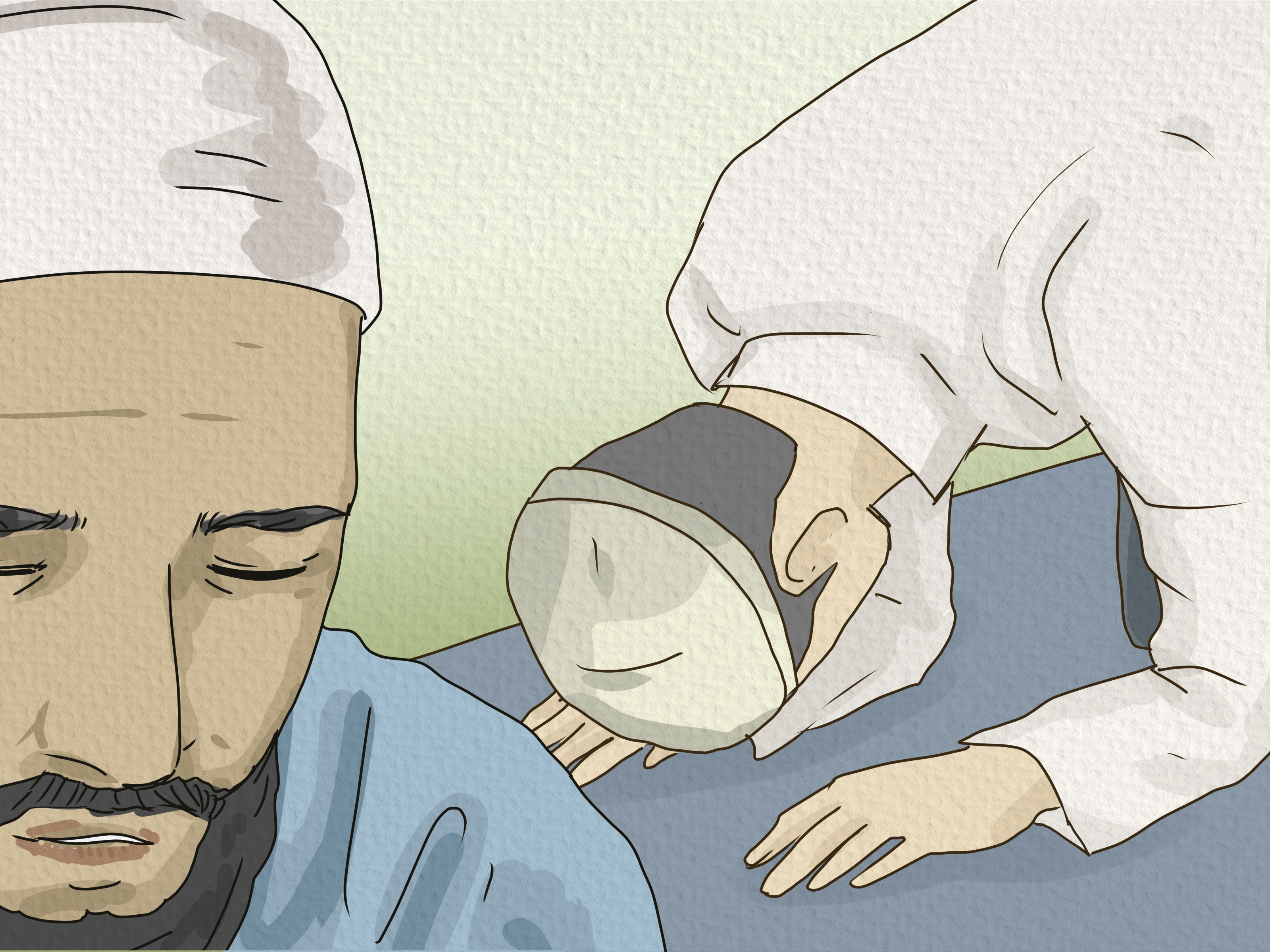
Stand and recite the opening supplication if you know it. Then recite Surah Al-Fatihah, followed by another portion of the Qur’an, such as a short surah. Bow into ruku, saying Allahu Akbar. In ruku, glorify Allah. Then rise back up, stand briefly, and go down into sujud. Perform two prostrations, sitting briefly between them.
Step 4: Second Rakat
Stand for the second rakat. Recite Surah Al-Fatihah and another portion of the Qur’an. Complete ruku and two sujud as before. After the second sujud, sit and recite the tashahhud. Since this is a four-rakat prayer, you do not end yet. Stand again for the third rakat.
Step 5: Third Rakat
In the third rakat, recite Surah Al-Fatihah. In many common methods, only Al-Fatihah is recited in the third and fourth rakats of fard prayers. Then complete ruku and two sujud.
Step 6: Fourth Rakat
Stand for the fourth rakat and recite Surah Al-Fatihah. Complete ruku and two sujud. After the second sujud, sit for the final tashahhud. Recite the tashahhud, send blessings upon the Prophet, peace and blessings be upon him, make dua if you know one, and then end the prayer by saying salam to the right and left.
How To Pray the 2 Sunnah Rakats After Isha
After the 4 fard rakats, many Muslims pray 2 Sunnah rakats. These are performed like a normal two-rakat prayer. Make the intention, begin with takbir, recite Al-Fatihah and another surah in each rakat, complete ruku and sujud, sit after the second rakat, and end with salam.
These 2 Sunnah rakats are short but meaningful. They help smooth the transition from the required prayer into a deeper night routine. For beginners, adding these after becoming steady with the 4 fard rakats is a great next step.
How To Pray Witr After Isha
Witr is usually prayed after the Sunnah of Isha and before sleep, unless someone plans to wake up later for night prayer. Many Muslims pray 3 rakats of Witr. The exact method can differ slightly depending on the school of thought, so it is best to learn the method taught by your local imam or trusted teacher.
In a common three-rakat Witr method, a person prays three rakats and includes a special supplication known as Dua Qunoot in the final rakat. Some Muslims pray Witr as two rakats followed by one separate rakat. Others pray three together with one final salam. These differences are well known in Islamic practice, so do not panic if you see someone praying Witr differently at another mosque. They are not inventing “Isha 2.0”; they may simply be following a different valid teaching.
When Should You Pray Isha?
Isha begins after the time of Maghrib ends and night has entered. The time lasts until Fajr, though many scholars encourage praying it earlier and not delaying it without a good reason. In everyday life, the best approach is to check your local prayer timetable and pray within the proper time.
If you are praying at a mosque, follow the local iqamah time. If you are at home, set a reminder before you become too sleepy. Waiting until you are half-asleep can turn a peaceful prayer into a battle between devotion and your pillow. The pillow is persuasive, so plan wisely.
Can Travelers Shorten Isha?
Yes, in the rules of travel prayer, the 4 fard rakats of Isha may be shortened to 2 fard rakats by a qualifying traveler. This is known as qasr. The details of who qualifies as a traveler, how long the concession applies, and whether prayers may be combined should be learned from a qualified scholar or local imam, because schools of thought explain the conditions differently.
Common Mistakes Beginners Make in Isha
Thinking All 17 Rakats Are Mandatory
This is one of the most common misunderstandings. The obligatory Isha prayer is 4 fard rakats. The additional Sunnah, Nafl, and Witr prayers have their own levels of importance, but they are not all the same as fard.
Rushing Through the Prayer
Isha often comes when people are tired. Still, Salah should not be performed like someone trying to beat a microwave timer. Slow down enough to bow, stand, prostrate, and sit with calmness.
Skipping Wudu Details
Prayer begins before the prayer mat. Wudu matters. A careful wudu helps prepare the body and mind for worship.
Getting Discouraged by Different Practices
You may see differences in how people hold their hands, recite quietly, pray Witr, or count optional rakats. Many of these differences come from recognized schools of Islamic law. Learn from reliable teachers and avoid turning every difference into a debate championship.
Practical Tips for Learning Isha Prayer
Start with the 4 fard rakats and learn them well. Once that feels steady, add the 2 Sunnah rakats after Isha. Then learn Witr. This gradual approach is especially helpful for new Muslims, young learners, or anyone returning to prayer after a long break.
Use a simple printed prayer chart, but do not let the chart overwhelm you. Prayer is not meant to feel like assembling furniture with missing screws. Learn one piece at a time. Practice the Arabic recitations slowly. If needed, use transliteration at first, but work toward learning the Arabic properly.
Another useful habit is to connect Isha with an existing routine. For example, pray Isha after dinner, before studying, before family time, or before turning on a show. Once Isha becomes part of the night rhythm, it becomes easier to protect.
Personal Experiences and Reflections: Making Isha Easier in Real Life
Many Muslims find that Isha is both the most peaceful and the easiest prayer to accidentally delay. That sounds contradictory, but it makes sense. Isha comes at night, when the world is quieter and the heart may feel more reflective. At the same time, it also comes when the body is tired, the couch is calling, and the brain has started speaking in low battery mode.
One practical experience many people share is that praying Isha earlier makes the entire night feel cleaner. When Isha is completed soon after its time begins, the rest of the evening feels lighter. You can study, work, relax, or sleep without that little voice in the back of your mind whispering, “You still need to pray.” That whisper is tiny, but somehow it has surround sound.
Another common experience is that learning Isha in stages helps build confidence. Some beginners see a full 17-rakat chart and feel overwhelmed. They wonder, “Am I doing everything wrong if I only pray four?” The answer is no. The 4 fard rakats are the required core. A person who starts there and performs them sincerely is building the foundation. Over time, adding 2 Sunnah rakats and Witr becomes easier. Faith grows well when it is watered consistently, not when it is flooded once and abandoned.
Families often create beautiful Isha routines. In some homes, everyone prays individually. In others, a parent leads children, or siblings remind each other. This can turn Isha into a nightly anchor. Instead of the day ending with random scrolling, it ends with standing before Allah. Even a short family reminder before or after prayer can help children understand that Salah is not just movement; it is connection, gratitude, and discipline.
For students and busy workers, the biggest challenge is usually timing. If homework, late shifts, or evening responsibilities pile up, Isha can be pushed later and later. A simple solution is to set two reminders: one when Isha begins and another as a backup. The first reminder is the ideal time. The second is the “do not let sleep win” reminder. This tiny system can save a person from repeatedly missing or rushing the prayer.
People who attend the mosque for Isha often describe a different kind of benefit. Praying in congregation adds structure and community. You see familiar faces, hear Qur’an recited, and feel that you are part of something larger than your own private routine. Even if someone cannot attend every night, going occasionally can refresh motivation.
There is also a quiet emotional side to Isha. Because it comes at the end of the day, it becomes a place to unload worries. Maybe the day went well. Maybe it was a complete soup sandwich. Either way, Isha gives you a moment to stand, bow, and place your forehead on the ground in sujud. That posture teaches the heart something the modern world often forgets: you do not have to carry everything alone.
The best experience with Isha usually comes from balance. Do not treat it casually, but do not make it so complicated that you give up. Learn the essentials. Add recommended prayers gradually. Ask trusted teachers when you are unsure. Most importantly, keep showing up. A calm, sincere 4-rakat Isha prayed consistently is better than a complicated plan that exists only in your imagination and a color-coded notebook.
Conclusion
So, how many rakat are in Isha? The required Isha prayer has 4 fard rakats. Many Muslims also pray 2 Sunnah rakats after it and 3 Witr rakats, making a common total of 9 rakats. Others add optional Sunnah and Nafl prayers, bringing the full routine to 13 or 17 rakats depending on local practice and personal devotion.
The key is to understand the difference between obligatory and optional prayers. Begin with the 4 fard rakats, learn them properly, and build from there. Isha is not just the last prayer of the day; it is a nightly return to Allah, a chance to close the day with remembrance, and a peaceful doorway into rest.