
Note: This article uses the phrase “Number 1” in the same ratings context reported by entertainment-industry coverage: Wheel of Fortune reached No. 1 positions in specific viewership windows and categories after Ryan Seacrest became host. It does not claim the show permanently ranks first in every syndicated measurement every week.
When Ryan Seacrest stepped onto the Wheel of Fortune stage, the reaction was not exactly quiet. Some viewers were curious. Some were nervous. Some had already decided, with the confidence of someone solving “THING” after buying one vowel, that nobody could follow Pat Sajak. And honestly, that skepticism made sense. Replacing a beloved game show host after four decades is not like changing the curtains in the studio. It is more like swapping the front door of a family home and hoping everyone still knows where to hang their coats.
Yet the wheel kept spinning. More importantly, people kept watching. The early numbers showed that Wheel of Fortune with Ryan Seacrest was not merely surviving the transition; it was thriving in a television landscape where even strong shows often fight for attention like contestants fighting for the last consonant in a bonus puzzle. Seacrest’s debut brought a noticeable ratings bump, and the show quickly became one of the strongest entertainment programs on linear television.
That is the real story behind the headline: Wheel of Fortune is still a television powerhouse, and Ryan Seacrest has helped prove that a classic format can evolve without putting on a backwards baseball cap and pretending to be twenty-one.
The Biggest Test: Replacing Pat Sajak Without Breaking the Spell
Pat Sajak was not just the host of Wheel of Fortune. For millions of viewers, he was part of the daily rhythm: dinner, dishes, the wheel, a little light shouting at the TV, and then the sweet satisfaction of solving a puzzle before the contestants did. Sajak’s long run gave the show a calm, familiar center. His humor was dry, his timing was effortless, and his presence was so tied to the program that replacing him felt risky even before the first puzzle board lit up.
That is why Ryan Seacrest’s arrival mattered so much. He was not walking into a broken franchise. He was walking into one of the most durable entertainment brands in American television. The challenge was not to rescue Wheel of Fortune; it was to respect it, refresh it, and avoid making the audience feel like someone had spun “BANKRUPT” on their childhood memories.
Seacrest entered with a major advantage: he is one of the most experienced live television hosts of his generation. From American Idol to radio to New Year’s Eve broadcasts, he has spent years managing nervous contestants, unpredictable moments, emotional reactions, and time-sensitive formats. In other words, he has the rare ability to look relaxed while a producer is probably whispering ten urgent things into his ear. That skill fits Wheel of Fortune better than many critics expected.
What “Number 1” Means for Wheel of Fortune
The phrase “Number 1” sounds simple, but TV ratings are a little like the bonus round: the answer depends on the category. After Seacrest’s debut, Wheel of Fortune posted strong premiere-week and monthly results. It was reported as the No. 1 show in syndication during its premiere week under Seacrest, and entertainment trade coverage also described it as the most-watched entertainment show across broadcast, cable, and syndication during a key September window.
That distinction matters. Ratings are measured in different ways: total viewers, household ratings, demographic groups, time periods, same-day viewing, and syndicated rankings. A show can be No. 1 in one category while ranking differently in another. Later reports also noted that Jeopardy! remained a fierce competitor and, in some syndicated measurements, led the game-show pack. That does not weaken the Seacrest story; it makes it more credible. The impressive part is that Wheel of Fortune stayed near the top after a huge hosting change, at a time when traditional TV viewing is generally harder to maintain.
In plain English: people showed up. They did not just sample the new host once and vanish. They continued watching, which is the true test for any long-running television institution.
Ryan Seacrest’s Hosting Style: Familiar Energy, Fresh Pace
Seacrest did not try to become Pat Sajak 2.0, and that was smart. Audiences can smell imitation from across the living room. Instead, he brought a style that feels brighter, quicker, and more openly enthusiastic, while still keeping the game itself at the center.
His strength is momentum. Wheel of Fortune depends on rhythm: spin, guess, solve, celebrate, repeat. If the host drags, the show feels sleepy. If the host overperforms, the game feels crowded. Seacrest lands in a useful middle zone. He keeps things moving, reacts warmly to contestants, and knows when to step aside so the puzzle can do its job.
He Lets the Contestants Be the Stars
One reason Wheel of Fortune has lasted so long is that the contestants are ordinary people having extraordinary thirty-minute experiences. A teacher wins a trip. A retiree solves a phrase at the last second. Someone buys a vowel with the seriousness of a Supreme Court decision. The host has to guide all of that without making the show about himself.
Seacrest’s long experience with talent shows helps here. He knows how to talk to people who are excited, stunned, nervous, or all three at once. He can handle a celebration without turning it into chaos. That matters because Wheel of Fortune is not only a puzzle show; it is a tiny emotional roller coaster with gift cards.
He Understands the Value of Speed
Modern viewers are used to quick edits, short clips, and endless entertainment options. Wheel of Fortune cannot become a TikTok feed, and thankfully it has not tried. But Seacrest’s pacing gives the show a subtle contemporary lift. The game feels crisp without losing its old-school charm. Think of it as polishing the wheel, not reinventing it as a spaceship.
Vanna White Remains the Bridge Between Eras
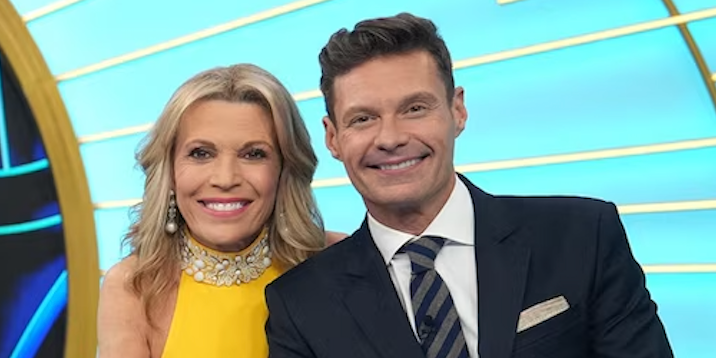
Ryan Seacrest may be the new host, but Vanna White’s presence remains one of the show’s most important assets. She gives the audience continuity. For viewers who worried that too much change might make the show feel unfamiliar, White’s role reassures them that the heart of Wheel of Fortune is still intact.
Her on-screen chemistry with Seacrest has been important because the show depends on warmth. Wheel is not a hard-edged competition series. Nobody wants the puzzle board to feel like a tax audit. The tone should be friendly, bright, and just dramatic enough that a lost turn still feels like a tiny tragedy. White helps preserve that balance.
The pairing works because Seacrest does not appear to crowd her role. He treats her as part of the show’s identity, not as a leftover piece from the previous era. That respect helps viewers accept the transition. In television, especially legacy television, comfort is currency.
Why the Ratings Bump Happened
The ratings success of Wheel of Fortune with Ryan Seacrest did not come from one factor. It came from a combination of curiosity, brand loyalty, smart casting, and a format that still works beautifully in a fragmented media world.
1. Curiosity Brought Viewers In
Any major host change creates curiosity. People wanted to know how Seacrest would handle the job. Would he be too slick? Too energetic? Too famous? Would he say “R, S, T, L, N, E” with the appropriate amount of sacred respect? Viewers tuned in to judge for themselves, and the show benefited from that initial wave of attention.
2. The Format Kept Them There
Curiosity can create a premiere spike, but it cannot sustain a season. The reason Wheel of Fortune stayed strong is that the format remains incredibly watchable. It is simple enough to join at any moment, competitive enough to stay interesting, and interactive enough that viewers at home can play along without downloading an app, creating a username, or agreeing to seventeen pages of terms and conditions.
3. Seacrest Was a Safe but Smart Choice
Sony and the producers needed someone recognizable, professional, and unlikely to scare off longtime fans. Seacrest checked those boxes. He is a known television personality, but he is also a broadcaster who understands structure. He does not need to prove he belongs on camera; he has lived there for years, possibly with a forwarding address.
4. The Show Offers Comfort in a Heavy Media World
In an age of intense dramas, streaming overload, political arguments, and algorithms that seem determined to recommend one more thing nobody asked for, Wheel of Fortune offers something refreshingly uncomplicated. There are puzzles. There is a wheel. There are trips to beautiful places. There is a chance someone will scream over a new car. That is good television math.
A Classic Game Show Built for Modern Fragmentation
One of the most interesting things about Wheel of Fortune is that it feels almost algorithm-proof. Streaming platforms spend billions trying to create addictive content, while Wheel keeps drawing viewers with a giant wheel, a puzzle board, and the eternal suspense of whether someone will mispronounce a phrase they clearly solved three seconds earlier.
The show’s simplicity is not a weakness. It is the engine. Families can watch together. Grandparents can play with grandkids. Casual viewers can drift in halfway through and understand the stakes immediately. You do not need to remember six seasons of lore or know which dragon is related to which royal house. You only need to know that “Before & After” is probably going to get weird in the best possible way.
That accessibility gives Wheel of Fortune rare strength. While many shows compete for binge-watch loyalty, Wheel wins by being a daily habit. It asks for half an hour and gives back a small dose of optimism. In today’s entertainment environment, that is more powerful than it sounds.
The Seacrest Effect on the Wheel of Fortune Brand
Ryan Seacrest’s presence also helps the brand beyond the regular syndicated show. His hosting of Celebrity Wheel of Fortune brought additional attention to the franchise, and the primetime version benefited from the same qualities he brings to the daily show: speed, polish, and comfort with celebrity guests.
Celebrity editions can be tricky because famous contestants sometimes try too hard to be funny, and suddenly the puzzle feels like it has been hijacked by a dinner party with cameras. Seacrest is useful in that environment because he can keep the energy high while maintaining control of the format. He is friendly without letting the show float away like a runaway prize balloon.
That broader brand value matters. Wheel of Fortune is no longer just a nightly syndicated program. It is a multi-platform entertainment property with primetime specials, social media clips, nostalgia appeal, and potential streaming value. Having a host who can move comfortably across those spaces is a strategic advantage.
Criticism Was Inevitable, but It Did Not Define the Era
Of course, not everyone embraced Seacrest immediately. That was inevitable. When a show has been part of American television for generations, fans develop strong opinions about everything: the host, the set, the music, the puzzle categories, and probably the emotional integrity of the wheel wedges.
Some viewers missed Sajak’s drier humor. Others questioned whether Seacrest was too polished. A few simply dislike change, which is fair. Change can be annoying. Sometimes you move one button on a remote control and civilization collapses.
But ratings suggested that the loudest online reactions did not represent the whole audience. Many viewers either accepted Seacrest quickly or were willing to give him time. That is a major win. In television, especially syndicated television, habit is everything. If viewers keep the appointment, the show is healthy.
The Business Lesson: Evolution Beats Reinvention
The success of Wheel of Fortune with Ryan Seacrest offers a useful lesson for entertainment brands: not every legacy property needs a radical makeover. Sometimes the smartest move is careful evolution.
The producers did not turn Wheel into a celebrity roast, a survival contest, or a neon obstacle course where contestants solve puzzles while hanging from ropes. They kept the core game intact. They chose a host who could honor the format while bringing a new personality. They preserved Vanna White’s stabilizing presence. They allowed the show to feel refreshed without making it unrecognizable.
That balance is difficult. Too little change, and the show feels frozen. Too much change, and longtime viewers feel betrayed. Wheel of Fortune appears to have found the middle lane, which is exactly where a mass-audience comfort show wants to be.
Experience: What Viewers Feel Watching Ryan Seacrest’s Wheel Era
The viewer experience of the Ryan Seacrest era is less about shock and more about adjustment. The first few episodes naturally feel different. The voice is different. The timing is different. The way contestants react is different. For longtime fans, the brain needs a moment to stop expecting Pat Sajak to stroll in with that familiar half-smile and a joke dry enough to qualify as desert climate.
But after that adjustment, the show begins to feel familiar again. That is the key. The puzzle board still delivers its little dopamine hits. The wheel still creates suspense with every click. The audience still gets to feel brilliant when solving “Homemade Blueberry Pancakes” before anyone on stage. The emotional contract between show and viewer remains the same: come in, relax, play along, and maybe watch someone’s life change because they guessed the right phrase at the right time.
For casual viewers, Seacrest’s version may even feel more accessible. He has an upbeat style that makes contestant interviews move smoothly, and he tends to bring a welcoming energy to the stage. That matters because contestants are often ordinary people having one of the strangest and most exciting days of their lives. A good host gives them room to be nervous, goofy, emotional, and triumphant. Seacrest has spent much of his career doing exactly that.
There is also something interesting about watching a famous broadcaster become the new face of an older format. Seacrest is associated with modern entertainment machinery: live voting, reality competitions, radio countdowns, red carpets, and giant New Year’s Eve broadcasts. Wheel of Fortune, by contrast, is wonderfully analog in spirit. Spin the wheel. Pick a letter. Solve the puzzle. Try not to land on Bankrupt while America groans in collective pain. Seeing Seacrest inside that format creates a bridge between eras.
The best moments are still the human ones. A contestant’s shocked laugh after winning a trip. A family member cheering in the audience. A bonus-round solve that arrives at the last possible second. Seacrest’s job is to frame those moments, not overpower them. When he does that well, the show feels like itself. That is why the transition has worked better than skeptics expected.
The experience also proves that comfort television is not outdated. Viewers do not always want darker, louder, more complicated entertainment. Sometimes they want a dependable half-hour where the rules are clear, the prizes are shiny, and the biggest villain is a cardboard wedge labeled “Lose a Turn.” In that setting, Seacrest does not need to reinvent the wheel. He only needs to keep it spinning with confidence, warmth, and enough charm to make the next puzzle feel worth solving.
Conclusion: Ryan Seacrest Spins a Strong New Chapter
Wheel of Fortune becoming a ratings standout with Ryan Seacrest as host is not just a celebrity-host success story. It is a case study in how legacy television can survive a major transition when producers understand what audiences truly value. Viewers did not need a brand-new game. They needed reassurance that the game they loved was still there.
Seacrest has brought energy, professionalism, and a modern hosting rhythm to the show while respecting the familiar structure that made Wheel a classic. Vanna White’s continued presence has helped connect the past to the present, and the show’s enduring format remains one of the most reliable engines in television.
The wheel is still bright. The puzzles still pull people in. The contestants still make America yell letters at the screen. And Ryan Seacrest, once viewed by some as a risky replacement, has helped turn a high-pressure handoff into one of the most successful hosting transitions in recent TV memory. Not bad for a guy who walked into one of television’s most famous jobs and somehow made the wheel look steady again.