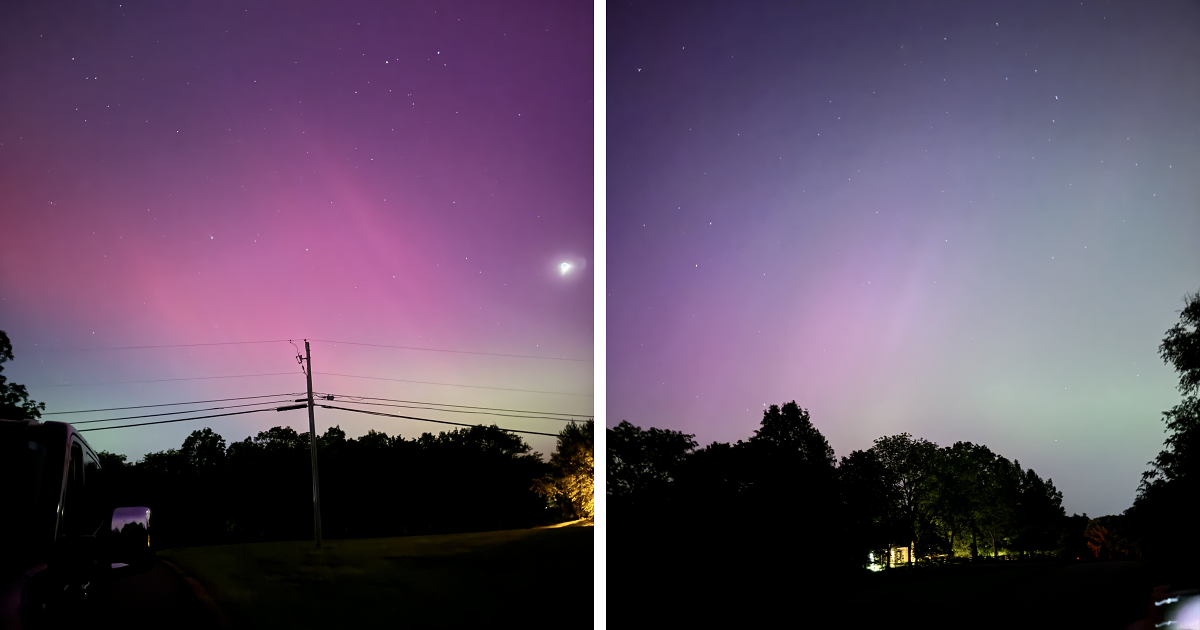

Seeing the Northern Lights in the Midwest feels a little like spotting a moose in a grocery store parking lot: technically possible, wildly memorable, and guaranteed to make everyone nearby pull out a phone. The aurora borealis is usually associated with Alaska, Canada, Iceland, and other places where winter seems to have a lease agreement. But when solar activity is strong enough, the Midwest can get its own front-row seat to the glowing sky show.
From Minnesota’s dark lakes to Michigan’s Lake Superior shoreline and Wisconsin’s quiet Door County beaches, the region has more aurora potential than many people realize. The secret is not magic, though it certainly looks like it. It is a mix of solar storms, clear skies, low light pollution, patience, and a willingness to stand outside at midnight whispering, “Is that a cloud or the universe doing jazz hands?”
This guide explores what makes the Northern Lights visible in the Midwest, where to see them, how to photograph them, and how eight picture-worthy scenes can turn a simple night outside into a story you will tell for years.
What Are the Northern Lights?
The Northern Lights, also called the aurora borealis, happen when charged particles from the sun interact with Earth’s magnetic field and upper atmosphere. During geomagnetic storms, energy moves along magnetic field lines and creates glowing curtains, arcs, rays, and patches of color. Green is the most common shade, but strong displays can also include pink, red, purple, and blue.
In the Midwest, auroras are usually seen low on the northern horizon. During stronger geomagnetic storms, however, they may stretch overhead or appear far enough south to surprise people in states like Iowa, Illinois, Indiana, and Ohio. The show can be faint to the naked eye but dramatic in long-exposure photos, which is why your camera may suddenly become more emotionally expressive than your eyeballs.
Why the Midwest Can See the Aurora
The Midwest sits below the usual auroral oval, the ring-shaped zone around Earth’s magnetic poles where auroras are most common. That means the region does not get nightly displays like northern Canada or Alaska. But strong solar activity can expand the auroral oval southward, bringing visible Northern Lights into northern-tier states and sometimes much farther.
The best Midwest aurora nights usually involve a strong geomagnetic storm, clear weather, minimal moonlight, and a viewing location away from city glow. This is why places along the Great Lakes are so valuable. A dark beach facing north gives you a wide, open horizon without trees, buildings, or billboards trying to photobomb the cosmos.
8 Picture-Worthy Northern Lights Scenes in the Midwest
The phrase “Northern Lights In The Midwest (8 Pics)” practically begs for a photo essay. While every aurora display is different, these eight classic Midwest scenes show why the region can be an underrated aurora destination.
1. Aurora Over Lake Superior in Michigan
Lake Superior is one of the Midwest’s best natural aurora stages. In Michigan’s Upper Peninsula, spots like Whitefish Point, Munising, Marquette, Copper Harbor, and Pictured Rocks National Lakeshore offer dark skies and broad northern views. When the aurora glows over the water, the lake can reflect the colors like a giant black mirror. It is dramatic, moody, and very much ready for its album cover.
2. Green Curtains Above Voyageurs National Park
Voyageurs National Park in northern Minnesota is a certified dark-sky destination with remote lakes, low light pollution, and wide horizons. The park’s water-based landscape makes it ideal for aurora watching because reflections can double the visual impact. On a calm night, the sky and lake seem to trade secrets in green light.
3. Pink and Purple Lights Over Door County
Wisconsin’s Door County is not just for cherry pie and charming small towns. Newport State Park, recognized for its dark skies, offers one of the state’s best aurora-viewing setups. Europe Bay and other north-facing areas can provide excellent views when geomagnetic activity is high. Bring a tripod, warm layers, and the emotional strength to wait longer than your snacks last.
4. Aurora Reflections in the Boundary Waters
The Boundary Waters Canoe Area Wilderness in Minnesota is famous for dark skies, quiet lakes, and wilderness scenery. When the Northern Lights appear there, the experience feels almost private, as if the sky forgot to invite the rest of civilization. Because the area is remote, careful planning is essential, but the reward can be unforgettable.
5. Northern Lights Above Michigan’s Keweenaw Peninsula
The Keweenaw Peninsula reaches into Lake Superior like it is trying to shake hands with Canada. That northern position gives it a strong advantage for aurora viewing. Copper Harbor and the Keweenaw Dark Sky Park are especially popular with stargazers and photographers. The combination of rugged shoreline, dark sky, and open water makes it one of the Midwest’s most photogenic aurora regions.
6. A Faint Glow Over Rural Iowa or Illinois
Not every Midwest aurora photo comes from the far north. During strong geomagnetic storms, faint auroras can appear much farther south. In rural Iowa, northern Illinois, or Indiana, the display may look like a dim haze to the eye but show up as pink, red, or green in a phone’s night mode. This is when people step outside expecting darkness and accidentally meet space weather.
7. Aurora Above Apostle Islands National Lakeshore
Wisconsin’s Apostle Islands region has dark shoreline views over Lake Superior, making it another strong candidate for aurora photography. The area’s islands, water, and quiet night skies create a cinematic setting. Even if the aurora does not appear, the stars alone can make the trip worthwhile, which is nature’s polite way of saying, “No refunds, but enjoy the Milky Way.”
8. Northern Lights Behind a Midwest Farmstead
One of the most charming Midwest aurora scenes is not a national park at all. It is a barn, a field, a gravel road, and a sky doing something completely unreasonable in the best possible way. Farm country offers low horizons and less light pollution than cities, so rural landscapes can become excellent foregrounds for aurora photos during strong storms.
Best Midwest States for Seeing the Northern Lights
Minnesota
Minnesota is one of the Midwest’s strongest aurora states because of its northern latitude and dark wilderness areas. Voyageurs National Park, the Boundary Waters, Grand Marais, Cook County, Lake of the Woods, and the North Shore of Lake Superior are all excellent places to try. Winter offers long nights, but auroras can happen any time of year when solar activity cooperates.
Michigan
Michigan may be the Midwest’s aurora overachiever. The Upper Peninsula has miles of Lake Superior shoreline, dark forests, and small towns with far less light pollution than major metro areas. Whitefish Point, Marquette, Munising, Copper Harbor, Pictured Rocks, Isle Royale, and Drummond Island are frequently recommended viewing areas. The northern Lower Peninsula can also work, especially at dark-sky preserves and north-facing beaches.
Wisconsin
Wisconsin’s best aurora locations tend to be in the northern part of the state and along the Great Lakes. Door County, Newport State Park, Apostle Islands National Lakeshore, Bayfield, and remote areas of northern Wisconsin offer strong viewing potential. When a storm is powerful enough, even central Wisconsin can get a glimpse under clear, dark skies.
North Dakota and South Dakota
The Dakotas sit farther west but remain part of many Midwest aurora conversations. Their open plains provide big horizons, which is useful when the aurora is low in the north. Rural areas away from city lights can be excellent for watching and photographing faint displays.
Iowa, Illinois, Indiana, and Ohio
These states are less reliable for aurora viewing, but they are not out of the game. During strong geomagnetic storms, auroras can reach surprisingly far south. The key is to leave city lights, face north, and use a camera or phone night mode. Sometimes the photo reveals what your eyes only barely detect.
When Is the Best Time to See the Northern Lights in the Midwest?
The Northern Lights can appear in any season, but the best viewing conditions usually come when nights are long and skies are dark. Late fall, winter, and early spring are especially useful because darkness arrives earlier and lasts longer. Around the equinox periods in March and September, aurora activity can also be more favorable due to the way Earth’s magnetic field interacts with solar wind.
The best time of night is often between about 10 p.m. and 2 a.m. local time, though auroras are famously inconsiderate and may appear earlier, later, or not at all after you have already driven ninety minutes and eaten gas-station pretzels for dinner. Checking live aurora forecasts is essential before heading out.
How to Check the Aurora Forecast
Before you chase the Northern Lights in the Midwest, check three things: geomagnetic activity, cloud cover, and moonlight. Aurora forecasts often use the Kp index, which measures geomagnetic activity on a scale from 0 to 9. A higher Kp number generally means auroras may be visible farther south. For much of the Midwest, Kp 5 may bring chances to northern areas, while Kp 6, 7, or higher can expand visibility deeper into the region.
NOAA’s Space Weather Prediction Center provides short-term aurora forecasts and viewline maps. Weather apps can help with cloud cover, while moon phase calendars show whether a bright moon may wash out faint color. A perfect aurora forecast under heavy clouds is basically a concert happening behind a locked door.
How to Photograph the Northern Lights
You do not need a professional camera to photograph the aurora, though a good camera gives you more control. Many modern smartphones can capture faint auroras using Night Mode or Pro Mode. The most important tool is a stable tripod or a way to keep your phone still. Handheld long exposures turn stars into spaghetti, and not the charming kind.
Basic Smartphone Tips
Use Night Mode, turn off the flash, and set the phone on a tripod. If your phone allows manual settings, try an exposure between 5 and 15 seconds, a higher ISO, and manual focus set near infinity. Take several test shots because auroras change quickly and cameras interpret low light differently.
Basic Camera Tips
For DSLR or mirrorless cameras, start with a wide-angle lens, aperture around f/2.8 or wider if available, ISO between 800 and 3200, and shutter speed between 5 and 20 seconds. Focus manually on a bright star or distant light. Shoot in RAW if possible so you can adjust brightness, contrast, and white balance later.
What to Bring on a Midwest Aurora Chase
A successful aurora night is part science, part road trip, and part stubbornness. Bring warm layers, even in shoulder seasons, because standing still under a clear sky gets cold fast. Pack a flashlight or headlamp with a red-light option, extra batteries, a power bank, snacks, water, and a blanket or camp chair. If you are near a lake, expect wind. Lake Superior in particular has a talent for reminding visitors that “fresh breeze” can mean “your hat lives in Canada now.”
Safety matters, too. Choose legal public access points, respect park hours and rules, avoid walking near cliffs or icy shorelines in the dark, and let someone know where you are going. The aurora is beautiful, but it is not worth twisting an ankle because you tried to sprint toward a glow like a cartoon character chasing a pie smell.
Common Mistakes That Ruin Aurora Viewing
The first mistake is staying in the city. Light pollution can erase faint auroras, so drive to a darker location whenever possible. The second mistake is looking south or straight overhead when the display is weak. In the Midwest, start by facing north and scanning low on the horizon. The third mistake is giving up too soon. Auroras can pulse, fade, and return within minutes.
Another common mistake is trusting only one forecast source. Space weather changes quickly, and a forecast can improve or disappoint with very little warning. Combine aurora tools, local weather forecasts, satellite cloud maps, and real-time reports from regional skywatching groups when available.
Why the Midwest Aurora Feels So Special
The Midwest is not the easiest place in the world to see the Northern Lights, and that is part of the charm. In Alaska or northern Canada, aurora tourism is a whole industry. In the Midwest, it still feels like a secret passed between weather nerds, photographers, campers, and people who were simply taking out the trash at the right cosmic moment.
There is something deeply satisfying about seeing the aurora above familiar landscapes: a frozen lake, a quiet farm road, a lighthouse, a pine forest, or a beach where families were skipping stones a few hours earlier. The lights make ordinary places feel mythic. They remind us that the sky is not just a ceiling; it is an active, electric, occasionally neon-green reminder that Earth is part of a much bigger system.
Extra Experience: Chasing the Northern Lights in the Midwest
The first thing you learn while chasing the Northern Lights in the Midwest is that patience is not a personality trait; it is equipment. You can have the best camera, the warmest coat, and a forecast that looks promising enough to make you cancel your evening plans, but the aurora still runs on space weather time. That means you may spend two hours staring at a dark horizon, debating whether a faint gray band is an aurora or just your imagination wearing hiking boots.
A typical Midwest aurora chase often begins with a message from a friend: “Kp is rising.” This is followed by frantic checking of cloud maps, moon phase charts, and driving distances. Suddenly, a normal Tuesday becomes an expedition. You grab a tripod, charge your phone, throw snacks into the car, and drive away from city lights. The farther you go, the darker the roads become, and the more the stars begin to show themselves. Even before the aurora appears, the trip starts to feel worth it.
Some of the best experiences happen along the Great Lakes. Standing on a Lake Superior beach at night is humbling in a way that daytime travel does not fully prepare you for. The water is black, the horizon is huge, and the wind has strong opinions. Then, if conditions line up, a pale green glow begins to form in the north. At first, it may look like distant city light, but it shifts. It brightens. A vertical ray appears. Then another. Someone nearby whispers, “There it is,” as if speaking too loudly might scare it away.
In Minnesota, the experience can be quieter and more wilderness-driven. At a lake in Voyageurs or near the Boundary Waters, the aurora may reflect in still water while loons call in the distance. That kind of moment does not need dramatic music. It already has atmosphere. In Wisconsin, a Door County beach can turn into a natural theater, with silhouettes of trees, islands, and shoreline framing the sky. In Michigan’s Upper Peninsula, the aurora often feels bigger because the Lake Superior horizon gives it room to perform.
Photography adds another layer to the adventure. Sometimes your eyes see only a faint haze, but your camera reveals purple pillars and green ribbons. This can feel like cheating, but it is really just technology helping your night vision catch up with the universe. The best photos usually include a foreground: driftwood, a lighthouse, a dock, a barn, a tent, or a frozen shoreline. The aurora is the star, but the Midwest landscape gives the image its personality.
The final lesson is that a “failed” aurora chase is not always a failure. Maybe clouds roll in. Maybe the solar wind weakens. Maybe the lights appear while you are in a gas station restroom, which is rude but possible. Still, you may come home with stars, silence, good photos of the Milky Way, and a funny story about freezing in a parking lot with six strangers who all became temporary sky scientists. That is the strange joy of chasing the Northern Lights in the Midwest: the reward is the glow, but the experience is the chase.
Conclusion
The Northern Lights in the Midwest are rare enough to feel magical but real enough to chase with smart planning. Your best chances come from monitoring NOAA aurora forecasts, choosing dark locations with open northern horizons, watching cloud cover, and being ready to move when solar activity rises. Minnesota, Michigan, and Wisconsin offer some of the region’s strongest viewing spots, especially around Lake Superior, Voyageurs National Park, the Boundary Waters, Newport State Park, and Michigan’s Upper Peninsula.
Whether you capture eight stunning pictures or simply stand under a faint green glow with cold fingers and a ridiculous grin, the Midwest aurora is worth the effort. It is science, scenery, and surprise all rolled into one unforgettable night sky.
Note: This article is based on real aurora science, Midwest dark-sky viewing guidance, and practical photography experience. Always check current NOAA space weather forecasts, local weather conditions, park access rules, and road safety updates before planning an aurora trip.