
Tai Chi’s horse stance looks simple. That is its first trick. You stand with your feet apart, bend your knees, sink your hips, breathe calmly, and suddenly your thighs begin sending strongly worded letters to management. Welcome to horse stance, also known in Chinese martial arts as ma bu, one of the foundational positions used to build balance, leg strength, posture, body awareness, and that quiet inner confidence that says, “Yes, I can stand still and somehow still be working hard.”
In Tai Chi, the horse stance is not about gritting your teeth and pretending you are a statue in a martial arts movie. It is about learning how to root through the feet, relax the upper body, align the knees safely, and let the body settle into a stable, centered position. Done well, it trains the legs without jarring the joints, teaches proper weight distribution, and gives beginners a reliable base for many Tai Chi movements.
This guide breaks down how to do Tai Chi’s horse stance in 14 steps, with beginner-friendly instructions, alignment tips, common mistakes, breathing cues, and practical experience notes you can use whether you are practicing at home, in a class, or quietly beside your desk while hoping nobody asks what you are doing.
What Is Tai Chi’s Horse Stance?
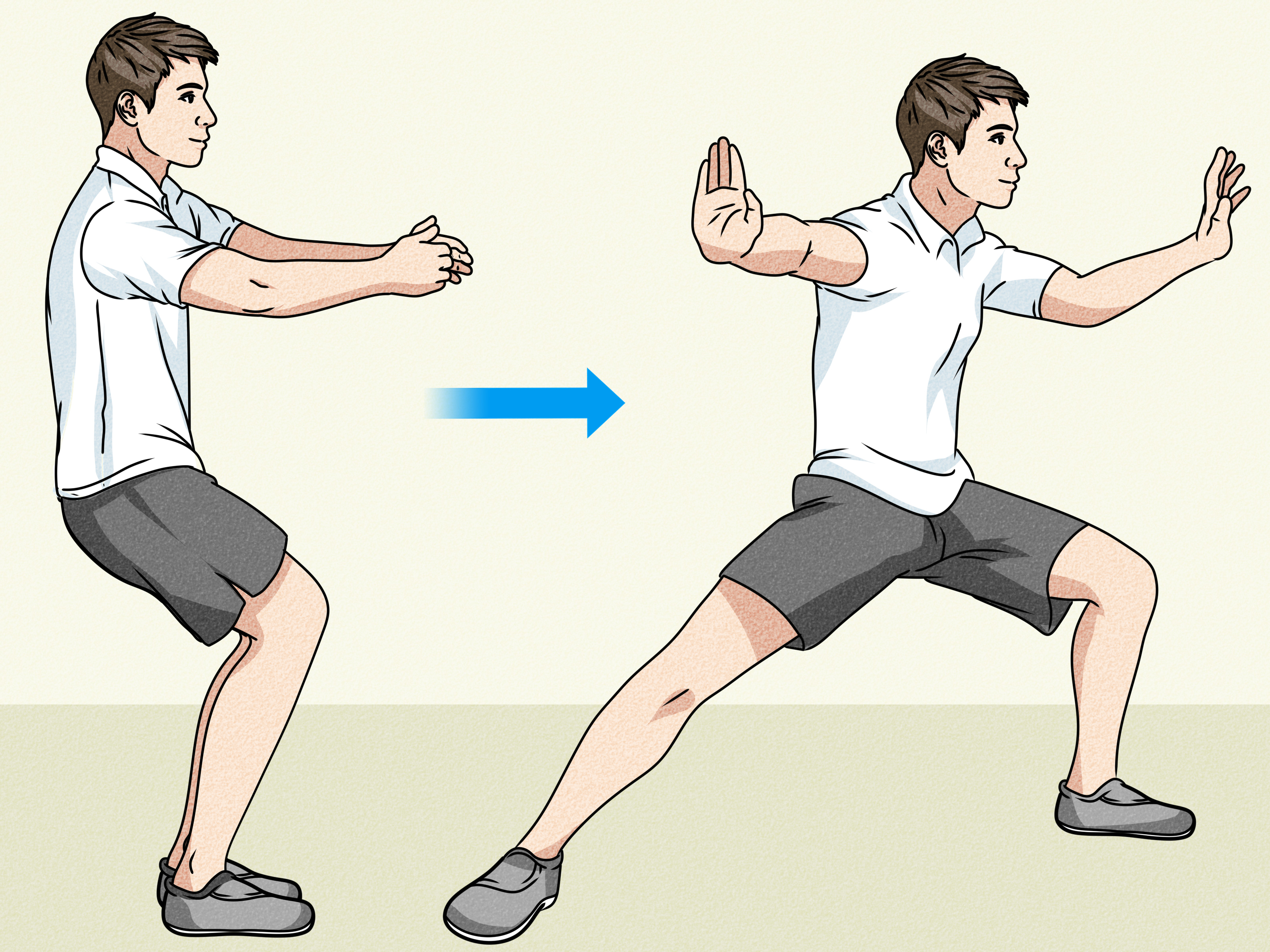
The Tai Chi horse stance is a wide, grounded standing posture where your feet are set apart, knees are softly bent, hips sink downward, and your body weight is distributed evenly between both legs. The name comes from the idea of sitting on a horse: stable, centered, and ready to move in any direction.
Unlike a deep gym squat, the Tai Chi version does not require you to force your thighs parallel to the floor. Many beginners use a higher horse stance, with only a modest bend in the knees. The goal is not to win a thigh-burning contest. The goal is to develop structure, relaxation, balance, and control.
Horse stance appears in many Chinese martial arts, but in Tai Chi it is usually softer, more relaxed, and more focused on internal alignment. You are not trying to look fierce. You are trying to feel rooted, calm, and connected from your feet to the crown of your head.
Why Practice Horse Stance?
Practicing horse stance can help develop lower-body strength, improve balance, increase awareness of knee and hip alignment, and teach you how to relax while under mild physical effort. That last part is important. Tai Chi often asks the body to work while the mind stays quiet. Horse stance is basically a polite invitation from your legs to pay attention.
Because Tai Chi is low-impact, many people use it as a gentle movement practice for balance, coordination, mobility, and stress reduction. Horse stance supports those benefits by training the basic “root” that makes the rest of Tai Chi feel smooth instead of wobbly.
Before You Start: Safety and Setup
Horse stance should feel challenging, not painful. If you feel sharp pain in your knees, hips, ankles, or lower back, come up immediately and reset. Beginners should start with a shallow stance and short holds. Even 20 to 30 seconds can be useful when your alignment is good.
Practice on a flat, non-slippery surface. Wear flexible shoes, flat-soled shoes, or practice barefoot if the surface is safe. Keep a chair or wall nearby if your balance is uncertain. If you have a medical condition, recent injury, joint replacement, or chronic pain, get guidance from a qualified professional before going deep or holding the posture for long periods.
How to Do Tai Chi’s Horse Stance: 14 Steps
1. Stand Tall in a Neutral Position
Begin with your feet about hip-width apart and your arms resting naturally at your sides. Let your shoulders soften. Keep your head upright, as if the crown of your head is gently floating upward. Your chin should be slightly tucked, not pushed forward like you are inspecting a suspicious sandwich.
Take a few relaxed breaths. Before you widen your stance, notice your natural posture. Are you leaning forward? Locking your knees? Holding your shoulders near your ears? Let those habits soften. Horse stance begins before the legs move.
2. Step Your Feet Wider Than Shoulder Width
Step your feet out so they are wider than your shoulders. For most beginners, a comfortable distance is about one and a half shoulder widths. Advanced martial artists may go wider, but Tai Chi practice usually values comfort, stability, and control over dramatic depth.
If your stance is too narrow, you may feel unstable. If it is too wide, your knees and hips may feel strained. The right width lets you bend your knees while keeping the feet grounded and the torso upright.
3. Point Your Toes Forward or Slightly Outward
Set your feet so the toes point forward or slightly outward, depending on your body and your teacher’s style. The key rule is simple: your knees should track in the same direction as your toes.
Do not force your feet into a perfectly parallel position if it makes your knees twist inward. Tai Chi alignment should feel organized, not robotic. Your feet are the foundation, and foundations work best when they are not arguing with the rest of the building.
4. Spread Your Weight Evenly Across Both Feet
Distribute your weight evenly between the left and right foot. Also notice the front and back of each foot. You want contact through the heel, the ball of the big toe, and the ball of the little toe. This creates a stable “tripod” base.
Avoid collapsing into the inner arches or rolling heavily onto the outer edges. Imagine the soles of your feet gently spreading into the ground. This helps create the rooted feeling Tai Chi is famous for.
5. Soften Your Knees
Unlock your knees and let them bend slightly. This is not yet the full stance. It is simply a release from stiffness. Locked knees make the body rigid and can reduce balance. Soft knees allow you to respond, shift, and sink.
Think of your knees as springs rather than hinges. They bend, but they do not collapse. They support you, but they do not grip with unnecessary tension.
6. Sink Your Hips as If Sitting on a High Stool
Now begin to lower your center of gravity by letting your hips sink downward. Imagine sitting lightly on a high stool behind you. Your pelvis lowers, but your upper body stays upright.
Do not shove your hips backward like a powerlifting squat. Also avoid tucking your pelvis so aggressively that your lower back becomes tense. The feeling should be soft, centered, and natural. A good beginner stance may only lower a few inches.
7. Keep Your Knees Aligned Over Your Feet
Look down briefly. Your knees should point in the same direction as your toes. They should not cave inward toward each other, and they should not be forced far outward. In many Tai Chi schools, students are also taught not to let the knees travel far beyond the toes.
This step matters. Poor knee alignment is one of the most common horse stance mistakes. If your knees drift inward, reduce the depth, adjust your foot angle, and think of gently opening the hips rather than pushing the knees.
8. Lengthen Your Spine
Keep your spine tall and relaxed. Picture a thread gently lifting the crown of your head while your tailbone drops toward the floor. This creates a feeling of length from top to bottom.
Avoid arching the lower back, rounding the shoulders, or leaning forward. If your torso tips forward, your stance may be too low or too wide. Come up slightly and rebuild your posture. Tai Chi rewards patience; your thighs will still complain, but at least they will complain with dignity.
9. Relax Your Shoulders and Chest
Let your shoulders melt downward. Keep your chest open but not puffed out. Tai Chi posture is upright without being stiff, alert without being tense.
Many beginners unknowingly hold tension in the upper body while the legs work. This turns horse stance into a full-body argument. Instead, let the legs support you while the shoulders, neck, jaw, and hands remain soft.
10. Place Your Hands Comfortably
You can let your arms hang naturally, rest your hands near your lower abdomen, or hold them in front of the body as if gently hugging a tree. Some martial arts versions place fists at the waist, but Tai Chi practice often favors relaxed, rounded arms.
Choose the arm position that helps you stay calm and balanced. If your shoulders tense up, lower your arms. The horse stance is already enough entertainment for your legs.
11. Breathe Slowly and Naturally
Breathe through the nose if comfortable, allowing the breath to become slow and steady. Let the lower ribs and abdomen move gently. Do not hold your breath. Breath-holding creates tension and can make the posture feel much harder than it needs to be.
Try this simple rhythm: inhale softly, then exhale as you imagine your weight settling through your feet. Each exhale is an opportunity to release extra effort from the shoulders, face, and hands.
12. Hold the Stance Briefly
Start with 20 to 30 seconds. If that feels easy and your alignment stays clean, work toward 45 seconds or one minute. Longer holds are not automatically better. A shorter hold with excellent structure beats a long hold performed with shaking knees, clenched teeth, and a facial expression that suggests betrayal.
As you hold, scan your body: feet grounded, knees aligned, hips sinking, spine long, shoulders relaxed, breath steady. This body scan is where the real training happens.
13. Rise Slowly
To come out of horse stance, press gently through both feet and straighten your legs slowly. Do not snap the knees back or spring upward. Move with control, keeping your posture tall.
Once standing, pause and notice the sensations in your legs and feet. You may feel warmth, steadiness, or a mild trembling. That is normal. Your body just discovered that standing still can be surprisingly eventful.
14. Repeat With Quality, Not Ego
Practice two to five rounds, depending on your comfort level. Rest between rounds. Keep the stance higher if you are new. Over time, you can gradually increase the hold time or slightly deepen the bend, but never sacrifice alignment for intensity.
The best Tai Chi horse stance is not the lowest one. It is the one where your body feels connected, your breath stays relaxed, and your knees remain happy enough to keep speaking to you tomorrow.
Common Horse Stance Mistakes
Going Too Low Too Soon
Beginners often think lower means better. In reality, going too low before you have the strength and mobility can cause the knees to collapse, the back to round, or the breath to tighten. Start higher. Let the stance develop naturally.
Letting the Knees Cave In
If your knees fall inward, reduce the depth and check your foot angle. The knees should follow the toes. This protects the joints and builds better movement habits for the rest of your Tai Chi practice.
Leaning Forward
A forward lean usually means the stance is too deep, the hips are pushed too far back, or the core is not supporting the spine. Come up a little and imagine your head floating upward while your hips settle downward.
Holding the Breath
Horse stance is not a breath-holding contest. Smooth breathing helps the nervous system stay calm and makes it easier to release unnecessary tension.
Trying to “Tough It Out” Through Pain
Muscle effort is expected. Sharp joint pain is not. Tai Chi is a long-term practice. Do not turn one stance into a heroic saga that ends with an ice pack.
How Long Should You Hold Horse Stance?
For beginners, 20 to 30 seconds is enough. Practice two or three rounds with good alignment. After a week or two, you might increase to 45 seconds or one minute. More experienced practitioners may hold for several minutes, but that should be built gradually.
A useful rule is this: stop while your form is still good. When the knees start wobbling inward, the back rounds, or the breath becomes strained, the training quality has dropped. Rest, reset, and try again later.
Beginner Practice Routine
Here is a simple horse stance routine you can use three to five times per week:
- Stand in neutral posture for 30 seconds.
- Step into horse stance and hold for 20 seconds.
- Rise slowly and rest for 30 seconds.
- Repeat for three rounds.
- Finish by standing quietly and breathing for one minute.
As you improve, increase the hold time by 5 to 10 seconds. Keep the stance comfortable and sustainable. Tai Chi progress is usually quiet. One day you simply notice your legs feel stronger, your balance feels steadier, and standing in line at the grocery store has become secret training.
How Horse Stance Helps Your Tai Chi Form
Horse stance teaches the body how to root. In Tai Chi, “rooting” means feeling stable through the feet and legs while the upper body remains free to move. Without rooting, the arms may wave around beautifully while the lower body negotiates with gravity in panic.
Many Tai Chi movements require weight shifting, turning, stepping, and returning to center. Horse stance gives you a clear starting point. It trains equal weight distribution, knee tracking, hip relaxation, and upright posture. Once these become familiar, movements like ward off, brush knee, cloud hands, and opening forms become easier to understand.
Experience Notes: What Practicing Horse Stance Actually Feels Like
At first, horse stance often feels too simple to be important. You may step out, bend the knees, and think, “That’s it?” Then 15 seconds later your thighs begin humming like a refrigerator with opinions. This is normal. The stance reveals tension, imbalance, and impatience quickly, which is why it is such a useful teacher.
One common beginner experience is discovering that both legs are not doing equal work. You may feel more pressure in one foot, one knee may drift inward, or one hip may feel tighter. Instead of judging it, use the stance as a diagnostic tool. Tai Chi is full of small discoveries. The body is basically leaving sticky notes for you: “More weight on the right,” “Relax the shoulders,” “Please stop locking the jaw.”
Another experience is the difference between muscular effort and unnecessary tension. Your legs will work. That is expected. But your face, neck, hands, and shoulders do not need to join the committee. Many students improve quickly when they learn to separate useful effort from extra bracing. The lower body provides structure; the upper body stays light.
Breathing also changes the experience. If you hold your breath, horse stance becomes a survival scene. If you breathe slowly, the same posture becomes more manageable. A good exhale can soften the hips, settle the feet, and calm the mind. This is one reason Tai Chi is often described as meditation in motion, even when the motion is temporarily “standing there wondering why time has slowed down.”
Over several weeks, students often notice practical improvements. Stairs may feel easier. Balance may feel more reliable. The knees may feel more organized during everyday movement because the body has practiced tracking them over the feet. Even posture can improve because horse stance encourages a long spine and relaxed shoulders.
The biggest lesson is humility. Horse stance does not care how athletic you think you are. It meets everyone honestly. A runner, weightlifter, dancer, office worker, and total beginner can all find something useful in it. The stance asks a simple question: can you stay grounded, aligned, and calm while your legs are working? The answer improves with practice.
For best results, treat horse stance like brushing your teeth, not like climbing a mountain. A short, consistent practice is better than an occasional heroic session. Hold the stance, breathe, come out cleanly, and repeat another day. Over time, the posture becomes less of a struggle and more of a familiar place. Your legs get stronger, your balance sharpens, and your mind learns to stay quiet inside effort.
And yes, your thighs may still complain. But eventually, they complain with better posture.
Final Thoughts
Learning how to do Tai Chi’s horse stance is less about copying a shape and more about building a relationship with balance, alignment, and relaxed strength. Start with a comfortable width, bend the knees gently, keep the spine long, align the knees with the toes, and breathe naturally. Do not chase depth. Chase quality.
Horse stance is one of those rare exercises that looks quiet from the outside and feels deeply educational from the inside. It strengthens the legs, steadies the mind, and gives your Tai Chi practice a dependable foundation. Practice it patiently, listen to your body, and let the stance teach you how to stand your groundliterally.