
The North Pole sounds simple: go north until there is no more north. Easy, right? Not exactly. The top of the world is not a candy-cane village, not a frozen continent, and not a place where your compass politely behaves itself. It is a shifting, wind-scoured world of sea ice floating over the Arctic Ocean, wrapped in months of daylight, months of darkness, scientific mystery, and enough cold to make your freezer look like a tropical spa.
In this guide, we will explore 11 frosty facts about the North Pole, from its geography and weather to polar bears, sea ice, magnetic north, research stations, and the climate changes reshaping the Arctic. Whether you are writing a school report, planning an imaginary expedition, or simply wondering where Santa parks the sleigh when the ice drifts, these North Pole facts will give you a clearer, cooler picture of Earth’s northernmost point.
What Is the North Pole?
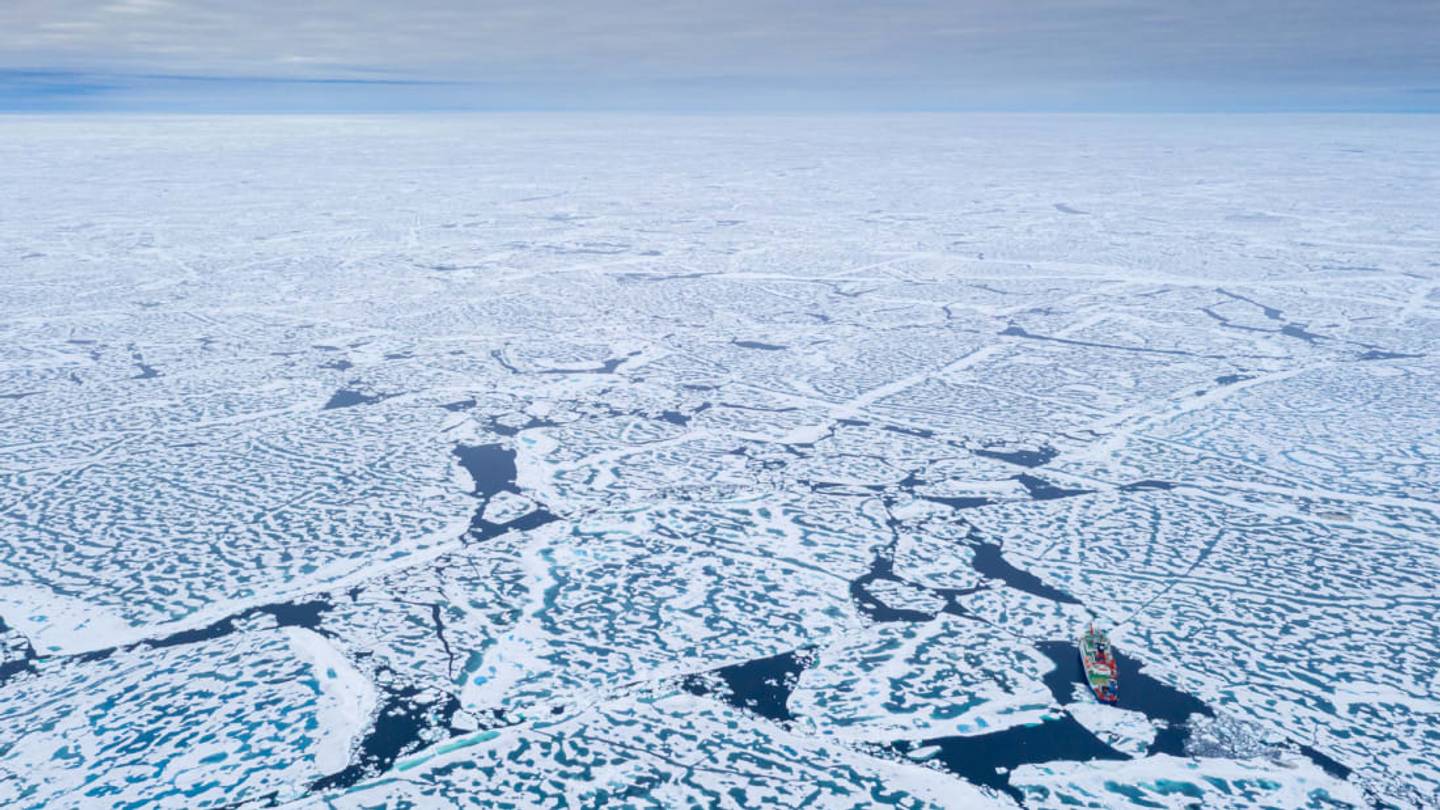
The geographic North Pole is the point at 90 degrees north latitude where Earth’s rotational axis meets the surface. Stand there, at least in theory, and every direction you walk is south. It is not located on land. Instead, it sits in the middle of the Arctic Ocean, on floating sea ice that moves with winds and currents. That means the “ground” beneath your boots is more like a giant frozen raft than a permanent address.
The North Pole is also different from the North Magnetic Pole, which is the point your compass needle wants to follow. That magnetic point wanders over time because Earth’s magnetic field changes. In other words, even “north” has commitment issues.
1. The North Pole Has No Land Under It
One of the most surprising facts about the North Pole is that it is not a continent. Antarctica, at the South Pole, is a landmass buried under ice. The North Pole is floating sea ice over the Arctic Ocean. If the ice cracked beneath you, you would not find frozen soil. You would find very cold seawater and a strong desire to be somewhere else.
This matters because floating sea ice behaves differently from land ice. It forms, melts, drifts, cracks, piles into pressure ridges, and shifts with ocean currents. A tent pitched near the North Pole does not stay neatly at 90 degrees north. The ice can carry it away like the world’s slowest, coldest moving sidewalk.
2. It Sits in the World’s Smallest Ocean
The Arctic Ocean is the smallest of Earth’s five major ocean basins, but “smallest” does not mean tiny. It is still enormous, covering millions of square miles and bordered by Greenland, Canada, Alaska, Russia, and Norway. It is also mostly covered by ice for much of the year, which gives the North Pole its classic frozen look.
The Arctic Ocean is shallow compared with some other oceans, but it is still deep enough to ruin anyone’s casual ice-fishing plans. Beneath the North Pole region, the ocean reaches thousands of feet down. So yes, the top of the world is technically over an ocean. The planet is weird. Delightfully weird.
3. The North Pole Gets One Sunrise and One Sunset Each Year
At the North Pole, the sun does not rise and set every day like it does in most places. Because of Earth’s tilted axis, the North Pole experiences extreme seasonal light. Around the March equinox, the sun rises and begins a long season of daylight. Around the September equinox, it sets and begins a long season of darkness.
This creates the famous midnight sun in summer and polar night in winter. Imagine having daylight at midnight for weeks and weeks, then living through months when the sun never climbs above the horizon. Your body clock would probably file a complaint.
4. There Is No Official North Pole Time Zone
Time zones are based largely on longitude, but all lines of longitude meet at the North Pole. That makes local time a little absurd. Step around the pole and, in a mapmaker’s sense, you can cross every time zone in seconds. Congratulations: you are late, early, and exactly on time.
Scientists, pilots, explorers, and expedition teams usually choose a practical time standard, such as Coordinated Universal Time or the time zone of their departure point. At the North Pole, time is less about local clocks and more about survival schedules, weather windows, satellite communication, and whether your coffee has frozen into a brown ice cube.
5. Geographic North and Magnetic North Are Not the Same
The geographic North Pole is fixed by Earth’s rotation. The North Magnetic Pole is controlled by Earth’s magnetic field, which is generated by movement in the planet’s outer core. That magnetic pole moves from year to year. This is why navigation systems and magnetic models must be updated.
For everyday life, the difference between true north and magnetic north may not matter much unless you are hiking, flying, sailing, surveying, or trying to impress someone with a compass at a picnic. In polar regions, however, magnetic navigation becomes especially tricky. Near the pole, compass needles can behave less like reliable guides and more like confused metal insects.
6. The Ice at the North Pole Is Always on the Move
The North Pole may look still in photographs, but the ice is constantly drifting. Wind pushes it. Ocean currents tug it. Cracks open, ridges rise, and floes grind against one another. This movement makes long-term research difficult because scientists cannot simply build a permanent laboratory on the ice and call it “North Pole Headquarters.”
Instead, researchers have used drifting stations, temporary camps, icebreakers, aircraft, satellites, buoys, and automated instruments. These tools help measure sea ice thickness, ocean temperature, weather, currents, and marine life. The North Pole is not just a destination; it is a moving science puzzle with frostbite.
7. Polar Bears Are Arctic Icons, But the Pole Itself Is Not Their Favorite Hangout
Polar bears are strongly associated with the Arctic, and for good reason. They depend on sea ice to hunt seals, travel, and survive. However, the exact geographic North Pole is far from the productive coastal zones where seals are more common. So while polar bears can roam across Arctic sea ice, they are not usually lounging at 90 degrees north waiting for tourists.
The Arctic food web is richer near areas where ocean life is more active. Sea ice supports algae and tiny organisms, which feed larger creatures, which support fish, seals, whales, and polar bears. The North Pole may look empty, but Arctic sea ice is part of a living system that starts small and ends with animals powerful enough to make “bear-proof” feel like a very optimistic phrase.
8. The North Pole Is Colder Than Most Places, But Not Colder Than the South Pole
The North Pole is brutally cold, especially in winter, when temperatures can plunge far below freezing and darkness dominates the season. Still, it is generally not as cold as the South Pole. Why? The North Pole sits over ocean water, which can store and release heat. The South Pole sits high on the Antarctic ice sheet, far from the moderating effect of open ocean.
This does not mean the North Pole is cozy. Summer temperatures hover near freezing, and winter can bring deep cold, fierce winds, and dangerous ice conditions. It is not the kind of place where you forget your gloves. It is the kind of place where your gloves need gloves.
9. The North Pole Has Helped Inspire Centuries of Exploration
For centuries, the North Pole captured the imagination of explorers, mapmakers, scientists, and governments. Early theories imagined open polar seas, hidden routes, and mysterious northern lands. Later expeditions faced crushing ice, extreme cold, drifting floes, and navigation challenges that made reaching the pole incredibly difficult.
Robert Peary’s 1909 expedition, with Matthew Henson and Inuit team members, has long been associated with the first claimed arrival at the North Pole, though historical debates continue over early claims and navigation evidence. The story is not just about one explorer planting a flag. It is also about Indigenous Arctic knowledge, dog teams, survival skills, and the complicated way history decides who gets remembered.
10. Melting North Pole Sea Ice Does Not Directly Raise Sea Level Much
Here is a common confusion: if floating sea ice melts, it does not raise sea level in the same way melting land ice does. Floating ice is already displacing seawater. So when North Pole sea ice melts, the direct sea-level effect is small compared with melting glaciers and ice sheets on land, such as Greenland or Antarctica.
But that does not make sea-ice loss harmless. Sea ice reflects sunlight back into space. Dark ocean water absorbs more heat. When ice disappears, the ocean can warm faster, which can influence weather patterns, ecosystems, coastal erosion, shipping routes, and wildlife habitat. In climate terms, the North Pole is not a remote freezer nobody needs to worry about. It is part of Earth’s cooling system.
11. The North Pole Is a Climate Change Hotspot
The Arctic is warming faster than the global average, and scientists have observed major changes in sea ice extent, thickness, and seasonal behavior. Less sea ice affects polar bears, seals, algae, plankton, Indigenous communities, shipping, research, and global climate feedbacks.
Modern satellites allow researchers to monitor Arctic sea ice even through cloud cover and polar darkness. This long-term data shows that the North Pole region is changing, not in a distant “maybe someday” way, but in a measurable, ongoing way. The Arctic is often described as a warning light on Earth’s dashboard. Unfortunately, it is not a cute little snowflake icon. It is more like a flashing red light that says, “Please stop ignoring physics.”
Why the North Pole Still Fascinates Us
The North Pole fascinates people because it feels both simple and impossible. It is just one point on a globe, yet reaching it requires planning, technology, courage, and respect for one of the planet’s harshest environments. It is a place where geography, astronomy, oceanography, climate science, wildlife biology, and human history all collide on a moving sheet of ice.
It also carries a powerful symbolic meaning. The North Pole is “the top of the world,” a phrase that sounds like a victory speech and a weather warning at the same time. It appears in holiday stories, adventure books, classroom maps, climate reports, and satellite images. It is imaginary in culture and very real in science.
Experiences Related to the North Pole: What a Journey Teaches You
Most people will never stand at the geographic North Pole, and honestly, that is probably good news for most toes. But learning about the North Pole can still create a vivid travel experience in the mind. Picture boarding a specialized aircraft or ice-capable expedition vessel, carrying layers of thermal clothing, and realizing that ordinary travel rules no longer apply. There are no highways, no hotels, no corner stores, and no friendly café where you can order a latte with oat milk and emotional support.
A North Pole experience begins with humility. The map may show a clean point, but the real world is messy. Weather can change quickly. Ice can crack. Visibility can vanish into a whiteout, turning sky and ground into one endless pale blur. Even trained explorers must respect the environment minute by minute. The Arctic teaches a simple lesson: confidence is useful, but arrogance freezes first.
Travelers who visit high Arctic regions near the pole often describe silence as one of the most powerful impressions. It is not ordinary quiet. It is a vast, snowy silence broken by wind, creaking ice, distant water, or the hum of an aircraft. In that silence, the scale of the planet feels different. You are not looking at nature as scenery. You are standing inside a system of ocean, ice, atmosphere, and sunlight that affects the whole world.
Another unforgettable part of the experience is light. During the midnight sun season, the sun circles the horizon instead of disappearing. Shadows stretch strangely. Time feels rubbery. You may feel wide awake at midnight because the sky insists it is still afternoon. During polar night, the opposite happens: darkness becomes the main character. The horizon may glow with twilight colors, stars, moonlight, or auroras, but the sun stays away like it is on a very long vacation.
Food, clothing, and equipment also take on new importance. In daily life, a missing sock is annoying. In the polar environment, dry socks are strategy. Batteries drain faster in cold temperatures. Metal can become painful to touch. Zippers, goggles, boots, gloves, and face protection matter. The North Pole turns small details into survival details.
The emotional experience can be just as intense as the physical one. Standing near the top of the world makes climate change feel less abstract. Sea ice is not just a statistic in a chart. It is a surface, a habitat, a mirror for sunlight, and a moving platform for life. When you understand that this ice is thinning and shrinking, the issue becomes personal. The North Pole stops being a distant white dot and becomes part of a shared planetary story.
That is why the best North Pole experience may begin with curiosity. You do not need to fly across the Arctic Ocean to appreciate it. You can study satellite images, read expedition journals, follow sea-ice updates, learn about Arctic Indigenous communities, and support science-based conservation. The more you learn, the clearer it becomes: the North Pole is not empty. It is full of meaning, motion, life, history, and warnings written in ice.
Conclusion
The North Pole is far more than a snowy spot on a classroom globe. It is a floating, drifting, freezing, sun-soaked, sun-starved, scientifically important region at the center of the Arctic Ocean. It has no land, no fixed time zone, no permanent town, and no patience for flimsy jackets. Yet it plays a major role in Earth’s climate system, wildlife habitat, navigation history, and human imagination.
These 11 frosty facts about the North Pole show why the region deserves both wonder and respect. It is magical, but not make-believe. It is remote, but not irrelevant. And while it may be cold enough to turn your eyelashes into tiny icicles, the North Pole remains one of the hottest topics in climate science, exploration, and global environmental awareness.