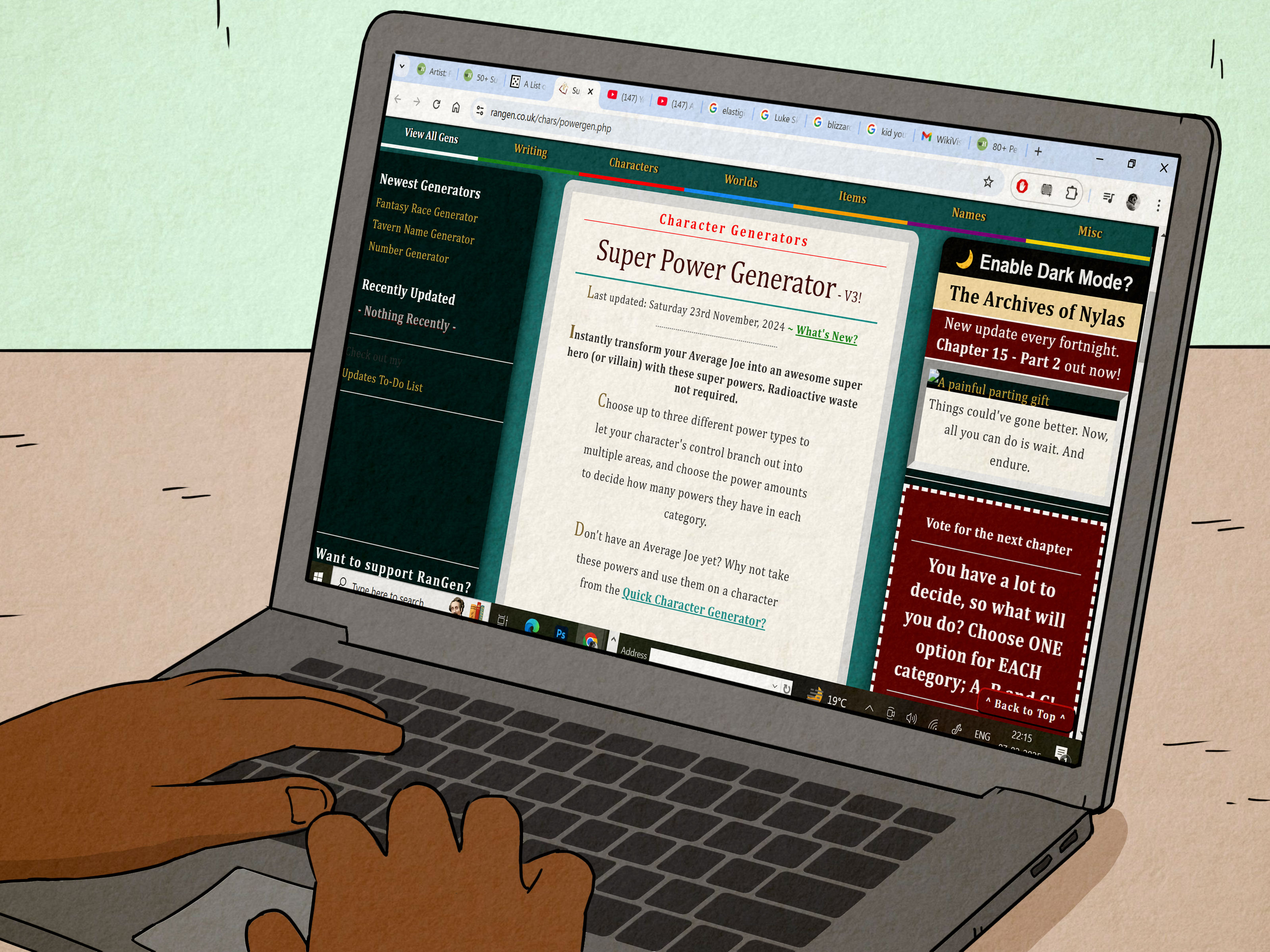

Every superhero needs a superpower. Otherwise, they are just a very dramatic person in tight clothing, and honestly, your local gym already has plenty of those. Whether you are building a comic-book hero, designing a fantasy character, writing a novel, creating a game, or simply wondering what ability would make Mondays less offensive, this guide gives you more than 50 superpower ideas that range from epic to ridiculous.
The best superpower ideas are not always the loudest ones. Yes, flight, invisibility, super strength, and telepathy are classics for a reason. But sometimes the most memorable character is the one who can rewind a single sneeze, speak fluent vending machine, or turn awkward silence into physical fog. A power becomes interesting when it has limits, consequences, personality, and a little bit of chaos sprinkled on top like suspicious glitter.
Below, you will find cool powers, unique powers, funny powers, weird powers, villain-friendly abilities, and practical everyday superpowers. Use them for stories, role-playing games, character sheets, creative writing prompts, comics, animation, or your secret plan to become the most interesting person at a party.
What Makes a Superpower Idea Actually Good?
A strong superpower does more than make a character “powerful.” It creates story. If a hero can teleport anywhere instantly with no cost, half the plot packs its suitcase and leaves. But if teleportation only works when the character can clearly remember the smell of the place, suddenly every jump becomes personal, risky, and slightly weird.
Good superpower ideas usually have four ingredients: usefulness, limits, personality, and conflict. Usefulness makes the power exciting. Limits keep it from becoming boring. Personality makes it feel attached to one specific character. Conflict gives the power a price, a weakness, or a hilarious inconvenience.
Ask These Questions Before Choosing a Power
Can the power solve problems? Can it also create problems? Does it match the character’s fears, dreams, flaws, or sense of humor? Would the power still be interesting in a quiet scene, not just during a rooftop battle with lightning and unnecessary wind? If the answer is yes, you have a keeper.
Cool Superpower Ideas
These powers feel cinematic, dramatic, and hero-ready. They are excellent for action stories, fantasy teams, science-fiction worlds, and characters who deserve a slow-motion entrance.
- Gravity Control: The user can increase, reduce, or redirect gravity around objects and people. Great for floating cities, crushing villains, and making furniture assembly even more dangerous.
- Shadow Travel: The character can move through connected shadows like secret tunnels. Bright daylight becomes the enemy, which is rude but useful for tension.
- Time Echoes: The user sees faint afterimages of what happened in a location during the last few minutes. Perfect for detectives, spies, and people trying to find where they left their keys.
- Metal Whispering: The user can communicate with metal objects and learn what they have touched, heard, or endured. A sword with gossip? Dangerous. A mailbox with trauma? Understandable.
- Solar Charging: The character absorbs sunlight to boost speed, strength, healing, or energy blasts. Rainy days become less “cozy aesthetic” and more “career crisis.”
- Sound Sculpting: The user shapes sound waves into shields, blades, bridges, or illusions. A bad karaoke night could become a national emergency.
- Memory Mapping: The character can enter someone’s memories and explore them like rooms in a house. Some rooms are locked. Some have clowns. Nobody asked for the clowns.
- Storm Threading: The user pulls lightning, wind, and rain into controlled patterns. This is ideal for sky warriors, weather witches, and anyone with dramatic hair.
- Kinetic Storage: The character absorbs impact and releases it later. Punch them once, and they may return the favor with interest.
- Instant Armor: The user can summon protective armor based on emotion. Confidence creates gold plating; fear creates spikes; embarrassment creates a helmet that refuses to open.
Unique Superpower Ideas
Unique powers are especially useful when you want a character to stand out. These abilities feel fresh because they twist familiar concepts or focus on overlooked parts of reality.
- Probability Nudging: The user cannot control luck completely, but they can gently push odds in their favor. A coin lands heads. A door jams. A villain slips on the only banana in a three-mile radius.
- Emotion Translation: The character can understand emotions as colors, sounds, tastes, or textures. Anger might smell like burnt toast. Jealousy might sound like a violin being bullied.
- Object Loyalty: Items the character owns become more durable and helpful over time. Their jacket blocks knives. Their pen never runs out. Their coffee mug judges enemies.
- Temporary Expertise: By touching a tool, the user briefly gains the skill to use it. Touch a violin, play beautifully. Touch a tax form, still cry, but with professional technique.
- Silence Generation: The user creates zones where no sound can exist. This is powerful for stealth, emotional conversations, and escaping leaf blowers.
- Reverse Healing: The character can transfer injuries from one person to another object. A broken arm becomes a cracked table leg. The furniture industry is not pleased.
- Name Binding: If the user knows a person’s true name, nickname, or chosen title, they can briefly influence that person’s movement. This makes introductions extremely dangerous.
- Dream Borrowing: The character can borrow ideas, images, or warnings from other people’s dreams. Side effects include confusion, prophecy, and craving cereal at 3 a.m.
- Pattern Sight: The user sees hidden patterns in crowds, traffic, conversations, and battle movements. They are amazing strategists but terrible at relaxing in wallpapered rooms.
- Personal Weather: A small weather system follows the character’s mood. Sadness brings drizzle. Anger brings thunder. Flirting brings suspiciously cinematic breezes.
Funny Superpower Ideas
Funny superpowers are perfect for comedy, parody, children’s stories, animated shorts, and side characters who accidentally steal the entire scene. The trick is to make the power silly but still useful in surprising ways.
- Summon One Sock: The user can summon exactly one sock from anywhere. Not a pair. Never a pair. Villains laugh until they trip on 400 single socks.
- Perfect Elevator Timing: The character can always make an elevator arrive instantly. Not flashy, but in a high-rise city, this person is basically royalty.
- Weaponized Awkwardness: The user creates unbearable awkward silence that freezes enemies in social discomfort. Even monsters fear secondhand embarrassment.
- Infinite Condiment Control: The character can summon ketchup, mustard, mayo, or hot sauce at will. This sounds useless until a floor becomes a slippery crime scene.
- Animal Roast Battle: The user can understand animals, but only when animals are insulting people. Birds have opinions. Cats have entire podcasts.
- Chair Magnetism: The user attracts chairs whenever they panic. This is excellent for defense and terrible at weddings.
- Instant Theme Music: Music plays whenever the character enters a room. They cannot control the genre. Sometimes it is heroic orchestration; sometimes it is discount polka.
- Leftover Prophecy: The user can predict the future by reading leftovers in the fridge. Lasagna knows more than it should.
- Perfect Parking: The character can always find the best parking spot. In some cities, this is not a funny power. This is divinity.
- Overdramatic Pointing: Whenever the user points at someone, wind blows, lights flicker, and everyone turns. It does no damage, but it wins arguments.
Weird Superpower Ideas
Weird powers are wonderful because they make readers lean closer and ask, “Wait, what?” These abilities are strange, memorable, and surprisingly flexible.
- Bone Music: The character can play melodies through their bones to create effects like healing, hypnosis, or mild confusion at airport security.
- Door Memory: The user can open any door and see everyone who has passed through it. Old doors become historical documentaries with hinges.
- Alphabet Manipulation: The character can remove one letter from reality for a short time. Remove “s,” and snakes become nakes. Society collapses faster than expected.
- Personal Gravity Sideways: The user experiences gravity from any direction they choose. Walls become floors. Ceilings become shortcuts. Stairs become a personal insult.
- Moth Command: The character controls moths. Not butterflies. Not bees. Moths. This is oddly powerful near lamps and extremely unsettling in capes.
- Texture Swapping: The user can swap textures between objects. A brick becomes soft as velvet; a pillow becomes concrete. Nap time becomes a legal matter.
- Echo Possession: The character can place a command inside an echo. When the sound returns, the command activates.
- Mirror Delay: Reflections show what someone will do five seconds later. Very useful in fights. Very disturbing while brushing teeth.
- Smell Portals: The user can teleport to the source of any smell they recognize. Pizza becomes transportation. Skunks become villains.
- Invisible Furniture Creation: The character creates invisible chairs, tables, stairs, and walls. Enemies cannot fight what they keep walking into.
Elemental and Nature-Based Superpowers
Elemental powers are classics because they are visual, symbolic, and easy to understand. To make them feel fresh, add unusual rules or emotional costs.
- Glass Growth: The user grows crystal-like glass from sand, soil, or broken windows. It can form shields, cages, lenses, or dramatic villain lairs.
- Root Walking: The character travels through connected plant roots. Forests become highways, while parking lots become tragic deserts.
- Fog Crafting: The user shapes fog into disguises, decoys, and soft barriers. Perfect for mysterious mentors and people who enjoy entering rooms unnecessarily.
- Magnetic Sand: The character controls iron-rich sand, forming blades, armor, or storms. Beaches become battlefields with sunscreen.
- Moonlight Healing: The user heals under moonlight but weakens under harsh artificial light. Great for gothic heroes and terrible for office jobs.
- Fungal Network Mind: The character communicates through mushrooms and fungal systems. They know secrets from forests, basements, and that one suspicious corner of the fridge.
- Ice Memory: The user freezes moments into ice crystals and can replay them later. The colder the memory, the clearer it becomes.
- Thunder Voice: The character’s voice can shake buildings, break weapons, or command storms. Whispering becomes an important life skill.
Mind, Reality, and Time Superpowers
These powers are powerful, so they need strong limitations. Reality-bending abilities can easily flatten a story unless the user pays a price or faces strict rules.
- Five-Second Rewind: The character can rewind only the last five seconds. This is enough to dodge a punch, fix a sentence, or relive dropping a taco with fresh heartbreak.
- Truth Weight: The user can feel how true a statement is as physical weight. Lies feel heavy, half-truths feel sticky, and political speeches require knee support.
- Idea Manifestation: The character can turn ideas into temporary objects. Vague ideas create floppy useless things. Clear ideas create tools.
- Fear Projection: The user makes enemies see their own fears. The power works best when the character understands fear, not when they simply want to scare people.
- Alternate Self Advice: The character can ask one question per day to a version of themselves from another timeline. Unfortunately, alternate selves may be dramatic, bitter, or obsessed with soup.
- Memory Editing: The user can remove or rewrite tiny memories. This is morally dangerous, emotionally rich, and perfect for complex villains or tragic heroes.
- Concept Locking: The character can temporarily lock a concept, such as “falling,” “burning,” or “being noticed.” If falling is locked, everyone hangs midair until the power ends.
Villain Superpower Ideas
A villain’s power should reveal how they see the world. A greedy villain might steal years from people’s lives. A perfectionist villain might freeze mistakes in place. A charming villain might control applause, which is terrifying if you think about it for longer than three seconds.
- Debt Magic: The villain grants wishes that must be repaid with memories, strength, or years of life.
- Applause Control: The villain becomes stronger when people clap, cheer, or approve. Public events become dangerous power stations.
- Regret Chains: The villain turns a person’s regrets into visible chains that slow movement and weaken courage.
- Identity Theft Aura: People near the villain slowly forget their own names, roles, and loyalties.
- Perfect Lie Field: Inside a certain radius, every lie sounds completely believable, even to the liar.
- Mercy Drain: The villain weakens anyone who hesitates to harm them, making kindness costly but still heroic.
How to Make Any Superpower More Interesting
If your superpower idea feels too familiar, do not throw it away. Add a twist. Flight is common, but what if the hero can only fly while holding their breath? Invisibility is classic, but what if the character’s shadow remains visible? Super strength is famous, but what if every use steals energy from the nearest electrical grid, causing blackouts and very angry neighbors?
Give the Power a Cost
A power with no cost is a shortcut. A power with a cost is a story engine. Costs can be physical, emotional, social, moral, or ridiculous. Maybe the hero ages one minute every time they teleport. Maybe their fire powers only work when they tell the truth. Maybe their psychic ability gives them everyone’s grocery list instead of useful secrets.
Match the Power to the Character
The most memorable powers feel personal. A shy character with thunder voice must learn when to speak. A control freak with probability powers must accept uncertainty. A grieving hero with memory mapping must decide whether living in the past is worth losing the present. That is where superpower ideas become more than cool effects. They become character arcs.
Create a Weakness That Is Not Boring
Weaknesses should not feel like random stickers slapped onto a character sheet. “Can fly, but afraid of heights” works because it creates emotional conflict. “Controls fire, but gets cold easily” creates practical problems. “Can read minds, but only hears thoughts sung in opera” creates comedy, pain, and possibly an unpaid theater internship.
Best Superpower Ideas for Different Story Types
For action comics, choose visual powers like gravity control, thunder voice, kinetic storage, or glass growth. For mystery stories, use time echoes, door memory, truth weight, or pattern sight. For romance, try emotion translation, personal weather, dream borrowing, or five-second rewind. For comedy, weaponized awkwardness, perfect parking, chair magnetism, and instant theme music are ready to cause beautiful nonsense.
For darker fantasy, consider regret chains, name binding, shadow travel, memory editing, or moonlight healing. For middle-grade adventures, object loyalty, root walking, animal roast battle, and invisible furniture creation are easy to understand and fun to imagine. For science-fiction, probability nudging, concept locking, temporary expertise, and alternate self advice can create clever plots without needing a cape budget.
Experience-Based Reflections: Using Superpower Ideas in Creative Projects
When working with superpower ideas, the first lesson is simple: the strangest powers often create the strongest scenes. A writer may begin by wanting a hero who can fly, because flight is iconic and easy to picture. But once the character can fly, the writer has to work harder to create obstacles. Locked doors no longer matter. Traffic becomes decorative. Even dramatic rooftop escapes lose tension when the hero can casually leave like a pigeon with better posture.
That is why smaller, odder powers are so useful in storytelling. A character who can hear lies as musical notes may not defeat an army with one punch, but they can turn a quiet dinner scene into a battlefield. A hero who can summon one sock sounds silly until the story needs a distraction, a clue, a trail marker, or a way to jam machinery. Odd powers invite creative problem-solving. They force characters to think instead of simply blasting through every wall like an overconfident blender.
Another important experience is that readers remember limits. “She controls fire” is clear, but “she controls fire only when she is calm” is instantly more dramatic. Now every battle is also an emotional test. If she panics, the flame dies. If she becomes angry, the fire spreads beyond control. The power is no longer just an ability; it is a mirror. It reveals who the character is under pressure.
Funny powers also work best when the story treats them seriously. If a character has perfect parking, make that power matter. Maybe the city is impossible to navigate. Maybe every perfect parking spot appears near danger. Maybe the hero discovers that the power is not about cars at all, but about being placed exactly where destiny needs them. Comedy becomes stronger when it has structure beneath the joke.
For games and role-playing campaigns, the most enjoyable superpowers are flexible but not unlimited. Players love abilities that can be used in surprising ways. Texture swapping, silence generation, object loyalty, and five-second rewind all encourage experimentation. The best moments often happen when someone uses a “weak” power brilliantly. Stopping a villain with invisible furniture may be less glamorous than throwing lightning, but it is much funnier and more memorable.
For character design, the power should influence clothing, posture, habits, fears, and relationships. Someone with sound sculpting might avoid crowded places. Someone with mirror delay may hate reflective rooms. Someone with moth command probably owns too many lamps and has accepted a deeply strange lifestyle. These details make the power feel lived-in rather than pasted on.
Finally, superpower ideas are not only about fantasy. They are a playful way to explore human wishes. People want to be seen, protected, understood, admired, free, forgiven, or finally able to open a pickle jar without negotiating with it. A great superpower exaggerates one of those desires. That is why cool, unique, funny, and weird powers keep inspiring stories. Beneath every impossible ability is a very human question: What would you do if the world suddenly gave you a little more power than you were ready for?
Conclusion
Superpower ideas are everywhere once you start looking. They hide in nature, technology, emotions, awkward social moments, dreams, fears, and that mysterious drawer full of cables nobody can identify. The best powers are not just strong; they are specific. They have rules, limits, personality, and consequences. A cool power makes readers excited. A unique power makes them curious. A funny power makes them laugh. A weird power makes them remember the character long after the story ends.
Whether you choose gravity control, emotional translation, five-second rewind, smell portals, regret chains, or the sacred ability to always find parking, make the power serve the character. Give it a cost. Give it a twist. Give it a reason to exist beyond looking cool on a poster. That is how a superpower becomes more than an ability. It becomes the spark that lights up the whole story.
Note: This article is an original, publication-ready synthesis based on superhero fiction conventions, comic-book history, character-writing principles, and creative power-design patterns. It contains no copied source text and no external source links.