
Note: This article is written for web publication and synthesizes ideas from real art education, online creativity, digital drawing, classroom prompt, and community challenge discussions.
Why “Draw Something On This Picture” Is the Internet’s Most Delightfully Chaotic Art Challenge
Every once in a while, the internet remembers it has crayons. Not literally, of coursealthough somewhere, someone is definitely drawing a tiny wizard on a grocery receiptbut creatively. The challenge “Draw Something On This Picture” is one of those wonderfully simple ideas that turns an ordinary image into a playground. A blank sidewalk becomes a dragon runway. A boring cup of coffee becomes a hot tub for a tiny alien. A photo of a cat staring at nothing suddenly becomes a dramatic movie poster titled The Ghost Behind the Tuna.
The beauty of this drawing challenge is that it does not ask participants to be professional artists. It does not demand perfect anatomy, museum-level shading, or the ability to draw hands without turning them into five sad sausages. Instead, it asks one friendly question: what do you see here that no one else sees yet?
That question is powerful. It invites imagination, humor, visual storytelling, and community participation. It works for kids, casual doodlers, digital artists, teachers, meme-makers, and anyone who has ever looked at a random photo and thought, “This needs a tiny pirate ship.” Whether the picture is a landscape, a household object, a street scene, or a mysterious blob that looks suspiciously like a potato with ambition, the challenge turns passive scrolling into active creativity.
What Is the “Draw Something On This Picture” Challenge?
The concept is straightforward: someone shares a picture, and participants add their own drawing to it. The original image acts as the visual prompt. Instead of starting from a blank page, artists build on what is already there. This could mean adding cartoon characters, fantasy creatures, speech bubbles, hidden stories, surreal details, funny captions, or clever visual illusions.
In many ways, the challenge belongs to the larger family of online art prompts, sketchbook challenges, “complete the drawing” activities, and community doodle games. These formats are popular because they lower the pressure of starting. A blank page can feel intimidating, like it is silently judging your life choices. A picture with a tree, a bench, or a funny shadow gives the brain something to grab onto. Suddenly, the question is not “What should I draw?” but “What could this already be?”
That small shift matters. Art educators often talk about the value of giving creators structure while still leaving room for freedom. A picture prompt provides boundaries, but the interpretation remains wide open. One person sees a cloud and draws a sleeping whale. Another sees the same cloud and draws an exploding popcorn factory. Both are correct. That is the magic.
Why Picture-Based Drawing Challenges Are So Addictive
They Make Creativity Feel Easy to Start
One of the biggest barriers to drawing is not skillit is hesitation. People say, “I don’t know what to draw,” or “I’m not creative,” or “My stick figures look emotionally unwell.” A challenge like “Draw Something On This Picture” removes that first obstacle. The picture supplies the setting, shapes, colors, and mood. The participant only needs to add a twist.
This makes the challenge especially useful for beginners. Instead of inventing an entire composition from scratch, they can focus on one element: a character, a prop, a funny detail, or a small scene. The result feels achievable, and that feeling encourages people to keep going.
They Turn Observation Into Play
Good drawing begins with noticing. A crack in a wall might become lightning. A shadow might become a monster. A puddle might become a portal. The challenge trains people to look more carefully at everyday images. It rewards curiosity. It says, “Look again. There is probably a raccoon wearing sunglasses hiding in this photo.”
That kind of visual thinking is not just fun; it is useful. Drawing has long been connected with learning, memory, and problem-solving because it forces the brain to translate ideas into images. When someone draws on a picture, they practice interpretation, composition, proportion, and storytelling, even if they think they are “just doodling.” Sneaky education! The best kind.
They Build Community Without Needing a Big Production
Online art challenges thrive because they create a shared starting point. Everyone begins with the same picture, but the results are wildly different. That makes the comment section more entertaining than a raccoon at a formal dinner. Viewers compare interpretations, laugh at unexpected ideas, and appreciate the range of styles.
A single photo might inspire one detailed digital painting, ten silly doodles, three dramatic fantasy scenes, and one person who adds a suspiciously confident goose. The diversity is the point. These challenges remind people that creativity is not a single “right answer.” It is a room full of different brains politely making chaos together.
How to Join the Challenge Without Overthinking It
Participating is easy. First, choose a picture. It can be your own photo, a copyright-safe image, a classroom worksheet, a community prompt, or a picture shared specifically for the challenge. The safest option for publishing online is to use your own image or one you have permission to edit. Nobody wants their fun doodle adventure interrupted by a copyright goblin.
Next, study the picture for shapes and storytelling opportunities. Ask yourself: What does this shape remind me of? Where is the empty space? What would make this image funnier, stranger, cuter, or more dramatic? Does that lamp look like a robot? Is that rock secretly a turtle? Could that chair be the throne of a very small king?
Then draw. Use a pencil, marker, tablet, phone app, laptop, or whatever tool feels comfortable. The drawing does not have to be polished. In fact, quick sketches often work best because they keep the energy loose and playful. Add your detail, save the image, and share it with a caption that explains the ideaor do not explain it at all and let people enjoy the confusion.
Creative Ideas for “Draw Something On This Picture”
1. Add a Tiny Character With Big Main-Character Energy
One of the easiest ways to improve a picture is to add a tiny character doing something dramatic. A small knight fighting a household spoon. A little astronaut walking across a kitchen counter. A mini detective inspecting a suspicious raisin. Tiny characters instantly create scale, story, and humor.
2. Turn Objects Into Creatures
Look at the shapes inside the photo. A backpack could become a sleepy bear. A car could become a beetle. A pile of laundry could become a mountain troll, which is honestly not far from reality. Object transformation is a classic creative exercise because it asks the artist to reinterpret what already exists.
3. Add a Portal, Door, or Secret World
Blank walls, puddles, windows, mirrors, and shadows are perfect places to draw hidden worlds. Add a glowing doorway. Draw a tiny city inside a crack in the pavement. Turn a refrigerator into the entrance to a snow kingdom. This type of addition works especially well because it makes the ordinary feel magical.
4. Create a Before-and-After Joke
Humor is one of the strongest engines of the challenge. A photo of a calm dog can become a scene where the dog is secretly controlling a spaceship. A lonely chair can become “the employee of the month” at a ghost office. The best jokes usually come from contrast: serious picture, ridiculous addition.
5. Use Speech Bubbles and Captions
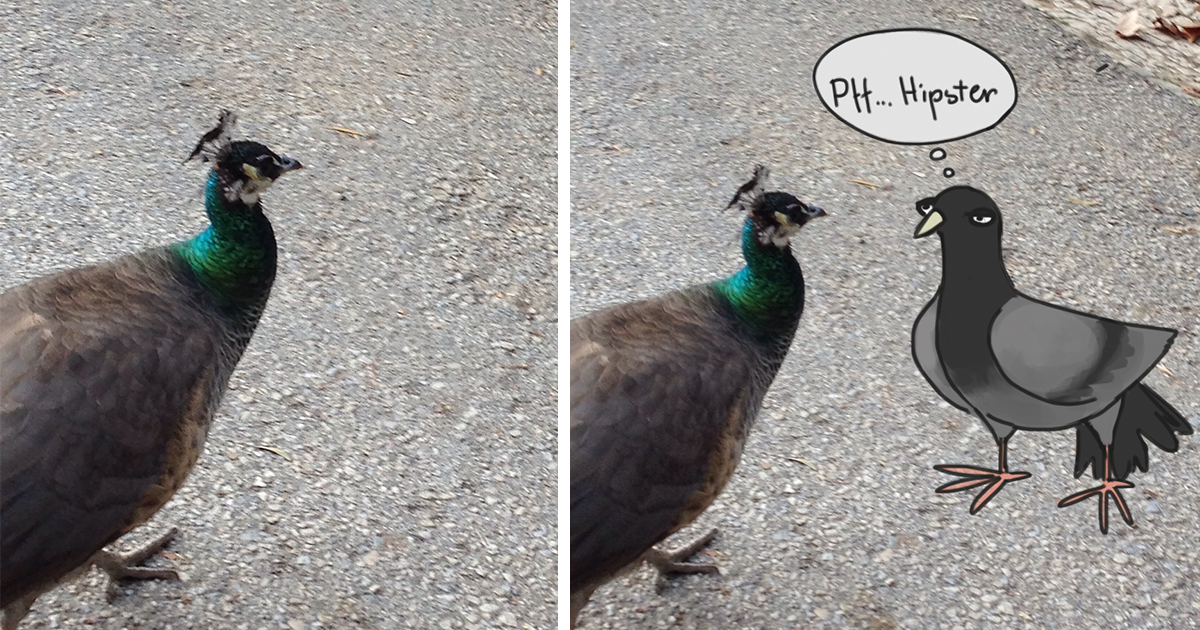
You do not always need complex drawing skills. A speech bubble can completely change the story. A plant saying, “I demand better sunlight,” or a toaster saying, “I know what bread fears,” can make a simple image unforgettable. Captions are beginner-friendly and excellent for social sharing.
Why This Challenge Works for Schools, Families, and Online Communities
Teachers often use drawing prompts because they offer a structured way to practice creative thinking. A picture-based challenge is especially flexible. It can be used in art class, language arts, storytelling activities, remote learning, warm-up exercises, or group projects. Students can draw their additions and then write a short explanation of the scene. That turns a simple doodle into a bridge between visual art and writing.
Families can use the challenge as a low-cost creative activity. Print a photo, pass it around, and let each person add something. By the end, the picture might look like a committee meeting attended by dinosaurs, robots, cupcakes, and one emotionally complex snail. That is family bonding, basically.
For online communities, the challenge creates engagement because it is easy to understand and fun to respond to. People do not need a long tutorial. They see the picture, understand the task, and start imagining possibilities. The format also encourages repeat visits because participants want to see what others created from the same image.
Digital Tools That Make the Challenge Easier
You can join the challenge with basic tools, but digital apps make the process especially convenient. Many creators use phone editing apps, tablet drawing apps, desktop illustration software, or browser-based tools. Layers are particularly helpful because they let you draw on top of the original image without permanently changing it. If your first idea becomes a disaster, you can delete the layer and pretend it never happened. Technology: protecting artistic dignity since forever.
For beginners, simple brush tools and opacity settings are enough. For advanced artists, the challenge can become a full digital painting exercise involving lighting, perspective, texture, and color matching. The key is to make the added drawing feel like it belongsor to make it hilariously obvious that it does not belong. Both approaches can work beautifully.
SEO and Social Media Value of This Challenge
From a content strategy perspective, “Challenge: Draw Something On This Picture” is highly shareable. It invites participation, not just consumption. That matters for websites, blogs, social pages, and online communities because interactive content keeps audiences involved longer. A reader who might scroll past a normal image may stop when asked to add something creative.
The title also contains strong search-friendly phrases such as “draw something,” “drawing challenge,” “draw on this picture,” “creative drawing prompt,” and “complete the picture.” These keywords naturally match what people search for when looking for fun art activities, classroom prompts, sketchbook ideas, or online creativity games.
However, the best SEO approach is not to repeat the title until it becomes annoying. Search engines are not impressed by keyword soup. Humans are even less impressed. Instead, strong content should explain the challenge, give examples, offer practical tips, and answer related questions. That creates a better user experience and helps the page rank for broader related searches.
Common Mistakes to Avoid
Using Images Without Permission
If the final artwork will be published online, use your own photos, public domain images, licensed images, or pictures shared with clear permission. A drawing challenge should be fun, not a surprise legal homework assignment.
Trying Too Hard to Make It Perfect
Perfection can drain the joy out of a playful challenge. The goal is not always to produce a portfolio masterpiece. Sometimes the best entry is a quick doodle that makes people laugh. A wobbly dragon with confidence is still a dragon.
Copying Someone Else’s Idea Too Closely
Inspiration is normal, but direct copying makes the challenge less interesting. The fun comes from seeing your own interpretation. Ask yourself what only you would notice, exaggerate, or invent.
How to Make Your Entry Stand Out
Start with a clear idea. The most memorable challenge entries are easy to understand at a glance. If your viewer needs a 12-page instruction manual to understand why the mailbox is wearing a crown, the joke may need simplifying.
Use contrast. Put something tiny in a huge space, something magical in a boring scene, or something serious in a silly situation. Contrast creates surprise, and surprise creates attention.
Match the angle and lighting when possible. If you want your drawing to blend into the picture, pay attention to shadows, perspective, and color temperature. A tiny dinosaur standing on a real sidewalk will look more convincing if its feet follow the ground angle and its shadow points in the right direction.
Finally, add personality. The internet sees endless polished images every day. What people remember is the funny detail, the unexpected expression, the weird little story, or the brave decision to draw a duck running a bank.
Why Adults Should Try It Too
Many adults stop drawing because they decide they are “not artists.” That belief usually begins somewhere around the age when someone compares their horse drawing to another person’s horse drawing and realizes theirs looks like a table with emotional problems. But drawing is not reserved for professionals. It is a form of thinking, playing, observing, and communicating.
The “Draw Something On This Picture” challenge is perfect for adults because it feels low-risk. You are not declaring yourself the next great master of visual culture. You are just adding a wizard hat to a traffic cone. That small act can reopen a creative door that has been closed for years.
In a world full of productivity goals, deadlines, and screens that mostly ask us to consume, playful drawing offers a refreshing reversal. You make something. It can be silly. It can be imperfect. It can exist simply because making it felt good.
Personal Experiences and Real-Life Reflections on the Challenge
The first time many people try a picture-based drawing challenge, they usually expect it to be easy. After all, the picture is already there. How hard can it be to add one tiny doodle? Then they stare at the image for five minutes like it owes them money. This is normal. The brain needs a little warm-up before it starts turning clouds into dragons and coffee mugs into luxury apartments for frogs.
One helpful experience is to begin with the obvious idea, even if it feels too simple. If a crack in the wall looks like lightning, draw lightning. If a shadow looks like a shark, draw the shark. The obvious idea is not a failure; it is the doorway. Once the first version exists, the second idea often becomes more interesting. Maybe the lightning belongs to a tiny wizard. Maybe the shark is late for a dentist appointment. Creativity often arrives after the pencil starts moving, not before.
Another common experience is discovering that humor beats technical skill more often than expected. A beautifully rendered dragon is impressive, but a badly drawn dragon holding a tiny “Will Work for Snacks” sign may get more smiles. This is not because skill does not matter. Skill is wonderful. But in a challenge built around participation, personality is the secret sauce. People respond to ideas that feel human, playful, and surprising.
The challenge also teaches patience in a sneaky way. When drawing over a real photo, you begin noticing details you would normally ignore: where light comes from, how objects overlap, which spaces feel empty, and how scale changes the mood of a scene. A tiny person standing beside a cereal bowl turns breakfast into architecture. A monster hiding behind a curtain makes the room feel like a story. The picture becomes more than a background; it becomes a partner.
For group settings, the experience can be even better. Give the same picture to ten people and you will get ten different worlds. One person adds a spaceship. Another adds a fairy village. Someone else draws a businessman fish yelling into a phone. There is always one participant who turns everything into a cat. Respect that person. They understand the internet.
What makes this challenge especially memorable is that it removes the pressure to be original in a grand, dramatic way. You do not need to invent an entire universe. You only need to notice one possibility inside an existing image. That is a gentle way to practice creativity. It rewards small ideas, quick experiments, and visual jokes. Over time, those small efforts build confidence.
The best experience comes from treating the challenge like a creative conversation. The picture says, “Here is a bench.” You answer, “Actually, it is a spaceship repair station.” The picture says, “Here is a puddle.” You answer, “No, this is clearly a portal for ducks.” The result is part drawing, part storytelling, part comedy, and part proof that the human imagination can make almost anything more interesting.
In the end, “Challenge: Draw Something On This Picture” is not just about drawing. It is about seeing. It asks people to look at ordinary images and find hidden possibilities. It encourages beginners to participate, gives skilled artists a fun constraint, and turns viewers into creators. That is why the format continues to work across blogs, classrooms, social platforms, and creative communities. It is simple, flexible, funny, and endlessly reusable.
Conclusion
The “Challenge: Draw Something On This Picture” trend proves that creativity does not need a fancy studio, expensive supplies, or a dramatic speech about artistic destiny. Sometimes it only needs a picture, a playful idea, and the courage to draw a tiny raccoon where no tiny raccoon has gone before.
For artists, this challenge is a useful exercise in observation, composition, and storytelling. For beginners, it is a friendly invitation to start without fear. For teachers and families, it is an easy activity that sparks imagination. For websites and online communities, it is interactive content with strong engagement potential. Most importantly, it reminds everyone that art can be fun, accessible, and wonderfully weird.