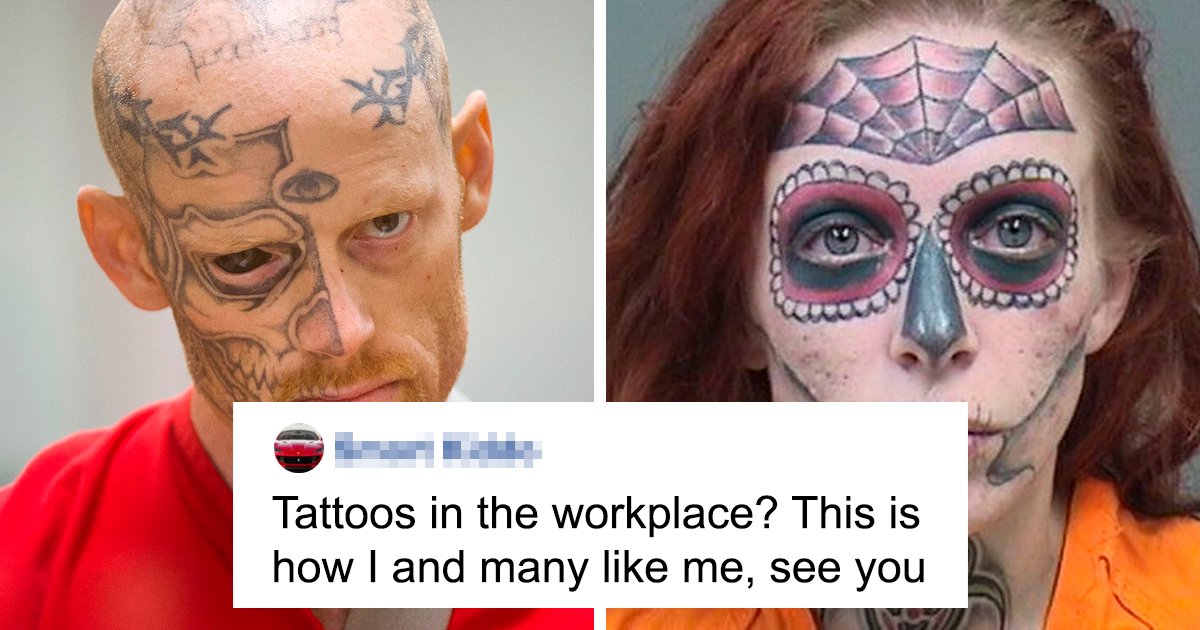
Guy Rants About Tattoos In A Workplace, Gets Shamed For His Own Unprofessional Pic

Every office has at least one person who treats “professionalism” like a personality trait. You know the type: they don’t just dislike somethingthey write a manifesto about it. In this case, the villain of our story decided that visible tattoos are the downfall of modern civilization and absolutely do not belong at work.
And then the internet did what it does best: it checked his profile picture. Turns out his idea of a “professional image” wasn’t exactly a crisp headshot with a neutral background. He got called out, loudly, and the conversation instantly shifted from “Are tattoos unprofessional?” to “Buddy… have you seen you?”
Funny? Yes. Useful? Also yesbecause this mini-drama exposes a bigger truth about tattoos in the workplace: most arguments about ink aren’t really about ink. They’re about bias, double standards, and inconsistent rules disguised as “company culture.”
Why Tattoos Still Trigger Workplace Drama (Even Now)
Tattoos are mainstream. Like, “your accountant has a sleeve under that cardigan” mainstream. A sizable chunk of American adults have at least one tattoo, and many have more than one. In other words, banning visible tattoos isn’t just a style preference anymoreit can shrink your talent pool fast.
So why does the debate keep resurfacing? Because tattoos sit at the intersection of three corporate pressure points: brand image, customer expectations, and that ancient office artifact known as “We’ve always done it this way.”
Also, let’s be honest: “tattoos are unprofessional” is often shorthand for “tattoos make me uncomfortable,” which is not the same thing as “tattoos prevent someone from doing excellent work.”
The Real Issue Isn’t InkIt’s Context
1) Customer-facing roles vs. behind-the-scenes work
A workplace tattoo policy usually gets strictest where a company believes appearance affects customer trust: luxury retail, certain financial services roles, some hospitality environments, and conservative client-facing sales. Meanwhile, in tech, creative fields, and many remote-first teams, visible tattoos barely register as “a thing.”
Here’s the uncomfortable part: some leaders aren’t protecting a brand standardthey’re trying to predict the preferences of the most judgmental customer in existence. It’s risk management… but sometimes it’s also just fear, dressed up in business casual.
2) Safety and operational considerations (the practical stuff)
Tattoos themselves usually aren’t the safety issuejob requirements are. If the role involves protective gear, sterile environments, or strict uniform standards, then “cover it” may be about compliance and consistency. In those cases, the rule should be tied to the job’s demands, not vibes.
3) Offensive content is a separate category
Not all tattoos are created equal in the workplace. A floral forearm piece is not the same HR situation as hate symbols, graphic violence, explicit imagery, or anything that could reasonably create a hostile environment. A smart dress code distinguishes between “visible” and “inappropriate.”
What Research Says About Tattoos and Careers
Tattoos don’t automatically tank employment or wages
One of the biggest misconceptions is that tattoos destroy job prospects across the board. Research summarized in major business publications and academic work has found no clear, across-the-board penalty for tattoos in employment and earnings. Translation: in the modern labor market, tattoos aren’t the automatic career kryptonite some people still imagine.
But perception can vary by industry and situation
Here’s where nuance matters. Some consumer-perception studies suggest visible tattoos can affect how a customer rates service employeesespecially depending on the type of service, the customer’s age, and the setting. It’s not “tattoos = bad,” it’s “context changes interpretation.”
In practical terms: in a creative agency, tattoos might read as “authentic” or “artistic.” In a conservative client meeting, the same tattoos might be interpreted as “risky” or “nontraditional,” even if the person is perfectly competent. That gap isn’t always fair, but pretending it doesn’t exist won’t help employees navigate real workplaces.
Bias is still bias, even when it’s wearing a tie
The workplace tattoo conversation often reveals a bigger problem: people confuse “professionalism” with “similar to me.” And once a rule is based on personal taste, enforcement becomes inconsistentmeaning the policy can turn into a magnet for resentment, morale damage, and accusations of favoritism.
Can Employers Ban Visible Tattoos? The HR Reality Check
In the U.S., employers commonly set appearance and dress code standards, which can include restrictions on visible body artespecially when rules are applied consistently. But there’s a major, important exception: if a tattoo is tied to a sincerely held religious practice, employers may need to consider reasonable accommodation unless it creates an undue hardship.
This is where “I just don’t like it” becomes a risky foundation for a policy. A thoughtful approach focuses on job relevance (client expectations, safety, uniform requirements, offensive content), and builds in a process for accommodations when legally required.
Not legal advicejust the common-sense version: if your “professional image” rule is basically “whatever my manager finds aesthetically pleasing,” you’re building a policy on quicksand.
If You’re the Manager: A Tattoo Policy That Doesn’t Start a War
If you manage people (or write policies), your goal isn’t “win the tattoo argument.” Your goal is clarity, consistency, and a workplace that doesn’t feel like a 2006 reality show audition.
What strong policies do
- Define the standard (e.g., “no offensive imagery,” “must be coverable in client-facing roles”).
- Explain the business reason (customer-facing expectations, uniform requirements, safety gear, etc.).
- Apply consistently across departments and job levels (yes, including the “top performer”).
- Offer practical options (long sleeves, makeup cover, sleeves, role-based flexibility).
- Include an accommodation process for religious practices and other protected needs.
What weak policies do
- Use vague language like “professional appearance required” and then improvise enforcement.
- Ban “visible tattoos” but ignore the manager’s offensive joke calendar and golf-cart beer photo.
- Target individuals instead of setting role-based expectations.
The fastest way to create a culture war is to enforce “professionalism” selectively. The second-fastest way is to confuse “professional” with “my personal preference.”
If You’re the Employee: How to Read the Room Without Shrinking Yourself
If you have tattoos (or want them), you shouldn’t have to hide who you are. But it helps to navigate strategically, especially when you’re entering a new workplace.
Smart, practical moves
- During interviews: when in doubt, keep tattoos covered until you understand the culture.
- Ask for the policy (employee handbook, dress code, client-facing guidelines).
- Know your “cover plan” for conservative meetingsthink of it like owning one nice blazer.
- Avoid the obvious landmines: anything that could be interpreted as hate, harassment, explicit content, or threats.
The goal isn’t to apologize for having tattoos. The goal is to avoid being judged by the most outdated person in the room before you’ve even had the chance to show your work.
The Profile-Pic Plot Twist: Professionalism Is a Mirror
Let’s go back to our ranting guy. He wanted to police someone else’s appearance, but his own “professional image” didn’t survive a two-second profile check. That’s the secret lesson hidden inside the drama: professionalism is holistic.
If you’re going to lecture coworkers about “appropriate appearance,” your own choices will be evaluated too: your profile photo, your email tone, your meeting behavior, your respect for other people’s boundaries, andyes whether you treat personal taste as moral truth.
In many modern workplaces, a tattoo is neutralbut a public-facing profile picture that screams “I make bad decisions on purpose” is a bigger problem. People don’t want colleagues who look edgy. They want colleagues who are reliable.
The irony is delicious: the guy wasn’t “defending professionalism.” He was broadcasting judgment, then got humbled by the very standard he claimed to care about.
Where Tattoo Acceptance Is Headed
The trend line is clear: society has become more accepting of tattoos, and workplaces are adaptingsometimes slowly, sometimes all at once. Companies competing for talent are increasingly cautious about rules that feel arbitrary, old-fashioned, or exclusionary.
That doesn’t mean “anything goes.” It means standards are shifting from “no ink ever” to “don’t be offensive, disruptive, or inconsistent with the role.” In other words: less pearl-clutching, more clarity.
If you’re an employer, this isn’t just an inclusion conversation. It’s also a recruiting conversation. Restrictive rules can push away qualified candidates in a labor market that increasingly values authenticity and flexibility.
Conclusion: Stop Policing Skin, Start Managing Standards
The “tattoos at work” debate is rarely about performance. It’s about perceptionand perception is shaped by culture, industry, and bias. Research suggests tattoos aren’t a guaranteed career penalty, but context can still affect how people respond, especially in certain customer-facing roles.
For managers: write clear policies, tie them to real business needs, and enforce consistently. For employees: don’t assume every office is the same; learn the norms, then decide how you want to show up.
And for anyone tempted to go on a tattoo rant: maybe double-check your own profile picture first. Because nothing ruins a “professionalism” speech faster than delivering it while standing in the digital equivalent of flip-flops.
of Real-World Experiences (So You Don’t Become That Guy)
In real workplaces, tattoo drama usually starts smallone comment, one side-eye, one “just curious” question that isn’t actually curious. A new hire joins with a visible forearm tattoo and, within a week, someone “helpfully” suggests long sleeves because “leadership might not like it.” Nobody can name which leader, what rule, or what client complaint. It’s just a ghost story people pass around to justify their own discomfort.
Another common scenario: the employee with tattoos is praised for being “creative” when the company wants edgy marketing, then quietly pressured to cover up when a conservative client visit appears on the calendar. The employee isn’t mad about dressing up for a meetingthey’re mad that the expectation was unspoken, inconsistent, and delivered like a personal critique rather than a role requirement.
You also see the “policy lottery.” One department doesn’t care at all. Another acts like a tiny tattoo is a compliance emergency. Employees talk. When rules vary without explanation, people don’t assume “different job needs.” They assume “different favorites.” That’s how a small appearance issue becomes a big trust issue.
In healthcare and hospitality, experiences can be even more mixed. Some teams are relaxed because patients and guests truly don’t care. Others keep tighter standards because leadership worries about older demographics or a specific brand image. The best-run organizations don’t argue about tattoos in the hallwaythey set standards: “No hate symbols. No explicit imagery. Cover if you’re in this particular role. Here are your options.” Clarity reduces conflict more than any debate ever will.
Then there’s the modern twist: remote work. On video calls, no one knows (or cares) about your tattoos until you reach for your coffee and a sleeve appears on screen. The “ink panic” usually comes from someone who’s already in the habit of policing optics. Meanwhile, the team that values outcomes barely notices because they’re busy reading the dashboard and hitting deadlines.
Finally, the most relatable experience: the hypocrisy moment. The coworker who lectures others about “professional presentation” is the same one with a chaotic social media profile photo, an aggressive comment history, or a habit of showing up late and blaming traffic like it’s a new invention. When people say “tattoos are unprofessional,” what they often mean is “I have a personal preference and I’m going to pretend it’s a universal rule.” The healthiest workplaces flip the script: they define professionalism as reliability, respect, and competencethings you can actually measure. Ink optional.