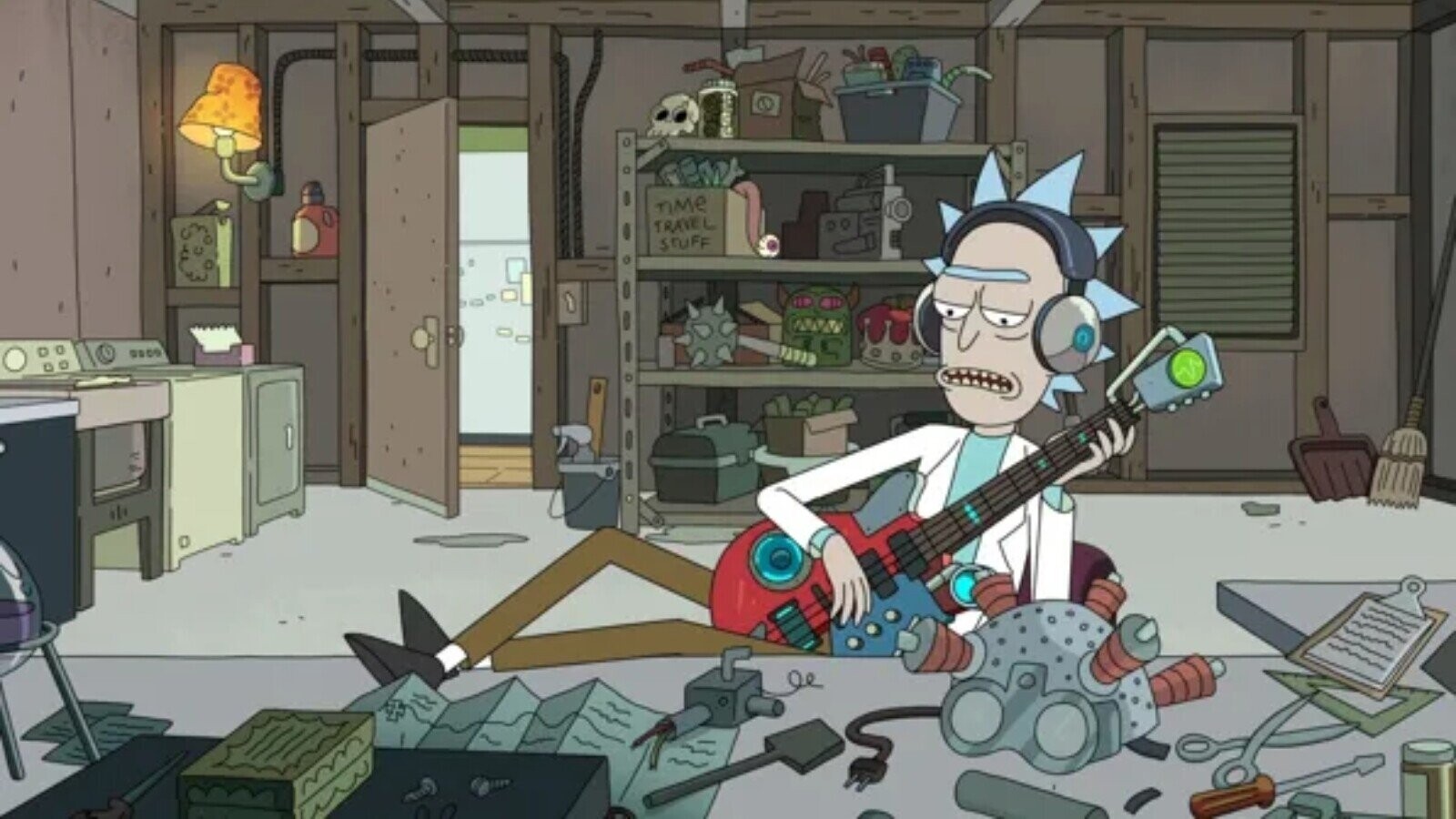

Some television Easter eggs announce themselves with a marching band, a portal gun, and a neon sign that says, “Please clap, Reddit.” Others arrive more quietly, like a battered CD in the background of a cartoon farmhouse, waiting for the exact viewer whose Venn diagram includes Rick and Morty, adult animation, sad piano albums, and the phrase “Tori Amos joke.” In Season 8, Episode 3, “The Rick, The Mort & The Ugly,” Dan Harmon and the Rick and Morty team slipped another Tori Amos reference into the chaos, turning a tiny music gag into one of the episode’s funniest and strangest talking points.
The joke lands because it feels so specific. A random pop-culture reference can be a throwaway. A second Tori Amos joke in Rick and Morty? That is no longer random. That is a breadcrumb trail. That is a man leaving emotional piano-rock fingerprints across a multiverse full of murder clones, Western shootouts, and traumatized Mortys. And because Harmon has publicly praised Amos’s classic album Little Earthquakes, the bit feels less like mockery and more like affectionate self-roasting. In other words: yes, the show is laughing at a grown man listening to Tori Amos, but it is also very much laughing with him.
What Happened in “The Rick, The Mort & The Ugly”?
“The Rick, The Mort & The Ugly” is the third episode of Rick and Morty Season 8, which aired on Adult Swim on June 8, 2025. The title is an obvious wink at Sergio Leone’s classic Western The Good, the Bad and the Ugly, and the episode embraces that influence with a dusty, gun-toting, revenge-driven setup. Instead of cowboys staring each other down across a sunburned cemetery, the episode gives us Rick variants, Morty clones, and enough multiverse violence to make a portal gun ask for a personal day.
The episode revisits the fallout from the Citadel of Ricks, a major piece of Rick and Morty mythology that has been blown up, rebuilt, mythologized, and joked about so many times it basically has tenure. Here, the story leans into a Western revenge structure. A version of Rick connected to Morty replication returns to a farmhouse and finds it wrecked by raiders. The vandalism includes a pointed insult aimed at his music taste: “What grown man listens to Tori Amos?” Nearby, his copy of Amos’s 1992 album Little Earthquakes has also been defaced.
On paper, this sounds like an absurdly niche background gag. In practice, it works because it tells us several things at once. First, this Rick is apparently the kind of guy who keeps physical media, which is already a character choice in the streaming age. Second, he loves Tori Amos enough for enemies to weaponize that fact against him. Third, somewhere in the writerly soul of Rick and Morty, there is a continuing belief that nothing says “emotionally complicated man” quite like owning Little Earthquakes on CD.
Why the Tori Amos Joke Is Not Really Random
This was not the first time Rick and Morty dipped into the Tori Amos well. In the Season 6 episode “Night Family,” Jerry bonds with his nocturnal counterpart over a shared appreciation for Amos. That earlier joke worked because it was perfectly Jerry: sweet, earnest, slightly embarrassing, and deeply uncool in the way that eventually loops back around to being kind of admirable. Jerry liking Tori Amos made sense. Jerry probably also alphabetizes his feelings and apologizes to furniture when he bumps into it.
The Season 8 joke is sharper because it transfers that musical taste from Jerry territory into Rick territory. That is the twist. In a show built around Rick’s aggressive genius, emotional avoidance, and performative contempt for normal human tenderness, a Tori Amos album becomes a hilarious vulnerability. It is not just a joke about music taste; it is a joke about masculinity, taste policing, and the terror of being caught enjoying something sincere.
The line “What grown man listens to Tori Amos?” is funny because it is a bad insult made by people who think sensitivity is a weakness. The joke boomerangs. The audience is invited to laugh at the attackers, not simply at the fan. After all, if a Rick can survive bullet wounds, clone wars, and multiversal collapse, surely he can survive the social consequences of enjoying one of the most acclaimed piano-driven albums of the 1990s.
Dan Harmon’s Longtime Love of Little Earthquakes
The reference has extra texture because Dan Harmon has talked openly about being moved by Little Earthquakes. In a past interview about his cultural influences, Harmon described playing the album repeatedly and being struck by its mix of comfort and venom. That description matters because it sounds like a blueprint for a lot of Harmon’s own writing: emotional confession wrapped in comedy, tenderness interrupted by cruelty, sincerity protected by a joke with a switchblade.
Little Earthquakes was Tori Amos’s debut solo album, released in 1992, and it became the record that established her as a singular voice in alternative music. Its best-known songs include “Silent All These Years,” “Crucify,” “Winter,” and the title track. The album’s power comes from the way Amos combines classical piano training, confessional songwriting, mythic imagery, and raw emotional directness. It is intimate without being small. It is delicate without being weak. It is the musical equivalent of a porcelain teacup that can also testify in court.
That is exactly why the album makes such a good Rick and Morty reference. Harmon’s comedy often lives in the collision between intellectual armor and emotional exposure. Rick Sanchez may pretend that feelings are a design flaw, but the show keeps proving that he is haunted by them. A Tori Amos joke fits right into that contradiction. It is funny because Rick-coded characters are supposed to be above that kind of naked vulnerability, and it is effective because the show knows they are not.
Why Music Matters So Much in Rick and Morty
Rick and Morty has always used music as more than decoration. The show’s soundtrack choices often clarify the emotional meaning of scenes that are otherwise buried under sci-fi noise. Think of the series’ melancholy needle drops, its bizarre original songs, and its willingness to let a joke become a full musical moment. The show can go from “Human Music” to cosmic despair in under a minute, which is basically its brand promise.
The Tori Amos gag continues that tradition, but in miniature. Instead of using music to score a dramatic emotional beat, the episode uses music taste as a character clue. It tells us something about the kind of person this Rick might be when he is not dodging bullets. It also reveals the show’s comfort with deep-cut references. Rick and Morty does not always explain its jokes. Sometimes it trusts the audience to catch up, search later, or simply enjoy the weirdness on contact.
That approach is part of why the show remains so searchable and discussable. Fans do not just watch an episode; they investigate it. They identify the movie references, debate the lore implications, rank the canon reveals, and then spend the next two days asking whether a defaced Tori Amos CD means something profound or whether the writers were just giggling in a room. With Rick and Morty, the answer is usually yes to both.
The Joke Also Says Something About Season 8
Season 8 arrived after a period of transition for the series. The show had new lead voice actors, a changed production atmosphere, and the ongoing challenge of proving that a long-running animated hit could still surprise people without constantly detonating its own mythology. The season leaned into a mixture of episodic adventures and selective continuity, which is a smart lane for a show that can exhaust itself if every episode tries to be the most important episode ever made.
“The Rick, The Mort & The Ugly” benefits from that balance. It is not merely a lore dump. It is a genre riff, a clone story, a Western parody, and a playground for visual violence. The Tori Amos joke fits because it is not asked to carry the episode. It is a garnish, but it is a very flavorful garnish, like a tiny sprig of parsley that suddenly knows all the lyrics to “Crucify.”
Critics and fans have often debated whether later Rick and Morty seasons should chase the emotional highs of earlier classics or simply deliver funny, clever sci-fi adventures. Season 8’s better moments suggest the show works best when it does both lightly: a little canon, a little chaos, a little character, a little “why is there a Tori Amos album in this revenge shack?” That combination keeps the series from feeling either too self-important or too disposable.
Why Tori Amos Is Such a Perfectly Weird Fit for Rick and Morty
At first glance, Tori Amos and Rick and Morty might seem like they belong in different emotional universes. Amos built a career on piano-centered songs that explore trauma, desire, religion, womanhood, politics, memory, and transformation. Rick and Morty built a career on burps, portals, body horror, family dysfunction, and jokes that sometimes arrive wearing a lab coat and no pants.
But look closer and the overlap becomes obvious. Both artists are interested in pain that refuses to behave politely. Both mix high intelligence with theatrical absurdity. Both use strange imagery to talk about very real wounds. Amos can make a song feel like a private ritual; Rick and Morty can turn a family argument into a universe-ending incident. Different instruments, same emotional lab explosion.
That is why a Tori Amos reference in Rick and Morty does not feel like a celebrity name randomly pulled from a hat. It feels like a secret handshake. The show is acknowledging a type of intense, literate, emotionally volcanic art that might not seem “cool” in the macho sense, but has outlasted countless trendier things. The gag is funny precisely because the target is not disposable pop fluff. It is a serious album being dragged into unserious circumstances.
The Masculinity Joke Under the Joke
The phrase “What grown man listens to Tori Amos?” is doing a lot of work. It mimics a familiar kind of gatekeeping, the idea that men are supposed to consume only certain approved forms of art: loud guitars, war movies, prestige crime dramas, podcasts about optimizing protein, and maybe one emotionally distant Bruce Springsteen song if no one is watching. Amos’s music, with its open nerves and piano-forward intensity, becomes coded as “too vulnerable” for a grown man.
Rick and Morty punctures that idea by putting the insult in the mouths of vandals. The joke is not that men should be embarrassed to love Tori Amos. The joke is that insecure people think embarrassment is a weapon. Harmon’s own admiration for Amos makes the gag feel self-aware. It is as though the show is saying, “Yes, we know exactly how this sounds. We are making the joke before the internet can, and we are putting it in a sci-fi Western because subtlety left through a portal two seasons ago.”
This is one of the reasons the reference has stuck with viewers. It is not just an Easter egg; it is a tiny cultural argument. Grown men can listen to Tori Amos. Grown men can cry at piano songs. Grown men can own CDs. Grown men can also be cartoon scientists with clone trauma and questionable ethics. Human beings contain multitudes. Some of those multitudes are wearing cowboy hats.
How the Joke Rewards Longtime Fans
Longtime Rick and Morty viewers enjoy patterns, and the second Tori Amos joke creates one. The first reference in “Night Family” could have been a one-off. The Season 8 callback makes it part of the show’s internal comic language. Suddenly, Amos is not just a musician who exists in the world of Rick and Morty; she is a recurring pressure point for male vulnerability inside that world.
That is good comedy architecture. A joke becomes funnier when it returns in a new form. The audience feels rewarded for remembering. The writers get to deepen the bit without stopping the episode to explain it. New viewers can still laugh at the absurdity of the insult, while returning fans get the extra satisfaction of realizing, “Wait, they did Tori again.” It is a small moment, but small moments are often what keep fandom alive between major plot developments.
Experience: Watching the Joke Land in Real Time
There is a particular kind of joy that comes from catching a joke before the internet has fully processed it. Watching “The Rick, The Mort & The Ugly,” the Tori Amos reference has that blink-and-then-rewind quality. At first, you are following the Western setup: the wrecked farmhouse, the raiders, the revenge energy, the cartoon brutality. Then the line appears, and your brain does a tiny record scratch. Did Rick and Morty just pause its multiverse shootout to make a joke about adult male Tori Amos fandom?
That experience is funny because it feels too specific to be accidental. Anyone can reference a superstar. Referencing Little Earthquakes in a way that folds into character, masculinity, and Harmon’s own taste feels like the kind of joke that escaped from a writers’ room conversation and somehow made it all the way to final animation. It has the energy of someone saying, “This is just for us,” and then millions of viewers seeing it anyway.
It also captures something true about how people experience music. Most of us have at least one artist we defend like a tiny emotional fortress. Maybe that artist helped us through a breakup. Maybe they made us feel less alone during a weird year. Maybe we found the CD in a used bin and decided, for reasons we cannot fully explain, that it belonged in the car forever. When a show makes fun of that attachment while clearly understanding it, the joke feels affectionate rather than cruel.
The best version of this experience is watching with someone who does not know the reference. They laugh because the phrase sounds ridiculous. Then you explain that Dan Harmon has actually praised Tori Amos, that Little Earthquakes is a landmark album, and that Jerry already had a Tori moment in Season 6. Suddenly the joke opens like a portal. What looked like a random insult becomes a layered callback, a creator fingerprint, and a mini essay on taste shame. Congratulations: you have turned a cartoon gag into a TED Talk nobody asked for. This is what fandom does. We are all unwell, but at least we brought citations in our hearts.
The joke also makes the episode more rewatchable. On a first viewing, the Western action and clone mayhem dominate. On a second viewing, the background details become louder. The album, the insult, the way the show uses vandalism as character expositionthese are the little touches that make Rick and Morty feel handcrafted even when the plot is moving at ridiculous speed. It reminds viewers that animation rewards attention. Every prop had to be chosen. Every scribble had to be designed. Someone had to decide that the emotional core of this wrecked farmhouse included Tori Amos.
For fans of Amos, the experience is even stranger and more delightful. Seeing Little Earthquakes appear in a mainstream adult animated comedy is not exactly the same as hearing “Winter” in a prestige drama or reading a serious anniversary essay about the album. It is messier, weirder, and more irreverent. But that may be why it works. Amos’s music has always carried intensity, humor, sensuality, anger, and theatricality. A Rick and Morty joke is not the most obvious tribute, but it is memorable. In a media landscape overflowing with generic references, specificity feels like respect wearing a fake mustache.
And for viewers who are new to Tori Amos, the joke may function as an accidental recommendation. Plenty of people have discovered artists through stranger doors: a soundtrack cue, a meme, a parody, a line in a sitcom, a defaced album cover in a cartoon. If even a handful of Rick and Morty fans looked up Little Earthquakes after the episode, the joke did more than land. It became a tiny cultural bridge between alternative music history and late-night animated sci-fi satire. Not bad for a gag about a grown man’s CD collection.
Conclusion: A Tiny Joke With Big Multiverse Energy
Dan Harmon sneaking a second Tori Amos joke into Rick and Morty is exactly the kind of odd, layered, oddly personal detail that keeps the show interesting. “The Rick, The Mort & The Ugly” works as a Western parody and a clone-violence romp, but the Amos reference gives it an extra spark of personality. It connects Season 8 to an earlier Jerry joke, nods to Harmon’s real-life admiration for Little Earthquakes, and turns a throwaway insult into a surprisingly rich gag about taste, masculinity, and emotional honesty.
The funniest part is that the insult fails. “What grown man listens to Tori Amos?” A more useful question might be: what grown man is still afraid of a piano? In the Rick and Morty universe, apparently even the toughest Ricks have soft spots, secret albums, and feelings they would rather hide behind a laser cannon. That is the little earthquake beneath the joke. It does not take much to rip a man into piecessometimes all it takes is one very specific CD.