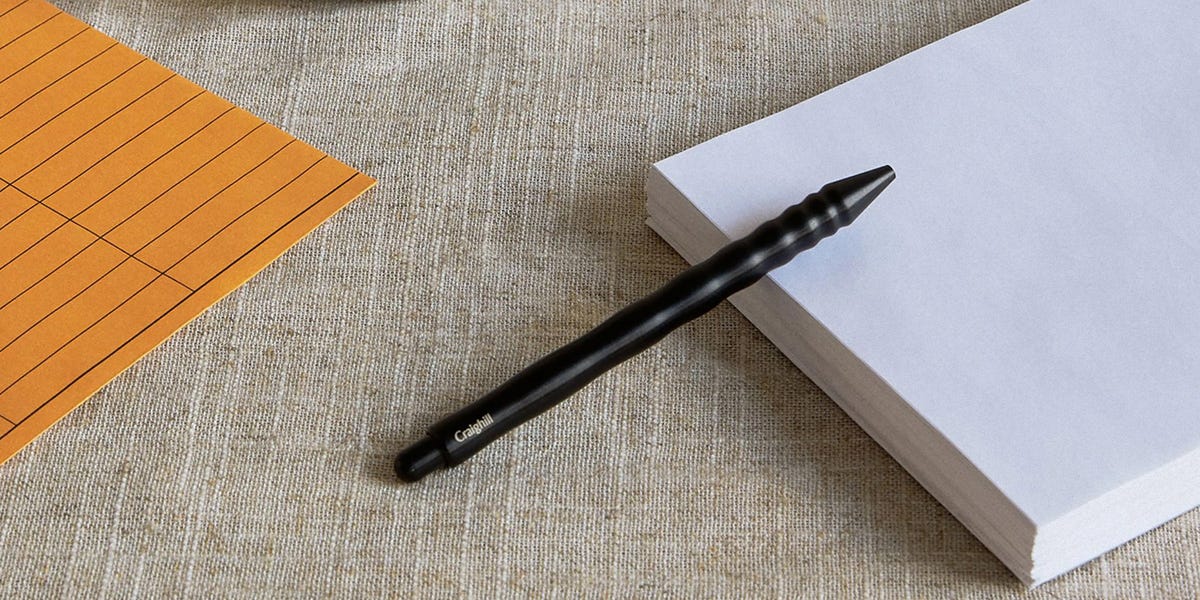

There are two kinds of people in the world: those who carry a pen, and those who awkwardly pat every pocket at the exact moment a form needs signing. In the age of smartphones, voice notes, cloud documents, smartwatches, and inboxes that multiply like rabbits, the humble pen can look almost suspiciously old-fashioned. But here is the plot twist: a good everyday carry pen is not a nostalgia item. It is a tiny, reliable, low-battery-proof problem solver.
Everyday carry, or EDC, is all about keeping useful tools within reach: wallet, keys, phone, flashlight, knife where legal, multitool, notebook, and yes, a pen. The pen may not look as dramatic as a titanium pry bar or a tactical flashlight that could signal aircraft, but it quietly earns its place. It helps you sign receipts, label boxes, write reminders, take measurements, sketch ideas, leave notes, record travel details, and capture thoughts before your brain tosses them into the “never to be seen again” drawer.
The best EDC pen is not necessarily the fanciest pen. It is the one that writes when you need it, rides comfortably in your pocket or bag, survives daily abuse, accepts refills, and does not explode ink all over your favorite jeans like a tiny blue volcano. Whether you are a student, traveler, nurse, contractor, designer, parent, office worker, or person who simply enjoys being prepared, a pocket pen is one of the smartest upgrades you can add to your daily kit.
What Makes a Pen an EDC Pen?
An EDC pen is built for daily reliability. That means it should be portable, durable, easy to deploy, and pleasant enough to use that you do not secretly hate it. A free promotional pen from a bank may technically write, but it is not always ready for real-world duty. It cracks, skips, dries out, vanishes into desk drawers, and somehow always has a logo for a company you have never visited.
A proper everyday carry pen should feel like a tool. It may be made from aluminum, stainless steel, brass, copper, titanium, durable resin, or tough plastic. Some are compact pocket pens; others are full-size writing instruments with sturdy clips. Some use pressurized cartridges that can write at odd angles, in cold weather, or on damp paper. Others focus on refill compatibility, letting you use popular gel, ballpoint, or rollerball refills.
Key features to look for
Start with size. A pen that is too long pokes your leg like it has personal issues. A pen that is too small may be convenient but uncomfortable for long writing sessions. The sweet spot depends on your lifestyle. A compact pen works beautifully on a keychain or in a front pocket, while a full-size pen is better for notebooks, journaling, meetings, and serious note-taking.
Next, consider the clip. A strong pocket clip keeps your pen from disappearing into the mysterious lint dimension at the bottom of your bag. Deep-carry clips are especially useful because they keep the pen secure and discreet. If you move around all day, a weak clip is not a clip; it is a farewell ceremony.
Refill compatibility matters too. A pen body may last for decades, but ink does not. EDC fans often prefer pens that accept common refill formats, such as Parker-style refills, Pilot G2-style refills, Fisher pressurized cartridges, or other widely available inserts. The easier it is to find refills, the less likely your premium pen becomes a beautiful metal stick.
Why Carry a Pen When Your Phone Exists?
Your phone is amazing. It can navigate, photograph, calculate, translate, stream, scan, and distract you from a task you were absolutely about to finish. But it is not always the fastest tool for capturing information. Unlocking your phone, finding the right app, waiting for it to load, dismissing notifications, and typing a note can take longer than writing three words on paper.
A pen is immediate. It has no loading screen, no low-power mode, no cracked glass, no software update, and no “storage almost full” warning. It works in places where pulling out a phone is rude, risky, or inconvenient. During a meeting, a quick handwritten note looks attentive. During a repair job, a written measurement on tape or cardboard is faster than opening a notes app with dusty fingers. During travel, a pen can save you when immigration forms, luggage tags, customs declarations, or hotel paperwork appear like pop quizzes from bureaucracy.
Handwriting also engages the brain differently than typing. Research on handwriting and learning suggests that writing by hand can support memory, comprehension, and the encoding of new information. That does not mean your pen will turn you into a genius overnight. It does mean that the physical act of writing can help you slow down, organize thoughts, and remember details in a way that quick tapping often does not.
The Best Uses for an EDC Pen
1. Capturing ideas before they vanish
Ideas rarely arrive politely. They appear while you are waiting in line, walking the dog, standing in a parking lot, or pretending to listen during a conversation about printer settings. Having a pen lets you trap the idea before it evaporates. Writers, designers, business owners, students, and makers all know the pain of thinking, “I’ll remember that later.” No, you will not. Your brain has already replaced it with a song lyric from 2009.
2. Signing and filling out forms
Even in a digital world, paper survives. Delivery slips, school forms, medical forms, bank slips, rental agreements, receipts, checks, labels, and permission notes still appear. A clean, reliable pen means you are not borrowing a germy counter pen chained to a clipboard like a medieval prisoner.
3. Labeling, marking, and organizing
An EDC pen is excellent for labeling boxes, freezer bags, notebooks, cables, envelopes, plant tags, travel documents, and moving-day chaos. Permanent ink or all-weather ink is useful when moisture, grease, or rough handling might ruin ordinary writing. If you work in a garage, warehouse, studio, kitchen, clinic, or field environment, the right pen can be a daily workhorse.
4. Emergency communication
In a real emergency, writing matters. You may need to leave a note, record a phone number, mark a location, write down medication details, exchange information after a car accident, or communicate when phone service is unavailable. A pen and a small notebook weigh almost nothing, but they can become surprisingly important when conditions get messy.
5. Journaling and mental clarity
A pocket pen can turn idle minutes into reflection. You can jot a gratitude list, track habits, write a quick plan for the day, or unload thoughts before they form a tiny committee in your head. Journaling does not require a leather-bound masterpiece and a candlelit desk. Sometimes it is three lines on a pocket notebook while drinking gas-station coffee that tastes like ambition and regret.
Types of Pens for Everyday Carry
Ballpoint pens
Ballpoint pens use oil-based ink. They are reliable, long-lasting, and less likely to smear than wetter inks. For EDC, ballpoints are often the safest choice because they perform well on many paper types and do not require delicate handling. Pressurized ballpoint refills are especially popular among outdoor workers, travelers, and preparedness-minded users because they can write in unusual conditions.
Gel pens
Gel pens are smooth, bold, and satisfying. They make writing feel easy, which is why office workers and students often love them. The tradeoff is that gel ink can run out faster and may smear more than ballpoint ink, especially for left-handed writers or glossy paper users. Still, if comfort and dark lines matter most, a gel-compatible EDC pen can be a joy.
Rollerball pens
Rollerball pens use water-based ink that flows easily and creates a rich writing experience. They feel closer to fountain pens than ballpoints do, but they can be less practical for rough everyday carry. Rollerball ink may bleed through thin paper or dry more slowly. They are great for desk carry and notebooks, but not always ideal for harsh pockets, rain, receipts, or chaotic backpacks.
Fountain pens
Fountain pens bring personality, beauty, and expressive line variation. They are wonderful for journaling and long writing sessions, but they are not always the most rugged EDC option. Nibs can be delicate, ink can leak under pressure changes, and many fountain pen inks are not waterproof. That said, plenty of people carry pocket fountain pens successfully. If your daily life includes meetings, journaling, and calm pockets rather than mud, ladders, and airport turbulence, a fountain pen can absolutely be part of your EDC.
Pressurized pens
Pressurized pens are the superheroes of the pen world. Their cartridges are designed to push ink toward the tip, allowing them to write upside down, at odd angles, in extreme temperatures, and sometimes on wet or greasy surfaces. This makes them ideal for field notes, outdoor work, construction, military-style preparedness kits, travel, and glovebox storage. If you want one pen that is boringly dependable in dramatic conditions, pressurized ink deserves serious consideration.
Popular EDC Pen Styles
The compact pocket pen
Compact pocket pens are small when stored but comfortable when posted or extended. The classic bullet-style design is popular because it slips easily into a pocket, pouch, or bag. These pens are great for minimalists who want utility without bulk. The downside is that compact pens can be easier to misplace if they do not have a clip or dedicated storage spot.
The click pen
Click pens are fast. One press and you are writing. No cap to lose, no twisting required, no drama. For people who take quick notes all day, a click mechanism is hard to beat. The only caution is mechanism quality. Cheap click pens can rattle, jam, or deploy in your pocket, creating abstract ink art where no art was requested.
The bolt-action pen
Bolt-action pens are beloved in EDC circles because they are durable, satisfying, and secure. Sliding the bolt becomes a tiny ritual, like cocking a productivity lever. Many are machined from metal and built to last for years. They can be more expensive than ordinary pens, but they feel like real tools rather than disposable office supplies.
The capped pen
Capped pens are simple and dependable. With fewer moving parts, there is less to break. A cap also protects the tip and helps prevent accidental ink marks. The tradeoff is obvious: caps can vanish. If you choose a capped EDC pen, look for one that posts securely on the back while writing.
How to Choose the Right EDC Pen for Your Life
The best EDC pen for you depends on where you write, how often you write, and how hard you are on your gear. An office worker may want a smooth gel refill in a professional metal body. A nurse may prefer a click pen that writes quickly on forms and labels. A mechanic may need ink that handles grease, awkward angles, and rough surfaces. A traveler may want a compact pen that survives pressure changes and customs forms. A student may want something comfortable enough for pages of notes without hand fatigue.
Think about your environment first. If you spend time outdoors, choose weather resistance. If you sign documents, choose a clean, professional line. If you write in tiny notebooks, consider a fine point. If you make bold lists or sketches, a medium point may feel better. If you carry your pen in a pocket with keys, avoid finishes that scratch easily unless you enjoy patina, which is the fancy word for “my stuff has lived a life.”
Weight matters too. Brass and copper pens feel substantial and develop character over time, but they can be heavy. Titanium is strong and lightweight, though often more expensive. Aluminum is affordable and light, while stainless steel offers durability with a polished feel. Plastic is not automatically bad; some of the most practical pocket pens are lightweight, inexpensive, and easy to replace.
Do You Need an Expensive EDC Pen?
No. You can build an excellent everyday carry setup with a simple, affordable pen. A reliable disposable or refillable pen is better than an expensive pen left at home because you are afraid to scratch it. The purpose of EDC is usefulness, not showing strangers that you have achieved enlightenment through machined titanium.
That said, a higher-quality pen can be worth it if you use it constantly. Premium EDC pens often have better clips, stronger bodies, smoother mechanisms, and refill flexibility. They also reduce waste because you replace the refill instead of the entire pen. A good pen can become a companion object: the thing you reach for automatically, the thing that feels familiar in your hand, the thing that somehow makes even a grocery list feel more official.
Small Pairings That Make a Pen More Useful
A pen becomes even more powerful when paired with a pocket notebook. Together, they form an offline capture system that works anywhere. Add a small stack of sticky notes, index cards, or waterproof paper, and your setup becomes more versatile. For travelers, a pen plus notebook can hold confirmation numbers, addresses, language phrases, itinerary changes, and backup information if your phone dies.
For work carry, keep one pen in your pocket, one in your bag, and one in your car or desk. This may sound excessive until the day you need a pen and become the hero of the room. People remember the person who has a pen. They may not build a statue, but they will look at you with brief, shining gratitude.
Maintenance Tips for Your Everyday Carry Pen
Even rugged pens need basic care. Replace refills before they are completely dead, especially if you rely on your pen for work. Clean pocket lint from the tip and mechanism. Check screws, clips, and caps occasionally. Avoid leaving ordinary pens in extreme heat, such as a hot car, unless the refill is designed for it. If your pen uses a special refill, keep a spare at home or in your bag.
If your pen body is metal, expect wear. Scratches are not always damage; they are evidence. Brass, copper, and titanium develop character over time. Some users love a pristine finish, while others prefer tools that look used. Either way, the best EDC pen is not the one that stays perfect. It is the one that keeps showing up.
Real-Life Experiences: Why Carrying a Pen Changes More Than You Expect
The funny thing about carrying a pen every day is that you do not realize how often you need one until you stop being the person who has to ask for one. At first, it feels like a tiny affectation. You clip it into your pocket and think, “Look at me, prepared for paperwork.” Then daily life starts proving the point.
One of the most common experiences is the public form moment. You are at a clinic, bank, post office, school office, airport counter, or delivery desk. Everyone is waiting for the single communal pen. It has been chewed by history. The ink is weak. The cap is gone. The chain is tangled. Then you pull out your own pen and move on with your life like a civilized adult. It is a small victory, but small victories count before lunch.
Another experience is the idea rescue. You hear a phrase, remember an errand, sketch a layout, or think of the perfect solution to a problem at exactly the wrong time. Instead of trusting memory, you write it down. The act takes five seconds, but it prevents the familiar later scene where you stare into space muttering, “What was that thing?” A pen turns random thoughts into captured thoughts.
Carrying a pen also changes how you interact with people. You become useful in tiny ways. Someone needs to sign a birthday card. Someone needs to write a phone number. Someone needs to label leftovers. Someone needs to mark a box during a move. You hand over your pen and suddenly you are not just present; you are prepared. This is not glamorous, but neither is being the person who says, “I think I had one somewhere,” while digging through a backpack full of granola bar crumbs.
For travelers, the pen becomes almost heroic. Airport forms, baggage tags, hotel notes, SIM card details, taxi addresses, parking locations, and quick currency math all become easier. A pocket pen can save time when your phone battery is low or when you do not want to flash your device in a crowded place. In a foreign city, writing down an address can be faster and clearer than trying to pronounce it with confidence you definitely have not earned.
At work, a good pen can improve focus. Writing action items by hand during a meeting feels different from typing them into a laptop while notifications tap dance across the screen. A handwritten list creates friction in the best way: you choose what matters, write it clearly, and see it in physical form. The page does not ping. It does not tempt you with another tab. It simply waits for your brain to do its job.
There is also the satisfaction factor. A pen with a smooth refill and comfortable grip makes ordinary tasks feel better. Signing a receipt, labeling a notebook, or planning a project becomes tactile. That may sound dramatic for a tube of ink, but tools shape behavior. When a tool feels good, you use it more. When you use it more, you capture more ideas, stay more organized, and look slightly less like a person losing a battle with modern life.
Finally, carrying a pen teaches a quiet principle of EDC: the best tools are the ones that disappear into your routine until the exact second they are needed. A pen is small, inexpensive compared with most gear, and socially acceptable almost everywhere. It does not need charging. It does not require training. It does not announce itself. It simply waits, ready to turn thought into mark, agreement into signature, confusion into list, and “I’ll remember” into something much more reliable.
Conclusion: The Small Tool That Earns Its Pocket Space
A pen may not be the loudest item in your everyday carry, but it is one of the most useful. It bridges the gap between thought and action. It helps you remember, organize, communicate, sign, label, sketch, plan, and prepare. It works when your phone is dead, when the Wi-Fi is useless, when forms appear, when ideas strike, and when someone nearby asks the ancient question: “Does anybody have a pen?”
The right EDC pen does not have to be expensive or tactical or carved from metal found in a meteorite. It simply has to be reliable, comfortable, refillable if possible, and easy to carry. Start with one that fits your routine. Clip it to your pocket, tuck it into your bag, or pair it with a small notebook. After a week, you may wonder how such a tiny object managed to make you feel so much more prepared.
In a world obsessed with smarter devices, the pen remains beautifully, stubbornly smart in its own way. It is analog, immediate, personal, and practical. That is why pens are not just office supplies. They are EDC essentials hiding in plain sight.