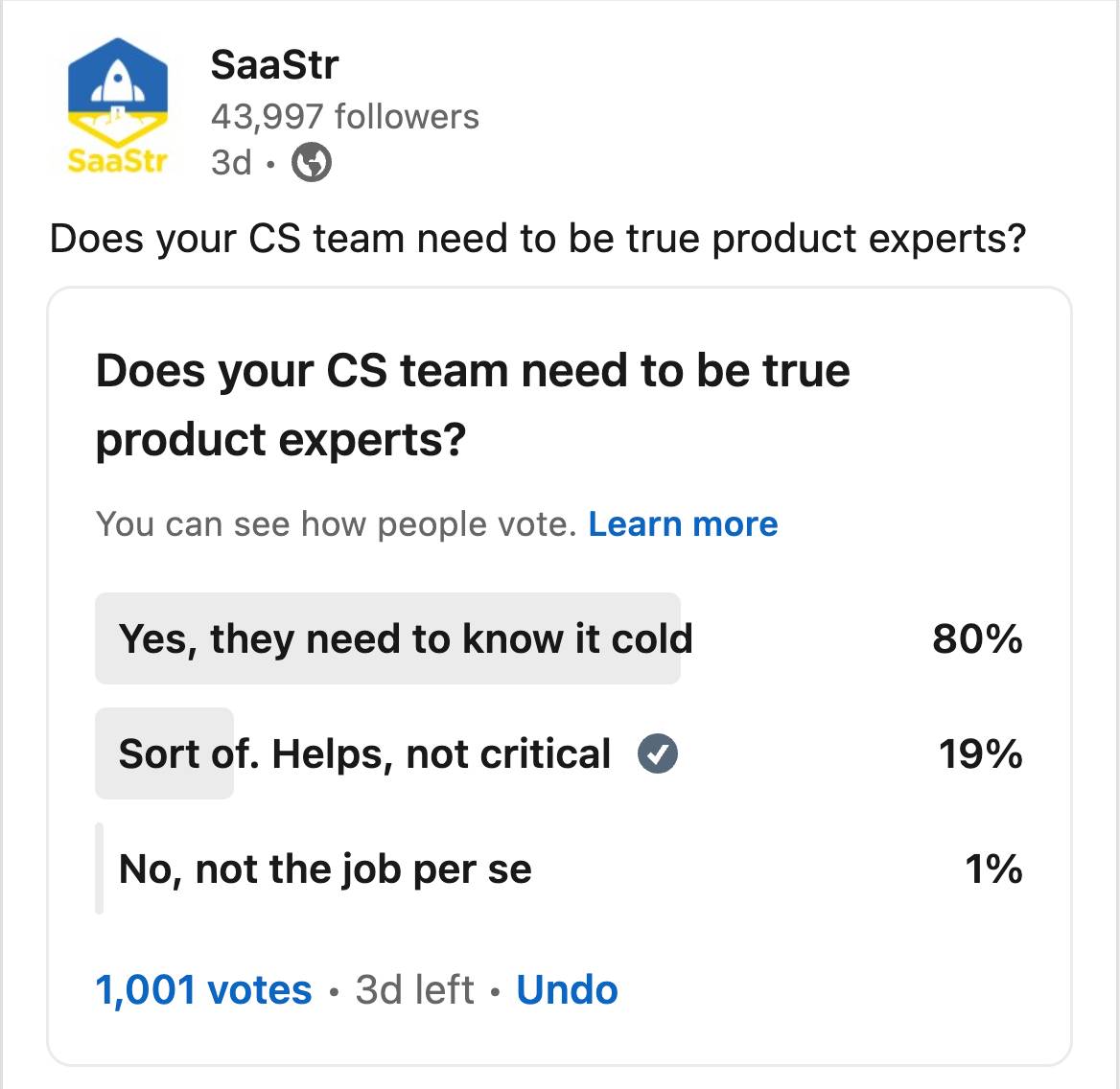

Customer Success has become one of the most important functions in modern SaaS, subscription businesses, and technology-driven service companies. Once upon a time, a customer bought software, received a login, and was left alone in the wilderness like a camper with one granola bar and no flashlight. Today, customers expect guidance, adoption support, strategic advice, measurable outcomes, and someone who can explain why the “simple integration” is acting like a moody house cat.
That raises a question many companies quietly debate in hiring meetings: Do Customer Success Managers need to be product experts? The honest answer is: yesbut not in the way many people think. A Customer Success Manager does not always need to know every technical detail, every API endpoint, or every obscure setting hidden behind three admin menus. However, they do need enough product expertise to connect features to business outcomes, guide adoption, diagnose common problems, and earn customer trust.
In other words, Customer Success should not be a walking help center article. It should be the bridge between customer goals and product value. Product knowledge matters, but it is only one ingredient in a much bigger recipe that includes empathy, consulting skills, communication, commercial awareness, data analysis, and cross-functional teamwork. Think of the CSM as part coach, part translator, part strategist, part detective, and occasionally part therapist when a customer says, “We just need one tiny workflow change,” and then describes a 19-step operational maze.
What Customer Success Actually Means
Customer Success is the proactive work of helping customers achieve their desired outcomes with a product or service. Unlike traditional support, which often responds after something breaks, Customer Success focuses on prevention, adoption, retention, expansion, and long-term value. The goal is not merely to make customers happy for five minutes. The goal is to make them successful enough that renewing feels obvious.
In SaaS companies, Customer Success teams commonly handle onboarding, product adoption, customer health monitoring, business reviews, renewal preparation, risk management, advocacy, and feedback loops to product teams. In plain English: they help customers use what they bought, get measurable value from it, and avoid becoming a churn statistic in someone’s terrifying Monday dashboard.
This is why the Customer Success Manager role sits in a delicate place. CSMs are close to the customer, close to revenue, close to product usage data, and close to internal teams such as support, sales, product management, implementation, and marketing. They do not need to replace all those teams. They do need to understand enough to coordinate them intelligently.
So, Do CSMs Need to Be Product Experts?
The best answer is: Customer Success Managers need practical product fluency, not encyclopedic product obsession. Product fluency means they understand what the product does, who it helps, where it creates value, what problems it solves, what limitations exist, and how different customer segments should use it. Product obsession, on the other hand, is memorizing every button, bug, backend behavior, and release note as if preparing for a game show called “Who Wants to Be a SaaS Millionaire?”
Practical product expertise helps a CSM answer the questions that actually matter:
- What customer problem is this feature designed to solve?
- Which workflows create the fastest path to value?
- What adoption signals suggest the customer is healthy or at risk?
- When should the CSM solve the issue, and when should they bring in support or solutions engineering?
- How can product usage be translated into business impact?
A CSM who lacks product knowledge becomes a friendly meeting scheduler. A CSM who knows only the product but not the customer’s business becomes a feature tour guide. The strongest CSMs sit in the middle: they understand the product well enough to advise, and the customer well enough to make that advice useful.
Why Product Knowledge Matters in Customer Success
1. Product expertise builds trust
Customers can tell when a CSM is guessing. They may smile politely on the call, but inside they are already opening a second browser tab to compare competitors. Product knowledge gives the CSM credibility. When customers ask how to accomplish something, they want a confident answer, not a dramatic pause followed by “Let me circle back,” repeated so often it deserves its own calendar invite.
Trust does not require knowing everything. In fact, pretending to know everything is one of the fastest ways to lose trust. A strong CSM can say, “I know the recommended workflow, but I want to confirm the technical edge case with our specialist.” That kind of honesty, paired with enough product fluency to understand the issue, reassures customers that they are in capable hands.
2. Product knowledge improves onboarding
Customer onboarding is where long-term success often begins or quietly collapses. If onboarding focuses only on showing features, customers may leave the session impressed but confused. If onboarding connects product capabilities to the customer’s goals, adoption becomes easier.
For example, imagine a company buys a customer engagement platform to reduce response times. A weak onboarding session says, “Here is the inbox, here are tags, and here are reports.” A stronger Customer Success approach says, “Your goal is to reduce first response time by 30%. Let’s configure routing, saved replies, reporting views, and team ownership around that metric.” Same product. Very different value.
3. Product expertise helps identify adoption gaps
Customer Success teams increasingly rely on product usage analytics, health scores, customer journey stages, and behavioral signals. But data is only helpful if someone understands what it means. A dashboard saying “low usage” is not a strategy. It is a smoke alarm. The CSM still has to figure out whether the customer is stuck, untrained, misaligned, understaffed, poorly implemented, or simply using the product differently than expected.
Product expertise helps CSMs interpret these signals. If a customer has enabled the platform but never activated a key workflow, that may explain weak outcomes. If an admin logs in often but end users do not, the problem may be change management. If one team uses advanced features while another ignores the basics, the CSM can tailor training instead of sending everyone the same cheerful but useless “Top 10 Tips” email.
4. Product knowledge supports better renewals and expansion
Renewals are rarely won on renewal day. They are earned throughout the customer lifecycle. A CSM who understands product value can connect customer goals to usage milestones, success metrics, and business outcomes. That makes renewal conversations more meaningful and less like a hostage negotiation with a purchase order.
Expansion also depends on product fluency. A CSM should be able to recognize when a customer has outgrown their current package, needs another module, or could benefit from a new feature. But this must be done carefully. Customer Success should not sound like a salesperson wearing a fake mustache. Expansion works best when it is grounded in customer value, not quota panic.
Where Product Expertise Can Go Too Far
There is a danger in expecting every Customer Success Manager to become a full technical expert. When companies overdo this expectation, several problems appear.
First, CSMs can become overloaded. They are already managing relationships, risk, adoption, business reviews, internal coordination, renewals, and customer expectations. Adding deep technical troubleshooting to every account can turn the role into a blender with a LinkedIn profile.
Second, deep technical work can distract from strategic work. If a CSM spends most of the week solving configuration issues, they may have little time left for executive alignment, adoption planning, value measurement, and churn prevention. Those higher-level activities are often where Customer Success creates the greatest business impact.
Third, customers may become confused about where to go for help. If CSMs act as support engineers, technical consultants, implementation managers, and account managers all at once, the operating model gets messy. Clear role definition matters. Customers should know when to contact support, when to involve a technical account manager, and when to work with their CSM on strategy and outcomes.
The Difference Between Product Expert, Technical Expert, and Business Expert
One reason this debate gets messy is that people use “product expert” to mean different things. A Customer Success leader may mean “knows how the product creates value.” A product manager may mean “understands roadmap tradeoffs and feature design.” A customer may mean “can fix my integration before lunch.” These are not the same thing.
Product expert
A product expert understands core features, workflows, use cases, limitations, adoption patterns, and best practices. This is the level most CSMs need.
Technical expert
A technical expert understands implementation details, integrations, APIs, data architecture, security requirements, and complex troubleshooting. Some CSMs need this, especially in enterprise or technical products, but many can partner with solutions engineers or technical account managers.
Business expert
A business expert understands the customer’s industry, goals, operating model, metrics, internal pressures, and success criteria. This is where excellent CSMs often separate themselves from average ones. Customers do not wake up excited about features. They wake up worried about revenue, productivity, compliance, cost, efficiency, customer experience, and whether their boss will ask for “just a quick update” at 4:58 p.m.
The Ideal Customer Success Skill Mix
The modern CSM needs a balanced skill set. Product expertise is important, but it must work alongside other capabilities.
Consultative thinking
CSMs should ask thoughtful questions, uncover root problems, and guide customers toward better workflows. This means moving beyond “Here is how the feature works” to “Here is how your team should use this feature to reach your goal.”
Communication
A CSM must explain complex ideas in simple language. This is especially important when working with executives, admins, end users, and technical teams in the same account. Each audience cares about different things. The CFO wants value. The admin wants control. The end user wants fewer clicks. The executive sponsor wants proof that buying the software was not an expensive group hallucination.
Data literacy
Customer Success now depends heavily on data: usage metrics, health scores, support tickets, NPS, renewal signals, adoption milestones, and product engagement. A good CSM does not need to be a data scientist, but they should be able to spot patterns, prioritize accounts, and use evidence in conversations.
Commercial awareness
Even when CSMs do not directly own renewals, they influence revenue. They need to understand churn risk, expansion potential, contract value, stakeholder alignment, and the customer’s business case.
Cross-functional collaboration
Customer Success is a team sport. CSMs must work with product management to share feedback, support teams to resolve issues, sales teams to manage expectations, and marketing teams to create education and advocacy. A lone-wolf CSM may look heroic for a while, but eventually the cape gets caught in the CRM.
How Much Product Knowledge Is Enough?
A useful benchmark is the “three-layer model” of product expertise for Customer Success.
Layer 1: Core product literacy
Every CSM should know the main product functions, common use cases, customer segments, onboarding steps, and basic troubleshooting paths. This is non-negotiable. Without it, the CSM cannot guide customers effectively.
Layer 2: Use-case fluency
CSMs should understand how different customers use the product in real business situations. For example, a marketing automation customer may care about lead nurturing, segmentation, campaign performance, and attribution. A cybersecurity customer may care about risk reduction, alert fatigue, compliance, and incident response. Use-case fluency turns feature knowledge into relevant advice.
Layer 3: Technical depth where required
Some products require deeper knowledge. Enterprise platforms, developer tools, data products, cybersecurity software, infrastructure solutions, and complex integrations may require CSMs to understand technical concepts. However, even then, the CSM does not always need to be the deepest expert in the room. They need to know enough to frame the issue, ask good questions, and involve the right specialist.
When Customer Success Must Be Deeply Technical
There are situations where product expertise is not optionalit is survival gear. If the product is highly technical, the customer base is technical, or the implementation is complex, a CSM may need substantial product and domain knowledge.
For example, a CSM supporting a developer API platform should understand authentication, rate limits, documentation, sandbox environments, and integration workflows. A CSM supporting enterprise data software should understand data pipelines, permissions, reporting logic, and governance concerns. A CSM supporting security software should understand threat detection, compliance frameworks, and operational risk.
In these environments, customers may not trust vague advice. They want someone who can speak their language. That does not mean the CSM must code the integration personally, but they should understand enough to avoid saying things like, “Have you tried refreshing the API?” which is the technical equivalent of putting ketchup on a laptop.
When Product Expertise Matters Less Than Business Expertise
In other environments, deep technical expertise is less important than business understanding. A CSM working with small businesses, marketing teams, HR departments, or customer service organizations may create more value by understanding workflows, team goals, adoption barriers, and change management.
For example, if a customer buys a CRM but the sales team refuses to log activities, the problem is not necessarily product knowledge. The problem may be incentives, leadership alignment, training, process design, or user resistance. A brilliant explanation of custom fields will not fix a team that sees the CRM as “homework with dashboards.”
Here, the CSM’s job is to help the customer build habits, define success metrics, train users, and align stakeholders. Product expertise still matters, but business expertise drives the outcome.
How Companies Can Train CSMs Without Turning Them Into Robots
Companies often make product training too feature-heavy. They hand new CSMs a giant knowledge base, schedule a few demo sessions, and hope wisdom appears. That is like teaching someone to cook by reading them the refrigerator manual.
Better Customer Success enablement should include:
- Use-case playbooks: Show how different customer types achieve value.
- Common objection guides: Help CSMs respond to adoption blockers and customer concerns.
- Product certification: Confirm baseline knowledge without requiring perfection.
- Shadowing: Let CSMs observe experienced teammates handling real customer conversations.
- Release training: Explain not only what changed, but why it matters to customers.
- Internal escalation maps: Make it clear when to involve support, product, engineering, or solutions consulting.
- Customer story libraries: Teach success through real examples, not just feature checklists.
The goal is not to create CSMs who recite product documentation from memory. The goal is to create advisors who can confidently guide customers toward outcomes.
The Product Team Needs Customer Success Too
This relationship goes both ways. Customer Success needs product knowledge, but product teams also need customer knowledge from Customer Success. CSMs hear the messy, emotional, practical truth from customers every day. They know which features confuse users, which workflows create value, which promises from sales need better alignment, and which “small requests” are actually symptoms of larger market needs.
A strong feedback loop between Customer Success and Product Management helps companies make better roadmap decisions. But feedback must be structured. “Customers hate the dashboard” is not especially useful. “Enterprise admins in healthcare accounts are struggling to create role-based reporting because permissions are too rigid” is much better. Specific feedback helps product teams prioritize real problems instead of chasing the loudest complaint.
What Customers Really Expect From a CSM
Customers do not expect their CSM to know everything. They expect ownership. That is a crucial distinction. A CSM can earn trust by saying, “I will get the right person involved and make sure we keep this moving.” Customers are often less bothered by a gap in knowledge than by the feeling that nobody owns the outcome.
The best CSMs combine confidence with humility. They know the product, but they do not bluff. They guide, but they do not lecture. They bring in experts, but they do not disappear after the handoff. They translate customer goals into action and internal complexity into a clear plan. Basically, they make the customer feel like someone competent is driving the bus, even if the road includes potholes, budget reviews, and one mysterious stakeholder named “Legal.”
Practical Examples: Product Expert or Outcome Expert?
Example 1: The underused analytics feature
A customer buys a platform partly for analytics, but usage data shows nobody is opening reports. A product-only CSM might send documentation about reporting. An outcome-focused CSM asks why reports are unused. Maybe leaders do not trust the data. Maybe the dashboard does not match their KPIs. Maybe users do not know it exists. The solution may involve training, configuration, executive alignment, or data cleanup. Product expertise helps, but diagnosis matters more.
Example 2: The angry admin
An admin complains that the product is “too complicated.” A weak response is a feature walkthrough. A better response is to identify the workflow causing frustration, simplify the setup, recommend best practices, and bring in support if there is a technical issue. The CSM does not need to be the engineer who built the feature. They need to understand the product well enough to reduce friction.
Example 3: The renewal at risk
A customer says they are not seeing value. The CSM reviews product usage, adoption history, original goals, stakeholder changes, support issues, and business outcomes. They discover that the customer bought the platform for automation but only uses manual workflows. Now the CSM can build a recovery plan. Product expertise reveals the missed value; business expertise turns that insight into a renewal strategy.
My Experience-Based Perspective: What Actually Works in the Real World
In real customer success work, the most effective CSMs are rarely the people who know the most obscure product details. They are the people who can make customers feel understood, guided, and confident. Product knowledge opens the door, but judgment keeps the relationship alive.
A common mistake is treating product expertise like a shield. Newer CSMs sometimes believe that if they memorize enough features, they will be safe on customer calls. But customers rarely follow the script. They bring strange workflows, internal politics, missing data, unclear goals, and urgent requests that begin with “This should be easy.” Product knowledge helps, but the CSM also needs curiosity. The magic question is often not “Which feature do you want?” but “What are you trying to accomplish?”
Another lesson: customers value clarity more than instant answers. A CSM who calmly explains next steps, owners, timelines, and tradeoffs often creates more trust than one who rushes into a half-correct answer. Saying “I need to verify that before advising you” is professional. Saying “Absolutely, that should work” when it might not work is how small problems grow little horns and start charging at renewal day.
Experience also shows that CSMs should build a personal product learning system. The best ones do not wait for formal training. They attend product demos, read release notes, shadow support calls, test features in sandbox accounts, ask solutions engineers questions, and keep a private list of common customer scenarios. Over time, they develop pattern recognition. They can hear a customer describe a problem and think, “This sounds like a permissions issue,” or “This is really a change management problem,” or “We need an executive sponsor before this account drifts.”
However, there is a ceiling to solo heroics. Great Customer Success teams create clear escalation paths. If every difficult technical question depends on one CSM becoming a genius overnight, the system is broken. A healthy model lets the CSM own the customer relationship while technical experts own deep diagnosis. The customer should experience one coordinated team, not a scavenger hunt through departments.
One practical habit that works especially well is translating every product conversation into a business outcome. Instead of saying, “You should use automation rules,” the CSM says, “Automation rules can reduce manual follow-up and help your team respond faster without adding headcount.” Instead of saying, “Let’s activate reporting,” the CSM says, “This report will help your leadership team see adoption progress before the quarterly review.” That shift sounds small, but it changes the customer’s perception from software tutorial to strategic guidance.
Another field-tested lesson: product expertise should be segmented by customer tier and complexity. A high-touch enterprise CSM may need deeper technical and industry knowledge because the accounts are complex and politically layered. A scaled CSM managing hundreds of smaller accounts may need stronger digital engagement skills, playbook design, webinars, lifecycle campaigns, and data-based prioritization. Both need product knowledge, but they apply it differently.
The most successful CSMs also learn the customer’s language. If the customer talks about revenue leakage, compliance risk, patient experience, employee productivity, ticket deflection, or campaign attribution, the CSM should not constantly drag the conversation back to generic feature names. Product value must be translated into the customer’s world. That is where trust grows.
Finally, experience teaches that humility is a competitive advantage. Products change. Roadmaps shift. AI features appear. Interfaces move. Integrations evolve. Nobody can know everything forever. The best CSMs stay teachable. They keep learning the product, learning the customer, learning the market, and learning from every awkward call where something did not go as planned. Customer Success is not about being the smartest person in the Zoom room. It is about helping the customer become successful enough to stay, grow, and maybe even say nice things about you when procurement is not listening.
Conclusion: Customer Success Needs Product Fluency, Not Product Worship
So, do Customer Success Managers need to be product experts? Yes, but with an important clarification. They need to be experts in applying the product to customer outcomes. They need to understand features, workflows, adoption signals, limitations, and best practices. They need enough technical knowledge to ask smart questions and enough business knowledge to give smart advice.
But they do not need to replace support engineers, solution architects, product managers, trainers, or implementation consultants. When companies demand that CSMs become everything to everyone, the role becomes chaotic. When companies equip CSMs with product fluency, customer insight, data, clear playbooks, and strong internal partners, Customer Success becomes a growth engine.
The best Customer Success professionals are not just product experts. They are outcome experts. They know the product, but they care most about what the customer can achieve with it. That is the difference between a feature tour and a success strategyand customers can feel the difference immediately.
Note: This article is written as original, publication-ready content based on synthesized best practices from reputable U.S. customer success, SaaS, CRM, product adoption, and customer experience resources. No source links or automated citation artifacts are included in the article body.